Clean Floors and Carpets Naturally (Without Harsh Chemicals)
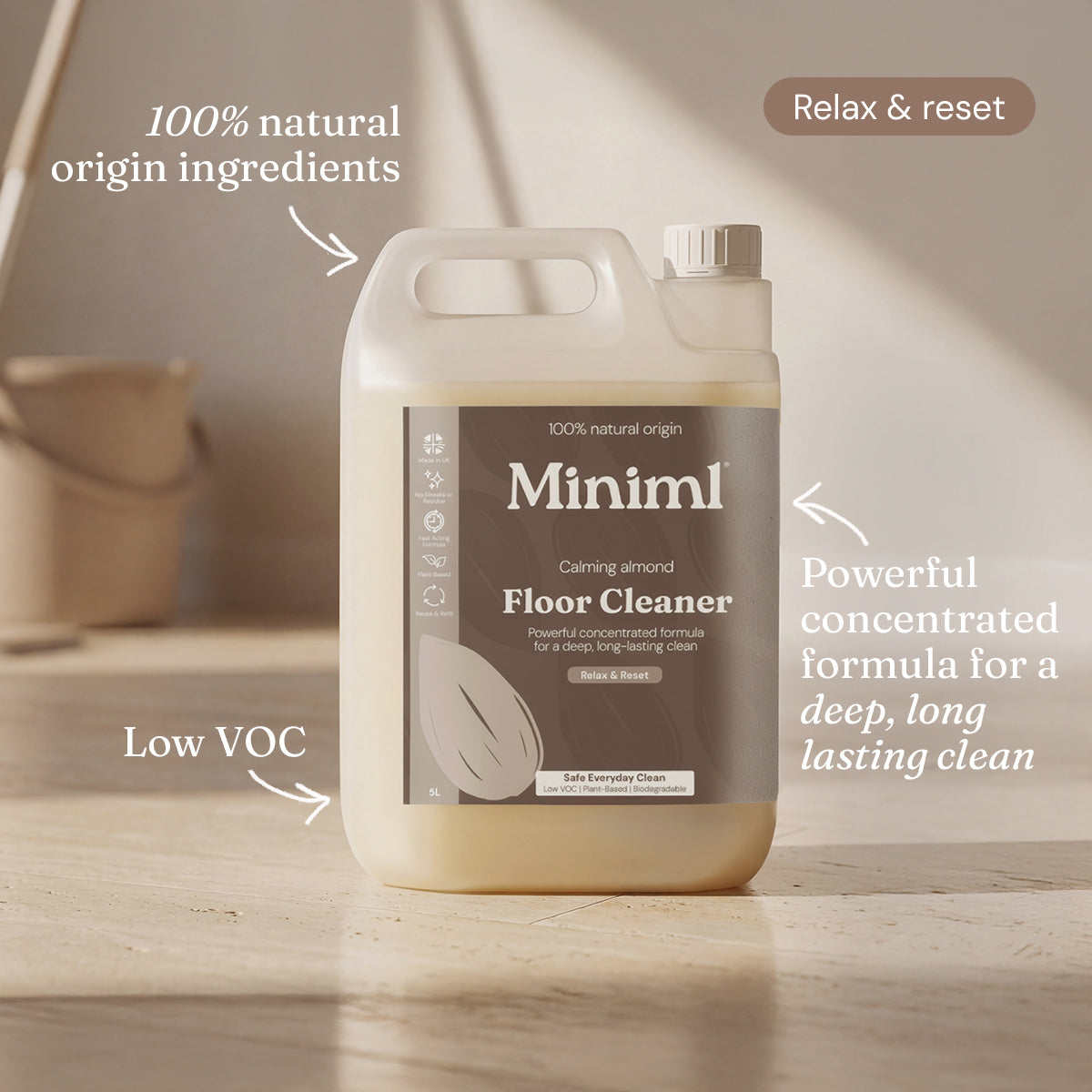
Miniml Nutty Almond Eco Floor Cleaner is the ideal swap to clean your hard floors. Made with biodegradable ingredients (including Yorkshire water – even scents are naturally derived), this is vegan-friendly and not tested on animals, and sold in bottles that you can send back to be refilled!
Use with a plastic-free mop or use a bucket filter if using a microfiber mop, to stop leaching microplastics (collect and securely bin them, to avoid them washing away at landfill). Although listed as pet-friendly, always thoroughly rinse and dry floors, before allowing pet paws back in!
If buying other items in the range, avoid essential oils for pregnancy/nursing and near babies/pets. Citrus oils are toxic to pets (even if rinsed and dried, residue could be licked from paws). For these homes, just clean with a mix of water and baking soda and white vinegar.
This floor cleaner is concentrated, so a little goes a long way. At end of use, you can get the bottle refilled at stores that sell it, or use the QR code to send off empty bottles for refilling, and return.
The starter bottle is 750ml, and the refill bottles give 200 uses!
The floor cleaner is suitable for all washable surfaces, floors, tiles and painted wood. To use, just add 1 to 2 capfuls per 5L bucket of warm water, then rinse and dry. For stubborn stains, use undiluted, then wash with a soft wet cloth. And again rinse and dry thoroughly.
There are discounts for regular subscriptions, and students.
For toxic cleaning/laundry products, you can recycle empty bottles with kerbside collections. For bottles with product, dispose of them at your council’s hazardous waste department.
Joseph Joseph’s Wall-Mounted Rubber Broom

This wall-mounted broom features a slot with easy access rubber flats, and bristles are covered when not in use. The separate comb removes trapped hair and dust, and the telescopic aluminium handle easily reaches places. Sold with a Dustpan & Brush that clips away, when not in use.
Don’t Sweep Up Cute Spiders!
House spiders in England won’t do any harm, and eat up flies.
- To prevent spiders, use biodegradable non-scented cleaners and vacuum regularly.
- Most have never been outside, so leave them be or gently cover with a cup, slide a thin card underneath and place in an unused cupboard.
- Carefully move the egg sacs too. Use a spoon or small jar to carefully slide under the egg sac, gently guiding the mother.
- British Arachnological Society says spiders don’t come up through plugholes, so need help to escape. Place a towel on the bath edge so your spider friend can climb out (leave one over the edge at night, in case spiders fall in). Or move as above, to a cupboard.
Quality Manual Carpet Sweepers (save on energy bills!)
If you live in a small property and are concerned over energy bills, consider a manual carpet sweeper:
Bissell has been around since the late 1800s, and makes sweepers that are ideal for a quick ‘hoover’ or picking up crumbs. They only cost around £20. Also good for hard floors, it has dual rotating brushes, handles that lie flat for low reach and easy empty twin dirt pans.
Hug Rugs (eco doormats to absorb mud)
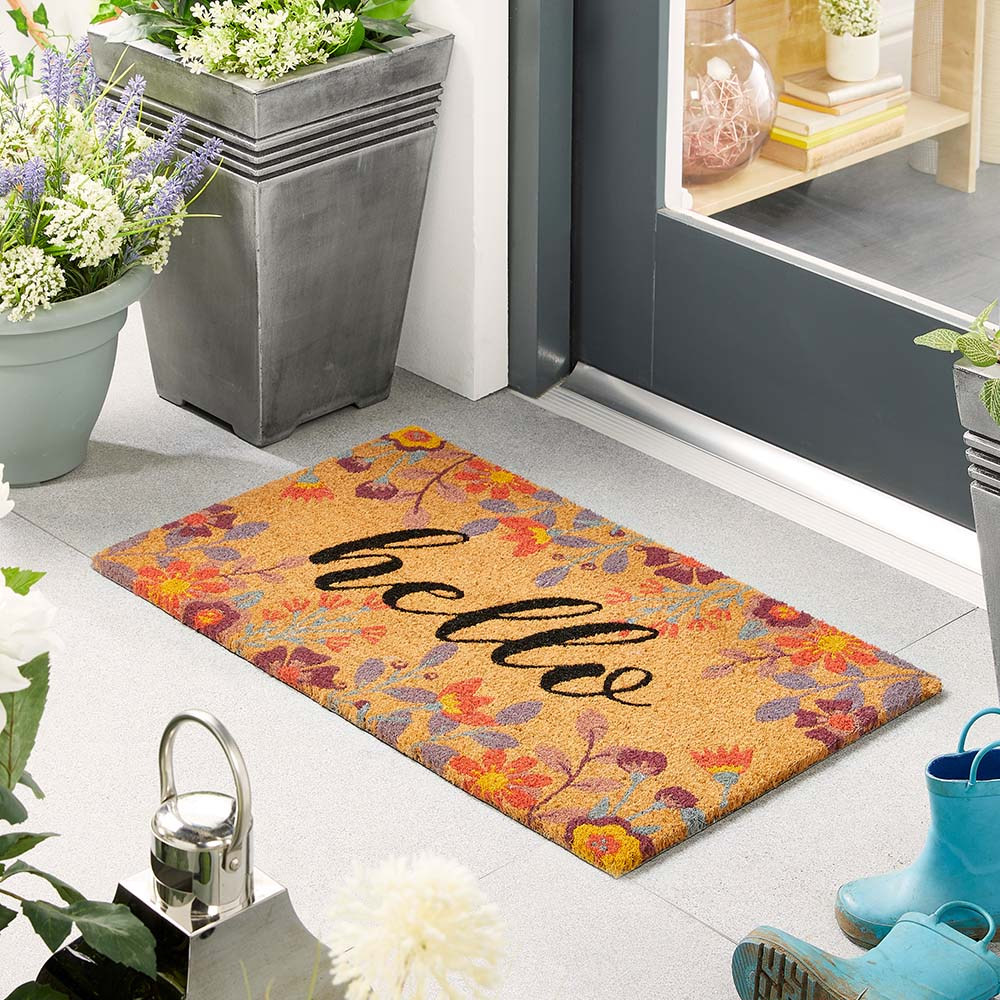
Hug Rug dirt-tracking doormats are made with recycled plastic and cotton. Made in Yorkshire, these can trap up to 95% of mud, dirt, dust and moisture, ideal for coming in from the garden, country walks or dog walks.
Then just wipe-clean. If you launder them, due to synthetic materials, do so in a microfibre filter. Hoover first and launder in a loose cotton pillow case (avoid biological washing powder, this may fade the colour).
They are great for porches and outside houses, and also hallways, kitchens and bathrooms. They absorb three times their weight in water, and can help to absorb sound, to reduce household noise.
New Hug Rugs may shed excess cotton, it will disappear after being brushed a few times. For best results, leave mud to dry first and brush away. Only place Hug Rugs on dry floors (leave washed rugs to dry naturally).
The Charity Mats donate a portion of sales to various charities:
- Battersea Dogs and Cats Home (London)
- RSPB (to create safe havens for garden birds)
- Bumblebee Conservation Trust
- Rainbow Trust (supporting families with sick children)
Your natural cleaning kit (and what each item is for)
You don’t need much, but each piece earns its place:
- Plastic-free cloths, a soft brush, and a spray bottle cover most jobs.
- Soft broom: Best for quick sweeps without scratching.
- Vacuum with the right head: Use a hard-floor head for smooth surfaces, and a beater bar (or brush roll) for carpets if suitable.
- Spray bottle: Helps you mist, not soak.
- Bucket: For rinsing and keeping dirty water away from the floor.
- Mop: Gives control over moisture and reduces streaks.
- Soft brush: Handy for textured tiles and grout lines.
- Squeegee or rubber brush: Great for pet hair on rugs and stair carpets.
- Measuring spoon or cup: Stops you “eye-balling” too much soap.
Wash cloths warm, skip fabric softener (it coats the fibres), and air dry if you can.
Vinegar, bicarb of soda and soap
A few everyday ingredients cover most jobs:
- White vinegar cuts grease and can tackle light limescale. However, don’t use it on natural stone (like marble or limestone), and avoid it on wood. Acid can dull surfaces and strip finishes.
- Bicarbonate of soda (bicarb) deodorises and gives gentle scrubbing power. It’s useful on grout, sinks, and carpets, but it can be too abrasive for delicate finishes if you grind it in.
- Mild liquid soap (pure soap or gentle washing-up liquid) lifts everyday grime. Use only a few drops, because too much leaves a sticky film that attracts more dirt.
- Hydrogen peroxide (3%) can help with some carpet stains, especially on pale carpets. Always patch test and treat it like a spot product, not an all-over cleaner.
Sealed hard floors (tile, vinyl, laminate)
- Start by removing grit, because tiny particles act like sandpaper. Sweep or vacuum first, especially near doors and under the table.
- For a simple mop mix, use 1 litre of warm water plus 3 to 5 drops of mild soap. For ceramic or porcelain tile (not natural stone), you can add a small splash of white vinegar if you need help with greasy patches.
- Dampen the mop rather than soaking it. Wring well, then mop in sections. If the floor still feels slippery, rinse the mop head and go over once with clean water. Finally, buff with a dry microfibre cloth to stop streaks.
- For sticky spots, press a warm, soapy cloth on the mark for 20 to 30 seconds, wipe, then dry. That short pause often does more than hard scrubbing.
- A realistic routine helps. Aim for a quick sweep and damp mop weekly, then do corners and skirting edges monthly.
Wood floors: keep water and vinegar in check
- Wood looks tough, but it hates sitting water. Sealed wood has a protective top coat, while waxed or oiled wood has a more “open” finish that can stain easier. If water soaks in quickly, treat it like waxed or oiled wood.
- Skip vinegar here. Instead, mix 1 litre of warm water with a few drops of pH-neutral mild soap. Use a well-wrung cloth or mop, wipe with the grain, and dry straight away with a clean cloth.
- Scuffs often lift with a damp microfibre cloth. Rub lightly, then dry. If the mark won’t budge, stop and reassess, aggressive rubbing can dull the finish.
- Avoid steam mops, soaking, and abrasive powders. They can warp boards, lift edges, or leave a rough patch that catches the light.
Natural stone (marble, limestone, slate)
- Stone needs a gentle approach, because some types react to acids. Vinegar, lemon, and many bathroom sprays can etch marble and limestone, leaving a dull patch you can’t mop away.
- Use warm water with a tiny amount of mild soap. Wipe, then rinse with clean water and dry to prevent water spots. For grout lines, use a soft brush with light pressure, then wipe clean.
- If your stone stains easily, sealing can help long-term. Still, everyday care makes the biggest difference, keep spills moving, and dry the surface after cleaning.
Fresh carpets and rugs naturally
- Carpets act like a big filter. They trap dust, crumbs, and oils, then release them when you walk over the pile. That’s why prevention works so well: take shoes off where possible, vacuum high-traffic lanes often, and deal with spills fast.
- When you clean, remember the golden rule: don’t over-wet the fibres. A damp carpet dries; a soaked carpet can smell musty for days.
- Bicarb is a simple way to freshen rugs and carpets, especially for pet odours and stale smells.
- Sprinkle a light, even layer over the area. Leave it for 15 to 60 minutes (go longer for stronger smells), then vacuum slowly. Take a few passes from different angles so you lift powder from the base of the pile.
- If your vacuum struggles with fine powders, use less and empty the bin (or change the bag) before you start. Keep bicarb dry in storage too, clumps don’t spread well and can leave residue.
Spot-clean spills and stains
Good spot cleaning is more like blotting ink than washing clothes. You want to lift the spill without spreading it.
- Blot, don’t rub. Press with kitchen roll or a clean towel to pull liquid up.
- Use cold water for most fresh spills, especially anything with protein (like milk).
- Mix a small bowl of warm water with a few drops of mild soap.
- Dab from the outside in, so the mark doesn’t grow.
- Rinse by dabbing with clean water, then press dry with a towel.
- Speed drying with airflow (open a window, or point a fan at the area).
Quick stain notes help in the moment. Tea and coffee often lift with the soap mix and repeated dabbing. Red sauce responds best when you act fast and rinse well. Mud is easier once dry, vacuum first, then dab what’s left.
For pet accidents, a plant-based enzyme cleaner can work well, because it targets the smell at the source. If you have a pale carpet, you can try 3% hydrogen peroxide on a stubborn mark, but patch test first and don’t leave it sitting long.
If a stain keeps returning, or the carpet smells sour after drying, it’s time to call a professional. Padding underneath may be holding moisture.