Celebrate a Compassionate Christmas (and less shopping!)
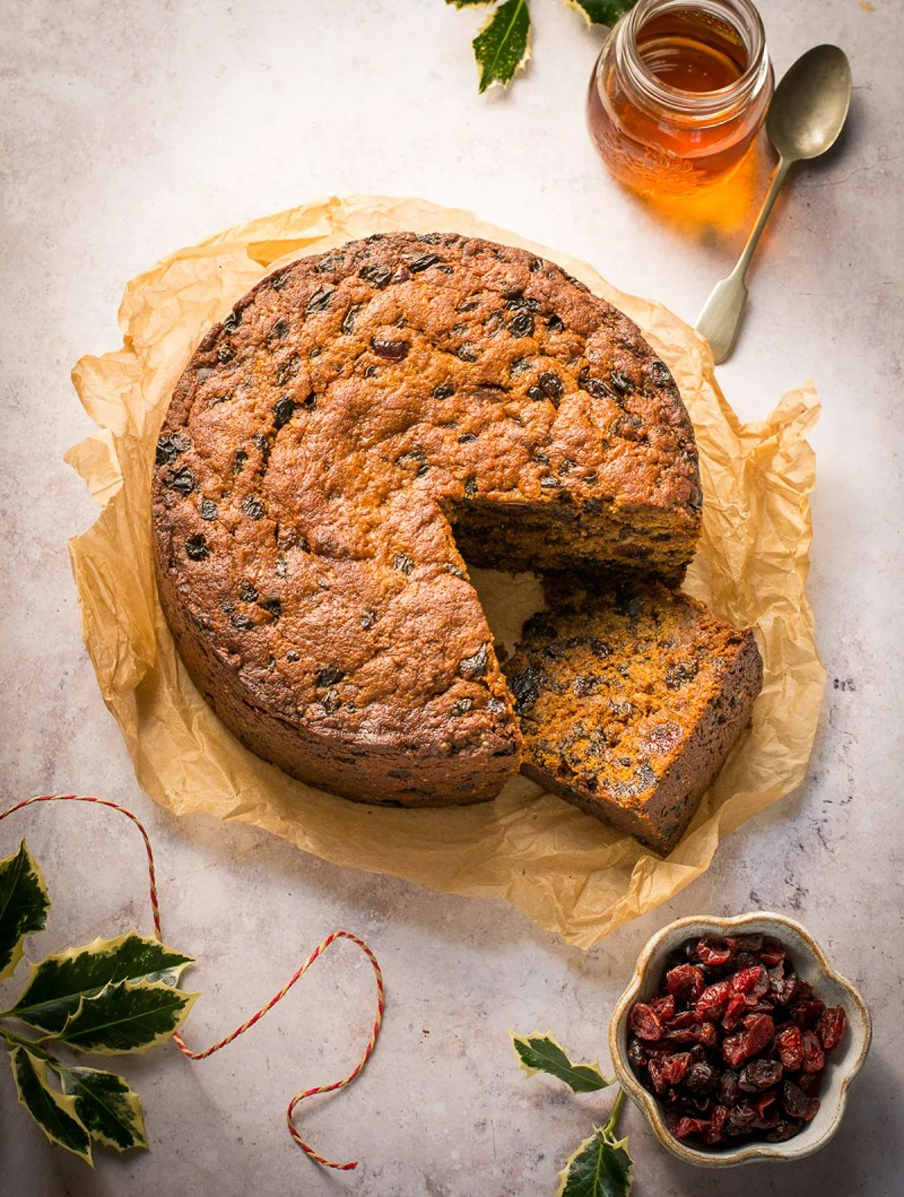
Millions of people buy Christmas cakes from supermarkets each year. Making your own is tasty, cheap and free from plastic packaging. And you can make a plant-based cake to ensure it’s suitable for all your guests. You can usually make Christmas cake ahead of time, then store just before decorating with with egg-free organic icing sugar.
Vegan Christmas Cake (The Veg Space) is simple to make and bake (no-soak method). It’s packed with dried fruits, cherries, nuts, black treacle and brandy.

This recipe is from the book A Very Vegan Christmas. You can make and store this (undecorated cake) a week ahead of time, ‘feeding it brandy or rum’ until a couple of days before icing.
A Vegan Chocolate Yule Log

This vegan yule log (The Veg Space) is an ideal alternative for people who are not keen on Christmas cake. The light chocolate sponge is rolled with a chestnut brandy filling, then covered in dark chocolate ganache.
Vegan Italian Panettone

Vegan Panettone (The Banana Diaries) is a plant-based take on the popular Italian Christmas bread, usually served with vegan ice-cream. Based off the blogger’s great grandpa’s recipe, this features a dough speckled with raisins, cherries and citrus.

Originally a savoury recipe, today the pies are made with fruit-based mincemeat, a blend of dried fruits and spices.
These vegan mince pies (The Coconut Collab) use a simple homemade pastry made with coconut oil, sweetened with maple syrup and then topped with their own delicious coconut yoghurt, then dusted with icing sugar.
Most mince pies on sale contain palm oil (the term ‘sustainable palm oil’ is just self-policed by industry, and has no legal guarantee that the forest homes of orangutans and other endangered creatures are being destroyed).
In addition, palm oil is full of saturated fat and flown half away across the world from Indonesia, before being made into mince pies that are then over-wrapped in plastic packaging. So why not instead have a go at making your own?
A quick look at a supermarket mince pie box finds a huge amount of ingredients including refined sugar, palm oil, glucose-fructose syrup (another sugar that contains sulphites which many people are allergic too), butter and milk (both likely not from free-range farming).
Recently one supermarket had to pull its own mince pie brand from the shelves, after it was found the pies contained dried glue, that had accidentally made its way into the pies from the packaging.
Although some premium vegan mince pies brands are on sale, they are only sold in a few stores and are also very expensive, so unaffordable to most people.
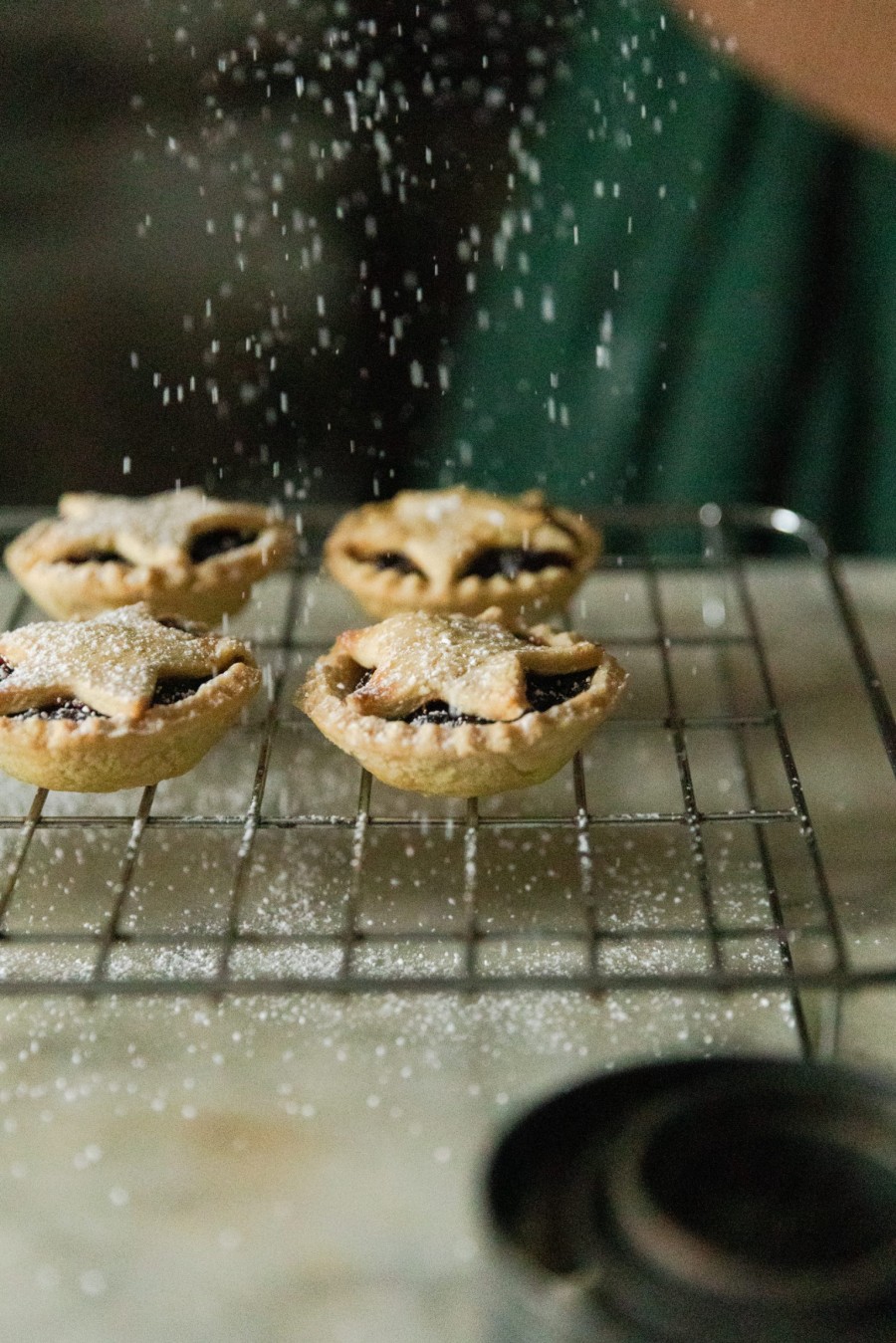
These vegan mince pies (Madeleine Olivia) are super-simple to make, and require no store-bought pastry. Just mix chilled palm-oil-free vegan block butter with flour, then add salt and water to make a chilled dough that you roll into pastry. Then just fill the cups with ready-made mincemeat, bake and dust with icing sugar.
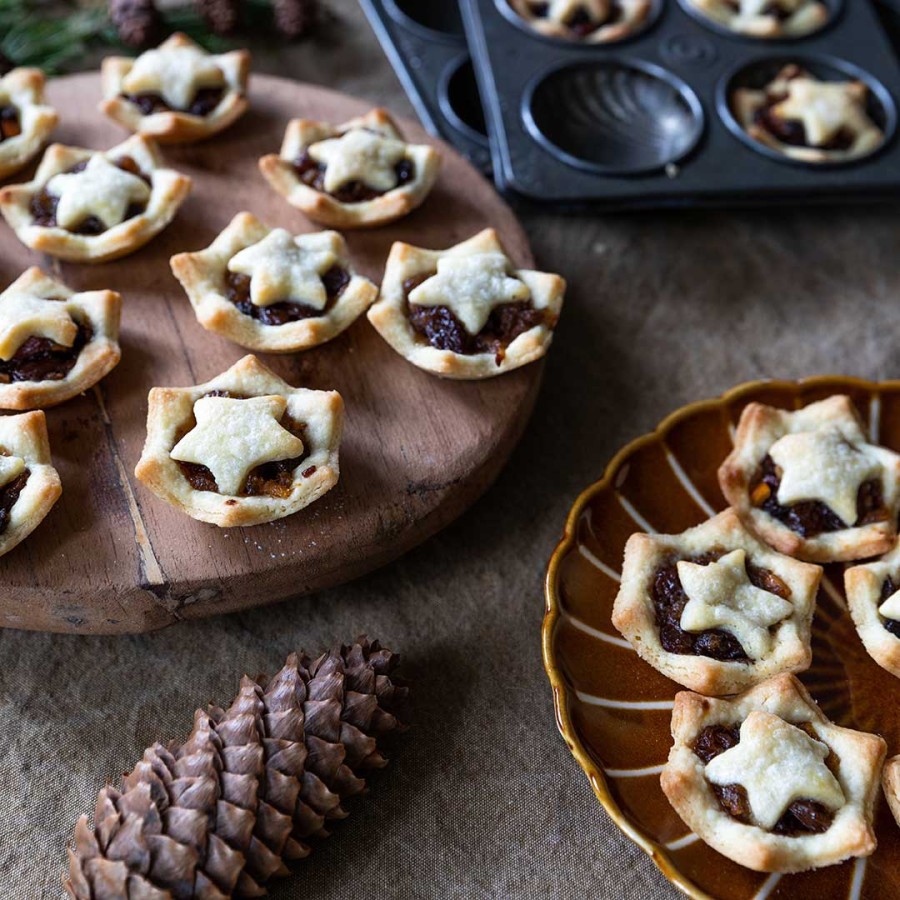
Spelt Mince Pies (Doves Farm) use an ancient flour that is easier to digest than white flour, and has a mild nutty flavour.
These use a simple homemade mincemeat (grated apple and orange rind, dried fruit, brown sugar and mixed spice). Homemade mincemeat must be poured into sterilised jars.
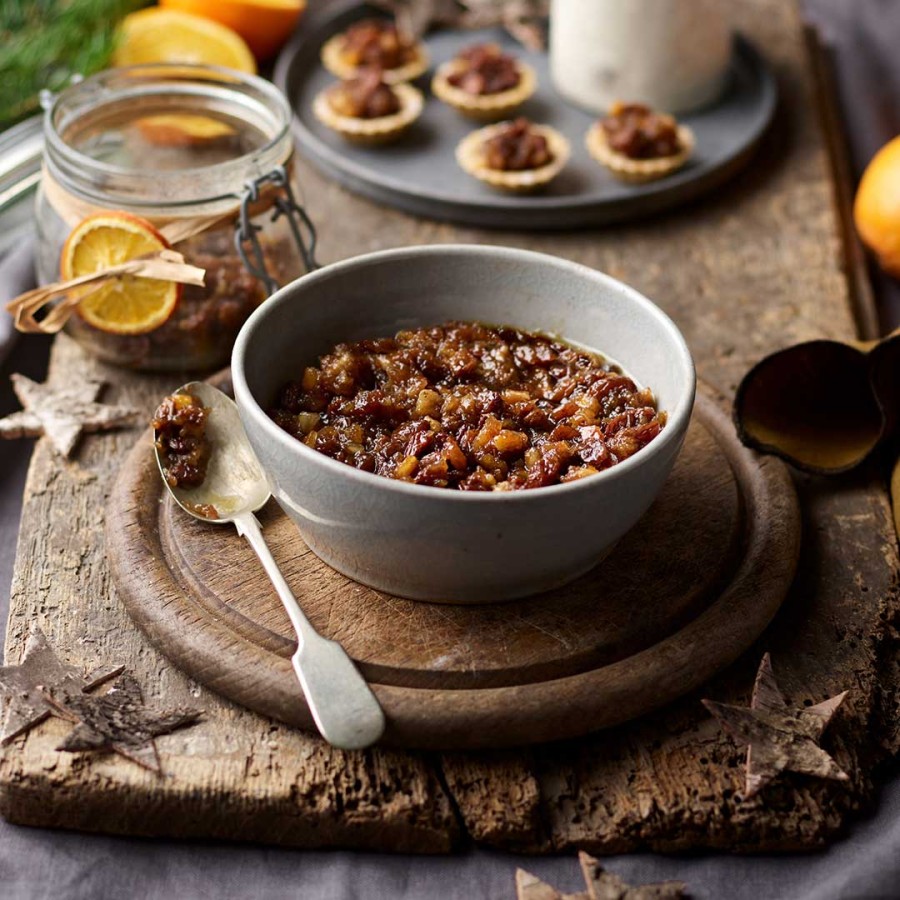
If this is too much of a faff, then just buy readymade. Look in indie health shops for Authentic Bread Company’s Organic Mincemeat, handmade to a traditional recipe, using Herefordshire apples soaked in cognac.
Easy Vegan Christmas is a book of around 80 simple recipes, by Katy Beskow, packed with festive recipes including mushroom thyme Wellington, sage and onion chestnut rolls, roasted pears with red onion, mulled wine and mince pie Danish pastries.
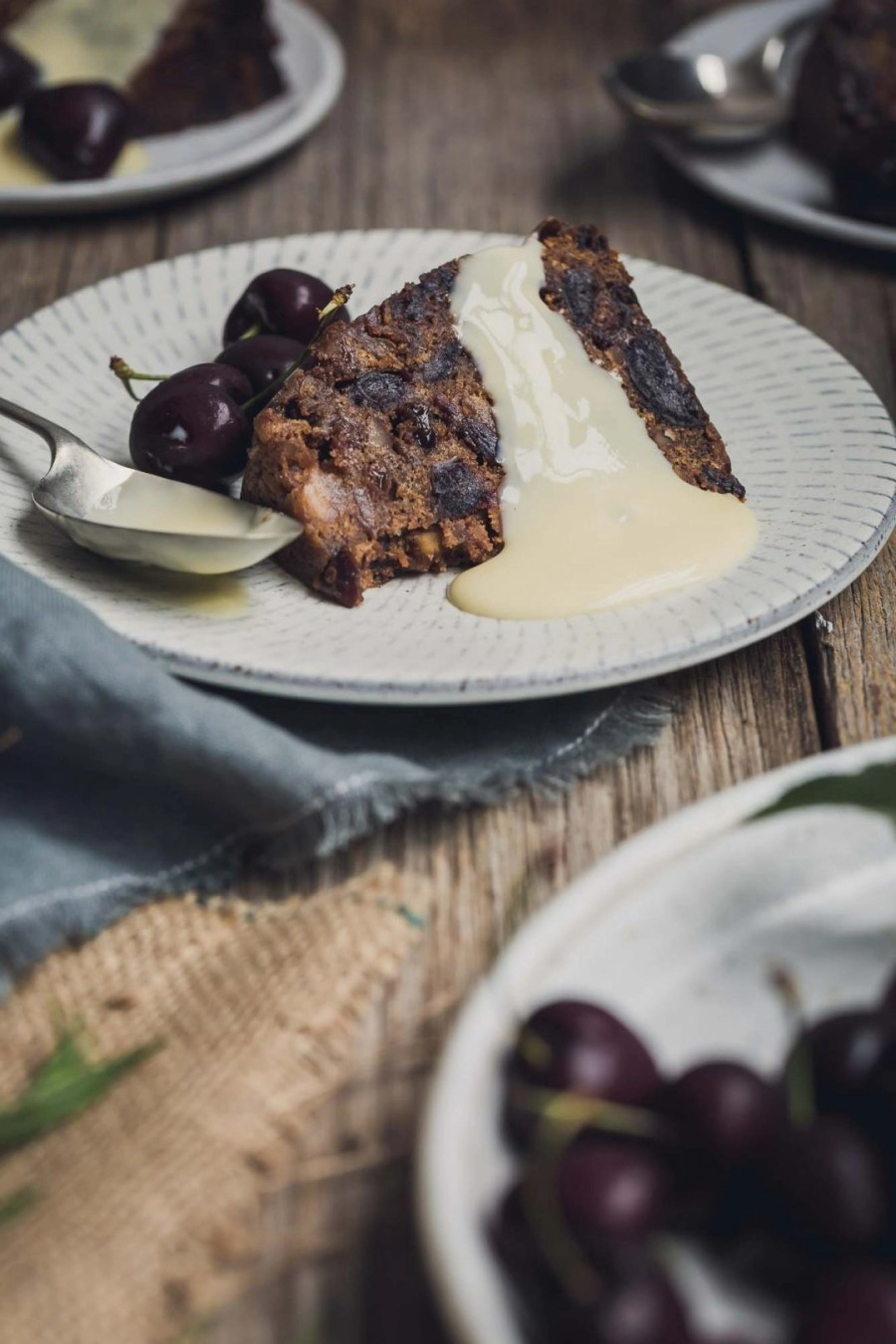
Christmas pudding is one of England’s favourite desserts, and is also enjoyed throughout the year, not just during the festive season. This Christmas pudding (My Goodness Kitchen) contains medjool dates, golden sultanas, dried cranberries and brandy.
Keep dried fruits, nutmeg, citrus, chocolate and fresh dough away from pets. Read more on food safety for people and pets (also read about pet safety at Christmas).
Bin citrus scraps, as acids could harm compost creatures.

Millions of people use candles, whether it’s for a romantic meal, or at Christmas time. But many candles contain chemicals, artificial fragrances and produce smoke that is not healthy or safe. Never leave candles unattended, and use a candle snuffer (not your breath) to blow them out).
You do not need candles, there are other ways to set the mood. Soft lighting from a lamp can give a gentle glow. Playing soft music will help people relax. A warm blanket and comfy pillows on the sofa can make people feel at home.
Important Candle Safety Tips
- Use battery-operated candles for a safer effect.
- Never burn candles near babies or pets (air rooms before allowing them back in). Keep reed diffusers and pot pourri away from pets. Never burn citronella candles (even outside) near pets. Read more on keeping pets safe at Christmas.
- Put candles on a flat, solid surface. Do not put them near anything flammable (curtains, paper etc). Never leave lit candles (use a candle snuffer to put them out before you leave the room).
- Trim the wick before lighting. If too long, the flame could grow too tall.
- Use stable candle holders that collect wax, without spills.
- Keep candles away from cold drafts.
- Place multiple candles at least 10 centimetres above.
Choose Soot-Free Candles
Soy or coconut candles are soot-free (so safer than oil-based paraffin candles). Good brands are scent-free or use real essential oils (not near babies or pets or during pregnancy/nursing). Octo Candles are made with real essential oils (not artificial fragrance), and hand-poured in glass jars.
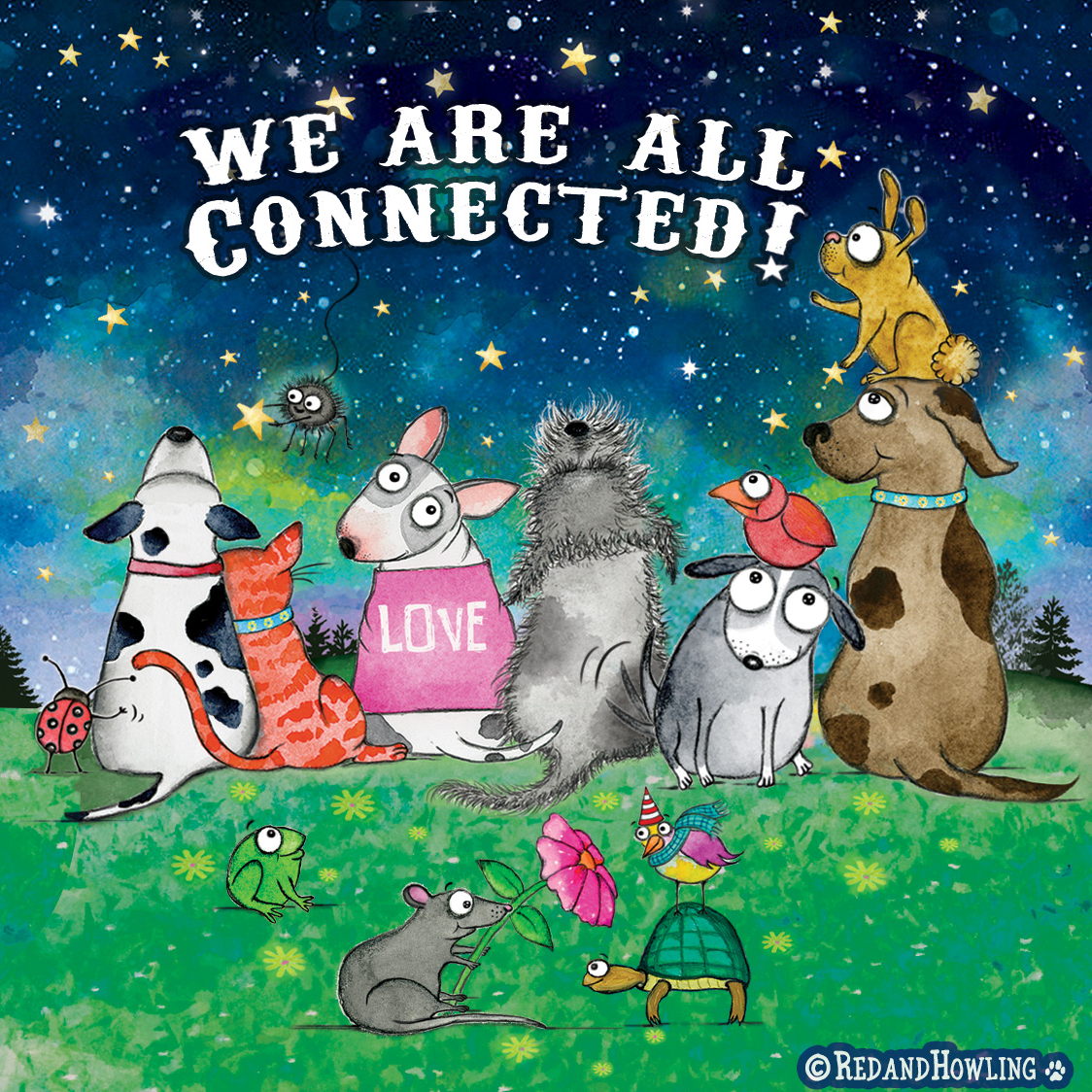
As much as we love decking the halls, Christmas brings a long list of household hazards for pets. With new sounds, scents, and colours filling every room, animals can get themselves into trouble without warning.
Keeping your home pet-proofed helps the whole family relax and enjoy every moment. Here are some simple ways to keep your space truly pet-friendly through the holidays.
With visitors coming and going, doors get left open and pets may slip out. Keep animals in another room when guests (or posties) arrive or leave. Make sure tags are up to date. Microchipping gives peace of mind, to help find lost pets.
Secure the Tree and Decorations
Christmas trees draw both pets and people in with their sparkle. Unfortunately, excited cats and wagging dog tails love to topple them over.
- Pick a sturdy tree with a strong base so it does not tip.
- If you use a real tree, tie the trunk to a wall or ceiling hook, to keep it steady.
- Place all breakable or sharp ornaments, tinsel, glitter and baubles high above paw or nose height (use the top half of the tree only). You can now buy recycled paper tinsel.
- Always sweep up fallen pine needles or bits of plastic so pets do not chew or swallow them. Even small needles can upset a dog or cat’s stomach, or worse, cause a blockage.
- Avoid snow globes, most contain pet-lethal antifreeze.
- Avoid facing indoor foliage to gardens, to help stop birds flying into windows
Decorating the tree is a highlight, but safety comes first. Make it shine from a distance and skip edible decorations altogether.
Keep Pets Away from Toxic Plants
Plants and greenery are festive but not always safe. The following are best kept far from paws and whiskers:
- Holly, mistletoe, poinsettias, lilies, and festive wreaths (fresh or scented) can cause stomach upset, drooling, or worse if pets chew on leaves or berries.
- If you buy flowers for the table, ask for pet-safe bouquets like roses.
- Don’t sent plantable cards to homes with pets, as most contain toxic wildflowers, when planted in gardens.
Keep Toxic Foods Away from Pets
Festive foods look and smell delicious to pets, but many are dangerous. Chocolate, mince pies, Christmas pudding, fruit cake, nuts, and anything sweet with xylitol, dried fruit or alcohol can be toxic if eaten. Read more on food safety for people and pets.
Keep snacks and treats out of reach:
- Store sweets, cakes, and chocolates in sealed containers or locked cupboards.
- Never leave bowls of nibbles or gift chocolates unattended on low tables.
- Pick up and throw away any chocolate wrappers straight away; even sniffing them can tempt curious pets.
Foods to keep away from pets include:
- Cooked bones (can choke)
- Chocolate (including white chocolate) & Caffeine
- Raw Eggs & Fish (salmon has a fatal parasite)
- Alliums (garlic, onion, shallots, leeks, chives)
- All Citrus Fruits & Dried Fruits
- Mushrooms & Avocado
- Fruit Pips & Seeds (contain natural cyanide)
- Faux Meats (inc. jackfruit)
- Raw Bread Dough (expands in the stomach)
- Corn-on-the-Cob (choking hazard)
- Spices (esp. nutmeg & mace)
- Most Nuts (esp. macadamia) & Seeds
- Xylitol (a sweetener, if used)
Keep Pets Away from Fairy Lights and Candles
Twinkling lights and scented candles set the mood, but the wires, flames and scents can put pets at risk.
- Use LED fairy lights that give off little heat. Pets are much less likely to burn themselves if they brush past.
- Tape down any trailing cords or string them high up along the walls or mantle.
- If you love an open fire or candlelight, use battery-operated candles for a safer effect (store safely and recycle, they are choking/fire hazards).
- Place any real candles on high, stable surfaces where tails, whiskers, or fur cannot reach. Even a playful swipe could knock a candle over.
- Do not forget to switch off lights when you leave the house. Chewing a wire or knocking a candle can happen in seconds.
- Fireplaces should have secure screens.
Control Noise and Noisy Visitors!

Extra people, noisy toys, and fireworks can put pets on edge or send them hiding.
- Keep firecrackers, crackers, and party poppers to a minimum. Choose zero waste Christmas crackers with low-noise or no bangs.
- Give your pet a quiet space such as a bedroom or crate with a soft bed, water, and their favourite toy if they need a break.
- Avoid dressing up pets in jumpers or antlers or fancy dress (could choke or over-heat).
- Remind guests to avoid shouting, chasing, or sudden noises. Loud sounds can easily scare animals and might make them bolt out an open door. Read our post on reasons to avoid fireworks.
A bit of planning helps the whole family (furry friends included) unwind during party time. Keep routines as normal as possible, and your pet will feel much safer.
Travel and Outdoor Safety
Bringing pets along on trips is part of many family celebrations, but journeys need planning if you want them to go smoothly. Pets should always travel safely, both to protect them and to cut down on driver distraction.
- Use a sturdy crate or pet seatbelt: A crate is best for cats or small dogs, giving them a cosy place to settle down for the ride. Quality seatbelt harnesses are sold for larger dogs, keeping them safe in the back seat.
- Keep windows only partially open: It’s tempting to let your dog stick their head out, but even on cold days, a jump or sudden stop is a real risk. Keep windows closed far enough that heads and paws stay inside.
- Never leave pets in a car, even briefly: Pets can get too hot or cold in extreme temperatures, even with the window cracked open. Take them with you, or leave them with someone you trust at home.
Don’t let dogs run immediately after long car drives (like running after food or gulping water, this could cause bloat, a serious medical emergency),
While snowy walks can make for great photos, winter weather creates hidden dangers for pets. Icy paths and deep snow are rough on paws and joints, especially for older pets or tiny breeds.
- Slippery surfaces: Ice can turn even your own front step into a slide. Watch for slick spots and walk slowly when you head out, both for your safety and your pet’s.
- Clear paths after a snowfall: Shovel a safe route for your pet to use for toilet trips in the garden. This reduces the chance of slips and helps pets who are unsure about deep snow.
- Avoid eating snow: Snow may look harmless but can hide roadside chemicals such as antifreeze or salt which are highly toxic. Always steer pets away from slushy puddles or roadside piles.
- It’s good to rinse paws after snowy walks, to remove rock salt which can burn inside at higher temperatures. EcoGrit recommends safer alternatives.
Experts suggest to use warm water around 37 ° Celsius. Pop a mat or tub in the bath/sink, to avoid wobbles (walk-in showers, paddling pools or outdoors may be easier for large secured dogs).
Both antifreeze and road salt are common in winter but can be dangerous (even deadly) for pets if eaten or licked from paws.
- Keep antifreeze well away from pets: Store bottles in locked cupboards or sheds. Even a small sip can be fatal, as it tastes sweet but is highly poisonous.
- Clean up spills straight away: If you spot a leak from your car, wash it away and keep pets out of the area until it’s dry.
- Road salt sticks to paws: Salt can cause sore pads and dry, cracked skin. More worryingly, pets may try to lick it off, which puts them at risk of poisoning.
Getting into the habit of wiping your pet’s paws after every walk is the best way to protect them. Use a damp towel or pet wipe to gently clean between their toes. If your pet licks or chews at their paws after a walk, check for redness and rinse their feet in lukewarm water.
Create a First Aid Kit for Pets

A simple pet first-aid kit gives you peace of mind and helps you respond faster if there is a problem. Don’t wait until something goes wrong to put it together.
Here’s what to include in a basic pet first-aid kit:
- Sterile gauze pads (for wounds)
- Tweezers (to remove splinters or glass)
- Saline solution (to flush out eyes or clean cuts)
- Non-stick bandages or vet wrap
- Blunt-ended scissors
- Digital thermometer
- Disposable gloves
- Tick remover
- An animal-safe wound wash (from vets or pet shops)
Keep this kit somewhere central—near the kitchen or living room—where you spend lots of time. Make sure everyone in the family knows where it is.
Never use human antiseptic. Check your kit every few months. Replace anything that is out of date or missing.
When to Call the Vet
- Vomits more than once or has diarrhoea that won’t stop
- Develops tremors or shakes for no reason
- Becomes very sleepy or hard to wake
- Struggles to breathe, wheezes, or coughs uncontrollably
- Collapses, has a fit, or cannot stand up
Keep the vet’s number on your mobile and posted in the kitchen. Read our post on finding free and affordable vet care.
The story of English Christmas carols stretches back hundreds of years. Their journey weaves together sacred hymns, homespun tunes, and a fresh spark during the Victorian age. Today, when we hear favourites like “God Rest Ye Merry Gentlemen” or “The First Noel”, we are joining a tradition shaped by monks, minstrels, songwriters, and families around the fire.
Read our post on keeping pets safe at Christmas (foods, plants including holly and mistletoe, and other hazards).
Medieval Hymns and Early Folk Tunes
In medieval times, most Christmas songs were church hymns sung in Latin. Monks and choirs would fill stone cathedrals with serious, chant-like melodies. These hymns, while moving, felt distant to many who didn’t understand Latin.
As time went on, some of these songs were translated into English, making them easier to sing outside church walls. Ordinary people began to add folk rhythms and catchy refrains to the mix.
This shift meant that Christian stories blended with everyday feelings and music. The early “carol” was more of a dance-tune, with people sometimes singing in a circle, hand in hand.
By the late Middle Ages, a handful of carols started to sound familiar. Songs like “The First Noel” had their roots in the folk style, combining simple English lyrics with a melody that was easy to remember.
Carols started to leave the church and show up in homes, markets, and even pubs. The joy of Christmas reached past the altar into streets and kitchens.
Victorian Revival and Publication
Centuries later, the Victorian age breathed new life into carol singing. As Christmas grew in importance on the social calendar, traditions that had faded were polished and brought back into homes and town squares.
Two names stand out here: Henry Ramsden Bramley and John Stainer. In 1871, they published “Christmas Carols, New and Old”, a book that brought together familiar carols with new arrangements. For the first time, families and choirs had a go-to collection in print, sparking a wave of singing from drawing rooms to country parishes.
Stainer’s arrangement of “God Rest Ye Merry Gentlemen” and Bramley’s verse for “The First Noel” captured the spirit of the age, blending rich harmony with folk charm.
Victorian collectors also travelled the countryside, notebook in hand, preserving old tunes sung by farmers, tradesmen, and schoolchildren. Many of these songs, such as “O Come, All Ye Faithful”, were stitched together from a mix of church, folk, and European influences.
“O Holy Night” and “O Come All Ye Faithful”
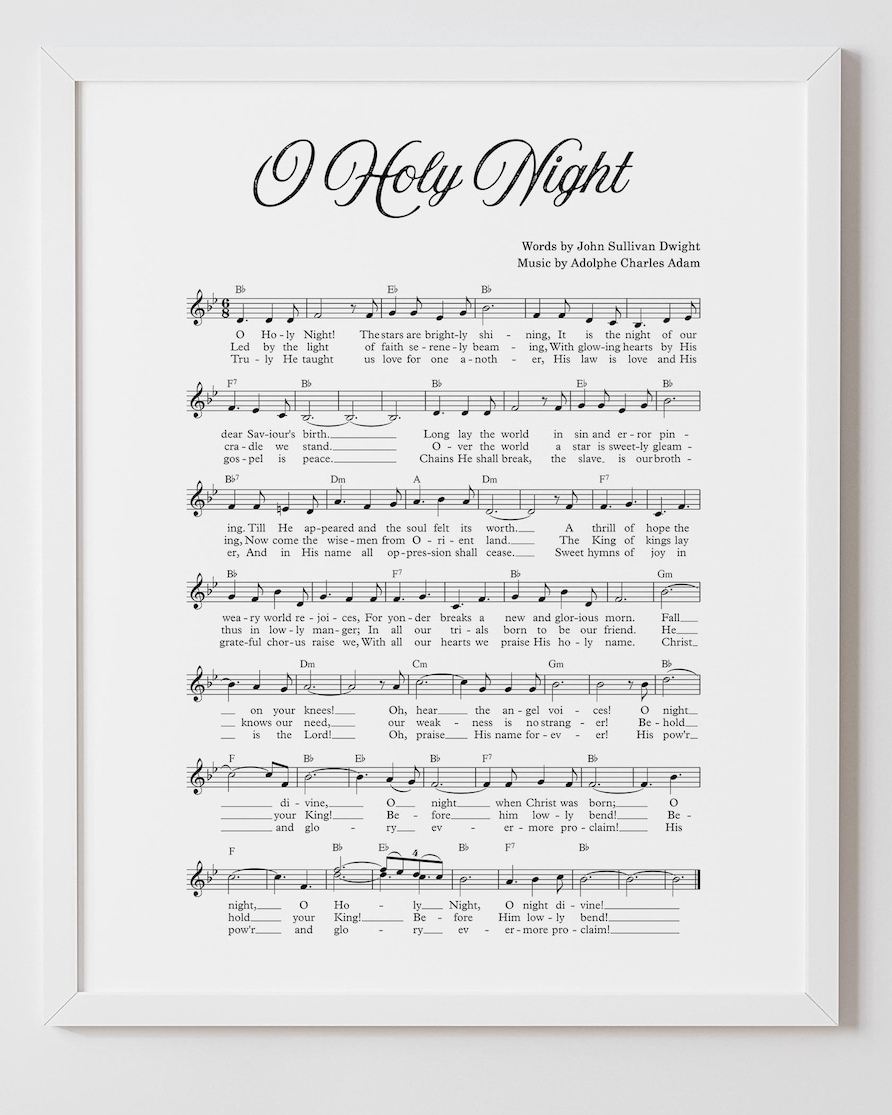
- “O Holy Night“ is known for its dramatic melody and sweeping chorus, which gives it a special place at big church services. Soloists often love it for the chance to show off their voice, but the message is simple enough for everyone to join in. It usually appears during late-night or candlelit services, adding a sense of awe to the moment.
- “O Come All Ye Faithful” carries a punchy tune that invites everyone to sing along. The “O come, let us adore Him” chorus feels like an open invitation. You’ll hear it on radio, in carol concerts, and every Christmas Eve broadcast from churches large and small.
“Hark! The Herald Angels Sing” and “The First Noel”
- “Hark! The Herald Angels Sing” sounds grand enough for a cathedral but familiar enough for a classroom. Its memorable opening line gets everyone started, even if they don’t know all the verses. It’s often picked for carol concerts because it’s rousing but not too tricky.
- “The First Noel” has a gentle, folksy feel. Its story and simple chorus mean people of any age can join in. No matter the setting—church, shopping centre, or care home—this carol brings people together with its hopeful message.
“Silent Night”, “Away in a Manger”, and “Once in Royal David’s City”
- “Silent Night” is a favourite at Midnight Mass. Its slow pace and calming tune help create a peaceful mood. The story of a silent, holy night connects with a sense of calm at the end of a busy December.
- “Away in a Manger” is a staple for young children. Its lullaby feel and simple words mean it’s often the first carol kids learn at school or nursery. Choirs and parents appreciate its sweetness and gentle flow.
- “Once in Royal David’s City” starts many traditional services, especially the well-known King’s College, Cambridge broadcast. A boy’s solo often opens the song, sending shivers through the audience as lights dim and candles flicker.
“Good King Wenceslas” and “God Rest Ye Merry Gentlemen”
Folk stories and catchy refrains bring these carols to life in settings from cosy pubs to lively street corners.
- “Good King Wenceslas” tells a story that’s easy to follow and fun to act out. Pub singalongs and folk festivals bring it out for its robust tune and tale of kindness during winter. It feels folksy and down-to-earth.
- “God Rest Ye Merry Gentlemen” has a steady, driving rhythm that stands out among gentler carols. Folk bands love to rearrange it, and choirs enjoy how the harmonies fit together. The lyrics speak of comfort and joy, making it feel traditional but never tired.
“Ding Dong Merrily on High” and “In the Bleak Midwinter”
Not every carol follows the same pattern. These two stand out for their quirky touches and emotional depth, making them favourites for choirs and music directors.
- “Ding Dong Merrily on High” bounces along with its lively “Gloria” refrain. Its skipping melody attracts both young singers and experienced choirs, turning a carol concert into a celebration. The cheerful rhythm never fails to brighten up a room.
- “In the Bleak Midwinter” goes the other way, drawing listeners in with poetic words and a haunting tune. It’s favoured by serious choirs and often chosen for reflective moments at services. The lyrics, based on Christina Rossetti’s poem, paint a vivid winter scene that many find deeply moving.
Top‑Streaming Carols Today
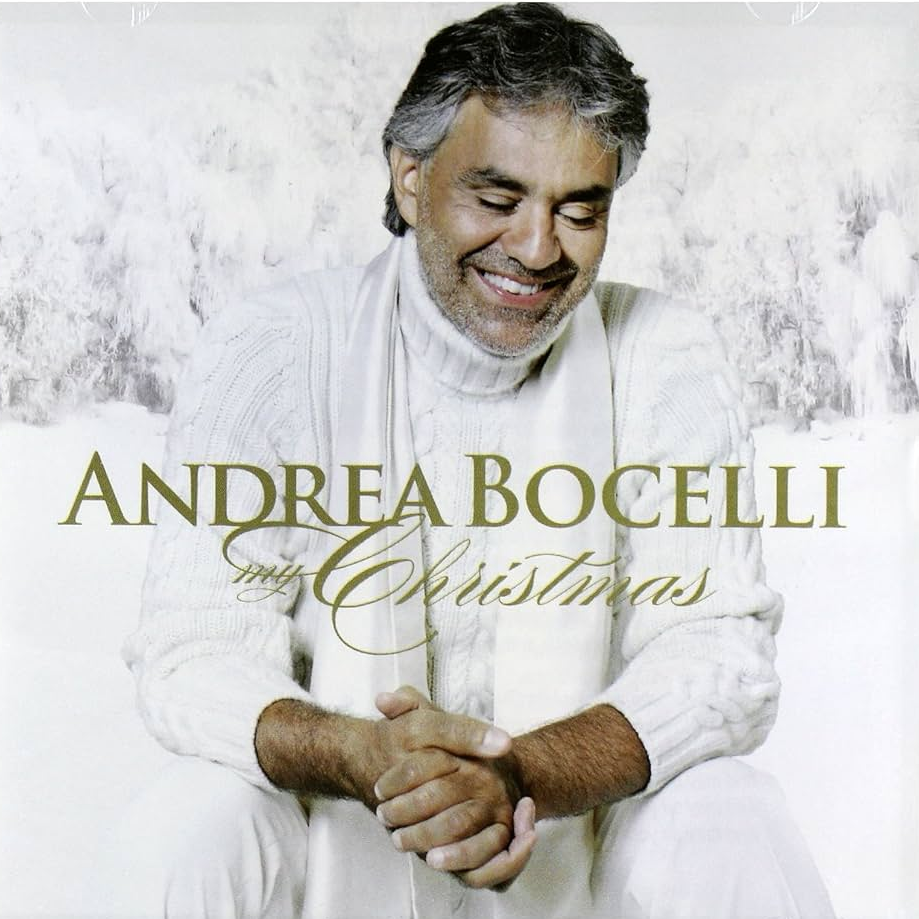
Here are the five most streamed carols in England in recent years.
- Silent Night (King’s College Choir)
- O Holy Night (Andrea Bocelli)
- Fairytale of New York (The Pogues & Kirsty MacColl)
- O Come All Ye Faithful (St Paul’s Cathedral Choir)
- All I Want for Christmas is You (Maria Carey)
BBC’s Christmas Eve broadcasts, including the King’s College “Nine Lessons and Carols” service, bring millions together to hear ancient carols each year. The solo opening of “Once in Royal David’s City” reliably tops streaming minutes right after the airing, with listeners keen to hear it again or share it with others.
Ever Read the Book ‘A Christmas Carol?’

A Christmas Carol remains one of the most read books of Charles Dickens, who often focused on how the poor suffered in society (for non-literary peeps, he wrote the book that inspired the musical Oliver!)
His book began as a ‘social manifesto’. And although it did not make him much money at first, soon after publication real-life scrooges began to make charitable donations.
Charles himself had a heavy childhood, being sent to work age 12, due to his father (who raised him in Portsmouth) being so in debt that he was actually sent to prison.
This of course gave Charles good fodder to try to inspire change for the downtrodden, through his written work. Although he eventually became a rich man, he never forgot his roots and the poverty he endured.
Later on in life, he founded a refuge for ‘fallen women’ (which basically meant prostitutes, and any other women who had been disowned by their families or imprisoned for living on the streets).
There the women would learn to read and write, and usually then emigrate to start new lives. He personally interviewed each women before admittance, insisting that each one was to ‘be treated with the greatest kindness’.
A Christmas Carol is the story of miserly Ebenezer Scrooge, who won’t even pay money for coals to keep cold people warm (sound familiar in the present political climate?)
Always offering excuses, one night he sees a ghost of his dead partner, who basically persuades him (mostly through fear) to change his ways.
Ebenezer then meets crippled Tiny Tim (a kind and happy boy) and is inspired by all the happiness around him, of those less fortunate than himself. He then decides to change his ways, and finds peace for the first time.
A Creativity Retelling of the Nativity

One Wise Sheep is a creative retelling of the Christmas story, from the perspective of one wise sheep! With an undercurrent message to young readers on forgiving quarrels.
Tonight, the sheep can’t sleep. The pasture is floodlit by a strange new star, and their shepherds have disappeared to visit a new-born child.
So the sheep set off to find their shepherds and see this child too, the quarrelsome flock pulling together to find their shepherds and the child. The German author wrote this book, after noticing that when the shepherds visit Jesus, no mention is made of the sheep!
While Nativity Plays tell the story of the birth of Jesus, Passion plays tell the story of the Easter resurrection. These are usually performed in the open air, with spectators following the actors.
The wonderful French-Canadian film Jesus of Montreal is based on a group of actors performing a Passion Play.
Moo Free Vegan Advent Calendars
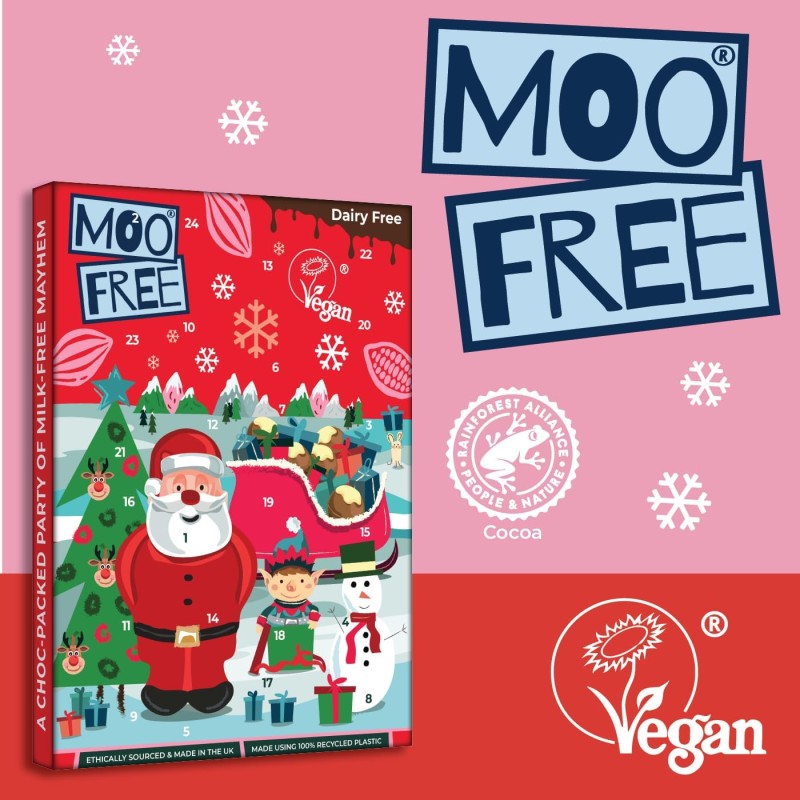
Advent calendars are a great example of the complete consumerist waste evident during the festive season. Advent is the celebration for Christians of the birth of Christ, which for over 1600 years has been celebrated beginning on the 4th Sunday prior to Christmas.
But rather than buying factory-farmed dairy chocolates with palm oil and refined sugar in plastic calendars, choose zero-waste and kinder versions.
Moo Free Chocolate offers Christmas vegan choccy gifts, all in easy-to-recycle packaging. Made with rice milk, these all taste like dairy milk, though they’re not!
Keep chocolate away from pets. You can recycle packaging at supermarket bag bins, if your kerbside does not recycle.

The way we celebrate Christmas shapes our homes, daily life, and the planet. Traditional Christmas trees often leave a hefty carbon footprint, from harvesting real pines to disposing of plastic trees that won’t break down for centuries.
Keep pets away from Christmas trees due to pine needles, tinsel & decorations. Secure the tree well to stop it tipping over. Use non-toxic ornaments and don’t leave food-based decorations within reach.
Holly and mistletoe are also unsafe near animal friends. Read more on keeping pets safe at Christmas.
Real Christmas Trees from Local Farms
Real Christmas trees are biodegradable and can be composted if you plan ahead. Sourcing from a local tree farm cuts down transport emissions and supports nearby growers.
Many farms plant a new tree for each one cut. After the holidays, check if your council collects trees for chipping into mulch. Avoid trees sprayed with heavy chemicals, which can harm pets and soil.
Rent a Christmas Tree
Renting a Christmas tree allows you to enjoy the beauty and scent of a real tree without commitment. One manager of a Christmas tree rental company says that he has up to 300 families renting the same trees each year – one family has even named their tree Colin (?)
It’s important to water daily and use the right stand and keep it away from heat sources like fire, radiators and direct sunlight. Also keep an eye out for shedding needles, you may need to water more or change position.
Renting a live potted tree keeps roots intact, so the tree can go back to grow another year. Local businesses deliver and collect potted Christmas trees in December. You get a living, healthy tree, then return it to the nursery for replanting.
Eco-Friendly Artificial Christmas Trees
Most artificial trees are made from polyvinyl chloride (PVC) and metals. The production process for these materials creates significant carbon emissions. Plus, once they’re past their prime, these trees often end up in landfills where they don’t biodegrade.
This raises questions about their long-term environmental impact, despite individual longevity. Oncor Christmas trees are made with recycled PVC. Designed to last 30 years, they include a metal stand, and are sent in recycled boxes.
Try Cardboard Christmas Trees

Cardboard Christmas is a delightful company that makes Christmas trees out of recycled cardboard. Forget the hassle of spruce needles, you now can enjoy biodegradable beauty year after year and reduced carbon footprint, with no plastic waste.
These are easy to assemble and dismantle, with minimal energy to make. Keep away from open flames, candles and tree lights.

The trees mostly contain just 6 pieces to slot together. On twelfth night, just disassemble and store flat under the bed. Some are Scandinavian-inspired (Estonia is next door to Sweden) and offered in dark green colours.
Christmas Trees (from reclaimed wood)

Welcome the Woodshop (US creates eco-friendly Christmas trees, a one-time purchase made from reclaimed chestnut wood, from dismantled barns.
Go Without a Christmas Tree
Sometimes, the greenest choice is none at all. This minimal approach fits smaller spaces, pet-friendly homes, and families looking to save money. You spend more time together and less on buying or discarding another tree.
Where to Find Zero Waste Christmas Decorations

Rather than contribute to the single-use plastic mountain, here are some better ideas:
East End Press is a one-woman empire in Glasgow, which makes lovely creative garlands and decorations made from paper and upcycled cotton waste. Keep away from flammables (don’t use fairy lights with paper or cotton decorations).
Eco Tinsel (made from recycled paper)

Eco Tinsel offers garlands made from 100% recycled paper over PVC tinsel that never breaks down. Handcrafted to high standards with 1000 precision handmade cuts, each garland is 180cm in length in wide strips to create super-bushy decorations in various colours that have rings to make them easy to hang.
Not to use near Christmas lights, keep away from fire and flames.
Recycled Paper Christmas Baubles

These recycled paper Christmas baubles are ideal alternatives to disposable plastic versions. Handmade in India (providing secure employment), it makes a classic decoration that is lightweight and easy to hang.
Made from recycled brown Kraft paper and paper pulp, it’s hand-painted with a stylish snowflake design, for those who prefer a more natural look. Choose from gold, silver and white.
Most Christmas decorations are made from plastic and glitter, which end up in landfills nationwide on Boxing Day. Also never use snow globes near pets or young children, as they contain antifreeze, which can be lethal if they smash.

Safer Christmas Lights
Throw away dodgy Christmas fairy lights. Check smoke alarms before use (have a fire blanket and extinguisher nearby).
Choose low-voltage LED lights that are cool to touch, last longer and save up to 90% on energy use. Ensure air circulates around the transformer, and keep away from carpets and furnishings. Never overload sockets, and turn lights off when you leave the house or go to sleep.
If using outside Christmas lights, use an RCD (residual current deice) to switch lights off, in case of a fault. Outdoor Christmas lights cause light pollution to birds and wildlife, and can also cause circuit cut-offs to neighbouring houses.
Avoid Outdoor Light Pollution
Outdoor holiday lighting can unsettle birds and other wildlife, especially if strung through trees or kept on all night. If you decorate outside, use warm white bulbs and keep lights low to the ground.
Turn off outdoor displays by bedtime to give birds and bats a break from the glow. Balanced lighting helps wild creatures navigate, keeps your electricity bill low, and still brings joy to your home.

Keep This Cracker is a wonderful brand of Christmas crackers. Made with pet-friendly, low-noise snaps (so don’t terrify animal friends or children), they can then be reused the next time.
Keep Christmas crackers away from small children and pets, due to choking hazards. For cracker gifts (included or homemade), keep toxic foods and plants away from animal friends – read more on keeping pets safe at Christmas.

These crackers work like ‘normal crackers’ in that you pull them apart. But rather than binning them, you just use another eco-snap, to use next time.
Flat-packed in sets of six, just fold into shape, to use. And everything is made in the UK. Sold in many colours and designs.

Keep This Cracker reusable crackers are made to last. The sturdy, snap-together design means you can open and refill them every Christmas. No more flimsy cardboard shells that tear apart after one use.
Just swap in new hats, jokes and treats, then click them shut for next time. Their strong build stands up to lots of festive fun, so you’ll have them ready for every Christmas dinner.
Why Switch to Zero Waste Christmas Crackers?
Most Christmas crackers contain small plastic choking hazards and are impossible to recycle, due to different materials (millions are thrown out on Boxing Day), they also scare babies and pets, with their loud cracker bangs. You can fill up these crackers with your own zero waste gifts.
Christmas crackers were invented by British confectioner Thomas Smith, back in 1846. While visiting Paris, he came across a sugared almond wrapped in tissue paper, and thought this would be a nice festive way of eating sweets at Christmas time. By 1860, he had added chemically impregnated paper to the crackers, to make a loud bang.
Originally called ‘bangs of expectation’, he was not to know that his invention would become an environmental nightmare.
Where to Find (Clean!) Cracker Jokes
The fun of reusable Christmas crackers is that you get to fill them with your own jokes. You could always copy the famous joke from the episode of The Good Life:
Why is the ooh-ah bird so-called? Because she lays square eggs!
If you’re stuck, here are a couple we like:
My dog is a genius. I asked him what two minus two was. He said nothing.
My boss told me to have a good day. So I went home.
Embroidered Linen Christmas Crackers
These woodland crackers are made from linen (flax plant) and embroidered with satin thread. In beautiful designs, just fill with your own gifts. Choose mixed or individual designs (robin, reindeer, wreath, tree, holly or mistletoe). Sponge-clean only, not to use as napkins or place mats.
Embroidered linen Christmas crackers look stunning on any table. Fine linen, neat stitching, and festive designs lift your whole setting and show your guests you care about the details. They add a subtle luxury that shop-bought crackers can’t match.
Beautiful Reusable Christmas Crackers
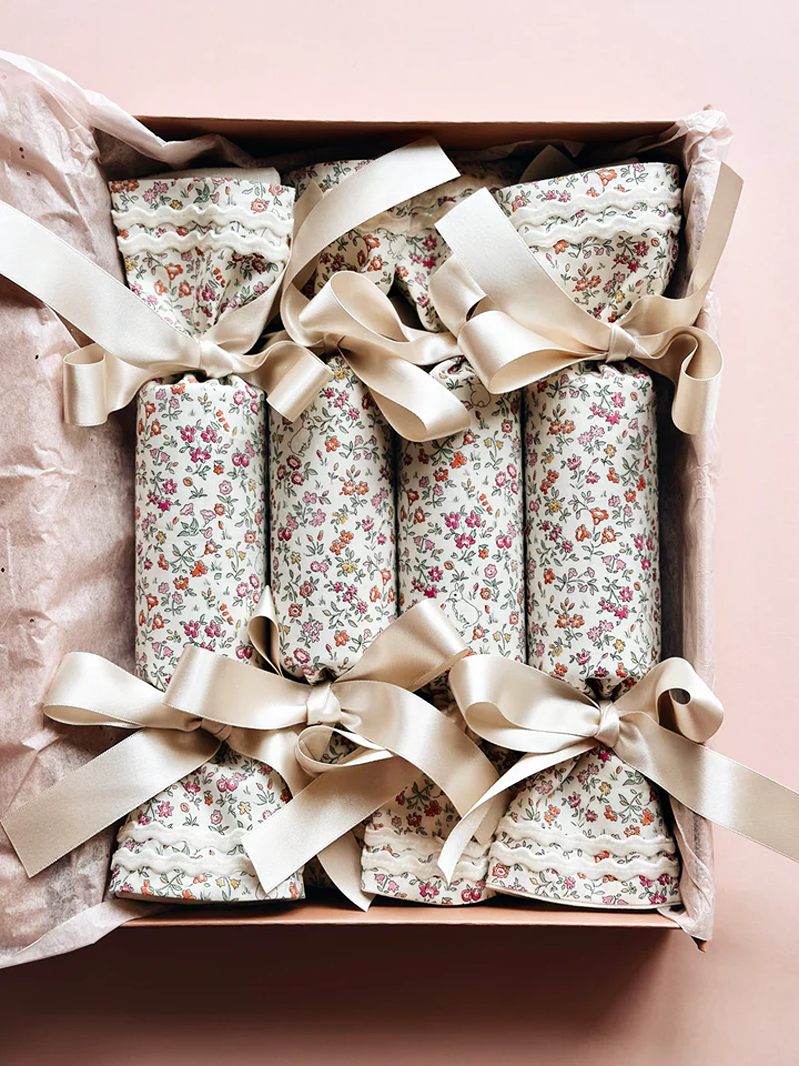
Happy Crackers offer empty reusable linen crackers, which you can fill with your own zero waste gifts. Choose from a lovely selection of designs. A few are silk, but the rest are vegan-friendly.
Reusable crackers may cost a bit more upfront, but you only buy them once. Instead of spending money every year on throwaway options, you keep your set safe for next Christmas.
A Box of Fun Festive Fabric Crackers
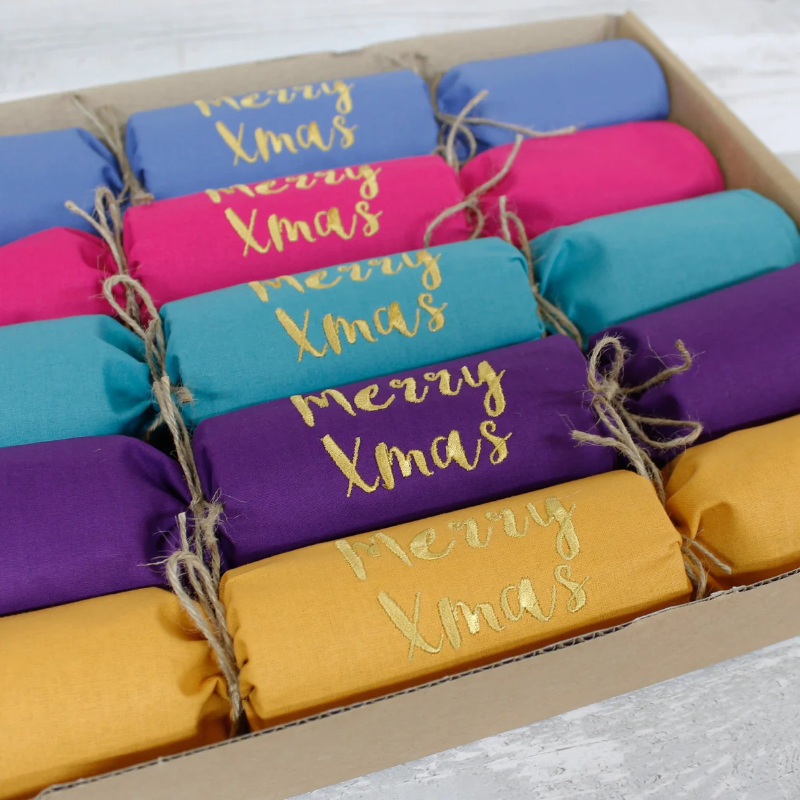
2 Green Monkeys offer nice fabric crackers, fill with your own gifts, then pack away to use again. Sold as single crackers of boxes (bright or traditional dark green and red festive colours), you can optionally embroider names.
No bang – just unroll to reuse as napkins, for dinner!