Simple Swaps to Dry Clothes Naturally
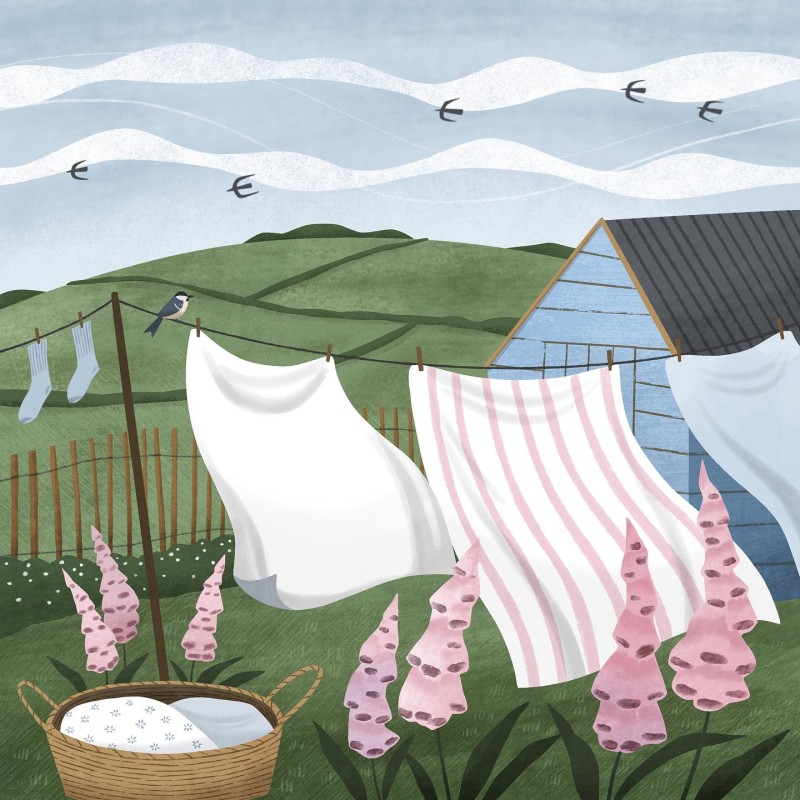
Firstly, read our post on biodegradable laundry detergents! But once your clothes are washed, here are some useful tips and swaps to dry your clothes naturally, whether that’s outside on a washing line, or inside on a heated clothes drier (with safety tips if you use a tumble dryer).
You Don’t Need Fabric Conditioner

Many brands say to use fabric conditioner, to help softer laundry when drying. This is not true. Fabric conditioners are usually full of chemicals and palm oil, and can even increase flammability in tumble driers.
They also are not recommended for washable nappies, feminine care or incontinence pads, as they reduce absorbency. Instead, add half a cup of unscented cleaning vinegar to the dispenser or final rinse cycle.
Bin (don’t rinse) empty fabric conditioner bottles. Take half-full items to toxic waste at the refuse centre.
Tips to Dry Your Clothes Quicker, Naturally
- Use a spin cycle on the washing machine (low-spin to avoid creases).
- Sort out damp if you live with it. A small dehumidifier helps.
- Don’t overfill your machine, as clothes will be more damp.
- Check the Met Office website for the forecast, and try to dry clothes during the sunniest parts of the day (from 10am to 2pm) for quickest drying.
Drying Clothes Outside (on washing lines)
England (despite being rainy) is also pretty windy (and sometimes sunny!) So drying clothes outside is a great way to save money on bills, and use the power of the sun and wind to naturally dry clothes.
Most washing lines are fine, although always fold away rotary washing lines when not in use, to avoid risk of strangulation for people, pets and wildlife (like football nets, curious creatures like foxes could entangle).
If you have a few pounds and someone to fix it, a retractable washing line is nice, as it means it folds flush to the wall when not in use (good for safety, ideal for small spaces, and also means that your garden remains free of a washing line, when not in use, for nicer views).
- Minky retractable clothes line, is designed to prevent sagging.
- High & Dry Portable Washing Line is put together with two tools, in under an hour, and can hold 2 full loads (including sheets and duvet covers), then folds away in seconds. You wheel it to where you want, so you can follow the sun. It costs over £200 but is designed to last a lifetime, and saves money on tumble dryer bills.
Throw out pegs that are broken or with rusty hinges, as these can create permanent marks on your clothing. Instead, opt for one of the following choices:
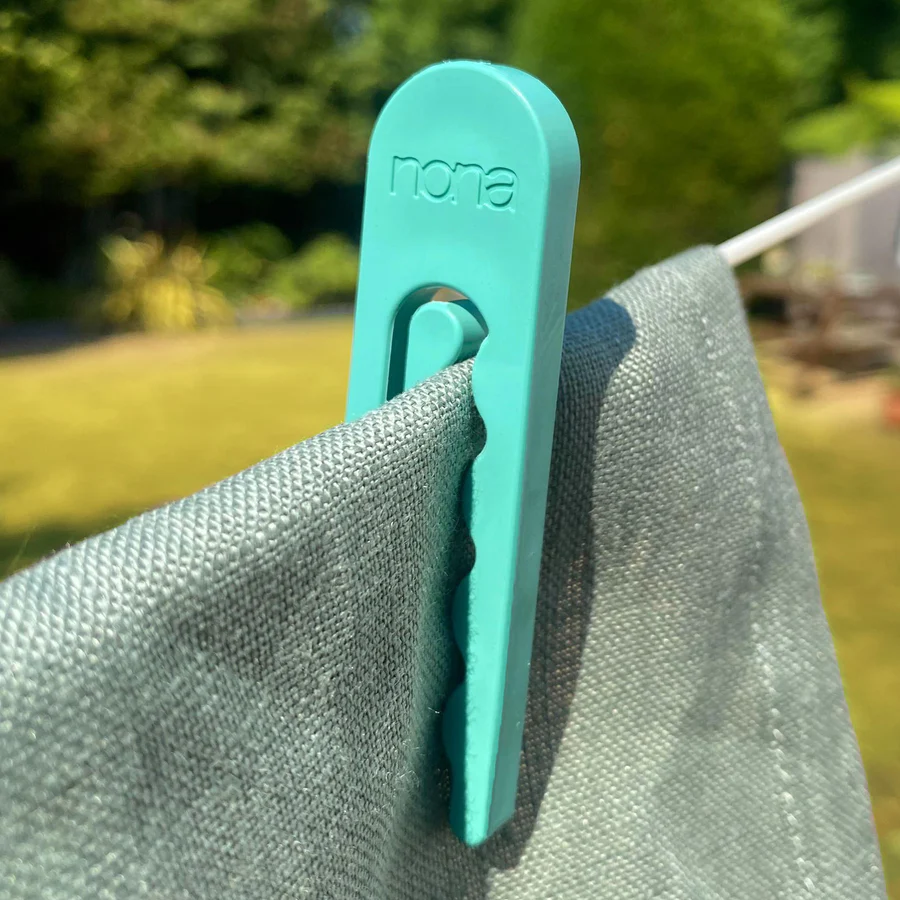
Made by Nona turns ghost fishing waste into strong naturally green clothes pegs, with no springs to snap. These won’t rust, bend or fall off the line in the wind, and are also easy to squeeze, even with cold or wet fingers. The smooth edges won’t snag clothes, and they can firmly hold heavy towels.
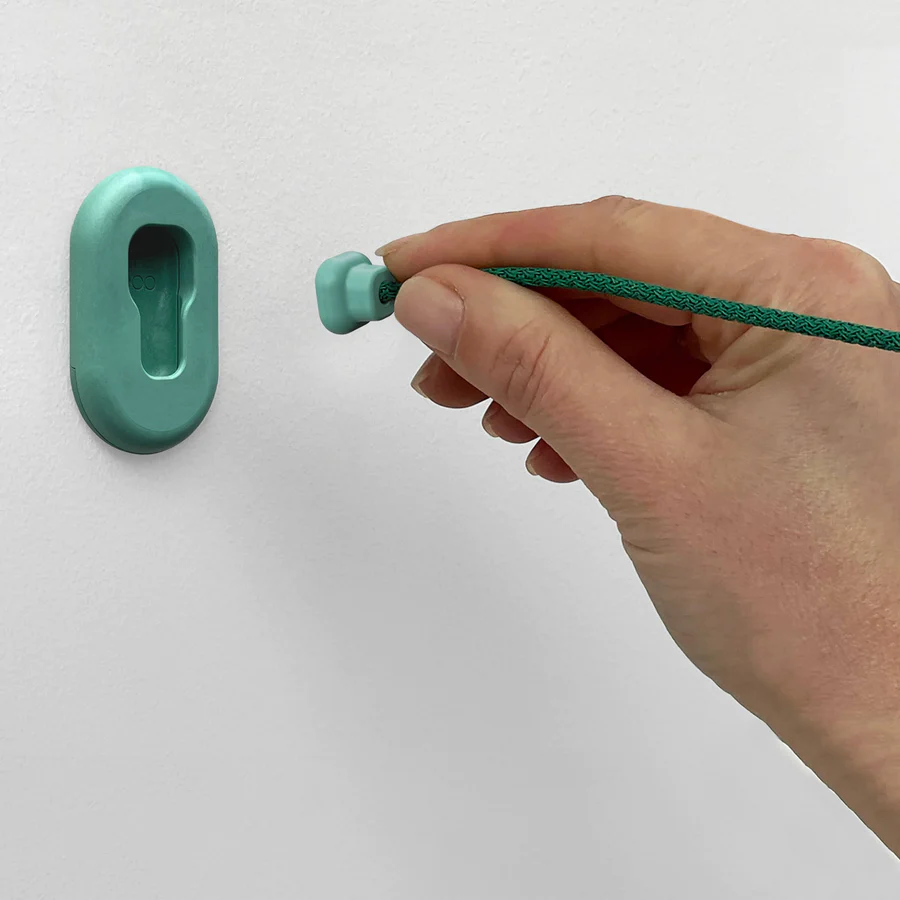
The matching Nona Loop is a washing-line alternative for homes, garages and laundry rooms. The Loop Basic has an optional Loop Return to help turn corners for awkward spaces, with a knitted cord in 12m or 16m lengths.
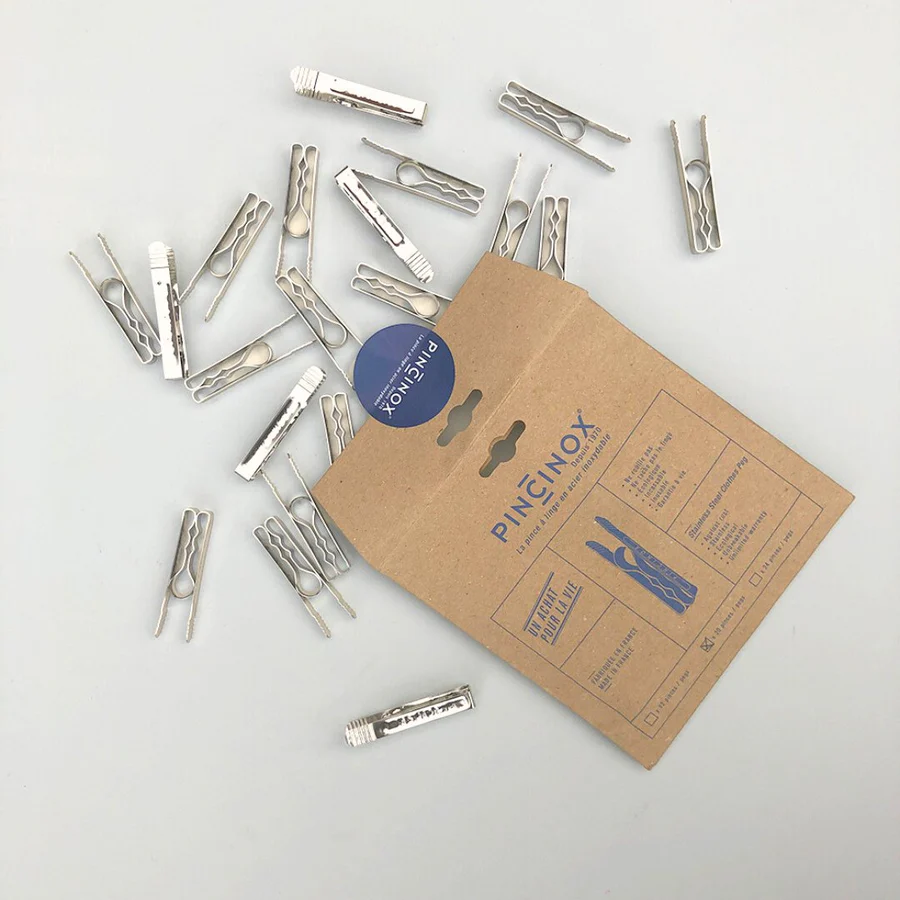
Stainless steel clothes pegs are made in France, designed to last for years as they don’t rust. Made since 1970 by a family company, they are sold in paper packs of 20 or 40. Again they have no joints to snap under pressure, and can easily secure heavy wet blankets. They are also good to seal open bags of frozen peas, seed packets for gardeners or tarps for campers.
Drying Clothes Indoors (without tumble driers)

When drying clothes indoors, ensure this is only done in wet rooms (like bathrooms). Drying clothes on radiators is not safe, and drying in ‘dry rooms’ like lounges and bedrooms, could create dangerous mould spores.
A heated towel rail is one option for the bathroom, though again you may wish to use a radiator grid, to avoid the metal staining clothes.
Heated clothes airers again are expensive to buy, but then cost less than 10p an hour to run. Modern quality versions have built-in timers, and switch off automatically. They are easy to move, and fold down for storage.
They work by gently warming the air around your washing, to cut drying time and ward off musty smells. Their low-level heat is safe on most fabrics.
Drying Clothes Indoors (with tumble driers)
If you own a tumble drier, never leave unsupervised and never overload. Register appliances, to be notified of recalls.
Don’t overload sockets, and be aware of scorch/burn marks and visible wires. Ensure dryers are well-ventilated, and use the ‘cool down’ cycle, before removing clothes.
Always remove lint every time you use a tumble drier, to prevent fire risk. Just bin lint (never leave it in the garden, as it could go mouldy or be collected by birds, who could choke (including baby chicks).
If you wish to get rid of your tumble drier to save energy bills, your council can collect on your behalf (or any UK store has to legally collect items, if they are selling you electrical goods). So Currys for instance must take your old one, if you buy a new tumble drier.
If you have an old washing machine and tumble drier, you could legally donate your washing machine to a furniture reuse network, then buy a new budget washing machine from an electrical store, and it would have to take and recycle your old tumble drier.