Purdey’s (a better brand of energy drink)
You don’t normally need energy drinks. For most cases, plain water is fine. But if you do drink them, don’t rely on them, just use them as boosters (say if you are feeling tired before work or a long drive, when you have to stay awake).
Also read natural lifestyle tips to prevent fatigue.
Energy drinks can raise the heart rate and blood pressure if consumed in excess (they are banned for sale for teenagers in Sweden and Lithuania). They should also be avoided for pregnancy/nursing, children and on medication, due to caffeine and herbs like guarana, ginseng, cola nuts etc).
Pop ring-pulls back over the cans before recycling, to avoid wildlife getting trapped.
The first energy drinks were invented in the 1930s. Lucozade was created by a Newcastle pharmacist, and Ribena as ‘free vitamin C’ for children. But due to the upcoming sugar tax, both now contain artificial sweeteners, so taste rank.
Energy drinks have been around since the 1930s (Lucozade was invented by a Newcastle pharmacist and Ribena created for ‘free vitamin C for children’). Both are very high in sugar, though artificial sweeteners are also now added, to protect against a possible sugar tax.
One personal trainer suggests a healthier homemade alternative is simply to add fresh lime juice to sparkling water.
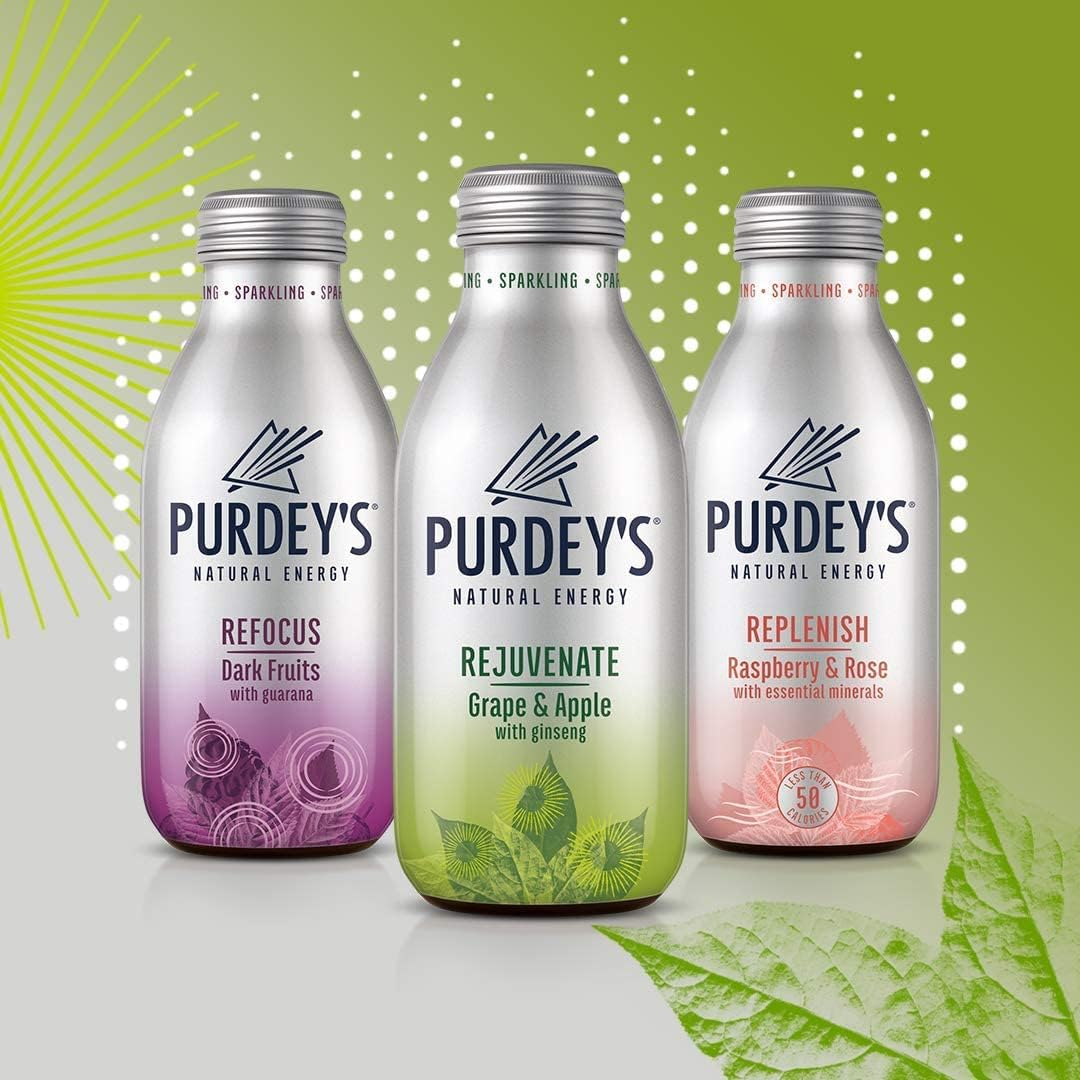
If you want to buy an energy drink now and then, look in stores for Purdey’s, these are made with sparkling water, fruits and botanicals, and sweetened with stevia (in three flavours – raspberry rose, grape apple and dark fruits).
Gusto Organic offers ‘real cola’ that with organic Fair Trade ingredients, sweetened with cane sugar and agave (the ‘naturally slim’ version is sweetened with stevia). Other flavours are lemon guarana, Sicilian blood orange and fiery ginger beer.
Why Choose Natural Brands over Red Bull?
Red Bull is now the third most profitable soft drink on earth (after Coca-Cola and Pepsi). Due to caffeine limits in various countries, the recipes differ, depending on where it’s sold. But it’s basically a mix of caffeine, taurine (an amino acid to stimulate the brain), B vitamins and simple sugars (or sweeteners).
Apparently users report that it tastes ‘like diluted cough syrup with bubbles’. One person says on first taste, it resembles battery acid? Banned in France for 12 years (the recipe was adjusted to now sell it again), the high acid level means (like diet cola) it also rots tooth enamel.
Masking Red Bull with alcohol is very dangerous, as the stimulants can mask the depressant effects of booze, and cause life-changing dangers (like suicidal thoughts).
Another reason to avoid Red Bull, is that it’s a big Goliath company, in a world of little men. In 2013, a Norfolk micro-brewery was told to change its name (similar but not the same), or face legal action.
How the average beer-loving man in eastern England could confuse a pint of ale with a can of energy drink is not clear. But they had to reach settlement, in order to continue to use a name that was not even the same. It’s corporate bullying, and a good reason to choose Purdey’s energy drink instead!
Red Bull also funds a charity that uses mice for spinal cord injury research. Far kinder, more accurate and cheaper to fund humane medical research instead.