How to Filter Tap Water (without plastic)

The good news is that in England (unlike many parts of the world), not filtering tap water is unlikely to make you ill, and won’t kill you. We are fortunate in having pretty safe tap water, even if it sometimes tastes funny or contains chlorine.
Aarke is one of the more affordable (around £100) stainless steel filter jugs, which features a refillable steel filter cartridge and granules, which are poured into the cartridge, and changed every 4 weeks.

You can set a dial inside the lid, so you know when it’s time to change the cartridge. Some parts are food-grade thermoplastic, but most is steel, and as long as you remove the granules from the filter cartridge, you can put it in the dishwasher.
If you don’t like the taste of chlorine (and if your council chlorinates water, there’s nothing much you can do), just do what restaurants do. And air a jug of water for 30 minutes, for the taste to disappear.
Lead pipes are an issue, so check with your builder or council. And don’t drink tap water from bathrooms (some say it’s fine, but often it’s from different tanks). It’s also best not to drink water from warm/hot taps.
These days, we have all kinds of stuff in tap water, from chlorine to microplastics. This can lead to normal tap water tasting unpleasant, or at least not very nice. Filtering tap water basically makes it taste nice, but you don’t have to use plastic jugs.
A Sustainable Alternative to Plastic Filter Jugs

Plastic jug filters are quite expensive, the filters are wrapped in plastic, and they don’t fit through the letterbox, if you don’t live near a bit supermarket (to buy or recycle the filters).
Phox Compatible is a refillable cartridge that fits all jugs, kettles and coffee machines that use Brita Maxtra & Matra+ cartridges.
If you’re not in the market to buy one of their own jugs, this is the next best thing. It slots into your current jug and is built to last years. Just replace the filter granules every 45 days.
Sold in 3 versions (for hard/very hard water or an Alkaline pack with increased magnesium) it won’t remove chlorine (you need reverse osmosis for that). The jug takes just a few minutes to fill, then lasts 200 litres.
You can put most parts in the dishwasher (not the jug base or rubber gaskets). If you go on holiday, immerse in water, remove and place in a jug of fresh water, to stop the granules drying out.
Ceramic Water Filters
Ceramic water filters use a porous shell to trap debris and bacteria, a bit like a coffee strainer. These last for months or years, and are easily cleaned with a natural brush. Go for ones that have stainless steel or glass housings.
To use, just fill the upper chamber with tap water, then gravity pulls the water through the ceramic, and leaves you with clean water below.
Activated Charcoal Sticks

Charcoal is a natural water filter, and this method (Binchotan) is from Japan, using white or bamboo charcoal to naturally absorb chemicals, to improve taste.
You just drop a clean charcoal stick into a bottle or jug, and leave it to sit overnight. Then just replace the stick every few months (you can recharge it by boiling in water), you can use old sticks to absorb odours in the fridge.
The sediments do fall to the bottom, so it’s best to avoid serving to young children, pets or people with swallowing difficulties.
Hard Water & Limescale in England
Unless you live in northwest England, you likely have hard water (which makes it cloudy, due to a combination of chalk and limestone) and although it doesn’t taste as nice, it does no harm.
Most water boards add chlorine (to kill bacteria) and fluoride (Ireland has fluoridated tap water for decades with no good effects on dental health, but it’s added around 10% of England, though new schemes are rare). For old pipes, ask your water board to visit, to check there is no (harmful) lead in your tap water.
The other main issue in hard water areas is limescale, which does not taste nice and could build up calcium and magnesium carbonate, which can lead to bladder stones.
To descale a kettle, fill it three-quarters with equal parts of tap water and distilled white vinegar (also sold in supermarkets).
Boil and cool, then drain and rinse several times, until all flakes have gone. Then boil (full) and empty again, to remove vinegar taste. Adding a teaspoon of bicarbonate of soda can help shift stubborn limescale.
Tap Water Ideas for Offices & Councils

Rather than spend money on buying in plastic bottles of water, here are some simple and innovative (and more affordable) ideas to keep staff hydrated:
- Councils can install water hydration stations so that people can easily fill their water bottles for free. These are very advanced to filter out impurities and keep water at the correct temperature.
- Belu offers water filters for pubs, restaurants and hotels, and also offers sparkling water in (minimum 40% recycled) glass bottles of various sizes. Again, profits are diverted to help clean safe water charity projects.
- If you run an office or hotel, Frank Water Coolers help people stay hydrated and reduce plastic waste. These mains-fed coolers use profits to help bring fresh clean safe water to children in India.
- Refill lists thousands of places nationwide that offer free refills for tap water, and also lists where to find free drinking water fountains. These are popular abroad (in California, there is even a Fountain of Woof that spurts fresh water from a concrete dog’s mouth for visiting pooches!)
How to Care for Reusable Water Bottles

Use warm a mix of warm water, unscented dish soap, and a plastic-free bottle brush to reach every corner, then rinse and keep the lid off, to avoid trapped water and odour. To deep–clean, half-fill the bottle with cleaning vinegar, fill up with cold water, screw the lid on and leave for 10 to 12 hours. Hand-washing is recommended, for a longer bottle life.
How Much Water Should We Drink?
We need water to keep cool, remove waste, and help our joints, brains and eyes (fresh water is also found in raw product like watermelons and bananas). The average person needs around 1.2 litres of water a day (more for athletes, hot weather, some medical conditions and after vomiting/diarrhoea).
So how much is 1.2 litres? Around 6 x 200ml glasses. So drink 2 glasses when you wake up, another 2 before lunch and dinner, and in a couple of weeks you’ll be hydrated. The caveat is that your body loses water with tea, coffee, cola and alcohol.
So add an extra glass, for each one of those you drink. It’s easier to reduce caffeine and alcohol, so you are not guzzling water all day to compensate.
What Kind of Water Should Pets Drink?
Spring and filtered water are fine, you may find health and fur improves. But vets say that (unless medically given) to avoid distilled water (removes minerals and electrolytes). Never give fizzy water to pets, as it could cause bloat.
Don’t let pets drink from puddles. It may taste nice to them, but could contain remnants of bacteria, oil or antifreeze.
Reusable Water Bottles (with in-built filters)

Water-to-Go (use WTGAW20 for 20% discount) is a company that makes lightweight yet durable reusable water bottles (made from sugar cane) with built-in and easy-to-recycle filters. The lids are made from recycled vegetable oil and wood pulp, and easy recycled at end of us. So now all you need is water from the tap, to stay hydrated!
Don’t fill hot liquids to top, and avoid wide-mouth bottles with hot drinks for children. Don’t place metal bottles in the microwave.
The company was created by founders of a textiles company, who were aghast when travelling abroad, to see the mountains of plastic waste. Knowing that everyone needs access to clean safe water, they decided to do something about it.
The filters contain three different technologies (mechanical filtration, electrical and activated carbon) to filter bacteria, protozoa, viruses, heavy metals and harmful chemicals, and have been internationally tested and validated for over 14 years.

Ideal for backpackers to commuters, and from busy mums to gym users, one filter (based on drinking 2 litres of water a day) should last 3 months.
Each filter can replace 400 plastic water bottles, and works out around 6.25p for each litre you drink. Then when the filter is used, the filter membrane is biodegradable and the shrouds recycled. The casing and end caps go in plastic recycling bins.

You have to wet the filter to activate the technology. Fill the bottle up and turn it upside down, then submerge the new filter for at least 15 minutes. Do the same if the filter has been dry for some days. At end of use, The larger bottle is dishwasher-friendly (the lid and the smaller bottle and lid are hand-wash only).
The other main issue in hard water areas is limescale, which does not taste nice and could build up calcium and magnesium carbonate, which can lead to bladder stones.
To descale a kettle, fill it three-quarters with equal parts of tap water and distilled white vinegar (also sold in supermarkets).
Boil and cool, then drain and rinse several times, until all flakes have gone. Then boil (full) and empty again, to remove vinegar taste. Adding a teaspoon of bicarbonate of soda can help shift stubborn limescale.
Belu (filtered water for offices and hospitality)

Belu is an amazing social enterprise, that offers both filtered and bottled/canned water for offices and the hospitality industry (restaurants, hotels etc). And uses profits to help provide clean water in Global South countries. Just imagine is everyone switched over, what good it could do?
We could take this even further. Just imagine if all schools, hospitals, nursing homes, doctor surgeries, gyms, council offices and government buildings also switched. It would reduce a huge amount of plastic waste, keep water sourcing local, and help the many people abroad without access to fresh clean water.
Over 700 million people in the world have no access to clean safe drinking water, with around one million women and babies dying each year, due to lack of clean places to give birth.
This has knock-on effects like diseases when washing hands or using toilets (Who Gives a Crap? offers recycled toilet paper, that gives 50% of profits to fund clean toilets abroad).
Every 2 minutes a child under 5 dies, from diarrhoea caused by dirty water. And climate change is making things worse (Reform UK does not believe in taking action on climate change, so more children would die, to create fossil fuel profits).
Belu Water Filtration Systems
Star of the show is Belu’s water filtration systems. These enable you to serve up fresh filtered water, without needing to buy any bottles or cans for staff, customers or patients. There are over 70 wholesalers that you can order from, listed on the website.
The company offers a range of machines, and can provide filtered water both front and back of house, with marketing materials and user instructions for staff. It also offers water dispensers for offices, meeting rooms, restaurants and restrooms.
There are options for chilled, still, sparkling and hot water available. Free-flowing filtered water also can boost revenues, as you will not be buying in bottled water for your business.
Bottled and Canned Waters
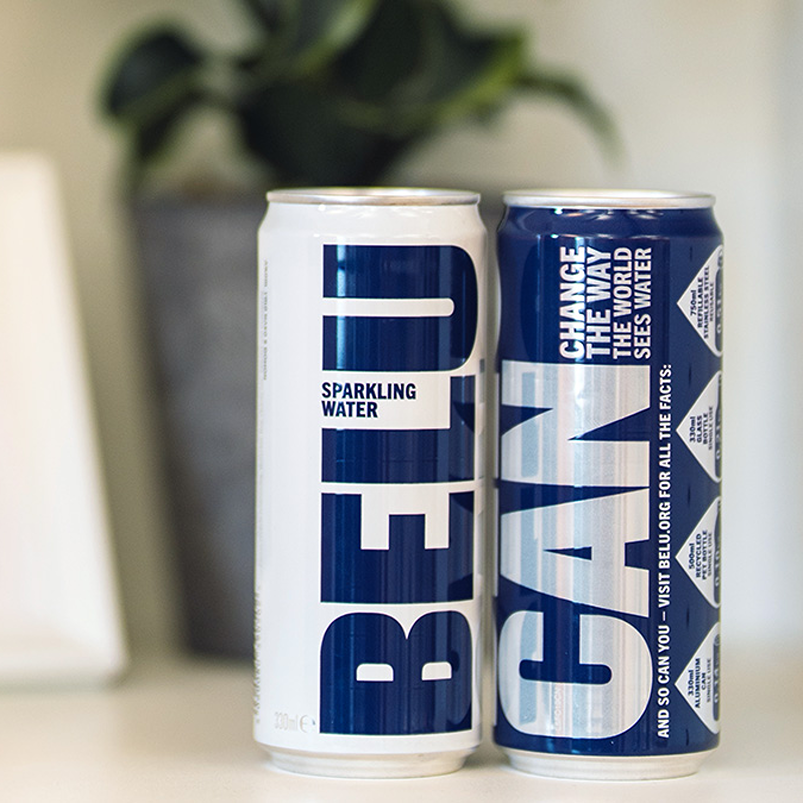
The still and sparkling mineral waters are from Powys (Wales) in glass bottles (if you want plastic, there are recycled plastic bottles available, just be sure to recycle them to avoid litter). Same with any plastic packaging.
Alternatively, you can serve up water in cans made of 68% recycled aluminium.
You don’t have to crush cans, but do pop the ring-pulls back over holes before recycling, to avoid wildlife getting trapped.
Natalie Campbell (Belu’s CEO)
Natalie Campbell is the CEO of Belu Water, and what an inspiration she is! This young black woman is not only helping to provide clean fresh water to countries that need it, but even stood for London Mayor in 2024, receiving the most votes for an independent candidate.
Her policies for London included creating 10 new neighbourhood centres in each borough, that would be home to 1300 police officers. No doubt someone who would have been pleased is TV presenter Selina Scott, who at age 74, was recently mugged in broad daylight by a group of smartly-dressed men.
She had to walk miles after the attack (they stole her purse, so she had no money) because the local police station had closed down four years ago. And the planned visit to her the next day was cancelled, due to lack of a police car.