Fruit Tree Protectors (more wildlife-friendly than netting)
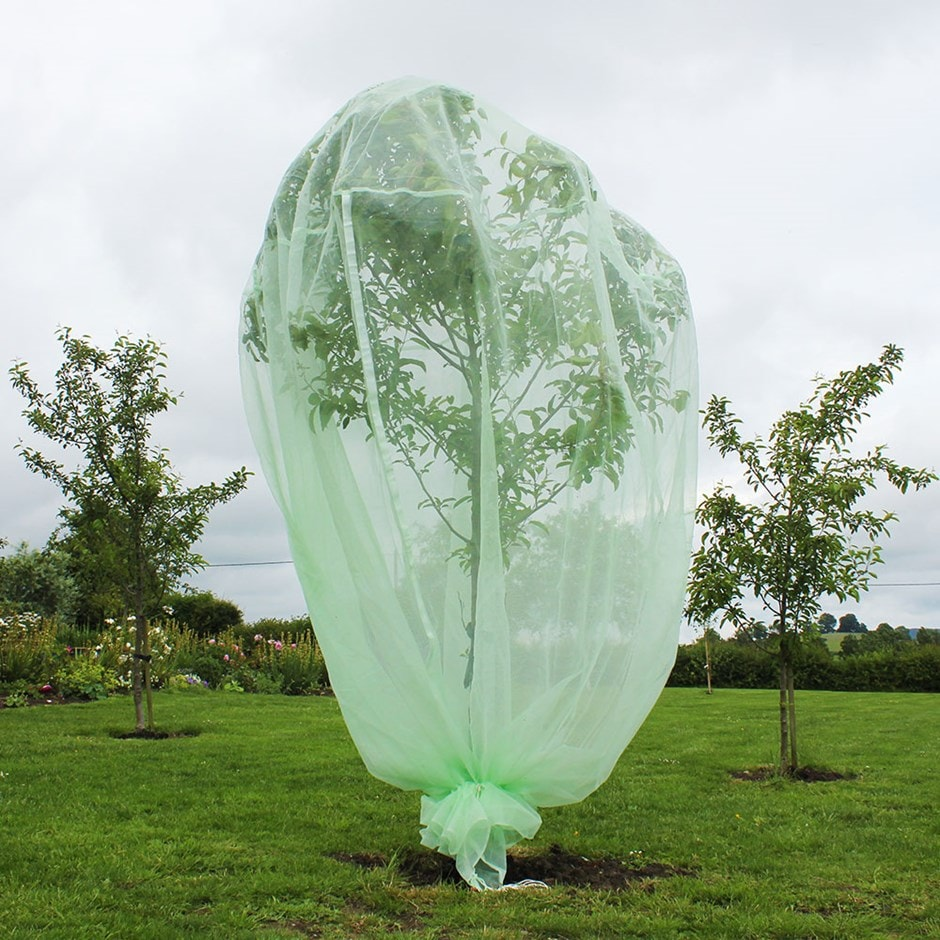
These fruit tree protectors are made with tiny mesh that is safer to birds and wildlife, over netting that can trap and entangle many creatures. Designed to keep fruit trees and bushes safe from bad weather and unwanted visitors.
Remove for pollination (this enables bees and other creatures to reach the flowers, or else no fruit will develop). Read more on wildlife-friendly gardens.
Designed with a sealable opening side, the net lifts and secures over trees and shrubs, to keep our cherry worm, aphids, fruit fly, wasps and birds, and also insulates fruit crops from frost, heavy rain and hail.
The ultrafine 1mm mesh is designed to be used in early spring to protect blossom, and in summer/autumn to protect fruit. Ideal for fruit bushes along with cherry, peach, plum, nectarine, apricot, apple and pear trees.
You’ll need two people and two long lightweight poles to lift and drape over trees.
Fruit protector bags are similar, for smaller berry bushes. Sold in a pack of 10, these breathable bags let air and moisture flow. Again remove for pollination. They have drawstrings for easy closure (ideally these should be made from biodegradable twine)
If you share your home with animal friends, learn about pet-friendly gardens (many plants and mulches are unsafe near animal friends). And use nontoxic humane slug and snail deterrents (organic gardens should take care of this by attracting birds, ladybirds, frogs and toads).
Reasons to avoid garden netting
Netting is awful for birds and wildlife. For a start, many brands are the wrong colour (so not seen by wildlife, especially nocturnal owls and bats). And most is way over the mesh size (tiny) recommended by wildlife rescue charities (who end up having to go out and untangle creatures caught in it).
If you see creatures caught in netting, call your local wildlife rescue (don’t try to remove yourself, you could do more harm than good). Also stow away rotary washing lines and football nets, after use.
- Wildlife ponds can be covered with rigid grids that still let wildlife flourish, and also prevent drowning accidents for children and pets. They can also be used over fish ponds (not the same as wildlife ponds, as carnivore fish eat tadpoles)
- Goal Wall (for commercial use, it’s expensive) is made from recycled plastic, the perfect alternative to netting in goal posts.
- Urban birds can be deterred by quality spikes (good quality brands) that make landing uncomfortable on buildings, but cause no harm.
- Never use mesh bags to feed birds, they trap tiny beaks or legs. Choose brand name feeders (never feed nuts in spring/summer, this could choke baby birds).
- Badger gates are used near farms, these are made from wood and enable badgers to move to and from areas, without getting trapped.
Where to recycle garden netting
Cut into small pieces (less than 6 inches) then bundle tightly in a plastic bag and seal with plastic-free tape before safe disposal (ask your council where).
Most ‘nets’ for citrus fruits and onions are made from plastic (so never compost). Buy loose produce (or take zero waste produce bags to the store). To dispose of existing fruit netting, cut open the holes and place inside a larger sealed bag for disposal at supermarket bag bins (remove/recycle metal clips).