How to Build Your Own (green) Home
Only a small percentage of people build their own homes, but whether you do or don’t, the building industry can switch to greener materials (like straw bale bricks over concrete).
Straw bale homes are as safe as wood and naturally insulated, yet we burn colossal amounts of waste straw each year, which could be used to build clean cheap homes on brownfield areas.
If you’re planning to build your own home, find suitable materials from Ecomerchant and MicroLouvre (a woven fabric from scrap metal that lasts 60 years to remove the sun’s heat with no power needed – it’s fire-rated and can even be used to shade traffic lights). Read Green Home Building.
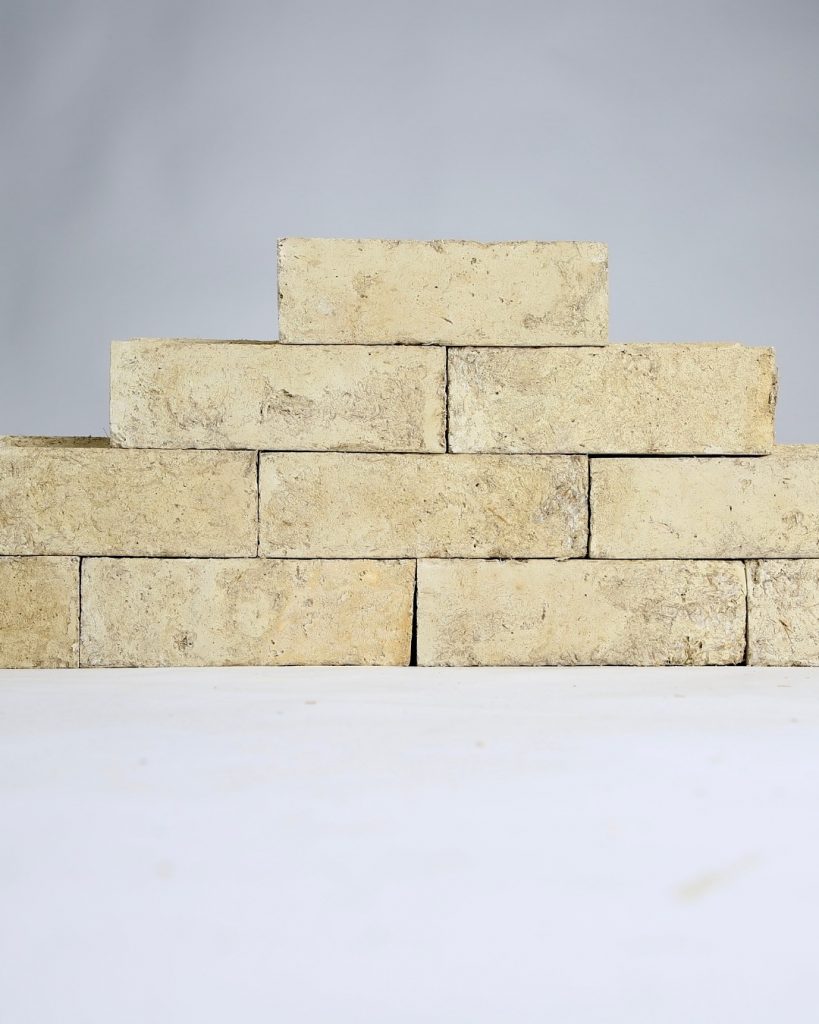
Sugarcrete is a low-carbon alternative to concrete bricks, developed by a London university. It combines sugarcane (leftover from producing sugar) with sand-mineral binders, to end up with a brick that has carbon footprint six times lower than clay bricks.
Sugarcane is the world’s largest produced crop, so there is substantial waste material. It also produces the Sugarcrete flooring slab, which is reusable and fire-resistant.
Ecobrix Woodcrete are made in the UK and easy to use and build with as blocks. Made from wood waste and cement, they are robust as bricks, but with the thermal advantages of wood. They also cost around a third less than traditional bricks.
Ecological Building Systems offers many green building products including insulation made from grass and recycled jute.
Reclaimed Brick Company offers nationwide delivery of reclaimed bricks, which are ideal for restoring period properties. They are cleaned to remove old mortar and debris, then repointed and sometimes resized for a quality and consistent batch. The same company offers:
London Reclaimed Brick Merchants also offers reclaimed bricks.
Salvage Reclamation Yards offer real finds, for period homes.
Clay Works (naturally coloured plaster and paint)

Clayworks is a company founded by a married couple who are experts in building cob homes and natural plasters. These plasters are made from clay and naturally coloured, so you can paint and plaster your cob or straw bale home, at the same time!
The site has full information on how to use, and where to find decorators who are trained in using these plasters.
Clay plasters are not suitable for wet rooms (like bathrooms) or sustained exposure to water, but are great for indoor walls and ceilings.
The Many Benefits of Clay Plasters
Clay plasters are ideal to keep the walls breathable for eco-friendly homes built from natural materials, and also have good moisture regulation, so ideal to prevent damp walls and mould. And they also help to reduce VOCs (volatile organic compounds found in toxic house paint).
Clay paints also offer good sound and thermal insulation, and are also good for people with allergies to chemical plasters.
Clay plasters absorb excess moisture from the air and limit the survival of viruses, bacteria and dust mites, which in tern can help to reduce allergies and asthma symptoms.
They are also very eco-friendly to build and biodegradable (and easily repaired). They also look lovely, with earth tones and textures, for a warm soft atmosphere.
Straw Bale Buildings (cheap and naturally insulated)

Straw bale buildings are quick and easy to build, naturally insulated (when plastered with lime) as safe as wooden houses, and make use of waste from the farming industry (which is otherwise burned emitting pollution). So why don’t councils make use of it?
The UK could build half a million affordable insulated homes each year from waste straw, presently burned as waste material from farming. This would reduce climate change and homelessness.
Straw bale buildings are basically made from tightly packed blocks of straw bales (so they are as safe as wood, as it would be like burning a phone directory). When plastered with lime and following building codes, they are likely the cheapest and warmest easy-build homes there are.
Load-bearing homes are stacked like bricks, and carry the weight of the roof. Non-load bearing use a timber frame to support the roof, then straw bale is filled in the space.
Natural Insulation Properties
Straw bale homes are naturally insulated, so (like all new homes) you don’t have to worry about installing it. The typical R-value is better than most brick walls, which keeps homes warm in winter and cool in summer, and drastically reduces bills.
In England, houses built this way often get fire ratings the same or better than regular homes. The lime plaster finish adds another strong layer of defence.
Cost, Building Process, and Regulations
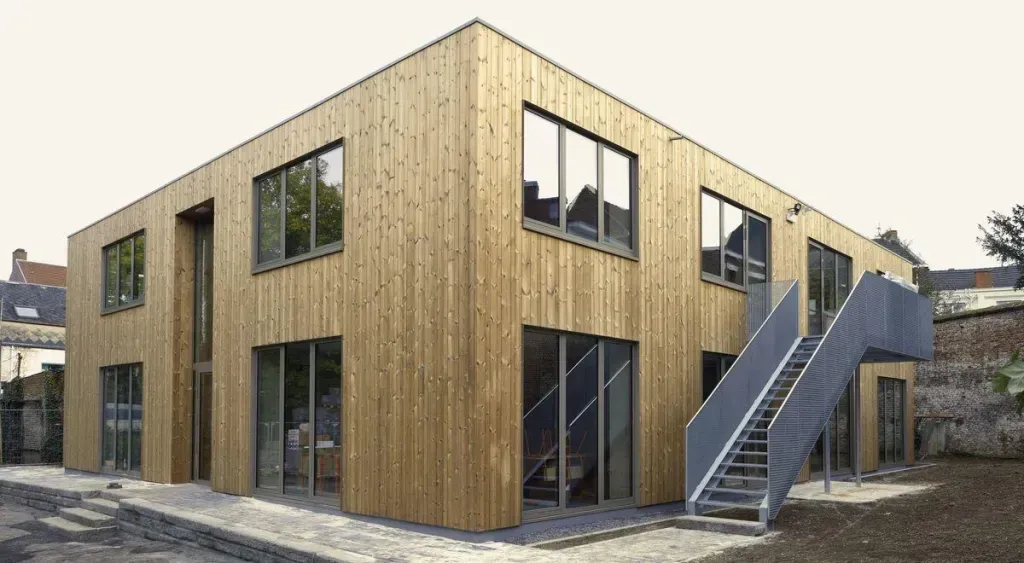
This Belgian school is built from straw bales.
An average straw bale house costs much less than a brick house, the issue is finding land to build them on, you need eco-friendly councils! Some people build the homes themselves, but obviously you need to get professionals in otherwise, and also for plumbing, electrics and gas.
But a small straw bale can be built with everything included, for as little as £50,000.
One reason is that the straw is free! It is simply the waste left from farmers, which if left on the ground contributes to air pollution and even wildfires in hot weather.
Straw bale homes are at no greater risk of mice and rats, as the material is not hay (food) but the empty stem of a crop. The best way to humanely deter rodents in any home is to seal up walls and don’t leave food out.
Sustainability Benefits and Challenges
When built properly, a straw bale home can last a long time (the newest ones in Nebraska are already over 100 years old, some say they could last 200 years (we don’t know yet, as there are none that old!
As straw bale works best in moderate dry climates, extra help and care may be needed in wet climates, like England. Barbara Jones (our leading straw bale expert – a woman!) is expert at building homes in our rainy climate.
She got into female carpentry to improve her own living situation, when funding cuts from her job helping drug addicts, ended up with her living in a squat with cold water and an outside loo!
Learn More on Straw Bale Building
- EcoCocon is a straw bale from Lithuania, championed by Barbara Jones. Over 300 buildings have been built with it.
- Building with Straw Bales is Barbara’s book (a few years old, but no others exist).
- Straw Bale Building Redefined is an English translation of a book from Lithuania, a hotspot for straw bale construction.
- Wellspring Architecture builds homes with straw bale, and Straw Bale Building is UK hub for all things straw bale.
- Huff and Puff offers a building alternative to cement, responsible for 10 to 15% of climate emissions worldwide. This company builds homes, and runs courses for self-builders.
The Good Building Book (sustainable design
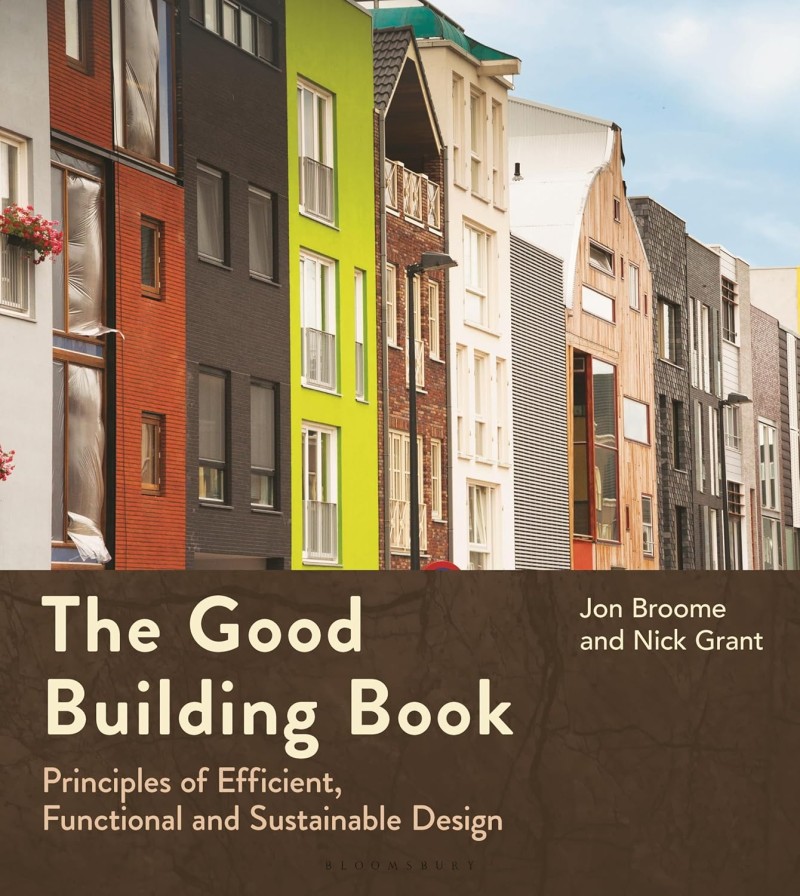
The Good Building Book is a comprehensive guide for all architects, builders and town planners, to create sustainable buildings that are affordable and good to live in, while protecting the natural world surrounding (not like present government policy of relaxing planning laws, to remove habitats for birds, mammals and marine wildlife).
A joint project from an architect and design engineer, this book offers empowering ways to rethink house-design and construction. It guides readers through project development, to single home and larger projects.
It also looks at commercial building including budgets and contracts, and details good ideas for green buildings that cope with the natural elements of English weather. Includes over 150 photos and 90 diagrams.
Every now and then, a book comes along that makes you wish it had been on your reading list from day one. This is one of those books. It will challenge and inspire you to do better – for people, buildings and the planet. Sarah Lewis (architect at UK Passivhaus Trust)
Gets to the essence of what makes buildings genuinely good. The findings may surprise you. Juraj Mikurcik (architect and self-builder)
The book is written by Jon Broome (an architect who has self-built two houses and runs a consultancy that specialises in low-energy design and sustainable building).
Nick Grant is a freelance energy consultant who pioneered the Passivhaus Standard (and is also an engineer and self-builder).