Where to Find More Sustainable Swimwear
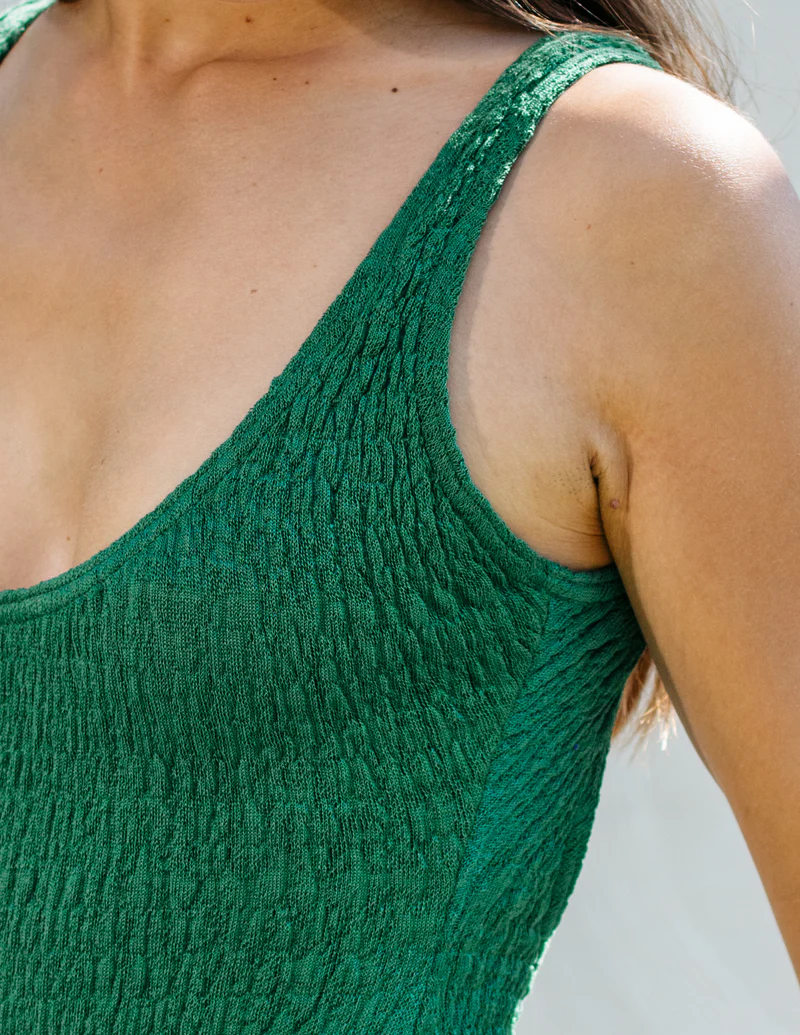
Nearly all swimwear is made from synthetic material (you can’t wear a cotton t-shirt in the pool, as it would balloon up and you could drown). Many brands now offer recycled plastic swimwear, but this of course still releases microplastics in the ocean, or when laundered.
So for now, experts recommend simply rinsing and air-drying swimwear after use, or use a microfiber filter, if laundered.
Environmental professor Timo. A Räsänen is not a fan of recycled plastic clothing, saying that plastic bottles should just be recycled into more plastic bottles (recycled plastic is weaker, so fibres degrade quicker, and lead to more plastics leaching into oceans).
A bathing suit made out of recycled plastic doesn’t excite me. It’s not going to solve the plastics problem, until we reduce the plastics we’re making. Chief Policy Officer, Oceana
It’s puzzling when ‘eco-friendly brands’ are like ‘We took old plastic bottles that were choking the turtles, and melted them, to weave you a bikini. S.Jane Kim
Also read how to keep dogs safe by the seaside.
Swim Good offers specially engineered cotton to make swimwear, but it’s not on mass sale. Ethically made in Green, it’s sold in just 2 sizes to mould to your body: Size 1 (XS to S) and Size 2 (M to XL). You can mix and match top and bottom sizes, for the ideal fit.
Dying naturally, there are just three pieces to choose from:
- Saphira: a one-piece swimsuit
- Ophelia: A classic two-piece bikini
- Rhea: A triangular, flattering bikini
Another company makes organic cotton swimwear (using natural dyes). But at $300 a pop, most people won’t be buying it. Some greener brands (but they still use a little elastane) are:
- Isole Vulcani offers organic cotton swimwear for women and girls
- Piuma swimwear (for women and girls) is mostly cotton
- Pure Earth Collection again offers a mostly cotton blend for children (including swimming trunks).
Keeping Skin and Hair Happy in Pools!
Although some pools use greener methods, most swim pools use chlorine bleach to disinfect, which is not just bad for the planet, but strips oils from your hair and skin too.
Rinse your skin and hair in the shower before you jump in pools, and they will soak up less chlorine. A little coconut oil on your hair can protect, as can a silicone swimming caps.
Ensure baby/child swim caps are right size for age, and fit snug but not too tight. Hats and outdoor clothing should be removed, in warmer indoor temperatures (including cars). Read more at The Lullaby Trust.
Rinse your skin and hair after your swim, and use biodegradable soap or shower gel, and a gentle hair conditioner and skin moisturiser.
Where to Recycle Unwanted Swimwear
You can send any brand of unwanted swimwear to Tide + Seek. It’s sent off to recycle into insulation, carpet underlay and sports equipment fillers.
Where to Rent a (slightly greener) Wetsuit
If you surf the ocean waves, you can rent (or buy) slightly greener wetsuits from Finisterre, has made from Yulex® natural rubber (a better alternative to neoprene that cuts carbon emissions by 80%). It still has some (recycled) synthetic material, but is the best option for now.
Rinse after use (don’t machine-wash or dry clean). After use, you can send back using the prepaid returns label on the bag it came in, and send it back.
Nudist Beaches: You Wouldn’t – Would You?!
Of course the one way to get around not wearing plastic swimwear, is not to wear anything at all! If you own a pool, this is not an issue. But if out in public, nudist beaches have quite a history.
Naturism (where people think it’s best to walk around with no clothes) is a movement that’s been around since the 20s, although England’s first nudist beaches (in Brighton and Hastings) only appeared in the late 70s, met with widespread disapproval.
They are only on shingle beaches (to stop sand getting in nooks and crannies!) It’s also good to wear natural rubber flops, as shingle is not comfortable to walk on, with bare feet.
Nudist beaches usually also have raised banks of pebbles to separate them from normal beaches (and prevent children asking awkward questions). Bathers also have to remain clothed before and after visiting nudist beaches, as to parade around in the nude, would be a public decency offence.
And obviously protect all regions from the sun. Read more on sustainable sun protection (always wash off natural sunscreens before letting pets kiss you, as most contain zinc oxide). Same with deodorants and cosmetics.
Learn How to Swim (whatever your age!)
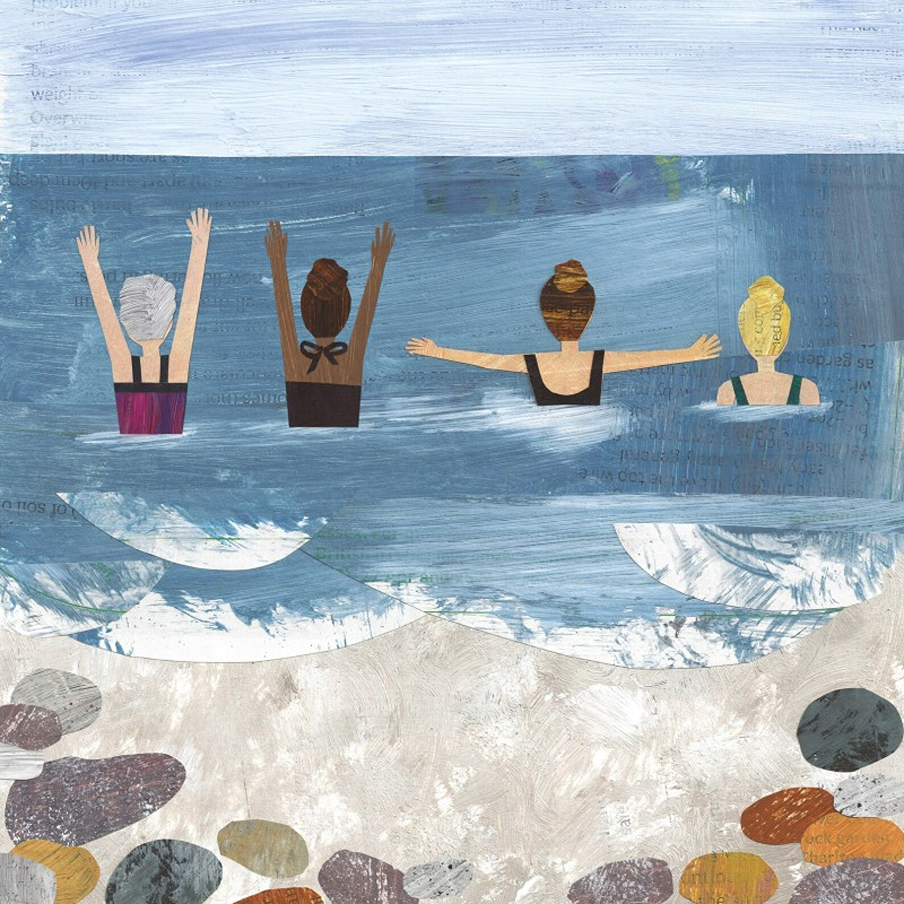
Learning to swim is good for our health, and to keep joints safe. The Royal Life Saving Society report that around 400 people drown each year in the UK, and most of the these accidents could be prevented with basic swimming skills, and water safety awareness.
Some of their tips include:
- Only use inflatable devices in pools (not open waters)
- Swim where there are lifeguards
- Don’t go near ice in winter, and keep dogs on leads.
If caught in a rip current, wade (don’t swim) parallel to the shore, raise hand and shout for help. A tow float (and bright swim hat) helps.
Know Your Beach Flags
Beach flags confusingly are different worldwide. But in the UK:
- Red flags mean ‘do not go in the water’.
- Red (top) and yellow (bottom) means ‘only swim in the lifeguarded area, between the flags’.
- Orange wind socks (show the direction of the wind)
- Black and white checks (surfing area – swimmers keep away)
Where to Find Swimming Lessons
- It’s the law for all schools to offer swimming lessons to young children, so they can swim a certain distance (usually 25m).
- If learning to swim elsewhere, look for clean well-maintained pools with clear safety signs and emergency gear, staffed by qualified lifeguards.
- Good pools also carry out regular water checks, to keep all swimmers safe. Look for teachers with recognised qualifications (like Swim England) that run lessons in age-appropriate groups.
Dealing With Fear of Water
Naturally, babies are only frightened of loud noises and falling. So everything else (including water) is usually a learned behaviour – either from someone else, or due to a previous bad experience. Did you know that otters are scared of water as cubs, they have to be coaxed in the water?!
Having said that, water is not our natural element. So (like apes) we have a natural fear of drowning. If you are scared of water, spend time in the pool with others who are not. You could practice putting your face in the water (while holding the edge), or just try floating for a few seconds.
We Need More Affordable Public Pools
Years ago, most people could enjoy a one-off swim at a local public pool. But today usually you have to pay in advance for monthly memberships, and many people simply can’t afford it.
Enter your postcode to find local pools which are more affordable than swanky gyms, or approach out-of-season hotels as many offer memberships in quiet seasons (though the caveat is that there are no lifeguards).
Another idea is that some private schools have heeded government advice to let local state school children use pools (sometimes with lifeguards). To help reduce the number of children, who can’t swim.
Keeping Safe in Private Pools
For private pools, install secure fencing at least 4 feet tall (it’s best to cover pools, when not in use).
To keep small critters safe, FrogLog and Critter Skimmer are two nifty inventions – one to let fallen creatures climb out, the other to stop them falling into pool skimmers. Get both, as they do different things (each site suggests how many to order, depending on the size of your pool).
How to Build a Natural Swimming Pond

Natural swimming ponds are not for everyone, but if you have the space, skills and inclination, they are an alternative to chlorine-filled private swimming pools. Natural plants and filtration keep them clean, and they blend in with local landscapes, and enable you to swim naturally, even inland!
Use sloping sides in ponds, to avoid drowning hazards for wildlife. Read up on pet-friendly gardens, to know toxic plants (like water lilies) to avoid (blue-green algae is very toxic to pets). Dogs can also get cramp when swimming, ask your vet about suitable lifejackets.
Also read our post on wildlife-friendly ponds. For conventional swimming pools, keep the cover on when not in use, and use FrogLog (a ladder to let small critters escape) and Critter Skimmer (rescues trapped creatures), how many you buy depends on pool size.
Note that wildlife ponds are not the same as fish ponds (fish are carnivores that eat wildlife). So like wildlife ponds, natural swimming ponds are free of fish (carnivores that eat wildlife). Swimming ponds are also kept free of aquatic vegetation by an internal dividing wall.
There are many companies that offer good advice and services:
- Gartenart uses standards required by the more stringent German swimming pond association, used by thousands of private swimming pools in Europe.
- The Swimming Pond Company has a show swimming pond in Norfolk, and offers conversion of conventional swimming pools (costs around £100,000). It says that when removing blanket weed during months, care must be taken to allow wildlife caught in it, to return to the water.
- Natural Swimming Pools offers ‘pools without plants’, if you simply want a pool but without the chlorine. Using an award-winning ‘Living Pool System’, biological filters naturally extract phosphorous, and an automatic robot cleans the pool each day (they can also be heated). These pools promise not to turn your hair to straw or go green!
Tips for Building Natural Swimming Ponds
Natural swimming ponds are not for everyone, as they need land, skills and are expensive. But we are talking here about alternatives to chlorine swimming pools, which use one of the world’s most toxic chemicals to every living thing.
And though we may not live in luxury, many people do and have pools in their gardens! Although only around 4% of people in England have garden pools, that’s still around 250,000. Most are in southern England, due to higher incomes and warmer weather.
Obviously care must be taken on how pools flow into neighbouring gardens, and impact on local wildlife.
You’ll need to ensure the right type of soil, for best results. Sandy and gravel soils drain quickly, but don’t retain water easily. While clay soil holds water well, but has poor drainage. Adaption many be needed, and ponds should be sited away from trees that could affect structure and sunlight.
Swimming zones should be safe yet deep enough to swim, with suitable (pet-safe) aquatic plants and biofilters, with sloping sides and easy maintenance.
You will likely need planning permission to build natural swimming ponds, and also check on restrictions, and laws on protected species and habitats nearby.
Swimming ponds have a regeneration zone where reeds and rushes are planted, to naturally absorb nutrients to prevent algae. You’ll also need some kind of circulation pump to move water from the swimming area through filter beds and plants, then back to the pool.
Finally, think of landscaping for shade and sun, seating areas, and soft lighting (solar-powered options that go off when not in use are good, to prevent light pollution). Choose warm orange hues over white or blue, that is less harmful to birds and wildlife.
Plants will also need to be trimmed regularly to encourage fresh growth and overcrowding. Fallen leaves also need to be raked, to avoid them sinking and rotting, which could cloud the water.
Excess water may also need to be drained after heavy rain, to avoid flooding low garden ponds. And in hot weather, pools may need to be topped up with clean water, to protect plant roots (a gauge can help track water levels).
The Interesting History of Swimming Lidos
England had many seaside lidos (outdoor swimming pools, often with sea water) years ago. But when people started to take package holidays to Spain, many of them fell into disrepair and closed. Today, a few remain, and there is a movement to restore those that are still repairable.
The word ‘lido’ is from the Italian word for ‘shore’. Lidos were popular for getting fresh air and exercise, especially in the days when there were no concerns over skin cancer or ozone layers.
Find a list of all lidos in the UK.
Bath’s Cleveland Pool (England’s oldest surviving lido)
Built in 1815, Cleveland Lido is now a Grade II listed building near the River Avon, now carefully restored. After briefly going bankrupt, it became a place to baptise Jehovah’s Witnesses, a trout farm and a private residence, before finally reopening as a public bathing pool.
In 1867, the ‘eccentric Mr W Evans’ would teach swimming (and provide ginger beer and gingerbread). Often diving into the pool from a height (wearing a tall hat to protect his head!)
Other lidos (past and present) in England include:
- Saltdean Lido (Brighton) once welcomed actress Jayne Mansfield
- Tinside Lido (Plymouth) is an Art Deco design with sea views.
- Jubilee Lido (Penzance) is a triangular pool that sits on rocks, opened in 1935.
- Clifton Lido (Bristol) opened in 1850, with striking Victorian brickwork.
- Devonshire Baths (Sussex) was uniquely filled with heated salt water.
- Tooting Bec (London) is known for its long pool and rainbow changing rooms.
- Brockwell Lido (London) opened in 1937, as a city escape.
Campaign for Clean Swimming Waters

England’s seas and rivers are now so polluted, that just 60% are deemed safe for swimming, compared to over 80% in mainland Europe.
Old sewage networks struggle to cope with litter, microplastics and farm chemicals, which are ending up in our seas due to everything from sunscreens to laundering synthetic fabrics. In 2024 alone, there were 400,000 sewage discharge reports, leading to demand for action.
Use the map at Surfers Against Sewage to check for swim water quality. SAS says that ‘if the water is brown and smells like shit’, it probably is. You can report raw sewage.
England now has the unenvious title of being ‘the dirty man of Europe’. High counts of E.coli, intestinal enterococci and other pathogens raise the risk of stomach bugs, ear infections and skin rashes. Cuts are more likely to get infected. And even ‘clean’ water can be unsafe in reality.
Even stretches of The Thames now have ‘no-swim notices, after heavy rain. Cornish beaches report contamination after storms, and Lake Windermere has issues with sewage pollution. One youngster recently reported ‘feeling sh*t’ while swimming in England’s largest body of water.
Polluted waters also harm fish, birds, otters and whales. Instead of ‘petrichor’ (the lovely earthy smell after rain’, we get odd smells, and red/amber warnings, which has knock-on effects on public health and tourism.
Other Polluters: Plastics and Farm Run-off
Microplastics from litter and washing synthetic clothing also pollute (a reason to use microfiber filters in washing machines). And fertiliser, pesticides and slurry wash off feeds in rain, feeding algal blooms and lowering oxygen. A reason to support organic farming.
Campaigners want stringent targets for the Water (Special Measures) Bill, especially for storm overflows (and meaningful fines for repeated breaches). It also wants major investment in storage tanks, pipe upgrades and green infrastructure (like reedbeds and wetlands).
People-powered action delivers quick wins. From volunteer beach cleans to river test kits, this brings about more pressure for stronger public reporting and for businesses and councils to do more. The Rivers Trust works with communities and farms to reduce runoff (that ends up in the sea) and restore habitats. Report pollution to the Environment Agency.
Only in England would you find people who would go wild swimming early on Christmas morning, then go back inside to enjoy tea and cake! Wild swims are popular nationwide, but it’s important to do it right, as obviously there are not lifeguards, plus hazards from bad weather to rocks, glass and jellyfish.
Keeping Safe on Wild Swims
Read How to Wild Swim which includes safety tips:
- Know the water: Check depth, flow, temperature and currents.
- Weather watch: Rain, storms, or high winds can change conditions.
- Swim with others: It’s safer and more fun.
- Stick to public spots. Look out for local signs and advice.
- Water shoes: Protect feet from sharp stones and rocks. Scuff/stamp your feet, to let creatures know you’re approaching.
- Waterproof bag: To store your phone (no lifeguards).
- Carry waterproof plasters, a whistle and foil blanket.
If caught in a rip current, wade (don’t swim) parallel to the shore, raise hand and shout for help. A tow float (and bright swim hat) helps.
If phone is out-of-range, call 999 and 112 (diverts to a signal). Download RYA SafeTrx app (with an Irish version) to alert contacts.
Dogs and Wild Swimming Safety
- Dogs may be at risk of currents and cramp (dogs will follow you, even if they are tired).
- Although quick sea swims for dogs are fine (rinse saltwater off with lukewarm water and dry with towel, dogs could be at risk from attacks by seals.
- Other dangers are seaweed (expands in the stomach as it dries) and blue-green algae. If you take them, go with friends and have someone ‘dog-sit’ nearby.
- Never swim near marine creatures like seals, you could spook pups into the water, before they are ready to swim.
Keep Away from Stinging Jellyfish
Jellyfish can sting (even when dead). In England, stings can be painful but are rarely serious, unless stung by sea urchins, stingrays, weever fish and Portuguese man-of-war. If so, leave water to warn others and lifeguard, then rinse with seawater. Read more on staying safe near jellyfish.
Remove spines with tweezers (or edge of a bank card), soak in warm water for at least 30 minutes (or use hot towels/flannels) and take painkillers. Do not cover/close wound.
For severe pain (or if stung on the face/genitals or from a stingray, visit minor injuries. For breathing difficulty, chest pain, vomiting, loss of consciousness, seizures or severe swelling/bleeding, call 999. Report jellyfish stings (this helps to monitor ocean health).
If dogs are at the beach with you, lion’s mane jellyfish and Portuguese man o’war in particular can be dangerous. If your dog is stung, rinse area with sea water, remove tentacles/barbs and seek immediate vet advice.
Good Tuesday’s Eco Wild Swimming Journal
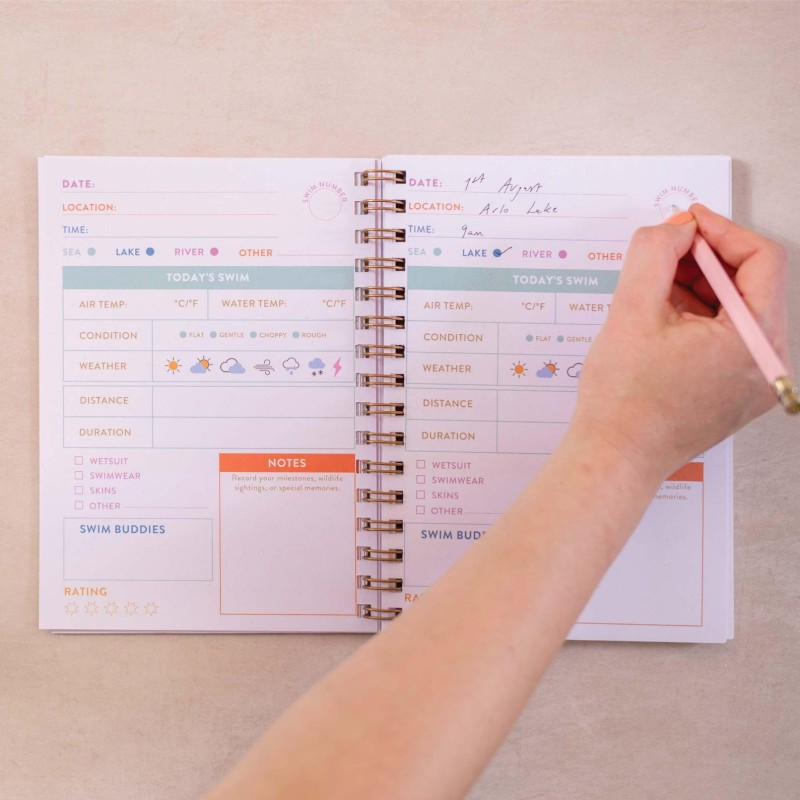
This wild swimming journal makes a great gift for people who brave the cold waters to swim in the great outdoors. Keep a track of all your adventures in this spiral-bound journal log book, with colourful pages throughout and striking deep blue ocean artwork on the cover..
Inside you’ll find a kit checklist, swim trackers and log pages for 120 swims – record the environment, conditions, duration, star rating and swim buddies on each outing.
Everything at Good Tuesday is printed on recycled paper, sent in plastic-free packaging, made in the UK and beautifully designed.
Choosing recycled paper is better than FSC-certified paper, as that still requires fast-growing trees with pesticides (instead these products ‘close the loop’ and use up unwanted waste that would otherwise end up at landfill, emitting methane gas).