How to Grow Organic Food (with no digging!)

One of the easiest ways to get past the food price crisis and enjoy tasty local and nutritious seasonal fruits and veggies, is simply to grow it yourself! This is fairly easy, even if you have a small space. Whether you have a small garden, a patio or even a kitchen garden or balcony.
If growing indoors, read our post on growing kitchen gardens. Also read about how to start a community garden (free food for everyone!)
Keeping People and Pets Safe in the Garden
When you are growing food, it’s important to know a few little garden rules to keep all creatures safe. Many plants (and trees) along with some mulch and fresh compost are unsafe near animal friends. Read more about pet-friendly gardens and humane slug/snail deterrence (to avoid toxic pellets).
Never use netting to protect food (nearly all sold has holes way wider than recommended by wildlife rescues, to avoid creatures getting trapped).
Acids can harm compost creatures, so bin citrus, tomato, rhubarb and allium scraps (onion, garlic, leeks, shallots and chives). Same with tea/coffee grounds (due to caffeine). Read more on making garden compost.
If growing indoors (including greenhouses), avoid facing indoor plants to outside spaces (to help stop birds flying into windows).
What is No-Dig Gardening?
No-dig gardening (called ‘no-till’ in North America) is the new way of growing food, that does away with spades and forks, and instead uses clever methods including mulching, to grow food in good soil, without the back-breaking work of digging.
This has the added benefit of not disturbing garden creatures like earthworms (that do most of the work in organic gardening) and baby endangered stag beetles (those big grubs you sometimes see in soil).
The method has been made popular by Somerset gardener Charles Dowding, who grows all his own organic food, teaches others and has written many best-selling books on the subject. He says that it’s also important to share some food with wildlife – he writes that occasionally rabbits ‘wave at him past the window’ as they help themselves to a little of his organic bounty!
Most gardening books focus on digging up soil (hard work and kills wildlife), then adding all kinds of chemicals and fertilisers to make the soil healthy. Just like junk food, the soil then becomes addicted to ‘receiving help’.
No-dig gardening focuses on preserving good soil by boosting nature (worms, retaining water, cycling nutrients etc). This leads to not just easier maintenance by also less watering and weeds, and locking carbon in the soil to prevent climate change, and produces bigger harvest yields.
Garden Organic has a good simple post on how to start a no-dig garden (or create one on existing soil). It says to avoid suppressing weeds with plastic or carpet (most has chemicals that would leach into soil).
It instead recommends a combination of mulch made from homemade compost, fully-rotted manure, leaves, straw, grass cuttings, to suppress weeds (this could take months, so be patient).
And for already-cultivated beds, again it’s simply to transfer to no-dig gardening, applying an annual mulch each autumn. Wonderful worms will do most of the work for you, rising up to eat and digest the mulch, to create black gold soil for your garden goodies! RHS also has a good post.
Charles Dowding (the godfather of no-dig gardening!)
Of course, all no-dig gardeners know that Charles Dowding is the man to go to, for extensive advice. His website has a beginner’s guide (which you can convert to pdf. and print) that covers all the basics, and he has many videos on his YouTube channel if you prefer ‘moving pictures advice’. He also has an online beginner’s course‘
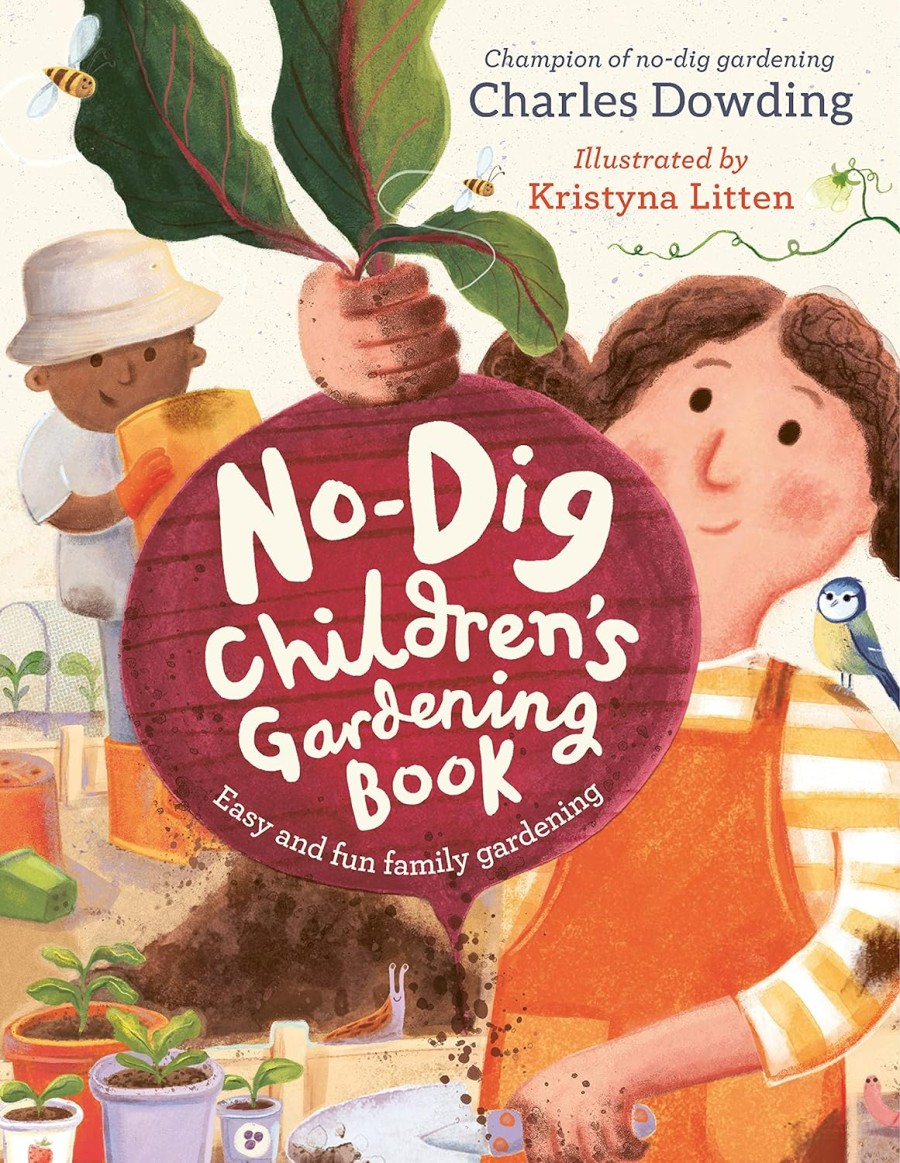
No-Dig Children’s Gardening Book is a fun easy book to grow own organic food (forget that it’s for children, this simple illustrated guide is good for everyone and much easier to understand!)
This book begins with an overview of no-dig gardening and healthy soil. Then learn how to create a no-dig garden bed in a day, and what to plant in it. You’ll learn how and when to sow common garden vegetables, along with tips to grow giant sunflowers!
You’ll also learn of the benefits of no-dig gardening to native wildlife, and how to create a no-dig market garden in your community. Plus learn how to save your seeds for next year, so you can plant them again, without having to buy more at garden centres.
Grow Together condenses 40 years of experience to create 50 proven companion planting combinations, so you know what to plant next to each other, for better harvests (this naturally deters unwelcome visitors to avoid chemicals or harming native wildlife).
Learn where to plant carrots, lettuce, fennel, spinach, garlic, coriander, broad beans, asparagus, cucumbers, peas and strawberries!
Use Plant-Based Fertilisers (no fish or bonemeal)
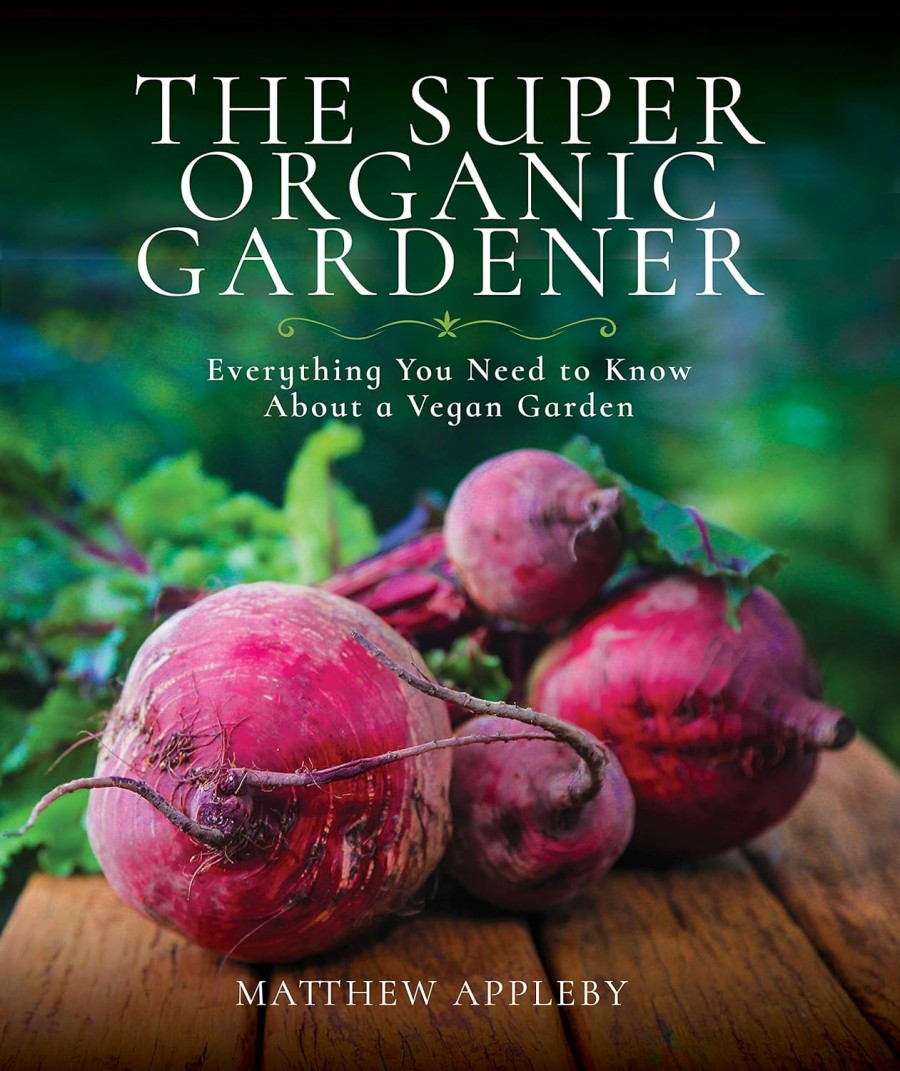
So-called ‘veganic gardening’ means avoiding fertilisers made with bone meal or fishmeal. Not only do these contribute to factory farming, but avoiding them also helps to deter creatures like rats, as there is no blood etc.
The Super Organic Gardener is the book to show you how to do it! Natural Grower offers a good range of vegan-friendly fertilisers and composts.
Buy Organic Seeds (or save your own)
Most seed companies in garden centres are hybrid F1, designed not to be saved the next year, so you have to buy new again for more profits.
- The Real Seed Company offers organic seeds (or if not possible, grown locally without pesticides). It also sells Community Support Seeds (for people on low-incomes).
- Vital Seeds (Devon) offers organic and open-pollinated seeds.
- Starting & Saving Seeds is a guide on how to save your own seeds.
Leafless peas – easy to find in pods (‘smaller yield, as plants have no leaves!’ The Real Seed Company (translating seed marketing speak)
Sutton Seeds offer a ‘uniform beetroot’ that is F1 hybrid. Who wants a uniform beetroot? We want a knobbly organic beetroot full of flavour, sold cooked at the local greengrocer!
Mr Fothergill’s again sells ‘uniform carrots that are quick to grow’. Organic carrots are quick to grow anyway, and throwing out ‘non-uniform carrots’ is why we have so much food waste.
B & Q’s website grows F1 Brussel sprouts, made by an ‘EU responsible person’. Who on earth is that? Find a friendly organic seed company, and buy from them instead!
The Many Benefits of Raised Bed Gardening

One easy way to start a no-dig garden (which is also good for people with mobility issues who can’t bend down) is to create a raised bed garden (most garden centres sell ready-made raised beds, or techy peeps could find non-toxic recycled materials to build their own).
You basically just site the beds, fill with good soil and then plant! Raised Bed Gardening shows you how to plant and also how to make raised beds, with a few common tools.
Growing Organic Food in Polytunnels
Polytunnels are more affordable (around £100) than greenhouses (and these ones are opaque, so can prevent bird strike, as they won’t see the vegetation inside). Choose ones with secure doors and roll-up alternative doors for wheelbarrows. Biodegradable paper mulch is designed for polytunnels.
Read How to Grow Food in Your Polytunnel to learn how to grow crops all year round (including during England’s hungry gap, when not much can be harvested). You’ll learn how to reap sweet potatoes and celery in November, radish and baby carrots in February, and salad leaves year-round!
No-dig gardener Charles Dowding has a post on how to choose and use a polytunnel. He recommends burying the polythene all around in a trenches of one spade’s depth to prevent animals, weeds and draughts creeping in! Charles also has ha YouTube playlist on polytunnels and greenhouses.
How to Store Your Own Garden Produce
How to Store Your Garden Produce is an updated version of a classic book, to show that anyone with even half an acre of land can feed a family of four for an entire year. Most gardens produce harvests in spring and summer, so this book shows how to avoid the rest of your harvest spoiling (of course you can donate the rest to others if wished).
This simple A to Z guide shows how to dehydrate, freeze, ferment and pickle your produce, plus there are recipes like strawberry wine, peach chutney, mushroom ketchup and celeriac soup. Also read the author’s book he wrote with his daughter: The Vegan Cook and Gardener.