Simple Ways To Help Small Organic Farmers
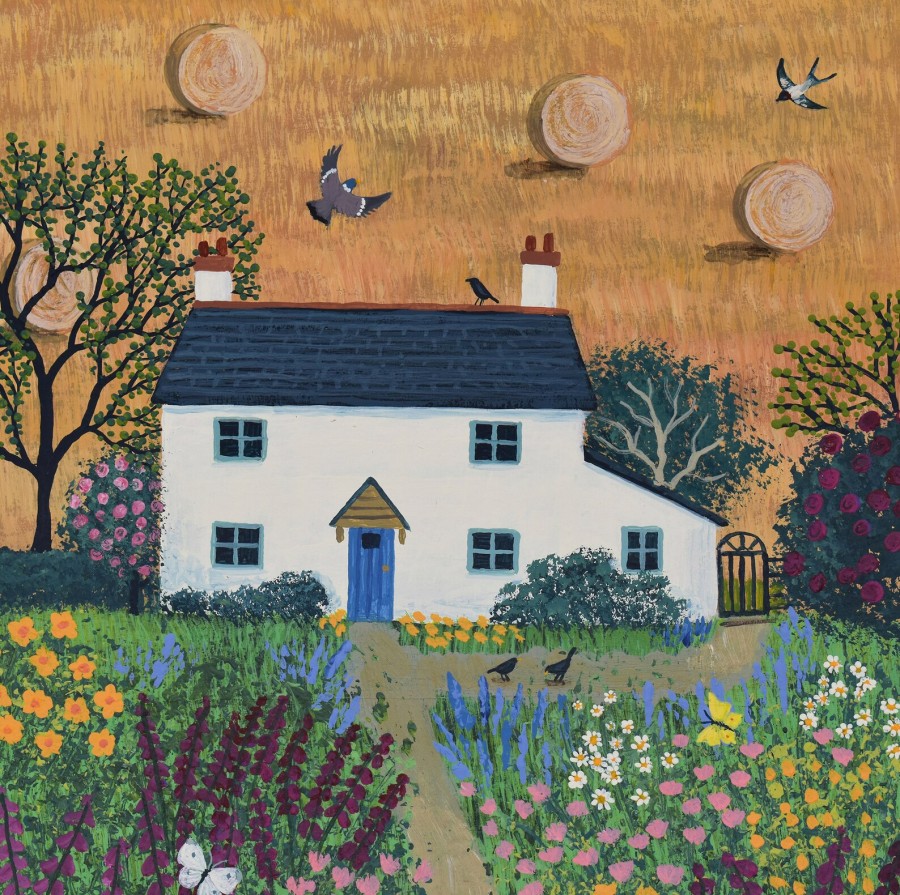
Small farmers in England face more pressure than ever. Not just being priced out and dominated by big supermarkets, but often climate change is now affecting weather, so they wait for rain when none arrives, and unpredictable weather threatens crop harvests.
Read our posts on no-dig gardening and wildlife-friendly gardening. And if you farm alongside dogs and cats, read about pet-friendly gardens.
Find info on preventive/treating common conditions at Homeopathy at Wellie Level (courses are endorsed by vets).
Alongside mounting bills and economic uncertainty, small farmers are feeling cut off from society, but there are wonderful non-profits that can help with advice and financial aid. And a listening ear, when farmers need it most.
Help farmers by following the countryside code to protect livestock (and dogs). Report concerns of farm animals to RSPCA (or Crimestoppers to remain anonymous).
Financial Pressures and Uncertain Incomes
Most farmers don’t have a set monthly wage. Prices for crops can collapse overnight, and many small farmers earn a pittance, when locked into supermarket contracts.
Some farmers get their entire harvest rejected if the produce ‘does not look perfect’, and even a small issue like this, can lead to collapse on tight budgets.
Small farmers who look after animals, may also find financial hardship affects their ability to buy feed or medicine, or access regular vet care.
Climate Change and Weather Extremes
Floods, droughts, late frosts – farmers live by the weather. But wet summers can wipe out entire harvests, and a dry spring can mean months of field work going to waste. Unstable weather hits incomes, and puts whole businesses at risk.
Mental Health and Social Isolation
It sounds good fun, but farming is a very hard way to make a living, with early starts when it’s dark, and for some can be a lonely profession. Long days in the fields can mean weeks without seeing friends, family or even neighbours. And money worries and stress on top can lead to depression or anxiety. It’s not always easy to ask for help.
But there is help!
Forage Aid
Forage Aid helps with free feed and bedding, if your farm has suffered due to weather or an ‘act of God’. Farmers who have had their farms flooded have received silage, hay and straw for animals, through donations to Addington Fund (below).
Addington Fund
Addington Fund helps with housing for farming families during tough times. If someone loses their farm or home due to finance or ill health, Addington steps in with emergency accommodation or relocation help.
The Farming Community Network (FCN)
The Farming Community Network offers support 365 days a year. Volunteers (many with farming backgrounds) listen, and guide those struggling with practical or emotional problems.
It also runs Farmwell, a site of useful information including grants and funding, animal welfare and staying connected.
Royal Agricultural Benevolent Institution (RABI)
RABI delivers confidential financial support and counselling. They help farming families facing hardship – paying bills, offering grants and funding therapy sessions.
The Prince’s Countryside Fund
The Prince’s Countryside Fund invests in projects that keep rural communities strong. It awards grants to help upskill farmers, boost local markets, and support young people starting out in agriculture.
Hen Helpline
Hen Helpline is run by a charity that rescues chickens (and roosters) designed to be killed, after end of egg-laying life. The free helpline helps with anything chicken!
How These Charities Help Farmers
These charities operate under a single umbrella charity that you can call. And you’ll be directed to the appropriate one for help. Between them, the charities offer:
- Direct financial help. This might by money to feed your animals, pay electricity bills or fix broken farm tools. Some even cover medical and funeral bills.
- Phone helplines offer quick, friendly advice. Volunteers can explain government paperwork or talk through a family crisis. Many charities arrange local meetings, so farmers can share solutions with others.
- Workshops teach farmers new skills or help them diversify, such as starting a farm shop or turning land into wildlife habitat. Charities also run courses in budgeting or mental health awareness.
- Transfarmation helps farmer ‘transition over’ to growing oats for the profitable plant milk market, with remaining animals living lives out in peace.
A Good Book to Help Small Farmers
Six Steps Back to the Land is a unique book by an expert on sustainable farming, on why England needs to turn back from the 1930s notion that ‘everyone needs meat for protein’, as this idea has destroyed our land and caused huge issues with factory farms and climate emissions.
Instead, the author offers a new idea of millions of small farmers, growing sustainable food without destroying our soil, harming our bees or making climate change worse.
You don’t have to be vegan or vegetarian, to know that we need to grow more plants, and eat less meat (a view shared by many chefs including Hugh Fearnley-Whittingstall).
The book also shows how taking his action steps could stop consumers and farmers being dominated by big corporations who control (and import) most of our food. Let’s restore farming to to feed the world, for a peaceful and prosperous future.
Crowdfarming (order organic food direct from farmers)
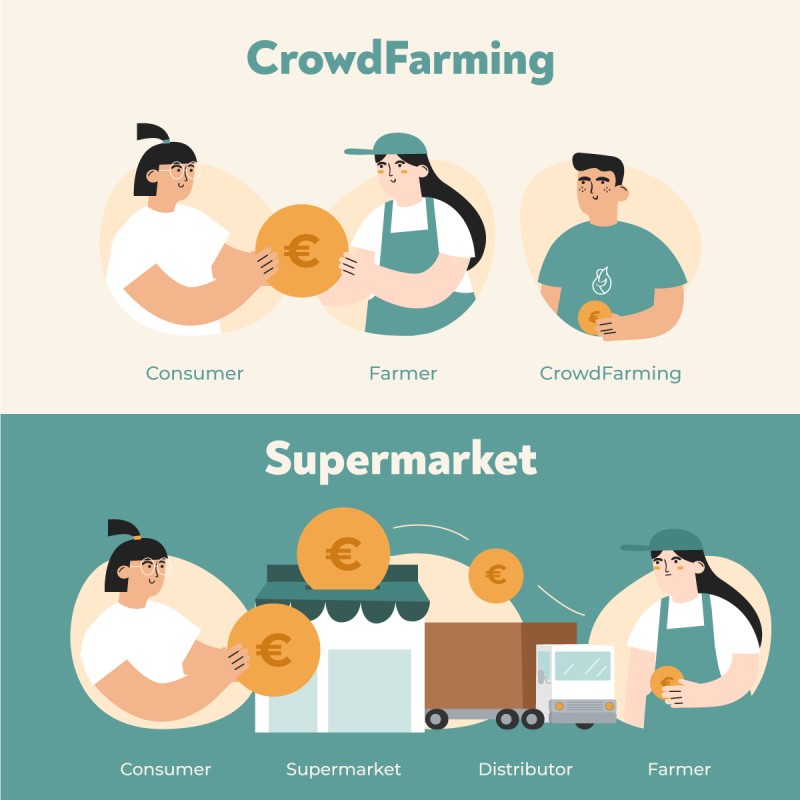
Crowdfarming is an ideal whose time has come! This website is global (and it does not appear to have many English farmers on board). But as a worldwide enterprise, presumably that’s simply because no farmers have yet signed up from here!
Basically, it’s like an online version of community supported agriculture. To keep them financially secure from selling out at a pittance to supermarkets, you can either ‘adopt’ a tree (say an apple or pear tree) and then receive your ‘money back’ when the fruit is harvested.
Or alternative, buy seasonal boxes from farmers. These are delivered direct to you, cutting out supermarkets and other middlemen profits, so the farmer gets to keep most income from his or her labours in the fields.
Before cooking, read up on food safety for people and pets. Just bin scraps from alliums (onions, garlic, leeks, shallots, chives) and citrus/tomato/rhubarb scraps, as acids may harm compost creatures.
Why Support Crowdfunding of Farmers?
Firstly, to avoid food waste. Around 19% happens at processing and wholesale phases (and 5% at retailer end and 12% in the catering and hospitality industry). In other words, a lot of food waste is not from you forgetting that your apples have gone off – it’s mostly that millions of items are thrown away by big business for ‘not being perfect’ before they even go on sale.
Supporting farmers direct stops this. Because if you’re going to make a tasty carrot soup or a batch of banana bread, you likely don’t care if the carrots are curly, or the bananas (yes, not local!) have a few black spots on them.
Secondly, farmers need our help. There are charities that can help small farmers (including ones that provide free feed, during natural disasters or financial difficulties).
Many farmers that grow food end up making a tiny profit when selling to supermarkets (who often cancel orders at the last minute).
A farmer anonymously told us how he grew 60 tonnes of salad potatoes for a large supermarket. Upon harvest, the supermarket decided they were no longer interested in that variety, and cancelled the order. Leaving a huge amount of food with no home, and the farmer financially screwed. Get Fair About Farming
Charities That Help Small Farming Communities
Many small farmers tend their crops and look after their animals well. But often have to either sell at a pittance to big supermarkets, or suffer from rising costs, high tenancy rents and/or natural disasters like floods, and end up living on the breadline, some even suicidal.
The good news is that there are wonderful small charities that can help:
Forage Aid (Free feed and bedding)
Forage Aid helps with free feed and bedding, if your farm has suffered due to weather or an ‘act of God’. Farmers who have had their farms flooded have received silage, hay and straw for animals, through donations to Addington Fund (below).
Addington Fund (emergency housing help)
Addington Fund helps with housing for farming families during tough times. If someone loses their farm or home due to finance or ill health, Addington steps in with emergency accommodation or relocation help.
Farming Community Network (general support)
The Farming Community Network offers support 365 days a year. Volunteers (many with farming backgrounds) listen, and guide those struggling with practical or emotional problems.
It also runs Farmwell, a site of useful information including grants and funding, animal welfare and staying connected.
RABI (financial support and counselling)
RABI delivers confidential financial support and counselling. They help farming families facing hardship – paying bills, offering grants and funding therapy sessions.
Prince’s Countryside Fund (grants for local farmers)
The Prince’s Countryside Fund invests in projects that keep rural communities strong. It awards grants to help upskill farmers, boost local markets, and support young people starting out in agriculture.
Hen Helpline (help with anything chicken!)
Hen Helpline is run by a charity that rescues chickens (and roosters) designed to be killed, after end of egg-laying life. The free helpline helps with anything chicken!