Helping England’s Waterfowl (swans, ducks and geese)

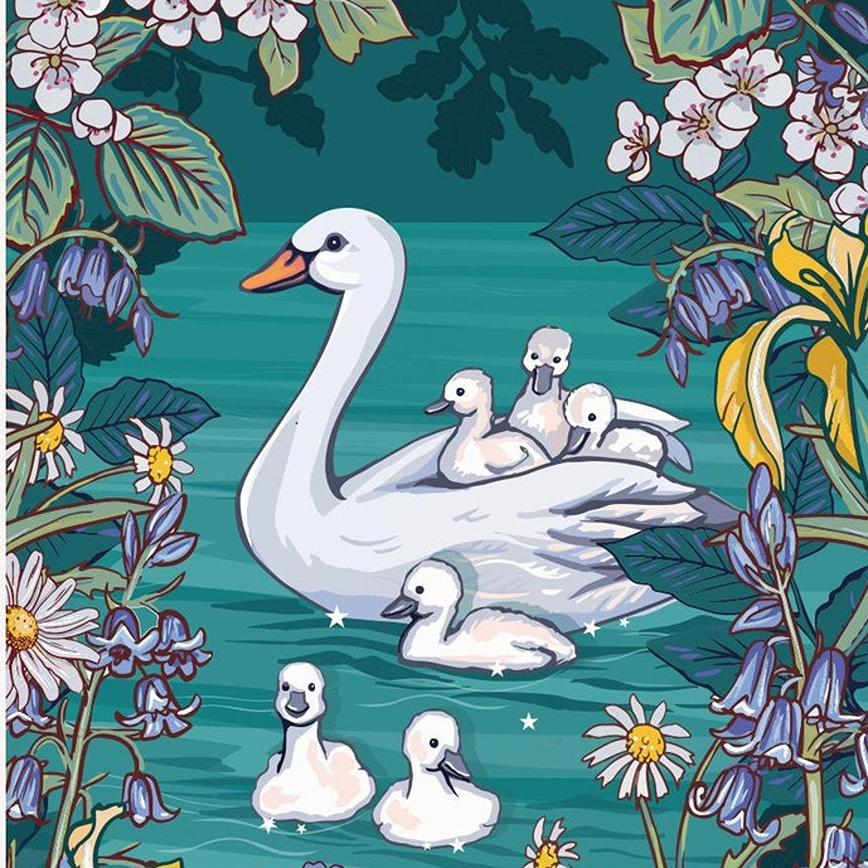
Swans have glided across England’s rivers, lakes and ponds for centuries, offering a sense of peace and beauty to the countryside. These elegant birds (some are owned by the King, but but not all) hold a special place in our culture and hearts.
Yet today swans face real threats, from pollution and pond litter, to shortages of safe nesting sites. Keeping our swans safe takes effort from all of us, whether we live nearby or are visiting places where they live.
I’ve developed into quite a swan. I’m one of those people that will probably look better and better as I get older, until I drop dead of beauty. Rufus Wainwright
In England, the three main types of swans you will see are:
- Mute swans (the most common) are less vocal, and easily recognised by their orange bills.
- Whooper swans migrate to England in winter. They are larger with yellow/black bills, and known for their loud calls.
- Bewick’s Swans are smaller, also with yellow/black bills. They also travel long distances to spend winter in England.
Keep Ponds and Rivers Clean

Litter and pollutants can quickly harm both swans and their habitats. Plastic bags, fishing lines and discarded rubbish often end up in the water, which can choke or entangle swans.
Even small amounts of oil or chemicals can spoil water quality and wreck nests. Local clean-up efforts really help, and even picking up a stray bottle during a visit makes a difference. Small acts, done together, add up to safer homes for these beautiful birds.
Don’t Drop Litter
The most helpful yet simplest way to help swans and all wildlife is to not drop litter. Take litter home with you, and pick up any litter you find, to safely dispose of in a nearby bin. Get involved in local litter clean-up campaigns, to clear rubbish that affects swan habitats.
Recycle Fishing Waste
Anglers have special responsibility to use fishing line recycling bins, to avoid hooks and other items being ingested by swans and other wildlife.
Monomaster is a nifty invention to store fishing line, using a unique design (to avoid encouraging nesting birds).
Voluntary bans on lead shot have not worked (100,000 wildfowl die yearly from ingesting metal in used pellets). Lead shot also harms up to half a million other creatures.
Support Swan Sanctuaries

Swan sanctuaries do a wonderful job, helping to educate the public, and providing emergency rescue and rehabilitation services.
You can volunteer (locally) or donate (nationally). You can also contact these organisations for help or concerns (don’t worry too much if swans fold one leg into their back – it’s like us crossing our legs).
It’s illegal to harm swans (or disturb nests). Report to wildlife crime unit (can be anonymous, if preferred).
Eton Swan Sanctuary (in the Thames Valley)
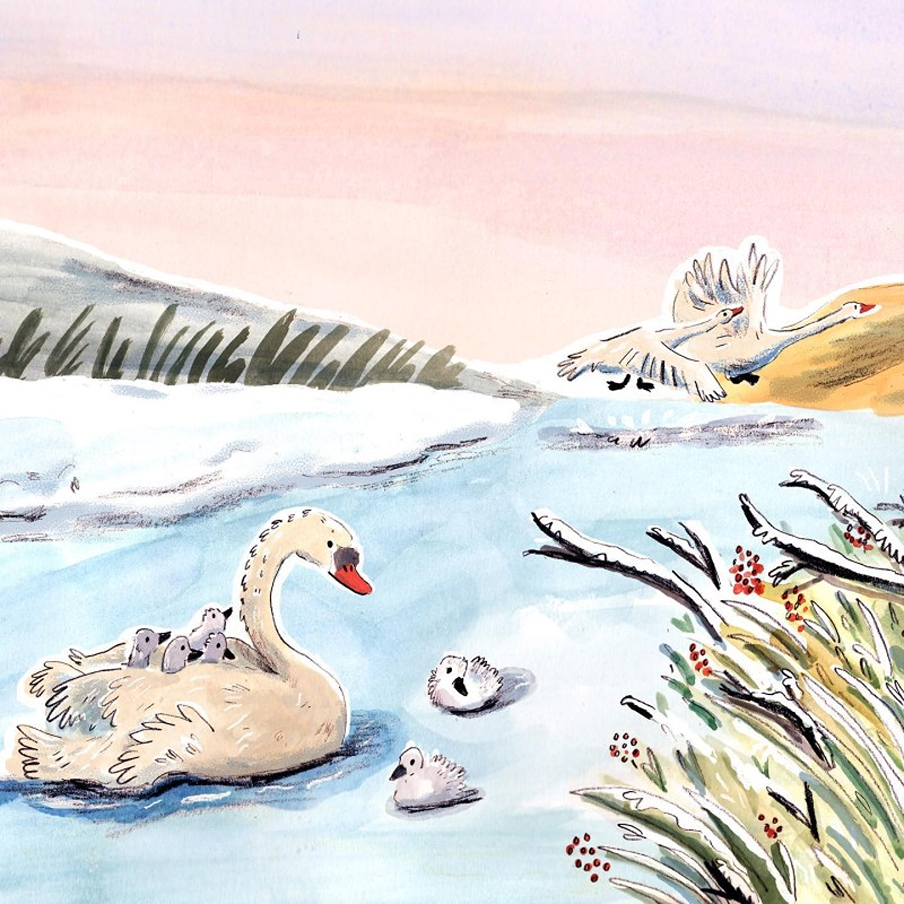
Eton is known for its posh school (past alumni include Royal Family sons and former Prime Ministers. Along with actors (Damian Lewis, Dominic West and Hugh Laurie). But the town is also home to one of England’s swan sanctuaries, which gives advice to help our graceful swans.
The seven-acre site on the River Thames houses Cuckoo Weir Island, a tranquil and peaceful location. It has 10 outdoor pens to house up to 180 swans needing help, with each one containing a pond, for a constant flow of river water.
The intensive care unit has 10 heated indoor pens for poorly swans, and a treatment room with various medical supplies, including a specialist ‘swan bath’ for swans covered in oil.
An easy way to raise funds is to sign up with easyfundraising (nominate Swan Lifeline, then anytime you buy things with shops or services, it donates a portion of profits, at no cost to you). You can if preferred donate anonymously, set up a giving account at Charities Aid Foundation.
Exploring Cookham’s Artistic Village
Just a few miles away is the village of Cookham, which has inspired artists for centuries, including Stanley Spencer. Walk the same lanes and riverside paths that appear in his paintings.
The village’s riverbank is a great spot for summer picnics, paddling or watching boats pass. Walk to the nearby commons and discover meadows full of wildflowers and birds.
Ask Councils to Install Bird Diverters
Swans fly well but need a long run to take off, due to body weight. So they often fly into pylons or busy roundabouts. Experts say councils could install bird diverters (these can also help prevent owls and bats from being injured or electrocuted).
Is It Okay to Feed Swans, Ducks and Geese?
Swans naturally live on grass, insects and molluscs. They should in theory be able to find their own food easily, under the water.
If you do choose to feed extra food, Swan Sanctuary says to only feed (occasional torn) lettuce, spinach or fresh (torn) bread is best (throw it on the water, as swans have no teeth). This also discourages swans from coming onto dry land, where they can be at risk from dogs and traffic.
Never feed mouldy/stale/crusty bread nor buttered bread (this smears on feathers, affecting waterproofing/insulation).
Never feed swans on nests, as it upsets brooding and encourages vermin. The Swan Food Project has good tips on what to (and what not to) feed swans.
Protect Nests and Nesting Areas
Swans need quiet, sheltered spaces along the water to build their nests and raise cygnets (swan chicks). These spots are often disturbed by dogs, people or careless boating. On walks, keep dogs away from nesting sites and stick to marked paths.
If you spot a nest, give it plenty of space and let others know it’s there. Signs and simple barriers can help, especially in parks and urban areas where swans are more likely to be disturbed.
Report Injured or Distressed Swans
Swans sometimes get caught in fishing lines, swallow hooks or suffer from dog attacks. If you see a swan in trouble, call a local wildlife rescue or the RSPCA. Quick action often means the difference between life and death.
Keep rescue numbers handy if you visit water often, and never try to handle an injured swan yourself. These birds are strong and can be frightened easily; experts know how to help safely.
Avoid Unnecessary Disturbance
Swans are sensitive, especially during breeding and moulting seasons. Noise, fast-moving boats and aggressive dogs can cause swans to abandon nests or flee into danger. Stick to slow speeds in boats near swans, and encourage others to do the same.
Remind children not to chase or shout at swans, and always treat them with the respect they deserve. A peaceful environment lets swans nest, feed and care for their young without stress.
Plant Native Vegetation Along Banks
Plants along riverbanks and ponds do more than look pretty. They stop erosion, provide cover and help filter runoff before it reaches the water. Swans use reeds and grasses for nesting, and the right plants offer a steady food source, too.
Where possible, encourage councils and landowners to plant or protect native plants. Even home gardens close to water can play a part if planted thoughtfully.
Good Books About Swans

Swan: Portrait of a Majestic Bird is the celebration of our mute swans, by a wildlife writer who has studied mute swans for over 30 years since boyhood and (as a pilot who shares their skies) speaks up for the mute, answering questions about nature and future.
The Swan: A Biography is by nature writer Stephen Moss. With beautiful illustrations, swans are the ‘avian equivalent of Sir David Attenborough’. Swans have been part of England’s scenery for hundreds of years. Thankfully swans are highly protected under the Wildlife and Countryside Act.
How to Help England’s Gorgeous (noisy!) Geese

England’s wild geese are large, noisy and social birds that (like swans) mate for life, and call out to each other, during their long migrations.
They often fly in a V-line (if one gets sick, two more fly down to be with it, until it recovers or dies). Then they fly back to the original group, or find another one to join. How loyal!
Geese are comical birds who fixate on the first ‘being’ they see. And that (sometimes person) becomes their ‘mother’.
Which is why they behave like guard dogs, if someone goes near your territory, if they think they should protect you!
Like most birds, geese love our wetlands, and return to England for breeding. So it’s really important to protect remaining wetlands, as we have lost most of them to industrial farming.
England’s Wild Geese Breeds

- Canada geese are common, with black necks and honking calls.
- Barnacle geese have black and white plumage, like they are wearing tuxedos! They migrate from Greenland to Scotland each autumn, and love coastal areas.
- Brent geese are also found along coasts and estuaries. These dark-bellied geese breed in Siberia (if light-bellied, they are from Canada). They love eating eelgrass and marine vegetation.
- Greylag geese are heavy birds that often graze on agricultural land. They often nest in grounded tufts of grass.
- Egyptian geese were originally from Africa, and have striking brown and beige plumage, with distinct facial markings. They like to live in parks and large estates, and often nest in trees.
Read The Meaning of Geese, the story of one conservationist, who watches wild geese fill the Norfolk landscape, as they fly in from Iceland and Siberia on epic journeys of over 1000 miles.
Don’t Litter Ponds with Fishing Waste
Anglers can use Monomaster to store fishing gear, until you store it in a fishing line recycling station.
Voluntary bans on lead shot (by the hunting industry) have not worked. 100,000 wildfowl die yearly from ingesting metal in used pellets (lead shot also harms other creatures).
Don’t Feed Unsafe Foods to Wildfowl
Don’t feed stale, mouldy or crusty bread (nor fatty or salty foods) to wildfowl (or garden birds). These can choke, and fat smears on feathers, affecting waterproofing and insulation.
Use Rapeseed Oil (for roast potatoes)
Make roast potatoes with local rapeseed oil. You don’t need goose fat to make nice roast spuds, for Sunday lunch.
Don’t Buy or Order Foie Gras
Don’t buy pate de foie gras (nor support shops or restaurants that sell it). Illegal to produce in the UK due to cruelty.
Support Good Works of Geese Sanctuaries

Support GoodHeart Animal Sanctuaries which gives loving homes to geese, who enjoy patrolling the yard and swimming in ponds.
When night falls, the ‘tame flock’ are herded into a cosy ‘bedroom’, while the ‘wild flock’ heads to a secure island.
Find Help on Caring for Geese
If you care for geese, RSPCA has information on food, housing, disease and keeping them safe from predators.
One tip to humanely deter foxes, is to get the male member of the household to urinate in the garden!
How to Help Injured Geese
If you notice a goose looking unwell, tangled in fishing line or acting strangely, report it to a local wildlife rescue group. Don’t try to catch the animal yourself.
Trained support teams know how to help without causing more stress or harm. Quick action gives injured geese their best shot at recovery.
Report concerns of anyone illegally harming geese (or any other creatures) to Wildlife Crime Unit (this can be anonymous).
Respect Their Space

Getting too close can stress geese, especially during nesting season or when goslings are young. Give them plenty of room to move, keep dogs on leads in parks and maintain a respectful distance.
Foie gras is one of the cruellest foods on earth, made by force-feeding factory-farmed geese (or ducks) through a tube, until their livers turn to pate. It’s like force-feeding you plates and plates of spaghetti in one go. Yet despite being illegal to produce in the UK, it’s still legal to sell it. So boycott it in hotels and restaurants, and any stores (including Harrods and Fortnum & Mason) that still sell it.
Foie gras is so cruel, that it’s banned for production in nearly all countries on earth (a few still produce it, including France and Hungary). When he was California’s governor, Arnold Schwarzenegger banned its sale, he was so appalled by it being offered in local restaurants and shops. It’s banned for sale in New York City and even the whole of India.
So why on earth is it still not banned for sale in the UK (and Ireland)? Kudos to King Charles III, who at least has banned it at Buckingham palace and all royal residences. But this does not go far enough. England is a country that adores animals, so why is it still on the menu of nearly every ‘posh’ hotel (including the Ritz, the Savoy and the Four Seasons).
Health Dangers of Foie Gras
As well as being cruel, foie gras is very bad for your health. It’s extremely high in saturated fat and cholesterol, a real ‘heart attack on a plate’. It’s just the kind of food to block arteries.
Due to the way that it’s produced (including intensive housing), foie gras also has risks for listeria and salmonella, as well as bird flu. It’s already not recommended for pregnant/nursing women or anyone with weak immunity. And is not good for anyone else either.
Why Has the Import Ban Been Delayed?
Just after the Labour landslide election in 2024, environment minister Steve Reed MP promised to ban the import of foie gras (like real fur, if it’s illegal to produce here, it should be illegal to sell). However, Animal Equality is not impressed that one year later, nothing has happened.
Apparently, the reason given is to do with ‘border checks’ in order to ‘boost economic growth’. We are better than that. Write to Your MP and ask what’s happening with the Bill, and ask him or her to support it, and raise the issue in parliament.
Every year, millions of terrified ducks and geese endure unbearable suffering for foie gras. Promises toe and UK imports of this abhorrent product has been disappointingly slow. Animal Equality UK
Labour has already pledged to ban foie gras imports. Foie gras imports betray British values of compassion. We should not be importing products that don’t meet our values. Animal Policy International
Kind, Vegan Alternatives to Pâté de Foie Gras
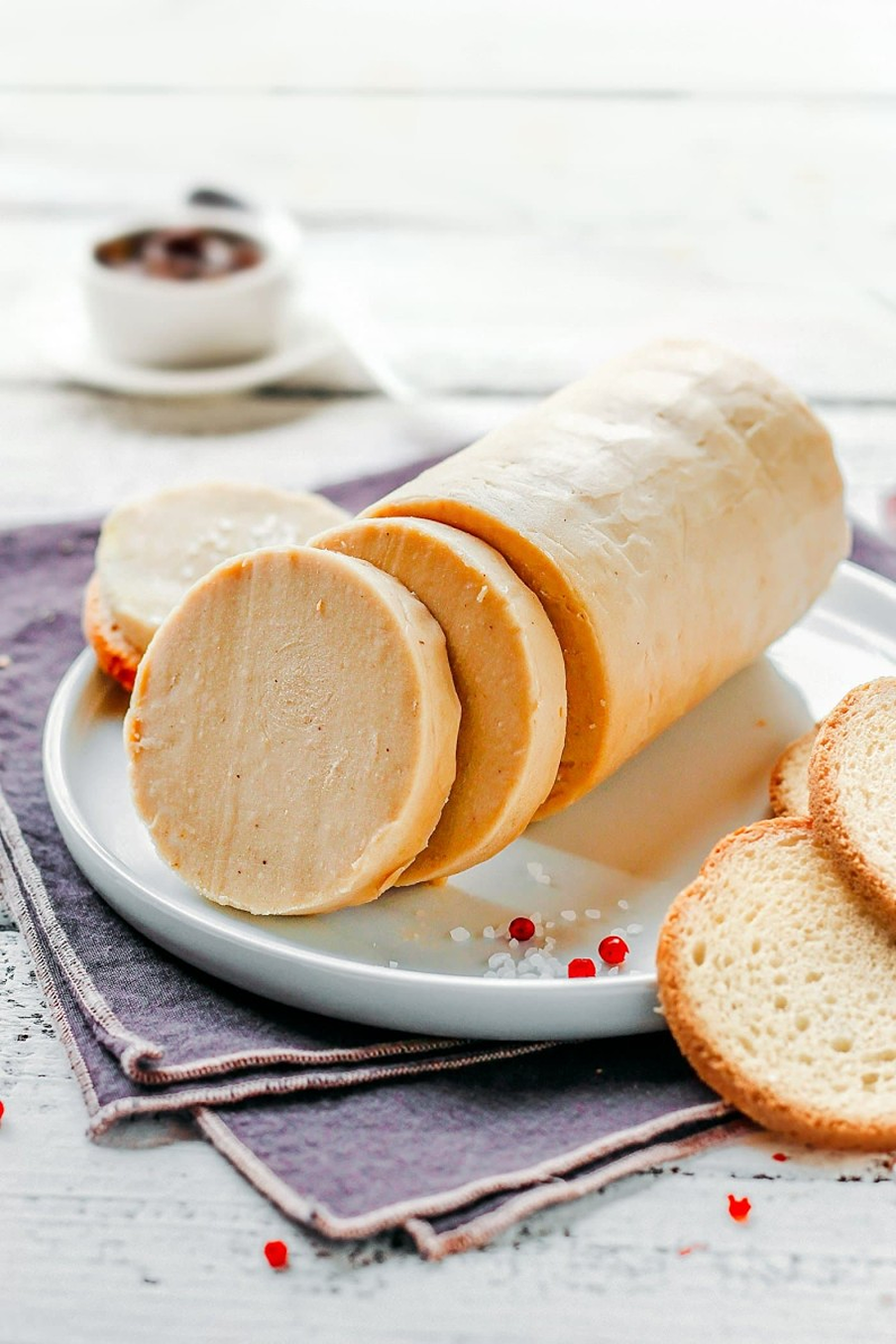
The reason given to eat foie gras is always the same – taste. So for those who can’t seem to stop eating it, just go for a good alternative instead.
Vegan Foie Gras (Full of Plants) was created by a French chef, and apparently tastes just like the real thing. It’s made with cashew nuts, and infused with tahini, truffle oil and miso (avoid for pregnancy/nursing due to being unpasteurised).
Before cooking, read up on food safety for people and pets.
- Faux Gras (Two Spoons) is made from mushrooms and lentils, for a umami-rich seasoned paste by an American who has lived in France for several years.
- Shocken Foods No Duck Pate features brandy and black truffle. Sold frozen, it was created by award-winning foodies.
- Spain’s Hello Plant Foods has sold nearly 4 million units of its faux gras, including to Michelin-starred restaurants.
When consumers try Fuah! their eyebrows shoot up and they go ‘Madre Mia’. Javier Fernández (founder of Hello Plant Foods)
Avoid Buying ‘Exotic Meats’ in Supermarkets

Some UK supermarkets sell ‘exotic meats’ like ostrich, crocodile and kangaroo. But welfare laws are likely even less stringent than they are for barn animals in England.
Read our post on Compassion in World Farming’s campaign to get shops to take on its 6-tier food labelling system (consumers would then know which animal foods to avoid, if they eat them).
Crocodiles are often skinned alive to make handbags and shoes and kangaroos are often clubbed to death (with their joeys left to starve) for the football boot industry, so it’s likely these animals used for food suffer the same fates.
Ostriches (the world’s largest birds) are also often killed (along with emus) for the beauty industry.

Some online stores even sell foods like zebra? Many supermarket had to take wild boar off the shelves, due to consumer boycotts. And there were more boycotts abroad, when some supermarkets started to stock snake.
They may be advertised as ‘low-cholesterol’ alternatives, but all animal foods have cholesterol (even chicken has the same cholesterol as beef). The only way to avoid bad cholesterol is to avoid animal foods – cholesterol is stored in the liver, and broccoli doesn’t have one!
Also boycott anywhere that sells pate de foie gras (made by force-feeding ducks and geese, until their livers turn to pate).
Goose-Friendly Vegan Roast Potato Recipes
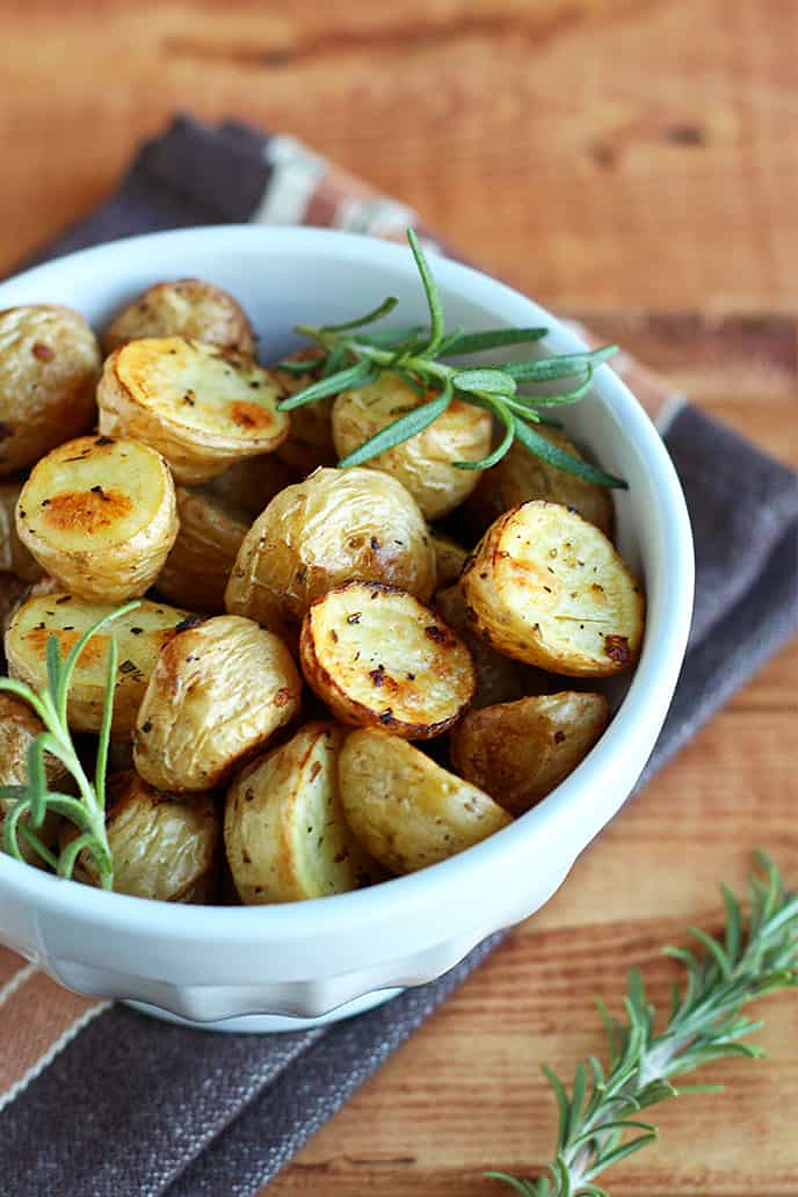
Simple Herb Roast Potatoes (I Love Vegan)
Roast potatoes are up there with everyone’s favourite side dish or snack. Most of us would gladly eat a plate of roast potatoes on their own, especially with sea salt and pepper. They do take a while to bake in the oven (if you’re worried about time or energy bills, there is a pan-fried version below).
But do take the effort to learn how to roast your own potatoes. You don’t need goose or duck fat, using rapeseed oil gives better results, and supports local farmers. (below). And home-baked roasties are tastier and cheaper than plastic-wrapped supermarket frozen roasties.
Can Everyone Eat Roast Potatoes?
Most people can, although of course you may wish to limit oil and salt. Avoid feeding roasties to young children or those at risk of choking.
Avoid feeding leftovers to pets, garden birds or wildlife (due to salt and fat – which smears feathers, affecting waterproofing and insulation).
Which Are The Best Roasting Potatoes?
Maris Piper are the best potatoes for roasting, due to their fluffy dry texture and ability to soak up flavours. Other good choices are King Edward and Desiree (these give a lovely colour).
Roast potatoes are actually a dish from the Americas, but ever since they arrived on English shores a few centuries ago, they have never been off the table!
How to Prepare Potatoes for Roasting
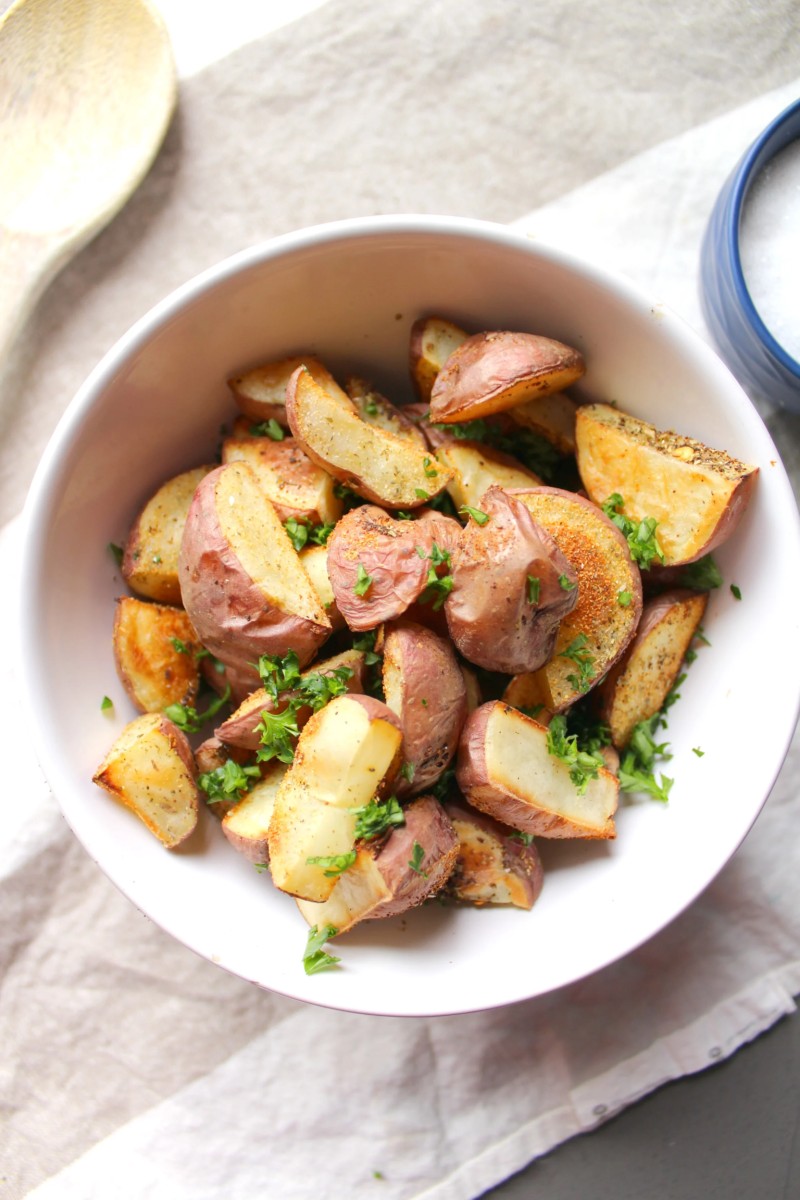
No-Oil Roast Potatoes (This Savoury Vegan) use Italian seasoning and spices
Get a good peeler (from a kitchen shop). It will last you a lifetime, and make peeling fun, not a chore. You can then use it for peeling root veggies, and also gather more potato from under the skin, to avoid food waste.
If flavouring roast spuds with garlic, onion or lemon, bin the scraps to break down naturally. This is because unless you know how to expertly balance greens and browns, excessive acids could harm compost creatures.
Why Rapeseed Oil is Best
Please no duck or goose fat, these beautiful birds have enough welfare issues already. Rapeseed oil comes from those bright yellow flowers that you see in farmers’ fields. Find a local brand in farm shops, or if you can’t find it, sub with sunflower or light (not extra-virgin) olive oil that has a milder taste.
Rapeseed oil has a higher smoke point than olive oil, which is best reserved for salad dressings. Rapeseed and sunflower oils have a neutral taste, ideal to add garlic or herbs.
A Basic Roast Potato Recipe
It’s best to ‘eyeball’ ingredients for basic savoury recipes, to avoid waste. Aim for around 2 medium potatoes per person.
- Peel and chop your spuds, then rinse under cold water and soak for 30 minutes.
- Bring to the boil in a pan of cold salted water, and simmer for 8 minutes until par-boiled. Drain and return to the pan, and shake for 10 seconds (this roughs the edges, for a crispy finish).
- Pour rapeseed oil (a tablespoon or two per person) in a roasting pan, and place in a pre-heated oven for 5 minutes. You then add the potatoes with tongs or a slotted spoon into the hot oil.
- Sprinkle over some sea salt (with optional smashed garlic cloves and fresh rosemary or thyme – not dried as it will burn). Roast for 25 minutes, turn each potato over, then roast for another 20 minutes.
- Serve hot, seasoned with more sea salt, if wished. If your potatoes are soggy, you need to set your oven temperature higher. Also be sure to space potatoes on the tray (for a big batch, simply use two trays).
What To Do with Leftover Cooking Oil
Never pour cooking oil down the drain, as it will clog your sink and sewers. For small amounts of oil, wrap in kitchen paper roll and bin.
If you have lots of leftover oil (say you cook for a large family or work in a restaurant or hotel, then invest in a cooking oil recycling container, to empty at local recycling banks (or arrange collection).
Worried About Cost of Oven Cooking?
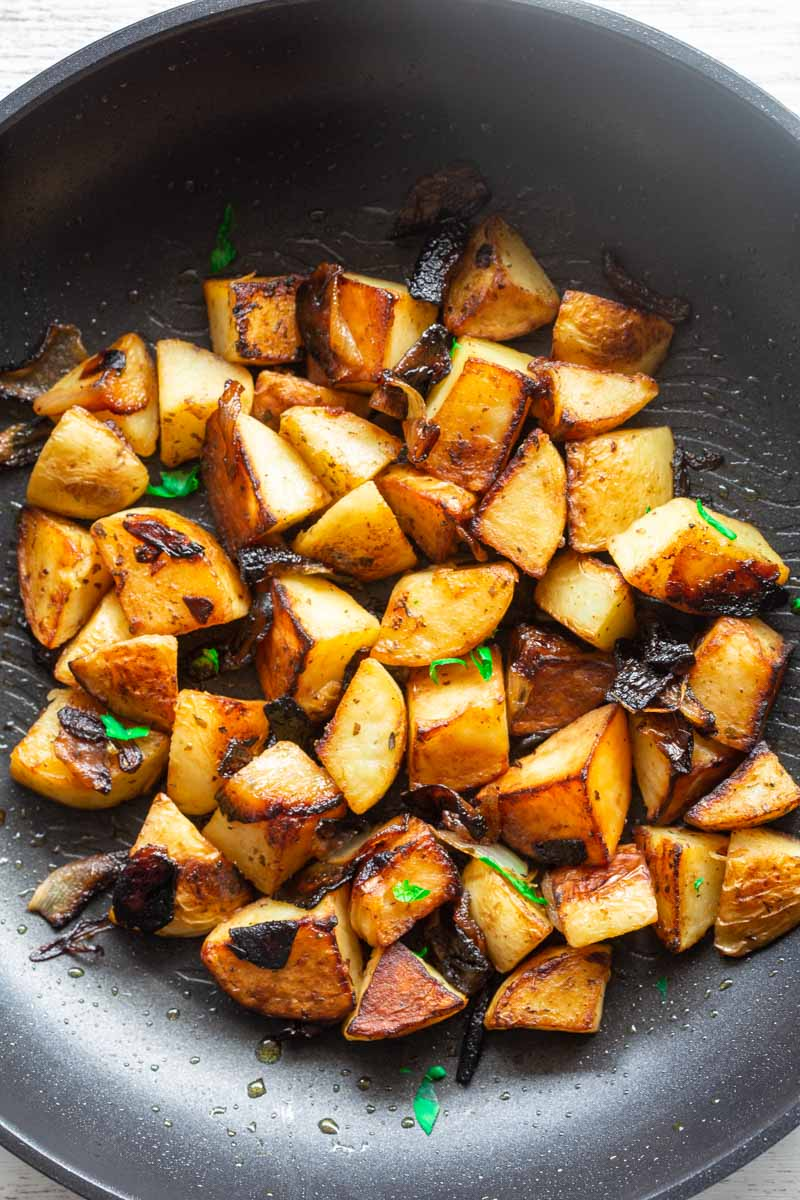
If you are worried about energy bills (or you don’t have an oven or are short on time), you can make pan-fried potatoes. Popular in Germany and Greece, you just chop the potatoes smaller, then cook them in a little oil in a frying pan. Again you can add flavours like chopped onion or garlic.
These pan-fried potatoes (Earth Blokes) only take 10 minutes from start to finish. You simply mix your rapeseed (or olive) oil with chopped potatoes and onions, and salt, garlic powder and optional Cajun spice. Then cook over a pan on medium heat until cooked. Yukon Gold or Desiree floury potatoes work best, but any blend will do.
Simple Ideas to Help Our Delightful Ducks
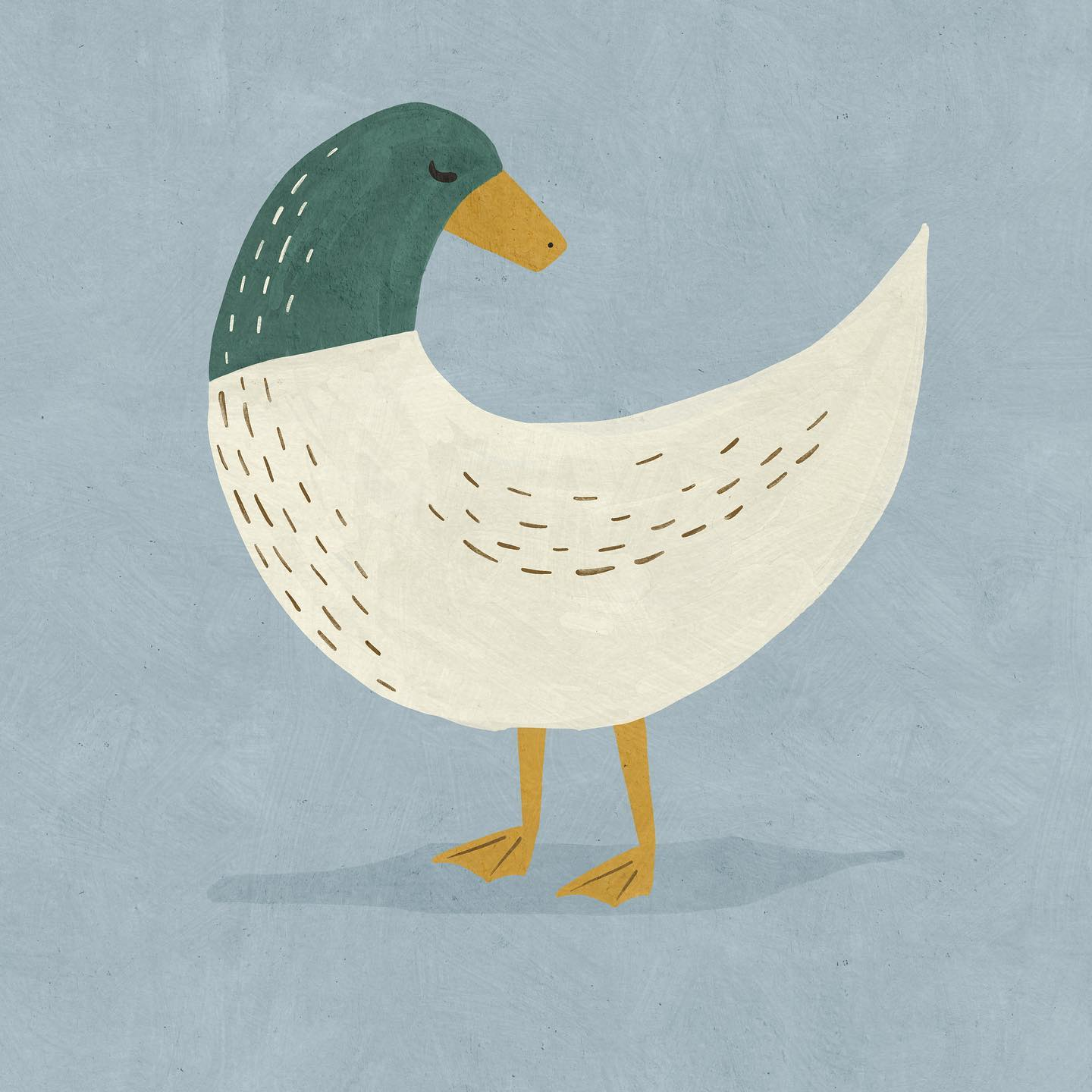
Ducks always brighten up England’s ponds, rivers and parks, adding life and colour, wherever they go. Their gentle quacks and playful antics charm young and old alike, but these birds face many risks that aren’t always obvious.
Pollution, lost habitat and well-meaning mistakes can put their health at risk. Here’s a clear, friendly guide to simple things you can do to help ducks thrive right where you live.
We have lots of species of ducks (those exotic looking ducks are escapees from zoos in South America years ago). These social creatures can live up to 20 years, and are so friendly, they even chat to other as ‘eggs’ while waiting to hatch!
If you’ve ever seen ducks sleeping with one eye open on the banks, that’s because ducks can literally shut off one part of their brains to go to sleep, while remaining alert with the other.
Don’t Feed Junk Food to Ducks
Wildfowl charities say that it’s best to let birds find their food, because in a country of 60 million people, even giving ‘a little’ bread means they end up eating junk food and dying earlier.
Bread has little nutrition for birds (and mouldy/stale/crusty bread can choke, as can salt from sandwiches – and butter smears on feathers, affecting waterproofing and insulation. Feeding wildfowl also makes them too tame, and they get too close to dogs and traffic.
Ducks often swoop down to nab snails or worms, while some even chase small fish. This diet supplement is particularly vital during breeding seasons when energy needs spike.
Come autumn and winter, many focus on seeds and grains, fattening up for migration or surviving the cold months.
Ducks and geese often graze, foraging on land and cropping grass, like mini lawnmowers. This method enables them to take advantage of terrestrial ecosystems when aquatic resources are scarce.
Keep Local Ponds & Lakes Clean

Ducks depend on clean water for drinking, bathing and finding food. Litter and chemicals in rivers and ponds can harm their health quickly. Take rubbish home after picnics and avoid dropping food scraps.
Pesticides, weed killers and fertilisers can wash into rivers and ponds after rain, harming ducks and their food. Swap harsh products for more natural options in your garden or on your allotment.
Support local parks and green spaces that reduce chemical use. Vote in some new councillors! Keeping chemicals away from water helps protect all creatures sharing the duck’s home, not just the birds themselves.
If you’re an angler, Monomaster is a nifty invention to store fishing line, the design does not encourage nesting birds.
Voluntary bans on lead shot have not worked (100,000 wildfowl die yearly from ingesting metal in used pellets (lead shot also harms up to half a million other creatures).
Why and Where Ducks Migrate

Each year, thousands of ducks embark on long journeys. Many species need specific habitats to reproduce, often found in more temperate regions during warmer months.
Each has unique migratory behaviours. For instance, the Teal migrates in small flocks, favouring wetlands as stopover sites. The Wigeon, known for its distinctive whistle, travels in larger groups and is often spotted in estuaries.
Provide Safe Nesting Spots
Many ducks nest in tall grass or bushes close to water. Councils can help by leaving patches of long grass and dense plants near ponds, especially during spring and early summer.
Avoid heavy use of lawnmowers or strimmers in these areas, as eggs and nests can be hidden from view. These little changes create safe, quiet places for ducks to raise their young.
Ducklings face many dangers, from busy roads to curious dogs (let alone from natural predators like herons). When out near water in spring, keep dogs on leads and teach children to give duck families plenty of space.
If you spot ducklings separated from their mother, watch quietly from a distance. Wild ducks are best left alone unless they are in immediate danger, in which case a wildlife rescue group should be called.
Sometimes park staff or councils put up signs or fences to protect duck nesting spots or fragile habitats. Respect these areas and help others do the same. Keeping to marked paths can make a big difference without much effort.
Watch for Injured or Sick Ducks
If you spot a duck that can’t walk or swim properly, stays away from others, or seems tangled in rubbish, don’t try to help alone. Contact a local wildlife rescue centre for advice.
Trained staff will know the best way to treat or help the bird. Acting quickly can save a duck’s life, and professional help gives the best chance of recovery.
Don’t Eat Duck Meat
This is a no-brainer. If you like Chinese food, try this recipe for crispy duck pancakes (keep away from pets, as it’s not real meat) or buy mock duck (braised seitan in gravy) in health stores.
Also boycott pate de foie gras. This when geese (and ducks) are force-fed until their pates turn to liver. It’s banned in the UK to produce, but still sold in some shops, hotels and restaurants.
Harming native wildlife is illegal. If you see anything of concern, report to wildlife crime unit (can be anonymous).
Look After Duck Rescue Charities

Support Sally’s Ducks, one of England’s duck rescue charities, which takes in elderly or disabled ducks needing a safe home.
One tip to humanely deter foxes from eating ducks, is to get the male member of the household to urinate in the garden, apparently it’s a good deterrent!