Image
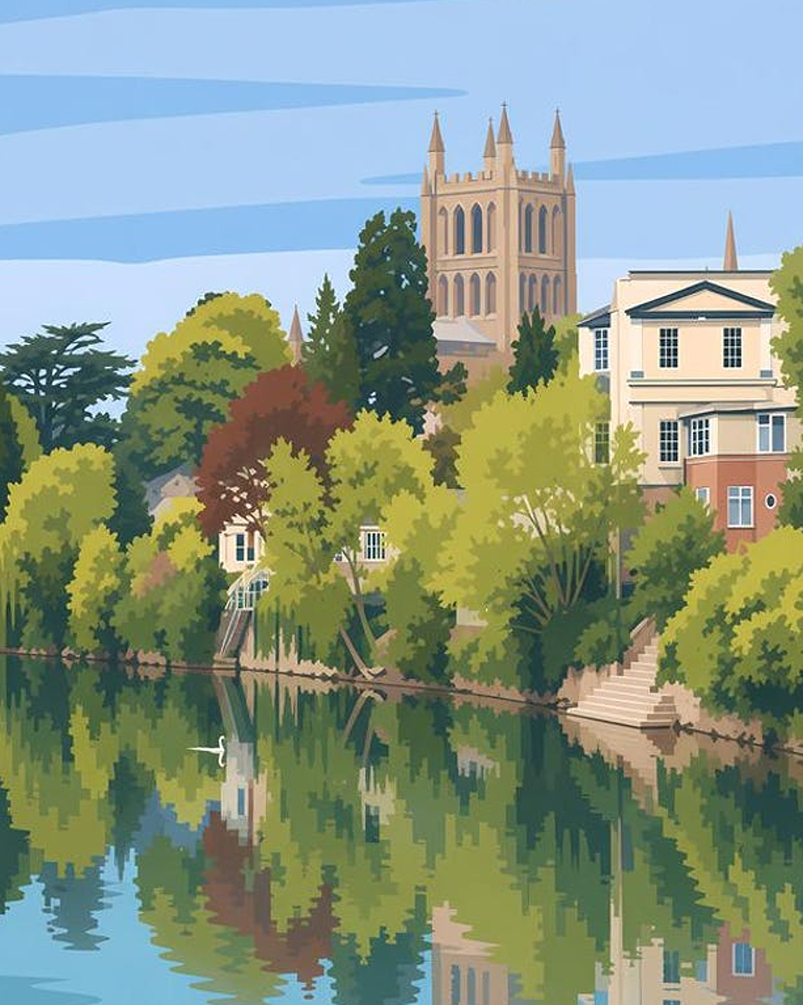
Hereford is a historic cathedral city in the beautiful county of Herefordshire, in the West Midlands and on the Welsh border. This is a city that feels and looks more like a large town, sitting on the banks of the River Wye, and home to many lovely buildings and indie shops.
It’s one of England’s smallest cities by population, so you won’t get stressed in lots of crowds like London or Birmingham or Liverpool. It’s far away from London (140 miles) and just 16 miles from the Welsh border.
This is orchard country, so all the local shops and pubs sell local apple juice and cider. Enjoy a pint at one of the many pretty independent pubs, while you look over the riverside.
Hereford Cathedral is one of England’s finest examples of Norman and Gothic architecture, building began back in the 11th century. The striking red sandstone is accompanied by a soaring tower. Inside is the Mappa Mundi, an enormous medieval map of the world created around 1300 by Richard of Haldingham (a local monk).
Looking over the River Wye
Hereford looks over the River Wye, England’s fourth longest river. Straddling the border between England and Wales, it begins in the Welsh Cambrian mountains and finishes at the Severn Estuary in Chepstow (the border with Wales and Gloucestershire).
Known for its dramatic limestone gorges, ancient woodlands and rolling meadow, it also contains many picturesque towns, and has captivated artists and writers for centuries.
The Wye Valley supports many wild creatures from otters to kingfishers to white-clayed crayfish. The ancient gorge woodlands are home to rare bats, peregrine falcons and pied flycatchers, plus diverse wildflowers. And estuary saltmarshes provide feeding grounds for thousands of migratory birds.
Green MP Ellie Chowns (who represents the constituency of North Herefordshire) is at the forefront of the campaign to protect the River Wye from pollution.
She recently took part in the launch of the River Wye Charter, a landmark recognition of the ‘rights of the River Wye’ to be protected for future generations, over growing concern on water pollution and farm run-off.