
Where are England’s most beautiful buildings?
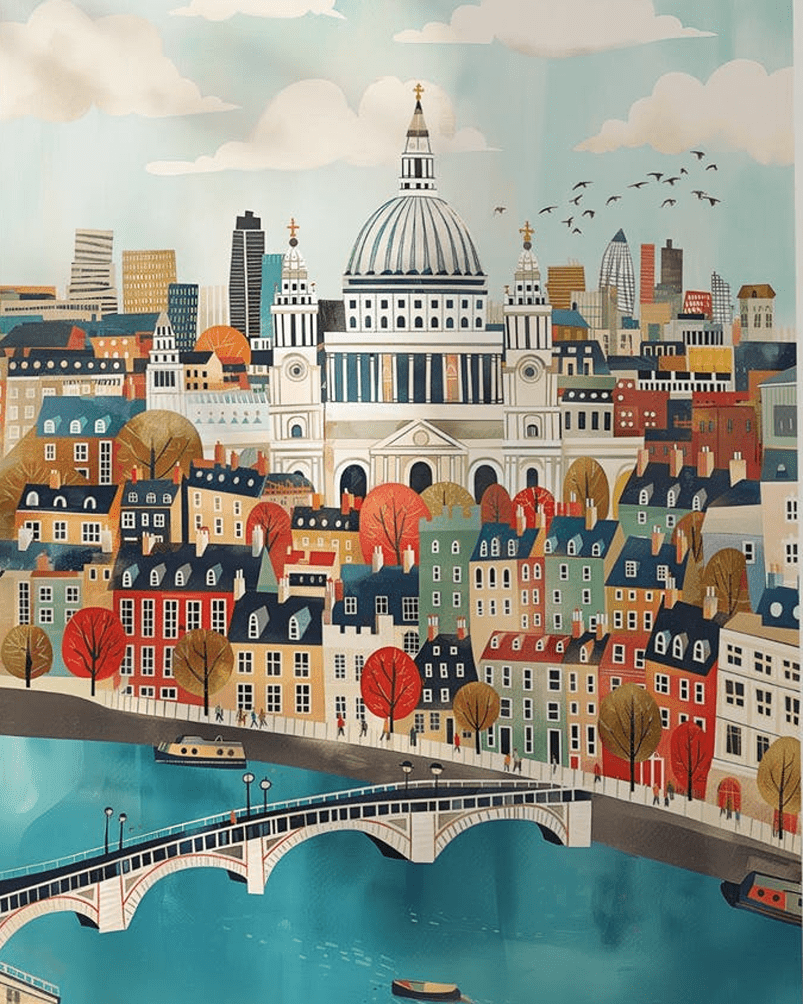
England is home to an extraordinary collection of beautiful buildings, ranging from medieval cathedrals and ancient castles to Georgian crescents, Tudor manor houses and Victorian masterpieces.
Some buildings are celebrated for their enormous scale. Others are admired for delicate details, harmonious proportions or their relationship with the surrounding landscape. England’s architectural beauty is particularly diverse because different periods have left their mark on the country.
St Paul’s cathedral, London
This is one of London’s most recognisable landmarks, designed by architect Sir Christopher Wren (there is much controversy that it is now hiring out the church to hold raves, to raise funds).
The enormous dome has dominated the city skyline for over 300 years. But it still remains a place of worship. It was built after the previous church was destroyed during the Great Fire of London in 1666.
Salisbury cathedral, Wiltshire
This is what American writer Bill Bryson believes to be England’s most beautiful building, with its enormous medieval spire. Built during the thirteenth century, it is famous for its remarkably complete Early English Gothic architecture and its exceptionally tall spire.
The cathedral stands within a spacious close surrounded by lawns and historic buildings. This setting allows visitors to appreciate the architecture from a considerable distance. Rather than being overwhelmingly massive, Salisbury Cathedral has a sense of vertical elegance.
York Minster
York Minster is one of the most spectacular Gothic buildings in England. Its enormous scale and intricate architecture dominate the historic centre of York.
The present building was constructed over several centuries, resulting in a complex mixture of Gothic styles. Its enormous windows are particularly impressive.
The Great East Window is one of the largest areas of medieval stained glass in Britain. The building’s towers and stonework demonstrate the extraordinary skill of medieval craftsmen.
Durham Cathedral
Durham Cathedral is among the most important Romanesque buildings in England. Built in the late eleventh and early twelfth centuries, it possesses a monumental quality that distinguishes it from later Gothic cathedrals.
Its massive Norman columns and rounded arches create a powerful sense of solidity. The cathedral stands on a rocky peninsula above the River Wear.
Wells Cathedral
Wells Cathedral is another outstanding example of English Gothic architecture. Located in Somerset, it is particularly admired for its elegant west front.
The façade contains an extraordinary collection of medieval sculptures. Hundreds of figures once occupied the architectural niches, creating a remarkable stone representation of religious history. Inside, the cathedral is famous for its unusual scissor arches.
King’s College Chapel, Cambridge
King’s College Chapel is one of the finest examples of late medieval architecture in England. Located in Cambridge, it is particularly famous for its enormous fan-vaulted ceiling.
The vault is an extraordinary achievement of medieval stone construction. Its delicate ribs spread across the ceiling in a spectacular geometric pattern. The chapel’s tall windows contain magnificent stained glass.
Bath Abbey
Bath Abbey occupies a prominent position in the centre of the historic city of Bath. The present building dates largely from the medieval period, although the site has an extremely long religious history.
Its large Perpendicular Gothic windows flood the interior with light. The fan vaulting is particularly impressive. The honey-coloured stone of the building harmonises with the surrounding Georgian architecture.
The Royal Crescent, Bath
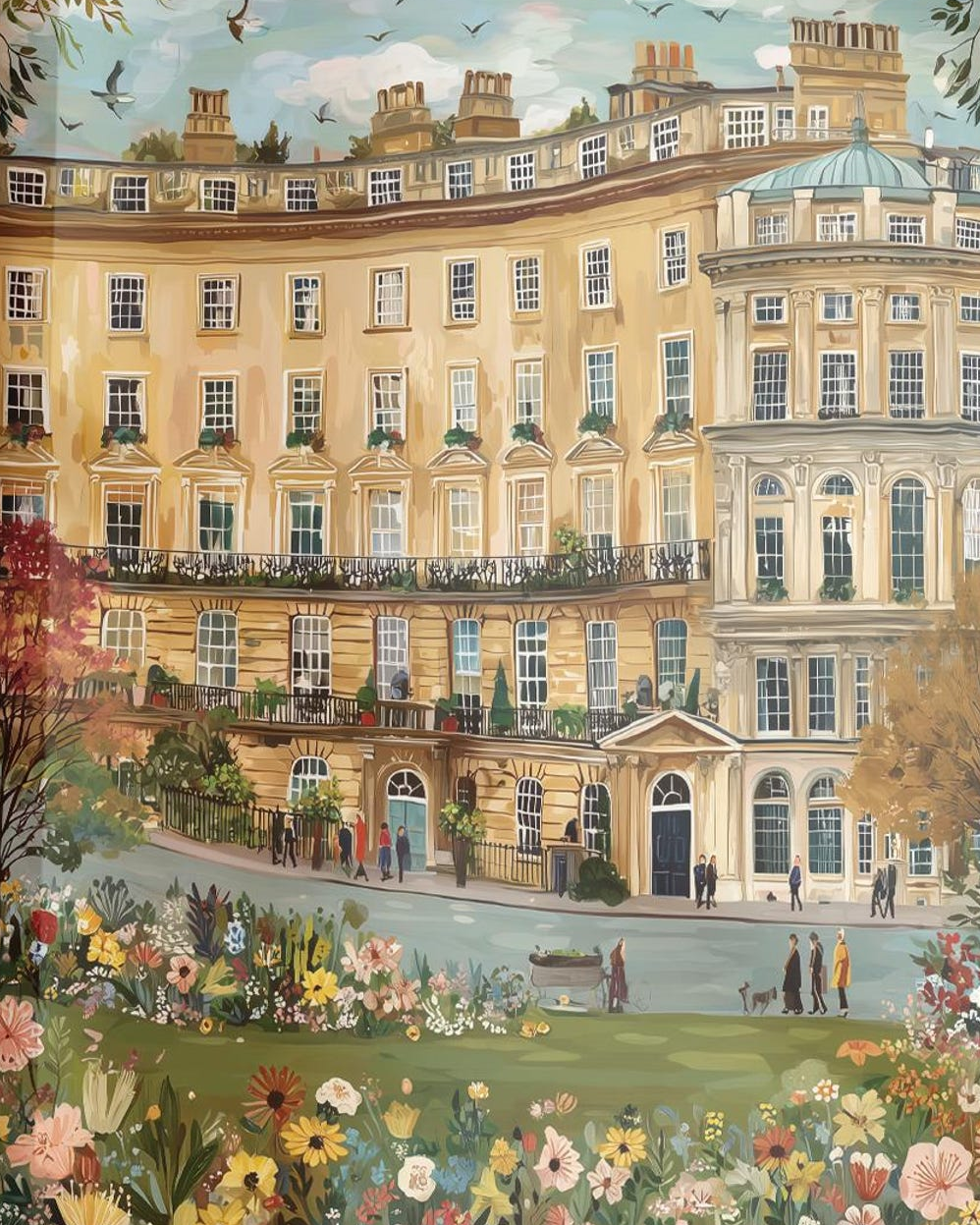
The Royal Crescent is one of England’s most famous pieces of Georgian architecture. Designed as a sweeping crescent of elegant townhouses, it overlooks a broad area of green parkland.
The building demonstrates the Georgian fascination with symmetry, proportion and classical design. Its long curved façade creates an impressive sense of unity.
Although the individual houses were built for separate residents, the overall design gives the impression of a single monumental building.
Ely Cathedral
Ely Cathedral dominates the surrounding Fenland landscape. Its enormous scale is particularly striking because the surrounding countryside is extremely flat. The cathedral’s octagonal lantern tower is one of its most unusual architectural features.
It was constructed following the collapse of an earlier central tower and provides a distinctive solution to the challenge of creating a large elevated space. The contrast between the cathedral and the flat landscape makes Ely particularly memorable.