The Landscape of Southern England
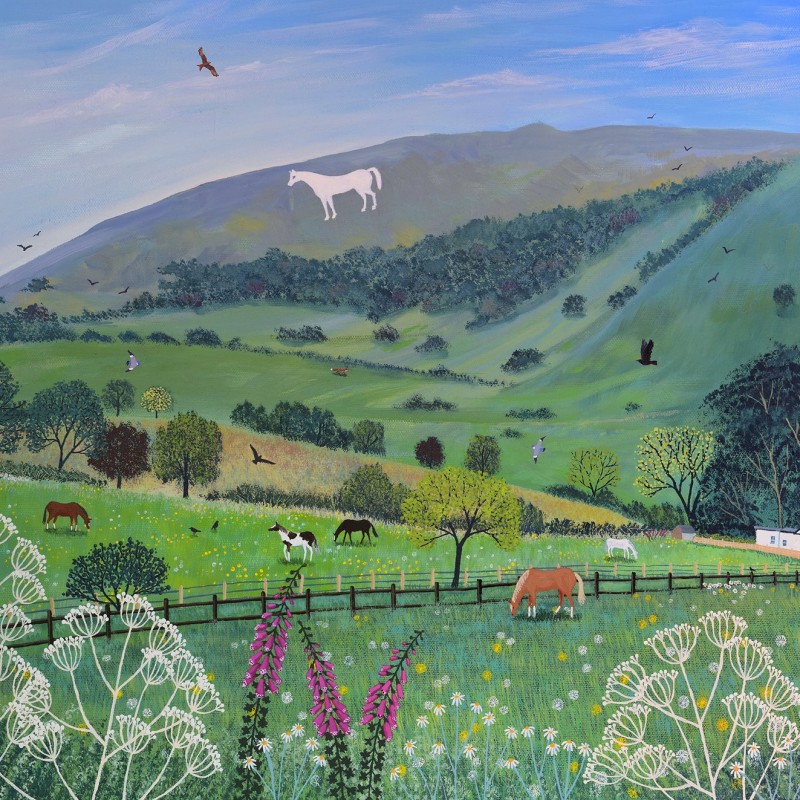
The chalk horses are concentrated in landscapes known for their broad ridges and open downs. The chalk downs of southern England form some of the most distinctive countryside in the country.
Wiltshire is particularly famous for its chalk landscapes, but similar terrain extends through Dorset, Hampshire, Berkshire, Sussex and other parts of southern England. These hills have traditionally been used for grazing sheep and other livestock.
The soils on the chalk downs are often relatively thin, and their agricultural history differs from that of the richer lowland valleys. The combination of exposed hillsides and short grass makes the landscape ideal for large figures that can be seen from a distance.
The Uffington White Horse
The most famous and oldest surviving chalk horse in England is the Uffington White Horse in Oxfordshire.
Although commonly associated with Oxfordshire today, the horse lies close to the historic boundaries of several counties and belongs to the wider landscape of the Berkshire Downs.
It is dramatically positioned high on a hillside. The figure is approximately 110 metres long and has an unusual, highly stylised appearance.
Unlike later white horses, it does not look like a naturalistic horse. Its body consists of sweeping curves and elongated shapes. The abstract design is one of the reasons archaeologists believe it may be prehistoric.
The Uffington White Horse is generally considered to be more than 3,000 years old. Its exact date and purpose remain subjects of archaeological discussion, but it is widely regarded as one of Britain’s most important prehistoric hill figures.
The Westbury White Horse
The Westbury White Horse is another famous Wiltshire hill figure. It occupies a prominent position on the steep slope of Bratton Down.
The horse is particularly striking because of its bright white appearance and dramatic setting. The figure that visitors see today has been restored several times.
Its history is complex, and the current appearance does not necessarily represent exactly what earlier versions looked like. The Westbury horse is nevertheless one of the most recognisable symbols of Wiltshire.
The Cherhill White Horse
This is carved into the hillside near Cherhill and is easily visible from the surrounding countryside. The horse was created in the eighteenth century. Unlike the prehistoric Uffington figure, its approximate date is known.
The figure is accompanied by another famous landmark on the same hillside: the Lansdowne Monument. The combination of monument and white horse creates an especially distinctive landscape.
The Marlborough White Horse
The Marlborough White Horse is associated with the town of Marlborough in Wiltshire. It is located on the hillside at Granham Hill. The horse is another example of the eighteenth-century enthusiasm for creating large white figures on chalk hills.
Its relatively elegant shape reflects the development of a tradition that had already become well established in Wiltshire. The figure remains an important part of the landscape around Marlborough.
The Pewsey White Horse
The Pewsey White Horse is one of the most impressive horses in Wiltshire. It is located on the northern escarpment of the Pewsey Vale.
The Pewsey Vale itself is one of Wiltshire’s most beautiful landscapes figure has a graceful appearance and is particularly attractive when viewed from the surrounding countryside.
The Pewsey Vale itself is one of Wiltshire’s most beautiful landscapes. The long valley is surrounded by chalk hills, creating a dramatic setting for the white horse.
The Devizes White Horse
The Devizes area has a particularly strong connection with white horse traditions. Several figures have existed in the surrounding landscape, reflecting the popularity of chalk hill figures in Wiltshire.
The Devizes region also contains numerous prehistoric monuments and ancient routes. This makes the relationship between the horses and the wider archaeological landscape particularly interesting.
The Broad Town White Horse
The Broad Town White Horse lies on the Marlborough Downs in Wiltshire. It is smaller than some of the county’s most famous figures but has a distinctive appearance. The horse was created during the nineteenth century.
Like other chalk figures, it requires periodic maintenance to prevent vegetation from covering the exposed chalk.
The Hackpen White Horse
The Hackpen White Horse is another prominent Wiltshire figure. It stands on the Marlborough Downs and can be seen from roads passing through the surrounding countryside.
Its location demonstrates why the chalk horse tradition became so successful. The open downs provide enormous natural canvases.
The Osmington White Horse
The Osmington White Horse is located near Weymouth in Dorset. Unlike many Wiltshire examples, this horse depicts a rider as well as the animal. The mounted figure is traditionally associated with King George III.
It was created in the early nineteenth century. The horse and rider are enormous and occupy a prominent position above the Dorset countryside. The figure is particularly interesting because it combines landscape art with royal symbolism.