The History of England’s Writers and Bards

England has a rich history of famous writers, let’s meet a few of them and learn about their history:
Stratford-upon-Avon is where you’ll find the legacy of one of England’s greatest ever writers. The streets of this town are lined with historic houses, including his own, which you can visit. Or take in a play at the Royal Shakespeare Theatre.
Shakespeare was a wealthy property developer (with left-wing political views) who has no direct descendants, as all his closest relatives died, with no living children.
Despite stories of other people writing some of his plays, Shakespeare Birthplace Trust refutes this. Some believe that Edward de Vere (the Earl of Oxford) wrote them.
The Illustrated William Shakespeare offers 25 of his most beloved poems alongside stunning colour collage artwork, if you feel that you really should read Shakespeare, but want some easy bedtime reading!
Germaine Greer is not a fan of ‘exploitation of the Bard’, saying that millions of ‘pilgrims’ now spend £7 to struggle up the stairs of Anne Hathaway’s Cottage (not a cottage, and it never belonged to her). And visit to spend money at fast food chains and over-priced sandwich bars, something that William would likely be appalled at.
Like Bath, London and the Lake District, Stratford-upon-Avon is now suffering from so-called ‘over-tourism’. Where people often visit with mass tourist companies, buy over-priced tourist tat, take a few selfies and return home, contributing almost nothing to local heritage or economies.
The town is now so commercial, that apparently China is soon to build its own version (just like Las Vegas builds its own versions of worldwide towers and bridges).
People Need to Find Other Things to Worry About
It seems like political correctness has also gone a bit mad here. Following media criticism that to call Shakespeare ‘the greatest living writer’, is ‘white supremacy’, there are now seminars in London, to prove that Shakespeare was not racist?
In fact, as noted above, he was a very radical left-wing campaigner, and about as anti-racist as you could get, nobody needs seminars, they just need to read his life story and work. In 1833, black actor Ira Aldridge played Othello on the London stage, and since then it’s rare for a white actor to play him.
This mirrors some who criticised the author of the Paddington Bear books, because he came from ‘darkest Peru’. In fact, Michael Bond was inspired to write his tales of the polite kind bear, after his own family would shelter refugees in the war.
His notion for creating the books, was actually to foster compassion and acceptance for people from abroad. Paddington Bear was the original illegal immigrant! What would Nigel Farage say?
Writer George Eliot – a Scandalous Life

Mary Ann Evans (better known as George Eliot) was one of history’s most scandalous writers. She is however known for her book Middlemarch, many describe it as one of the best novels of all time.
So why did her life shock so many people. For a start, she refused a loveless marriage, instead taking a partner who could not legally wed her, as he was married to someone else. This shocked both friends, family and society.
Born in 1819 in rural Warwickshire (near Nuneaton), she was a bookish child who studied languages, history and religion. After her mother died, she had to run the household, but still would read at every chance she got.
On moving to London as an adult, she worked with a publisher, and soon became editor of the Westminster Review. She also was so bright, she could translate religious works, and realising that it would difficult to publish as a woman, took her pen name of George to hide her gender (and keep her controversial life separate from her writing).
A Scandalous Life with George Henry Lewes
In 1851, she met George Henry Lewes through literary friends. Already in an open marriage (his wife had children with another man), She met George Henry Lewes in 1851 through literary friends. He was a sharp critic, witty and warm, and already married. His marriage to Agnes Jervis was open (she had four children with him, and another four with his friend?!) Forming a strong bond, Eliot and Lewes chose to live together out of wedlock, a bold move in Victorian London.
The couple lost friends and family, and newspapers hinted at their immorality. She was shut out from polite society, yet this did not seem to affect her work, as her writing thrived. They even travelled to Europe, where she wrote some of her finest books.
In 1878, Lewes died. Consumed with grief, she continued to edit his work, but her health declined. Just 2 years later, she married a banker (and old friend) John Walter Cross, who was 20 years her junior.
What happened next was beyond belief. On their honeymoon in Venice, John (consumed with depression) jumped from a hotel window into the Grand Canal. He survived, and they returned to London. But not long after, George died and is buried beside Lewes in Highgate Cemetery. John never married again, and died many years later age 84.
Challenging Social Norms Through Literature
Although George Eliot wrote some years after Jane Austen and the The Brontë sisters, their styles were very different. If you liked old-fashioned romance novels and the Christian faith, you likely preferred the latter and its romantic Regency life.
George was more a humanist-leaning feminist, and was seen as having views not in keeping with modern society. A bit like the 60s likely, when you either preferred The Beatles or The Rolling Stones!
It is a narrow mind, which cannot look at a subject from various points of view. George Eliot
Agatha Christie – England’s Crime Writer

Dame Agatha Christie was England’s most successful crime writer, with over 2 billion copies of her books sold worldwide. Her stories were intelligent puzzles, without gratuitous violence, set in nostalgic villages.
Agatha Mary Clarissa Miller was born in 1890 in Torquay, Devon. Raised in a wealthy family, her American father loved to read to her, and her mother encouraged her imagination.
Agatha’s father’s early death put a stop on many of the family finances. Her sister married well, although her brother was more rebellious, a professional hunter who was often getting into trouble. Agatha meanwhile was more fun, becoming the first women in England, to surf standing up!
She had a controversial life, going missing once for 11 days, during an episode of intense stress before her marriage breakdown. It’s now believed she was genuinely suffering from memory loss, and it was not a publicity stunt, as often claimed.
Hercule Poirot and Miss Marple
Agatha Christie’s most legendary sleuths were Belgium Hercule Poirot (a retired detective) and Miss Marple, a village spinster, who saw patterns in people, that others missed). Both were turned into much-loved TV shows. Her book popularity puts her only second to William Shakespeare, with her books having been translated into 100 languages.
Agatha’s home Greenway in Devon is one of the most popular National Trust destinations. Described by the author as ‘the loveliest place in the world’, she and her second husband (archaeologist Max Mallowan) lived here, in the house that had originally been built for a sea merchant. The walled gardens are home to a restored peach house and vinery, plus there is a local allotment cared for by local children.
Joan Hickson: The Undisputed Miss Marple!
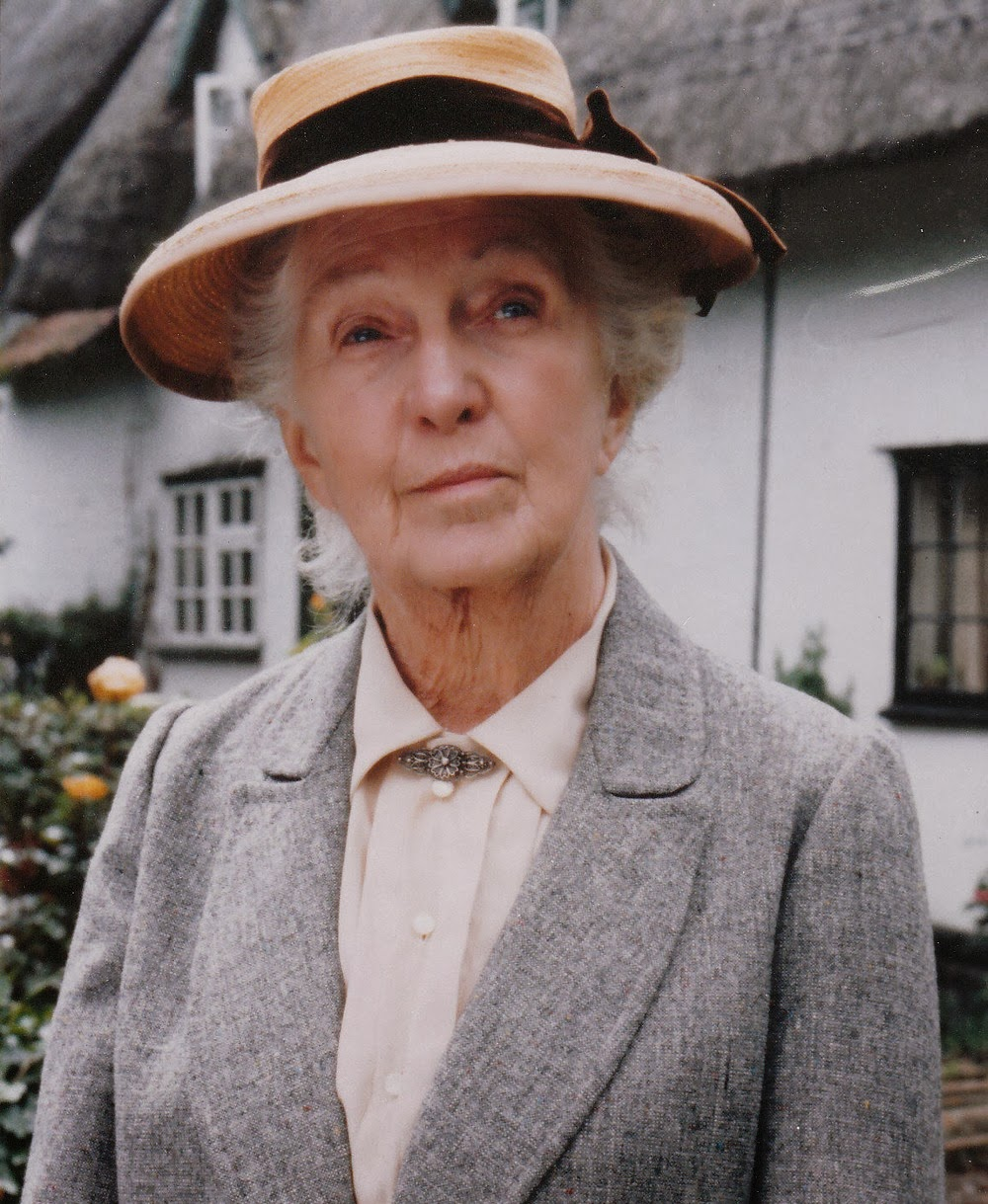
Without doubt, the best Miss Marple was the actress Joan Hickson. The RADA-trained actress (who starred as a nurse and drunk in Carry on Nurse and Carry on Constable), later became one of our most beloved character actresses.
After appearing on stage in the 40s in the play Appointment with Death, Agatha Christie wrote her a note, saying ‘I will call you to play Miss Marple one day, if I can find the time to write another play’.
Joan was already 78 when she eventually played the title role, until she decided to retire from the series several years later. Never a ‘star’, she refused to appear on Wogan. But remained an actress until her death at 92, writing ‘Retirement is fatal. If you retire you go POP’.
Joan (her doctor husband died in the late 1960s) lived for over 40 years in a cottage in the Essex village of Wivenhoe. One of her two children wrote The Story of Wivenhoe, which covers the history of the town over several hundred years.