Kernewek: Get to Know the Cornish Language!

The Cornish language is known as ‘Kernow locally’. Cornwall’s place names are packed with Cornish words. Towns like Penryn, Penzance, or Bodmin all carry Cornish roots.
Cornish is not related to Gaelic, and more similar to Welsh (people in Brittany often understand the Welsh language, so perhaps it’s the same here!)
A Celtic language, Cornish has a unique alphabet and different sound rules. So the letter ‘w’ sounds like ‘oo’ and the letter ‘y’ sounds like ‘i’ (in words like ‘it’).
Many place names are Cornish (not just towns beginning with ‘tre!’) For example, the town of Penzance is Cornish for ‘holy head’ (‘sans’ means holy and ‘pen’ means head).
Here are some everyday phrases to master:
Dydh da – Good day
Dha weles genev vy – Nice to meet you
Dhe vos i – I am
Py dy’th aneth? – What is your name?
Dh’aga vy yav, mar pleg – Yes, please
Nyns yu drog – No problem
Quick exchanges like these can help you navigate through simple conversations, whether you’re meeting locals or asking for help.
Pelea veum gans fruta ha legum? – Where do I find fruit and vegetables?
Leverow beu, mar pleg – Food menu, please
Denmayth lowen – Delicious!
Cornwall even has its own political party!
Speak Cornish Week is an annual event, dedicated to getting local people speaking the lingo! An Rosweyth (a group of local language organisations) let people have a go at speaking Cornish (Kernewek!) with the experts.
People who don’t understand Cornish say it kind of sounds like ‘how English would sound to someone who doesn’t understand the language. Here’s a video of a native Cornish speaker. What do you think?
Dolly Pentreath: The Last ‘Mother Tongue’ Speaker

Richard Thomas Pentreath (a Cornish artist, presumably a relative?)
Dolly Pentreath is often said to be the last mother tongue speaker of Cornish, though this is not verified. Born in Paul (next door to the Cornish village of Mousehole) in 1692, she was the child of a fisherman and apparently did not speak English until age 20.
She never married and (quite controversially in the day) gave birth to a son. Living in dire poverty, not much is known about her – apart from the fact that she could apparently swear in Cornish!
50 Cornish Words to Teach Your Dog!
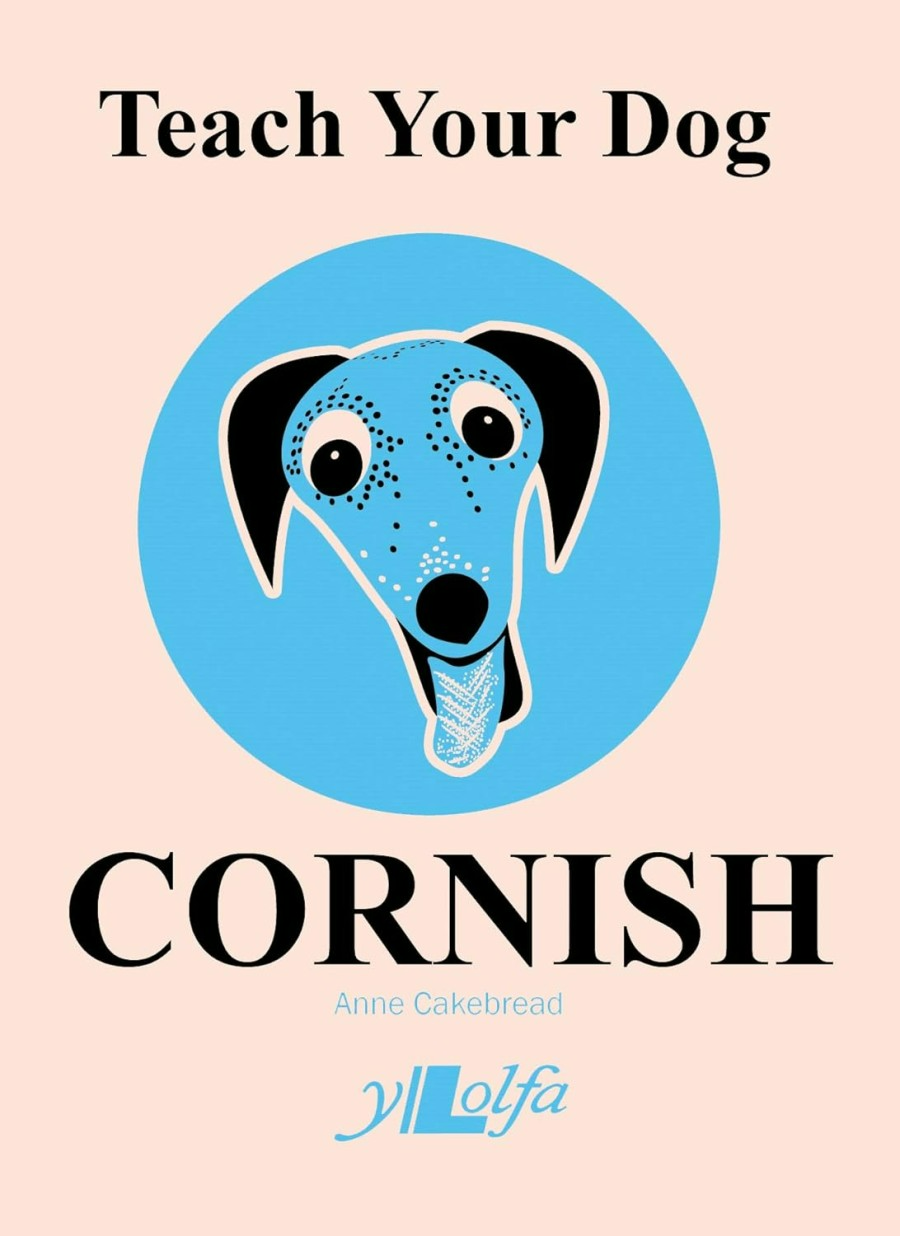
Teach Your Dog Cornish is a fun book that uses a pooch, to helpfully train you (and possibly your dog!) to learn 50 common words and phrases in the language of Cornwall. Using a fun retro-style layout, practice Cornish with your furry best friend. Or your cat (who is likely to just walk off).
A Celtic cousin of Welsh and Breton
Cornish belongs to the Celtic language family, in the Brythonic branch. In plain terms, that makes it a close cousin of Welsh and Breton. If you put the three side by side, you can sometimes spot family resemblances in sound and spelling, a bit like cousins sharing a smile.
Cornish was traditionally spoken across Cornwall, from fishing villages to inland towns. Meanwhile, Breton grew in Brittany, in north-west France. The Cornish and Breton link isn’t an accident. People travelled and traded across the Channel for centuries, and those connections helped keep the languages closely related.
That said, they aren’t the same language. A Cornish speaker won’t automatically understand Welsh, and vice versa. Still, shared roots mean certain sounds and word shapes can feel familiar, especially in greetings and common place-name parts.
Spelling and pronunciation without the stress
Because Cornish was revived from historical material, you may see more than one spelling style in books, posters, and online. Different groups made different choices about how to represent older forms, sounds, and later changes. That variety can surprise new learners, but it’s common in revived languages.
In public settings, you’ll often see the Standard Written Form (SWF), which helps organisations keep spelling consistent on signs and in documents. Even if your class uses another system, don’t panic when you spot a different version of the same word.
A few easy sound pointers help early on:
- Some letters don’t match English sounds, so trust audio when you can.
- Many speakers use a tapped or lightly rolled r, especially in careful speech.
- Vowels can sound cleaner than English ones, less “slid” into a second sound.
- Accents vary, just as they do across Cornwall and beyond.