Kevin F Adler (the American hero who is ending homelessness)

Just take a few minutes to think about what we often see: go into a major town or city, and you’ll see people literally sleeping on the streets. Often with their loyal dogs.
Councils do what? They install ‘hostile architecture’ (with spikes or devices so homeless people can’t lie down on benches). And free toilets are increasingly banned, so then homeless people have nowhere to visit the toilet. If they go to the loo on the street, it’s classed as a public indecency offence.
We have big homelessness charities, and they have good hearts. But in a country of 67 million people, why do we now have over 350,000 people classed as homeless in England? It’s shocking.
How to immediately help homeless people
If you see someone sleeping rough, send a report to StreetLink, whose outreach teams visit rough sleepers at night, to alert them of support to find benefits and accommodation (if the person is under 18, call 999). Also read about how to help homeless people with dogs (indie shops can sign up for BillyChip that can be given to homeless people to buy food, pet food and hot drinks).
Homeless people can claim benefits, giving the address of a family member/friend, hostel or job centre. This helps to pay for food (and pet food), interview clothes and rent deposits. People without bank accounts can use the government’s Payment Exception Service to collect benefits from post offices or PayPoint outlets.
Meet Kevin (who is seriously helping homeless people)

Kevin F Adler (he uses the middle initial in memory of his later Joan Farrington) is a social entrepreneur in the USA, whose book and organisation are rewriting how people think about homeless people, and how to help them.
When We Walk By is Kevin’s book, which is being received with great reviews everywhere. It’s a community tool book on ‘how to help in 60 seconds’, with ideas for taking action and making real impact with what Kevin calls ‘unhoused neighbours’.
Kevin also founded Miracle Messages, a wonderful organisation that we could emulate here. Basically, it has three premises:
- A family reunification service so that homeless people can reunite (if they want) with estranged family members, which often is the answer in many cases. It has helped to return many homeless people back to their loving families, often after years of nobody being able to find them.
- A phone buddy program, as ‘nobody should go through homelessness alone’.
- Basic income (this campaigns for the benefits of basic income, and meanwhile has a donation page for people to give online – this money is then used to help find stable homes and training for homeless people)
Creativity is often the answer
Although the big homelessness charities (and often governments) are well-meaning, sometimes it takes a creative mind to find a solution. Think about all the years that Shelter has been around, showing adverts to ask us to give.
Why has none of their staff ever come up with such creative, empowering and simple ideas like Kevin? It’s obvious that in not all cases, homeless people are running from abusive homes. And often their relatives are missing them, and want to take care of them.
The premise is that homeless people are not ‘just lost beings’ that always lived on the streets. Most have histories, and some even had homes and spouses and families and mortgages and good jobs. We should never judge.
Other good books to help prevent homelessness
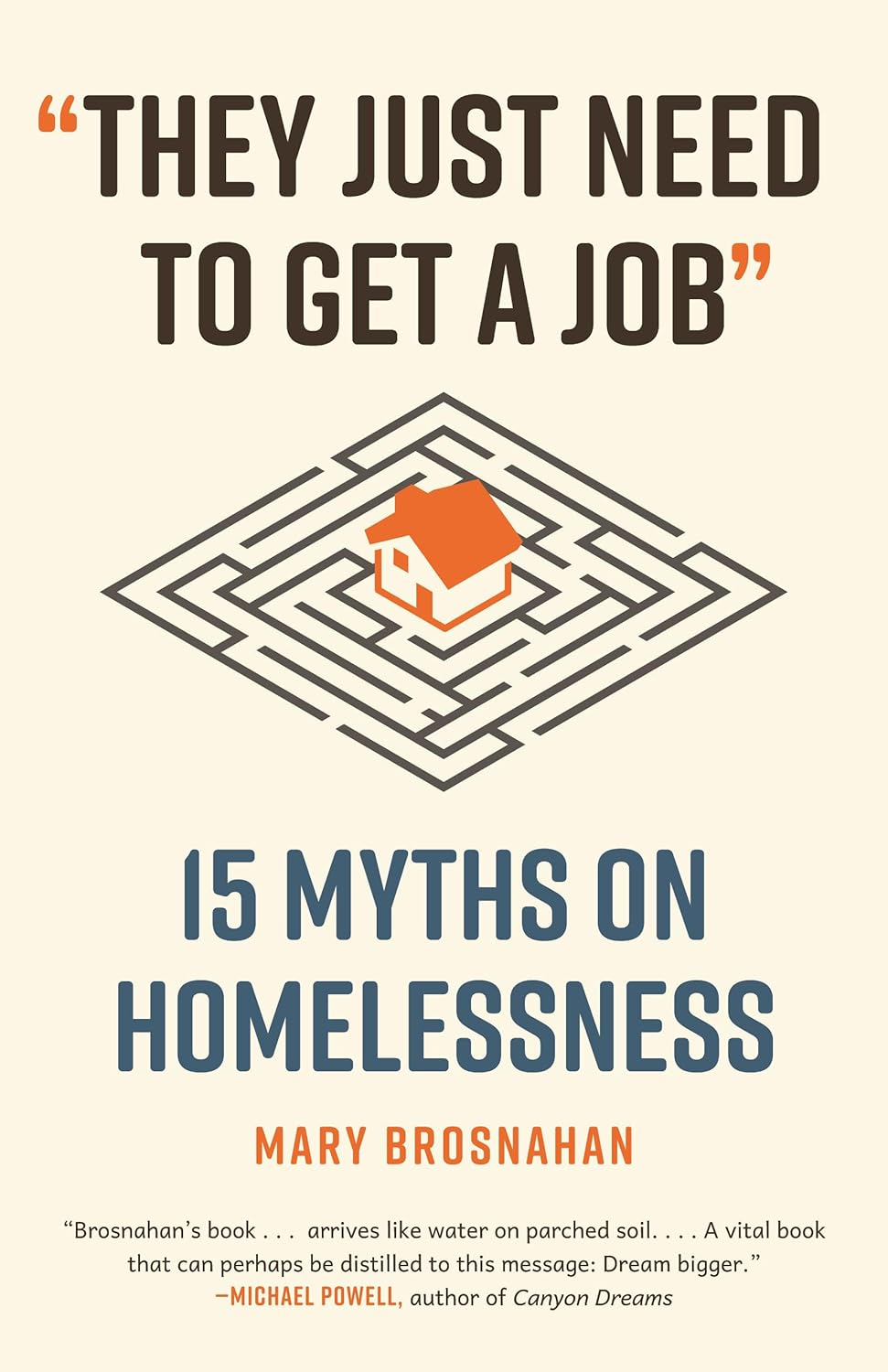
They Just Need to Get a Job is the anti-dote to MPs who say ”being homeless was a lifestyle choice’). Being homeless is cold, boring and often dangerous, and many are there due to being widowed, divorced, fallen behind on rent payments, escaping domestic abuse or mental illness.
Unlike in Germany and Italy (where renting is the norm), in England there is little regulation to protect tenants from exploitative landlords (Crisis wants a Local Housing Allowance, so tenants receive help to match higher rents).
Although job centres do a great job helping people to find work, it’s more difficult without an address or bank account. Ask about the Flexible Support Fund, which can help with interview travel costs and work clothes.
Not everyone who’s homeless is a drug addict. Some are normal people who’ve been knocked down, and it can happen to you too. Sherrilyn Kenyon
The Roofless Truth focuses on how to design towns that help to prevent homelessness, drawing on ground-breaking research and projects from Canada to Switzerland. Includes tips on (avoiding) hostile architecture.
How to use Evidence to End Homelessness again uses evidence to show what works with case studies and policy tools (includes a contribution from Greater Manchester mayor Andy Burnham).