The Lake District: England’s Largest National Park
The Lake District is England’s largest National Park, situated in the north west county of Cumbria. It’s a popular walking holiday destination. The town of Windermere is not actually on the lake, it’s a few miles away. Poet Wordsworth campaigned against the building of a railway station there, saying it would ruin the quiet village. He was right. Today the station is much smaller, a good portion of it has now been turned into a Booth’s supermarket.
Always follow the Countryside Code to keep all creatures safe. Keep dogs away from steep banks, mushrooms (and toxic plants/trees) and on leads near birds, barnyard friends and wild ponies.
If at the coast, keep away from nesting birds and never walk on sand dunes. Learn how to keep dogs safe by the seaside (check beach bans before travel).
How to upright an overturned sheep
Pregnant sheep (and sometimes due to wool waterlogged from rain) can sometimes roll over onto their backs, and can’t get back upright, due to having four stomach chambers (so will die if not turned back upright).
If you see a sheep on its back, just firmly right it back, then stay with it, until rain has drained off, so it won’t happen again. Then inform your local farmer.
The 16 ‘lakes’ of the Lake District
The Lake District actually only contains one ‘proper lake’ (the rest are tarns or other bodies of water). There are around 16 lakes in England’s largest National Park. Here’s a quick guide, so you know when you visit (or can win at your local pub’s general knowledge quiz!
- Bassenthwaite Lake is the only real ‘lake’ in the northern Lake District, overlooked by Skiddaw mountain, with wide open views and a surprising sense of calm, considering it’s near a main road. There are footpaths and cycling routes on the western shore, where ospreys like to nest, when visiting from Africa.
- Buttermere is framed by dramatic fells that rise from its shores. The easy path around the lake offers a quiet charm.
- Coniston Water is set below the Old Man of Coniston (mountain), a beautiful village with a shore walk, although in summer it gets busy with paddle steamers and tourists. This is a charming place with a zero waste shop, little veggie cafes and a tiny museum. The body of speed racer Donald Campbell was only recovered 20 years ago.
- Crummock Water is quite remote, just 3 miles long. And popular with wild swimmers.
- Derwent Water is on on the edge of the mountain town of Keswick, surrounded by wooded hills and gentle slopes. There are many islands scattered across this lake, plus a shore with easy walking paths, and views to Catbells mountain and Friar’s Crag.
- Elter water is a little lake with views of Great Langdale Valley and the four peaks: Pavey Ark, Loft Crag, Pike of Stickle and Harrison Stickle. Nearby Stickle Tarn has views over Great Langdale, with rock pools cut into the mountain, and dramatic waterfalls.
- Ennerdale Water is a little lake of wild beauty, with few crows. The rugged paths along the shore are popular with walkers. The area remains almost untouched, and the birds like it that way!
- Esthwaite Water is a tiny lake that’s home to visiting ospreys, within walking distance of the chocolate-box village of Hawkshead, and hamlet of Near Sawrey (which was home to writer Beatrix Potter). If you like peace and quiet, this is the ‘hermit’s lake!
- Grasmere is next to the village of the same name (the home and burial place of poet William Wordsworth. You can walk the lakeside to Ambleside, known for its pretty bridges and waterfalls.
- Haweswater is a wild lake, which sadly was home to England’s last golden eagle.
- Loweswater is another hidden lake, not a touristy place. graze and herons fish close to the shore, while buzzards fly overhead.
- Rydal Water is tucked away between Rydal village and Ambleside, surrounded by woodland, trails and small beaches for ‘dipping your toes’. Walkers love the quiet paths and narrow lakeside trails, shaded by trees.
- Thirlmere is on the border of the south/north Lake District, surrounded by forests. It’s near to Helvellyn mountain, one of England’s highest climbs. It’s more enclosed than other lakes, passing through pine woods and open moor.
- Ullwater is a large lake (7.5 miles) that is set below the wild peaks of Helvellyn and Place Fell, and home to Aira Force Waterfall.
- Wastwater is England’s deepest lake, surrounded by Scafell Pike – England’s highest mountain that is only for experienced climbers). The setting has earned this lake the title of ‘Britain’s Favourite View’.
- Brothers Water is a small peaceful lake in Hartsop Valley, nestled at the foot of Kirkstone Pass south of Ullswater. It has an idyllic woodland setting and is popular for lakeside walks.
Wasdale (a remote valley in the west)
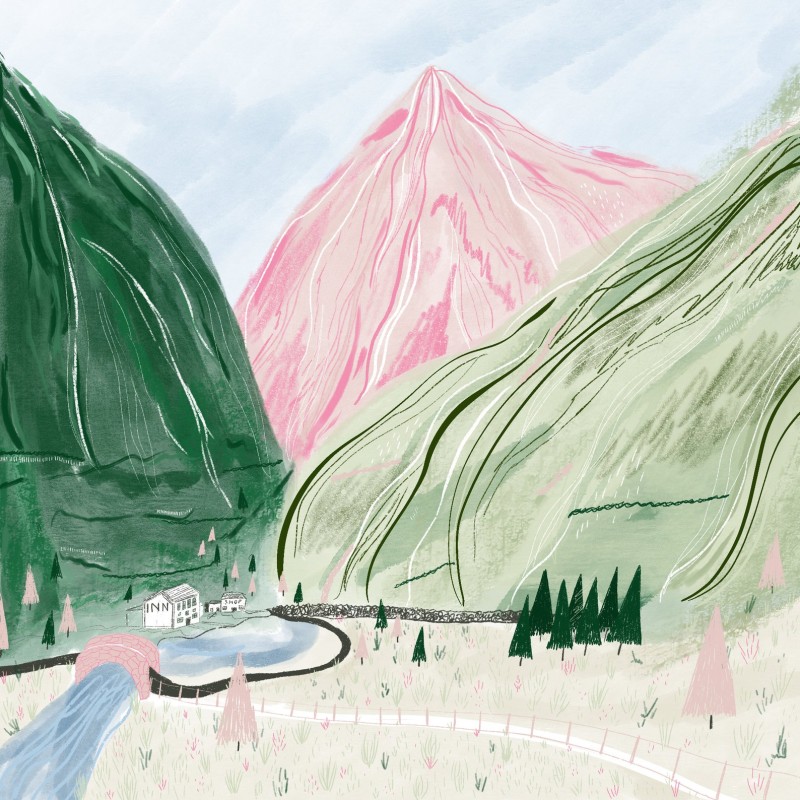
Wasdale is a remote valley of the western Lake District (England’s largest National Park). This is home to Scafell Pike, England’s deepest lake (Wastwater at 243ft) and smallest church (St Olaf’s). It’s also the birthplace of rock climbing, likely due to the high mountains!
The view surrounding Wastwater is so lovely, it was even once voted ‘Britain’s favourite view’. After admiring the view, you can pop into the tiny church (named after a Norwegian king) to learn about Norse settlers (the roof beams are believed to have been salvaged from a Viking longboat).
The quite unsettling thing here you may hear on stormy nights if ‘the screaming on Scafell’. Some say it’s due to lost spirits, while most say it’s simply the sound of the wind funnelling between Scafell (a smaller mountain) and Scafell Pike.
Haweswater (a sunken underwater village)
In nearby Haweswater, there is even a sunken ‘underwater village. Mardale Green was submerged in the 1930s to create the local reservoir, a water source for nearby Manchester. All the residents were evacuated and the buildings demolished, by engineers, before the area was flooded.
Today during droughts, the ruins often resurface. Including several farms, a church and an old inn. Even graves from the church were relocated.
Meet the local hardy herdwick sheep
Although they look super-cute, Herdwick sheep are some of England’s toughest (kind of like the sheep equivalent of Shetland or Icelandic horses!) They live on the pastures and slopes of England’s highest mountains (all in the Lake District) so can cope with the elements pretty well.
Sheepeasy is a device invented by an engineer, that makes it easy and quick to treat the feet of sheep, goats and alpacas. Regular footcare is of utmost important, especially in the Lakes, due to all the rain.
Always give Herdwick sheep right-of-way on roads, just slow down and wait for them to pass.
Herdwick sheep have very good memories and sense of direction, so if they do get lost, they usually find their way home pretty quickly. Their name derives from the old Norse word for sheep pasture ‘herdvyck’.
Herdwick lambs are born black, but turn grey (just like humans!) when they get old! They have wiry wool that insulated against the wind and rain.
Children’s author Beatrix Potter helped to save them from extinction, during her lifetime (by bequeathing her estate to the National Trust, on the condition that they were allowed land for breeding).
Around since the 12th century, today nearly all Herdwick sheep live within a short distance of the lakeside village of Coniston (below the Old Man of Coniston mountain). You can easily recognise the females, as unlike the rams, they don’t have big curly horns!
Known as ‘the gardeners of the Lake District’, their grazing of grass, heather, bilberry and young trees, is responsible for the unique treeless mountainsides in the Lakes.
Visiting all 36 Lake District Islands
36 Islandsis an adventure book with a difference, a poet who decides to visit all 36 islands in England’s largest National Park (some no more than rocks, others perfect for a night of wild camping).
Armed with just an inflatable canoe (and inspired by Inspired by Wainwright and Wordsworth), the author journeys beyond the tourists and busy roads, to islands both real and remembered.
You can feel the chill of waters creeping into your bones, as Twigger paddles his way to some of the most inaccessible spots. Shaun Bythell
He visits all the well-known lakes (and some not – who has heard of Devoke Water?) It’s usually raining, but he’s an irrepressible optimist. Fiona Reynolds
Robert Twigger is an award-winning poet, whose 12 books have been translated into over 20 languages. He has also crossed Canada in a homemade canoe, and was the first person to travel on foot across the Egyptian Great Sand Sea.
His previous book Walking the Great North Line saw him travel in a straight line from Stonehenge to Lindisfarne, to discover secrets of our ancient past.
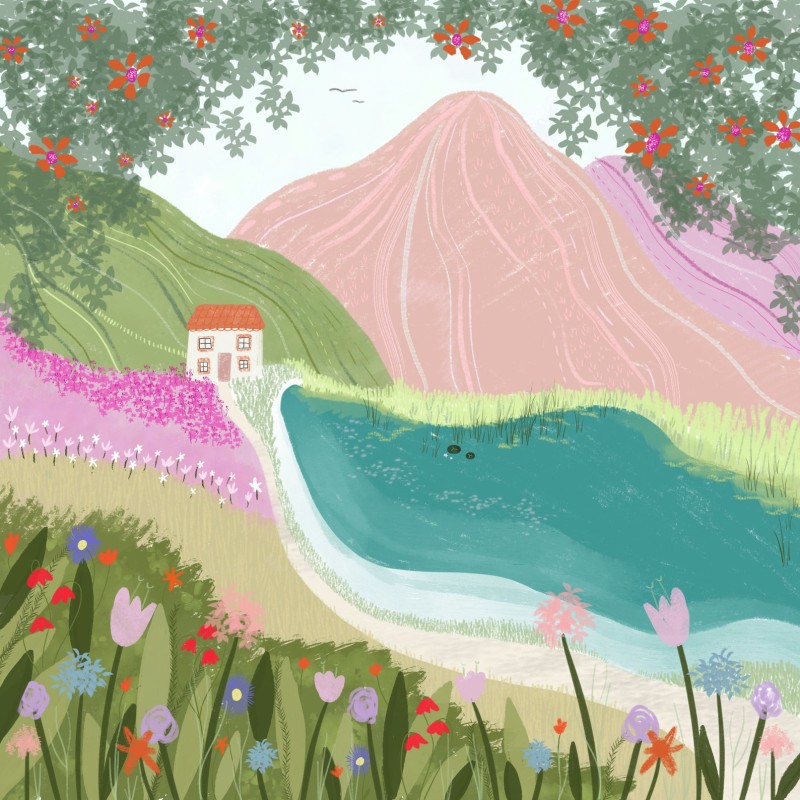
Ullswater is considered by many to be the most beautiful lake in England (although it’s not technically a lake, but that’s another story). Although Windermere is larger in the Lake District, it does suffer from over- tourism.
This is quieter and located in the northeast, a glacial like that is nine miles between the villages of Pooley Bridge (north) and Glenridding (south). It’s very popular for walking and sailing.
Lately, councils and the police have upped fines for local people who are illegally camping and leaving litter, in a bid to protect this beautiful area.
The Ullswater Way is a 20-mile circular route that goes around the lake. You can walk it in sections if preferred, using buses to get to the starting point.
Also here is Aira Force Waterfall, which drops 65 feet into a rocky pool. Surrounded by ancient woodland and landscaped glades.
Nearby places to Ullswater
- Glenridding is a former mining village that is now the main gateway to climb Helvellyn, England’s third-highest mountain.
- Pooley Bridge is a pretty village at the northern end of Ullswater, known for its traditional pubs and tea rooms.
- Hallin Fell is a popular hill on the eastern shore, that offers some of the best views of the lake, after a fairly short climb.
If you’re travelling by public transport, the nearest train station is Penrith, about 6 miles away. You’ll have to then get a bus to the area’s villages.
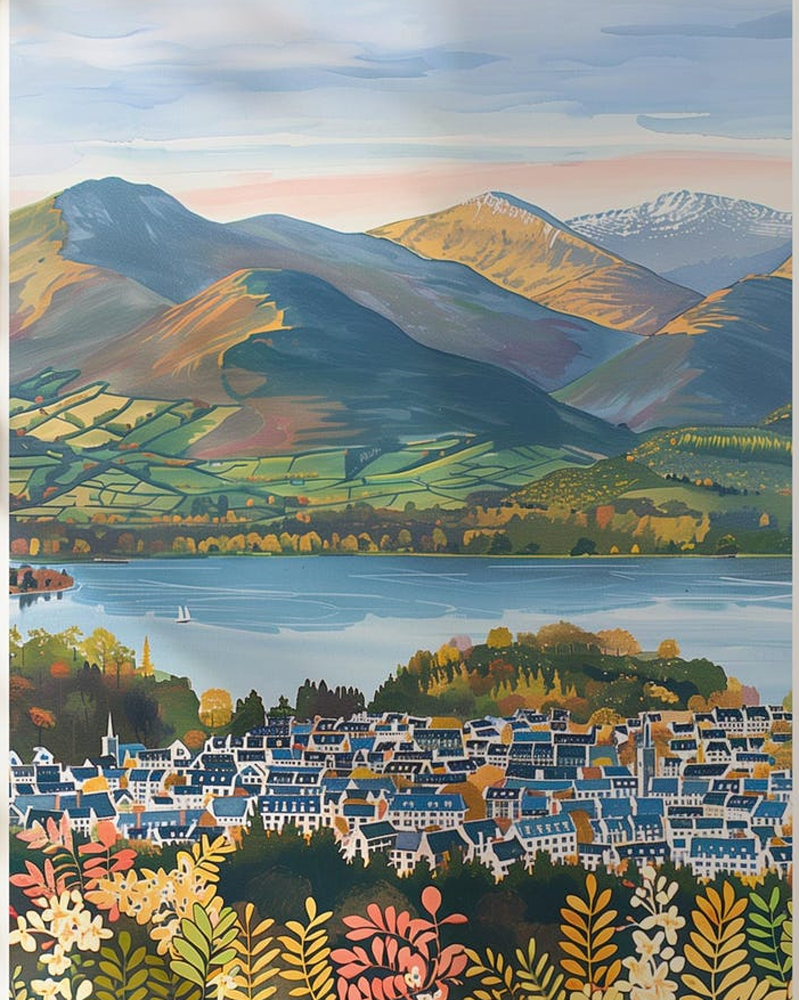
Keswick is a pretty market town sitting below mountains in a less touristy area of the Cumbria’s Lake District. Though it still rains a lot! In the northern end, it has a history connected to poets, and has a weekly food market that has run for 700 years!
Keswick sits near the lake of Derwentwater, which is far quieter than Lake Windermere. Known as the ‘queen of the lakes’, it’s 3 miles long, bordered by Keswick and Borrowdale, and is a pretty shallow lake. Home to England’s rarest freshwater fish (vendace) and a relic of the Ice Age (a conservation priority so illegal to fish).
St Herbert’s Hermitage is named after a 7th century hermit who lived here, and it’s said died on the same day as his friend Saint Cuthbert (who has strong links to County Durham and Northumberland).
St Herbert’s Island was inspiration for Owl Island in Beatrix Potter’s book The Tale of Squirrel Nutkin. The only inhabited island with just one house is Derwent Island, now owned by the National Trust). There is also a floating island, made from gases from decomposing vegetation that lift to the surface.
The name ‘Derwent’ means ‘river with oak trees’.
Acorns and conkers should also be kept away from pets. Did you know that oak trees are toxic to horses, livestock and other animals?
Catbells and Latrigg (local mountains)
Latrigg is a Lake District fell near Keswick (often called ‘Skiddaw’s little brother’), offering panoramic views of Derwentwater, Skiddaw and the Borrowdale valley. In 1887, over 2000 people walked to the top, to defend public access rights after a landowner tried to block paths (this is a similar story of how The Peak District park was formed back in 1951).
The woodland areas have many mixed forests and hazelnut trees, proof that when the right mix of trees are planted, red squirrels thrive (culling greys is not the answer, working with nature is).
Catbells is a ‘mini-mountain’ with views of Derwentwater and surrounding peaks (it’s known to be one of the easier mountains to climb, but still take care as there are rock scrambles and gaps. It’s thought to be named after ‘shelter for wild cats’, who lived here centuries ago. Wainwright loved this walk.
Just four miles from Keswick, it’s a popular day out.
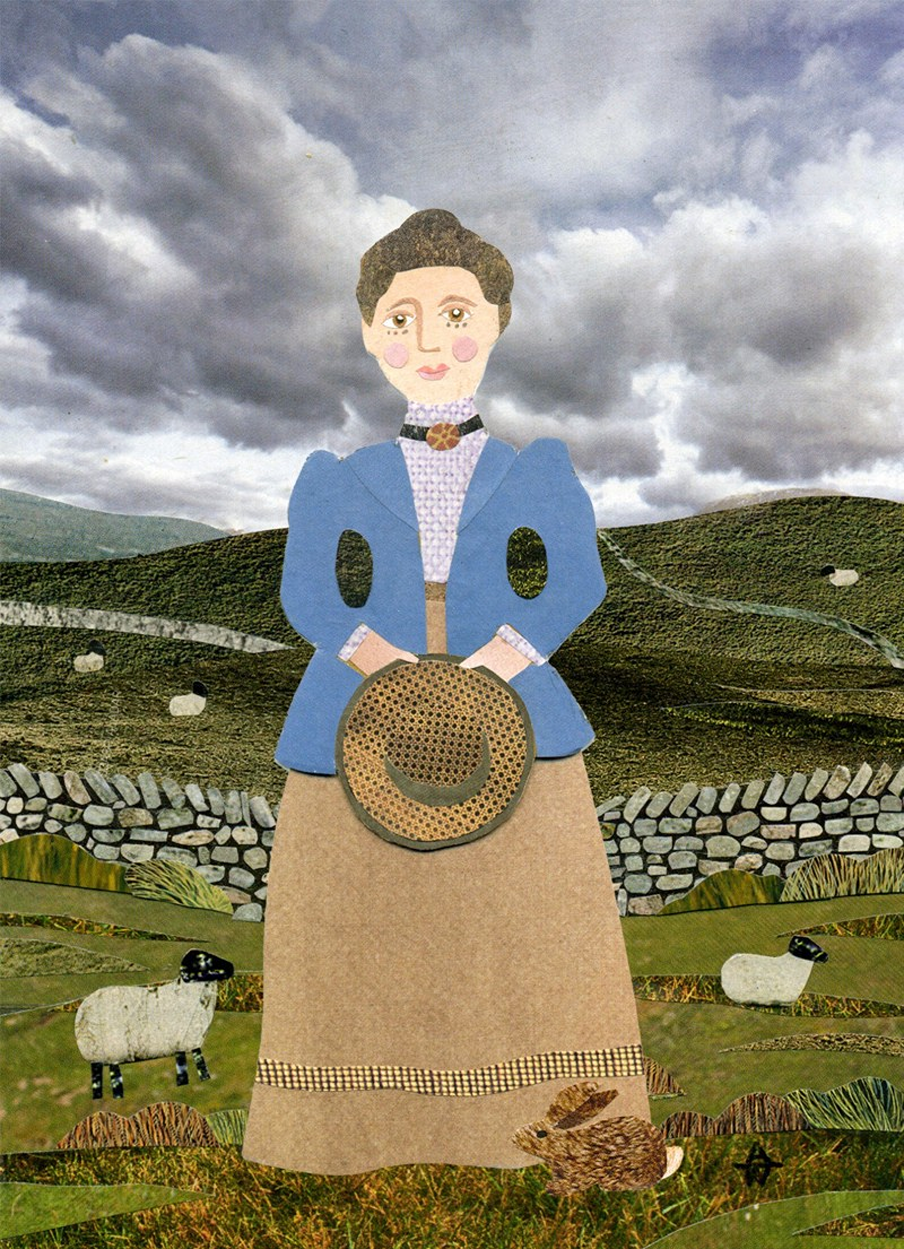
Hawkshead is a pretty ‘chocolate box village’ sitting in the southern Lake District, not far from the town of Ambleside (England’s busiest mountain rescue team). It’s only a few miles from the village of Coniston and its ‘Old Man of Coniston’ mountain.
It’s mostly pedestrian, though it does get busy with tourists in summer. What many visitors are unaware of, is its rich literary heritage.
Where Beatrix Potter met her husband
Children’s writer Beatrix Potter met her husband in Hawkshead, and soon afterwards, they moved to the hamlet of Near Sawrey, a few miles away.
Today, it’s a National Trust property (home to one of four plant-based eateries – Joey’s Café (founded by a climber who decided to switch professions, after recovering from a serious accident).
Beatrix (despite the cute bunny image) gave over the property, on the condition that fox-hunting would always be allowed. Of course, the law has thankfully changed since then, so fox-hunting is now illegal nationwide.
Hopefully her views would have now changed. She did leave an important legacy as her extensive land was given over to the National Trust, otherwise we would likely all be living in car parks by now. And she is credited with likely saving the local Herdwick Sheep from extinction, by giving them land to roam and graze.
Ulverston (a charming Cumbrian market town)
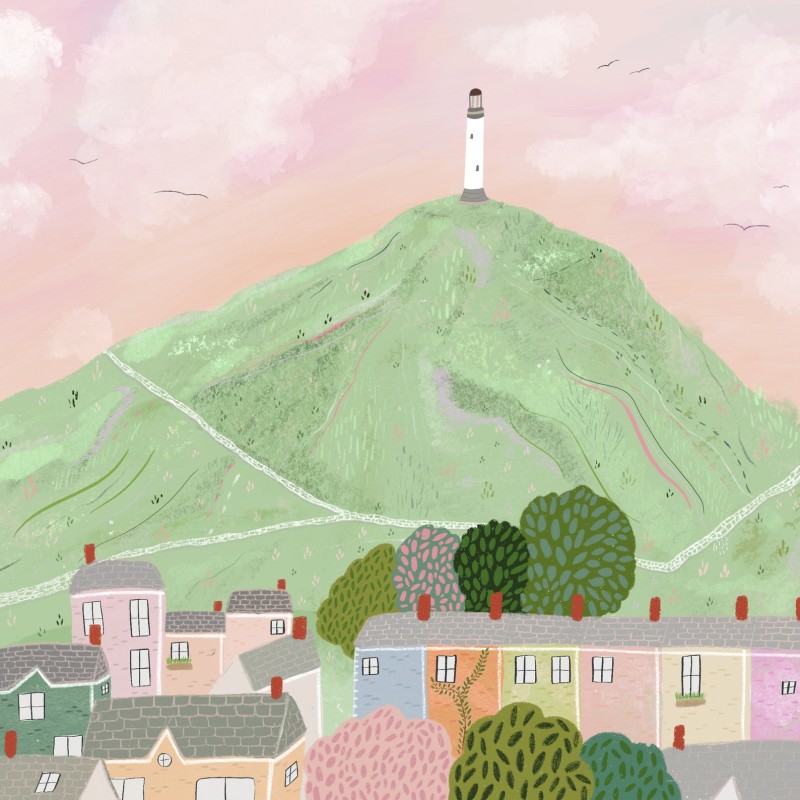
Ulverston is a charming market town located in the county of Cumbria, one of the few places that is not really in the Lake District National Park.
The Quakers are a peaceful society of friends, and it was here that George Fox began the movement. He lived with wife (10 years his senior – a widow with several children) and was supported by her father, the local judge. You can still visit the house just outside the main town, to learn the history.