Look After the Planet God Gave Us: Faith vs Science
It’s multiple bonkers these days that the so-called ‘Christians’ seem to be the ones who are completely messing up our planet. The one that (you know) God gave us. From drilling for oil (that’s not needed if we create walkable communities and independent shops selling organic food that are not covered in pesticides).
To living simply. But no instead we are asked to fund ‘economic growth’, which will cause irreversible climate change, and could send endangered species (from hedgehogs to polar bears) extinct. And yet any of the parties that promote this (Reform UK and Conservatives in the UK, Republicans in the USA) all profess to be ‘doing God’s work’.
Even Tommy Robinson (who turns up at riots where police officers and police dogs have been harmed (and local people terrified in their own communities) is now a ‘devout Christian’.
In the USA, they even have children being taught that dinosaurs are only a few hundred years old (as is the Grand Canyon!) There is absolutely a possibility of being both a scientist and a Christian (there are many of them!) But letting those who seek to harm the planet by peddling false information is downright dangerous.
The science story (in plain English)
Planet Earth is part of the solar system that formed around 4.6 billion years ago (there’s plenty of evidence like meteorites, ancient minerals and ‘radioactive clocks’ in rocks). Dust turned into pebbles, and pebbles into rocks. Gravity pulled a cloud of gas and dust in space to flatten into what we now call home.
Next came air and water: volcanoes released gases (including water vapour) and as the planet cooled, steam condensed, rain fell and oceans gathered. India collided with Asia to form the Himalayas, and intense volcanic activity and tectonic uplift created the Lake District!
Somerset’s Cheddar Gorge was formed over the last 1.2 million years by massive meltwater floods, carving through limestone cliffs. Recently archaeologists found England’s oldest human skeleton ‘Cheddar Man’. Who turned out to have black skin and blue eyes, like that actor off CSI!
Some scientists say that humans evolve from microscopic, ‘bag-like’ sea creatures, which later evolved into fish with bony limbs and lungs. They apparently used to get hiccups, just like us!
Creationism, science and the search for truth
People often talk as if there are ‘two teams’. The scientists who don’t believe in God, and people who believe in God, who are not listening to the science. Who’s telling the truth? In fact, most people sit somewhere in the middle, trying to be honest about evidence and honest about faith.
Perhaps one of England’s most ‘strong’ atheists’ is Richard Dawkins, although recently he has admitted that he more a ‘cultural Christian’ in that he enjoys listening to Christmas hymns.
Mr Dawkins is likely a nice, educated man. But one writer once asked if rather than keep pressing on with his number-crunching arguments against God, perhaps he should go outside and look up at the sky with wonder one night, and then perhaps he would ‘get it’.
What believers mean by ‘God created Earth’
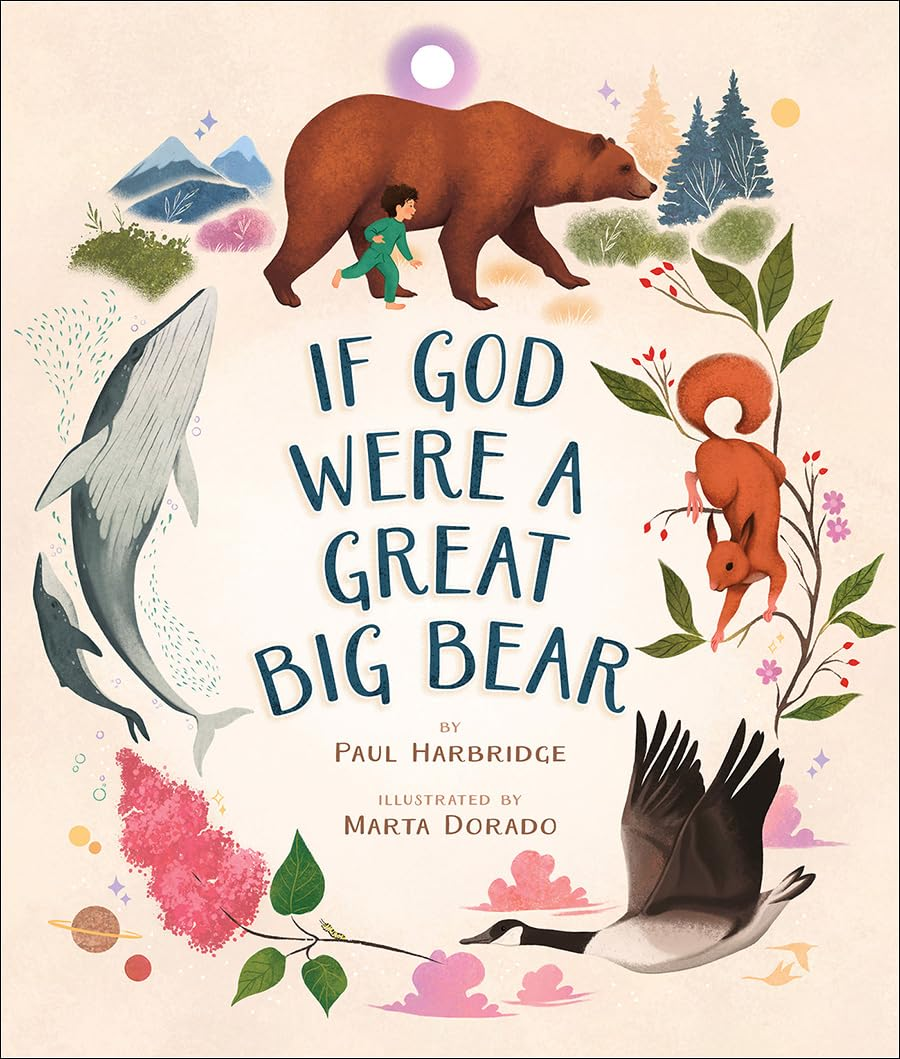
Some believers hold a young Earth creation view. In that approach, Genesis is read as a tight timeline, and Earth is thought to be thousands of years old. Others accept an old Earth but still see God’s direct action in key moments.
Some say that the Bible is being read too literally. For instance, if God ‘created earth in seven days’, who says that one day was 24 hours back then? It may have been 1000 years, how do we know, we weren’t there?
Sort out this planet, before exploring others
Spare exploration of other planets costs billions, whereas many of us think that it would help instead to use the money to help get this planet in order. Before blasting into space and polluting more of them.
When you fall into a Black Hole, you will literally be spaghettified. Dr Brian Cox
I’m only a four-dimensional creature. Haven’t got a clue how to visualise infinity. Even Einstein hadn’t. I know because I asked him. Sir Patrick Moore
Going to the moon is like building the pyramids or Louis XIV’s palace at Versailles. It’s rather scandalous, when human beings are going short of necessities, to do this. If we’re clever enough to reach the moon, don’t we feel rather foolish in our mismanagement of human affairs? Arnold J Toynbee (British historian)
Presently, the UK government spends 0.05% of GDP on space exploration, through investment in the European Space Agency. The US government spends around $25 billion each year on NASA’s space exploration program (actually less percentage at 0.$% of the federal budget.
So if this money were directed to ‘planet earth’, what could it fund?
It’s useful to compare (at March 2026, Trump’s Iran war has cost around the same: $25 billion. Here’s what the site American Progress says this money could have been used for instead:
- Covered over 3 million people for medical insurance
- Provided over 29 million children with free school meals
- Housed over 3 million people
- Covered childcare costs for almost 2 million families
- Funded almost 3 million adults for a 2-year associate degree
The UK’s $15 billion or so used to fund space exploration could fund:
- Lifting one million homes out of fuel poverty with grants for insulation, solar panels and heat pumps to cut energy bills (this is already happening, so another £15 billion could double the program).
- Massively improve public transport including bus, rail and tram routes nationwide
- And of course, it could help to fill the ‘black hole’ left by the Conservative government, the reason the present government keep giving for all the cuts to public services.
A quick and simple guide to the cosmos!
The sun is a large star made from hydrogen and helium. Its light and heat power all life on earth, including the weather and seasons. It takes around 8 minutes for its heat to reach earth.
The sun is four hundred million million million million watts. That is a million times the power consumption of the US each year, radiated in one second. And we worked that out by using some water, a thermometer, a tin and an umbrella. And that’s why I love physics. Dr Brian Cox (on the energy radiated by the sun)
- Earth is the only known world with life. It’s around 70% water (a reason why most things released like balloons end up in the sea, harming marine creatures). A balanced atmosphere protects it from harsh sunlight and space debris. And a mix of nitrogen, oxygen, and trace gases supports complex ecosystems.
- Our Moon steadies Earth’s tilt, which helps keep seasons regular. From space, Earth glows blue and white, a sign of seas and clouds. The moon is also responsible for our ocean tides.
- Venus is the earth’s hot twin! Thick clouds trap heat in a runaway greenhouse effect. The surface is hot enough to melt lead, roughly 465 degrees Celsius. It rotates backwards, so (unlike on earth where the sun rises in the east), here the sun rises in the west!
- Mercury races around the Sun in just 88 days. It sits so close that its surface bakes in daylight, then freezes in night. Air is almost absent, so heat has nowhere to hide. It’s covered in craters. And as it spins so slowly, it has days that last longer than years!
- Jupiter is the largest planet by far, a giant of hydrogen and helium with no solid surface. It is home to fierce storms, and has around 95 known moons.
- Saturn is famous for its rings, a wide, thin disc of ice and rock that gleams in sunlight. The planet itself is so light that, on paper, it would float in water.
- Uranus and Neptune sit on the far edge of the cosmos. Smaller than Jupiter and Saturn, they are richer in water, ammonia, and methane. Uranus is tipped on its side by about 98 degrees, so its seasons are extreme and long. Neptune shows a deep blue hue, and it hosts the fastest winds measured in the solar system.
- Pluto orbits in the Kuiper Belt, a ring of icy bodies beyond Neptune. Ceres (in the asteroid belt between Mars and Jupiter) is also a dwarf planet.
- Mars owes its red colour to iron oxide, a rusty dust that coats much of its surface. It has polar ice caps that wax and wane with the seasons. Olympus Mons, the largest volcano in the solar system, towers over its plains. Ancient channels hint that water once flowed here.
Iron oxide is often found in natural sunscreens, cosmetics and deodorants. It’s toxic to pets, so always wash any of the above off your skin, before letting pets kiss you!
Can asteroids hit earth?
Asteroids are rocky remnants from the early days of planet building. Comets are icy wanderers from the Kuiper Belt and the far-off Oort Cloud.
Asteroids do hit earth frequently, but with little damage. There is a high chance of a big one that would destroy a city falling in the ocean, as our planet is 70% water). This would however devastate marine life, in the same way as it would life on land, due to shock and pressure waves and underwater explosions.
Two of the biggest asteroids in the past have been a 10m asteroid (that wiped out dinosaurs 66 million years ago) and more recently (43 million years ago), a 160-meter wide asteroid that hit the North Sea (80 miles off the Yorkshire coast, forming a 3km wide crater).