Manchester (birthplace of England’s industrial revolution)
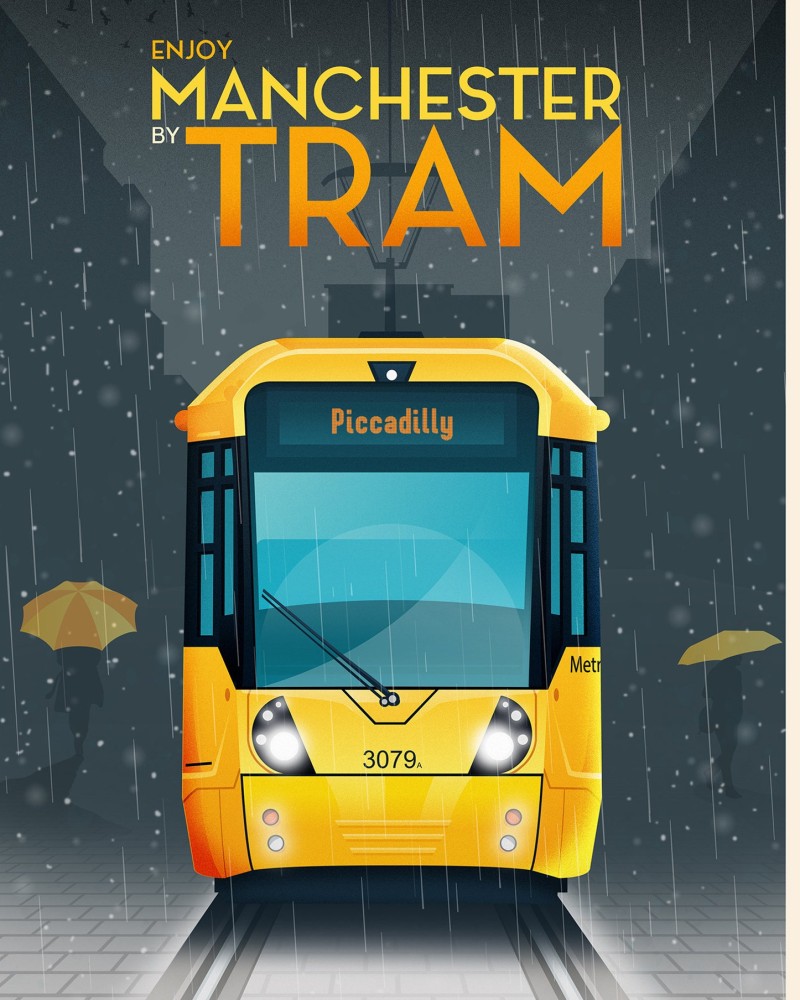
Manchester tram, part of the Bee Network
Manchester carries the Industrial Revolution lightly and loudly at the same time. You can feel it in the street plan, the brickwork, the water lines, and the old names that won’t go away. Yet it’s also a living city, busy, musical, and practical, with everyday places that sit right beside the big history.
Manchester is a city that was built from water and cotton, through labour and transport. The result is a Manchester that feels less like a museum label, and more like a place you can walk through.
Manchester’s cotton industry roots
Manchester’s cotton industry didn’t just grow, it reshaped work, time, and the city’s pace. Mills and warehouses rose fast because cotton could move, sell, and scale. As a result, the city became a place where production felt constant, and where new ways of organising labour took hold.
Even now, the cotton story sits in the background of many streets. Look up and you’ll spot old loading bays, tall windows, and sturdy brickwork built for storage and sorting. This matters because cotton wasn’t only a product, it was a system, and Manchester became its working capital.
Manchester once earned the nickname “Cottonopolis” because trade shaped everything, from skyline to street names. Warehouses weren’t minor buildings, they were the city’s engine rooms for buying, selling, and shipping. So you get long façades, repetitive windows, and interiors designed for bales and books.
In addition, the commercial heart of Manchester grew around routines that still feel familiar. Meetings, contracts, and deadlines took place in rooms above busy streets. The products have changed, yet the idea of Manchester as a working city, always making and moving, remains close to the surface.
Birth of the union movement (shaped by mills)
Industrial growth brought jobs, yet it also brought danger, low pay, and long hours. Workers organised because they had to, and Manchester became central to the birth of the union movement. That history isn’t abstract, it links to real streets and real families, and it still colours how the city talks about fairness.
Even when you can’t see it on the walls, you can sense the legacy in local pride. Manchester often respects plain speaking and collective effort. In other words, it’s a city that remembers who built it, and who pushed back when the cost got too high.
Manchester music (the city’s other power)
Manchester is known for its music. It’s the city that birthed The Smiths and folk singer Ewan MacColl (who wrote Dirty Old Town and was father to Kirsty MacColl).
Another local was Letter from America’s Alistair Cooke, who presented on BBC Radio 4 for decades. A tragedy after his death is that illegal gangs sold his bones to the medical industry (he died from bone cancer, so the tissue was not even healthy). All in a country that Alistair spent his life endearing us to.