England’s Mining History (and why we don’t need coal)

Years ago, mining was an important (albeit dangerous) profession, where workers would travel underground to collect tin and coal, in order to provide fuel and construction materials.
However all climate change experts now say that likely one of the best ways to help make things better for our planet is to stop the use of fossil fuels.
The easiest way for us to do this is to simply switch to companies like Ecotricity for energy (this company does not burn abattoir waste to generate electricity, and makes gas from grass!) It also offers business and charity tariffs.
It also does not support fracking (making gas by drilling into the ground, which in some cases can cause cancer and taps even have fire coming out of them, instead of water).
Thankfully it looks like the previous government’s plans to build a new coal mine in Cumbria (which would have destroyed local nature and wildlife) has now been dropped. It was due to be built near Whitehaven, once one of England’s largest ports.
Friends of the Earth said that local land would have been contaminated and sea life impacted, especially since we don’t need coal anymore.
The claim that mining would provide jobs is debunked. By the fact that insulating all of England’s homes and investing in cleaner energy provides more jobs than that anyway.
The History of Coal Power Stations
Coal once powered nearly all of England, but now due to climate change, the mines have closed down. The planned one in Cumbria thankfully was never opened, due to local protests.
Coal has always carried a heavy environmental cost. From greenhouse gases to choking smog, the true price of coal is now plain to see. Countries have responded with strict laws and clean-up efforts.
Coal’s Role in Climate Emissions
Coal is one of the biggest sources of carbon dioxide on the planet, also releases methane and toxic ash. Around 40% of the world’s energy-related carbon emissions come from coal. It’s a main driver behind global warming, rising sea levels, and air pollution.
In 2008, the UK set clear carbon reduction goals with the Climate Change Act. Coal, the most polluting fossil fuel, became an obvious target. These strict rules forced power plants to rethink how they operate.
Yet in the USA, President Trump is now reviving old coal mines, in a bid to ‘make America great again’, which will have huge environmental consequences for the world.
The Guardian reports that the administration is now allocating 13.1 million acres of public land to coal mining, despite it having rapid decline in the last 30 years. Despite coal pollution being linked to thousands of deaths including asthma and cardiac events.
The Trump administration is hell-bent on supporting the oldest, dirtiest energy source. This is a colossal waste of money, when the federal government should be spurring along the new energy sources that could help bring down electricity bills for struggling families. National Resources Defense Council.
The History of Battersea Power Station
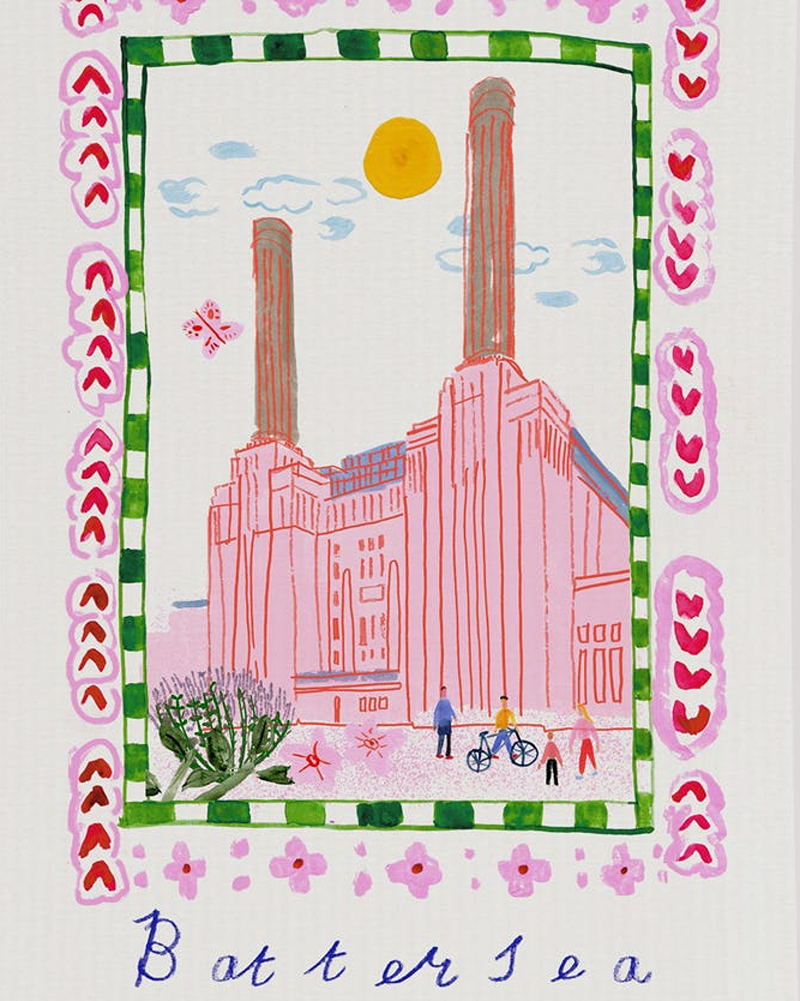
Battersea Power Station is almost as well known as Battersea Dogs & Cats Home. One of the world’s largest brick buildings, this coal-fired power station on the River Thames has long since been converted into shops.
Built in the late 1920s (the second station was added in the late 1930s), the building remained empty for years, before being converted. Today it’s owned by Malaysian investors.
When coal was the main power in England, the power station was providing around a fifth of energy needs (a fire on the night that BBC2 was due to launch, caused the station to have to delay and launch the next morning).
When first proposed in 1927, people didn’t want it (one Conservative MP warned that the power station would ‘kill every green thing within 2 miles, rot the buildings and bleach all the babies). Many people were concerned about soot and even King George V protested.
Some local residents who did love the power station’s heat were around 200 feral cats, but tragically, not-very-nice people killed all bar six of them.
One person who wasn’t a fan was straight-talking Prince Philip. He was reported to have asked one owner of the newly renovated building: ‘Why don’t you just knock the bloody thing down?’
The Complicated History of Britain’s Miners

Mining Men is an important history of the last generation of miners. We of course now know the environmental damage of mining, and thankfully there are now no more coal mines to be built (one proposed in Cumbria has thankfully now been scrapped).
But it’s important to know that mining was a dangerous job, and many of its workers were not treated well, if you know your history.
The book explores how miners felt when their pits were closed. And we meet former miners who went on to become factory workers, detectives, driving instructors, counsellors, the local mayor and one even ended up working on Fleet Street.
With accounts from ‘the people’s republic of South Yorkshire’, you’ll also meet miners from the Sunshine Corner Coalfields of Kent, along with others from Wales and Scotland.
Britain’s last deep coalmine closed in 2015, yet just 50 years before the industry employed over 250,000 people. Once considered the backbone industry of Britain, the miners fought hard against pit closures during the strike of 1984 and 1985.
The controversy was more on the way that miners were treated, as we obviously know that mining is not a sustainable industry.
Author Emily P Webber wrote research papers at university on the mining industry from 1947 to pit closures at the end of the 20th century. She has spoken to over 100 former miners, and has also worked for the Imperial War Museum and Holocaust Exhibition.
What Was the Miners’ Strike About?
The Miners Strike in 1984 lasted for over a year, brought about by unions and miners trying to prevent the closure of 20 colliers, where it was often the only employment in the communities.
As the bitter battle ensued, it became more the Conservative government’s struggle to stop huge power by trade unions, in an age where Margaret Thatcher famously said ‘there is no such thing as society’.
Despite the dangerous dirty job, mining families were indeed part of close-knit communities, so this created huge tensions. But the realisation that we needed to switch to cleaner energy, also meant there was less demand for coal.
The controversy was that no real support was offered to educate or fund alternative employment. 8 people died during the miners’ strike including workers, picketers and even a taxi driver.
After the strike was declared illegal, gradually miners began returning to work. People also began to lose faith in the National Miners Union, as the government refused to concede with any of their demands. So in effect, they had gone on strike for nothing.
Though at first the miners’ strike was popular with the general public, this soon subsided when first the coal ran out. And then when things starting turning violent. The end result was that the UK coal industry was then privatised.
What Was Arthur Scargill’s Legacy?
Arthur Scargill was the president of the National Union of Miners, during the strike. The controversy was that ballots were held in regions, with no national ballot to go on strike, saying that miners with safe jobs should not vote on striking in areas with vulnerable pits.
This led to controversy, as miners in areas like Nottinghamshire never voted to strike. And as a national strike by law needed a national ballot, this is why the strike had to end. Even the Labour government could not support an illegal strike.
Today the Barnsley suburb of Worsborough (Scargill’s community) has no mines, just as big ASDA, and ‘modern shops’ like vaping retailers, nail bars and a tanning salon.
One local resident says the community spirit has gone, saying she can’t even now leave potted plants in her garden – someone even stole her garden gnome.