Nuneaton (birthplace of Larry Grayson and George Eliot)
The West Midlands town of Nuneaton in Warwickshire would likely be anonymous to many, if it were not for it producing two well-known names in recent history. And their stories could not be more different.
Nuneaton (the name is from a 12th century Benedictine nunnery) has a market that has been there since 1247. Local residents are concerned that a new housing development could impact the water quality at a local stream from run-off, as it recently found endangered water voles nearby.
Labour government plans are to rip up local planning laws, to build more homes (although it’s possible to do this, without affecting wildlife if they consult with ecological planning experts).
Out walking? Follow the Countryside Code to keep all creatures safe. Keep dogs away from steep banks, mushrooms (and other toxic plants/trees) and on leads during nesting season (and near barnyard friends and wild ponies).
Larry Grayson (a warm friendly TV presenter)
Nuneaton was the birthplace of Larry Grayson, one of England’s most beloved entertainers, who despite his success, loved it here so much that he never left.
Larry was born to a single mother, who who handed him in a blanket to a local family (they all remained close friends, he lived with his sister until his death). His phrase ‘shut that door’ arose from when he first did stand-up, and a stage door kept flying open!
It is important to be happy and enjoy what you are doing, without the sole aim of becoming a star. Setting out only to be a star, can lead to misery. If someone is meant to become a star, it will happen naturally. Larry
Isla St Clair (not impressed by reality TV)
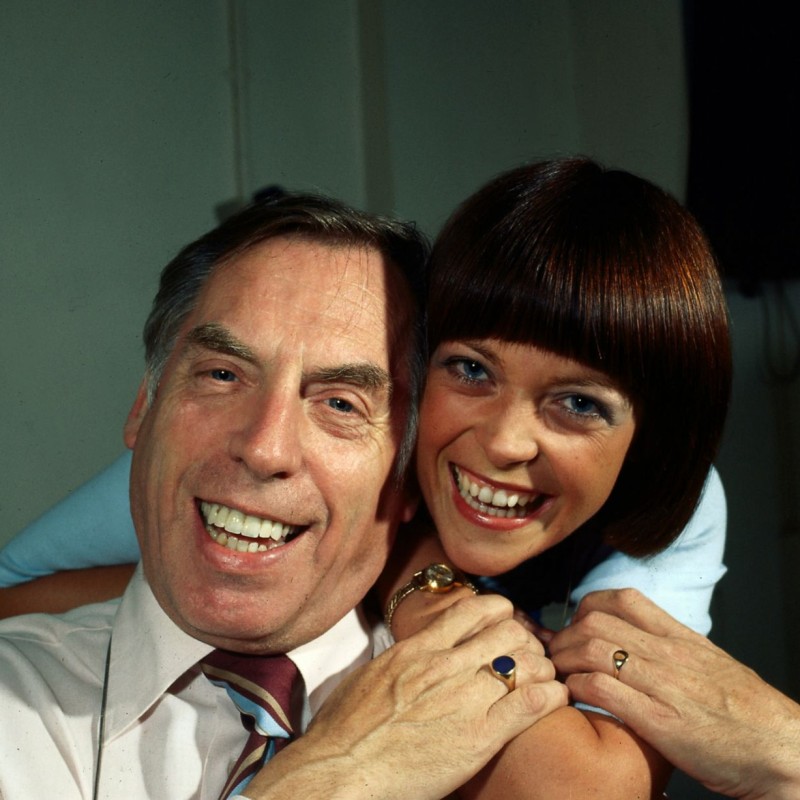
Many people loved The Generation Game TV series a few decades ago, presented by Larry and his beautiful co-star Isla St Clair. She was a Scottish folk singer (still is! – listen to beautiful songs at her site for free).
Like many, she is not impressed with reality TV. She writes that people long for a light entertainment show that ‘doesn’t involve eating worms or awful revelations that should be kept indoors’.
A view shared by TV wildlife presenter Chris Packham. He recently wrote an open letter to Ant and Dec, asking them to not promote a show where native creatures are scared (or eaten) for ‘entertainment’.
Each year, Ofcom receives thousands of complaints about the ‘I’m a Celebrity’ show, which disrupts local ecosystems (these are creature that in nature, would be food for other creatures).
The programs also sends the message that insects are of no value. In fact, insects vital to ecosystems (and likely more important species than us!)
Writer George Eliot (a scandalous life)

Also from Nuneaton was Mary Ann Evans (better known as George Eliot), described as one of history’s most scandalous writers. She is however known for her book Middlemarch, many describe it as one of the best novels of all time.
Born in 1819 in rural Warwickshire, she was a bookish child who studied languages, history and religion. After her mother died, she had to run the household, but still would read at every chance she got.
On moving to London as an adult, she worked with a publisher, and soon became editor of the Westminster Review. She also was so bright, she could translate religious works, and realising that it would difficult to publish as a woman, took her pen name of George to hide her gender (and keep her controversial life separate from her writing).
An open marriage with George Henry Lewes
In 1851, she met George Henry Lewes through literary friends. Already in an open marriage (his wife had children with another man), He was already in an open marriage (she had four children with him, and another four with his friend?!) Forming a strong bond, Eliot and Lewes chose to live out of wedlock, a bold move in Victorian London.
The couple lost friends and family, and newspapers hinted at their immorality. She was shut out from polite society, yet this did not seem to affect her work, as her writing thrived. They even travelled to Europe, where she wrote some of her finest books.
In 1878, Lewes died. Consumed with grief, she continued to edit his work, but her health declined. Just 2 years later, she married a banker (and old friend) John Walter Cross, who was 20 years her junior.
What happened next was beyond belief. On their honeymoon in Venice, John (consumed with depression) jumped from a hotel window into the Grand Canal. He survived, and they returned to London. But not long after, George died and is buried beside Lewes in Highgate Cemetery. John never married again, and died many years later age 84.