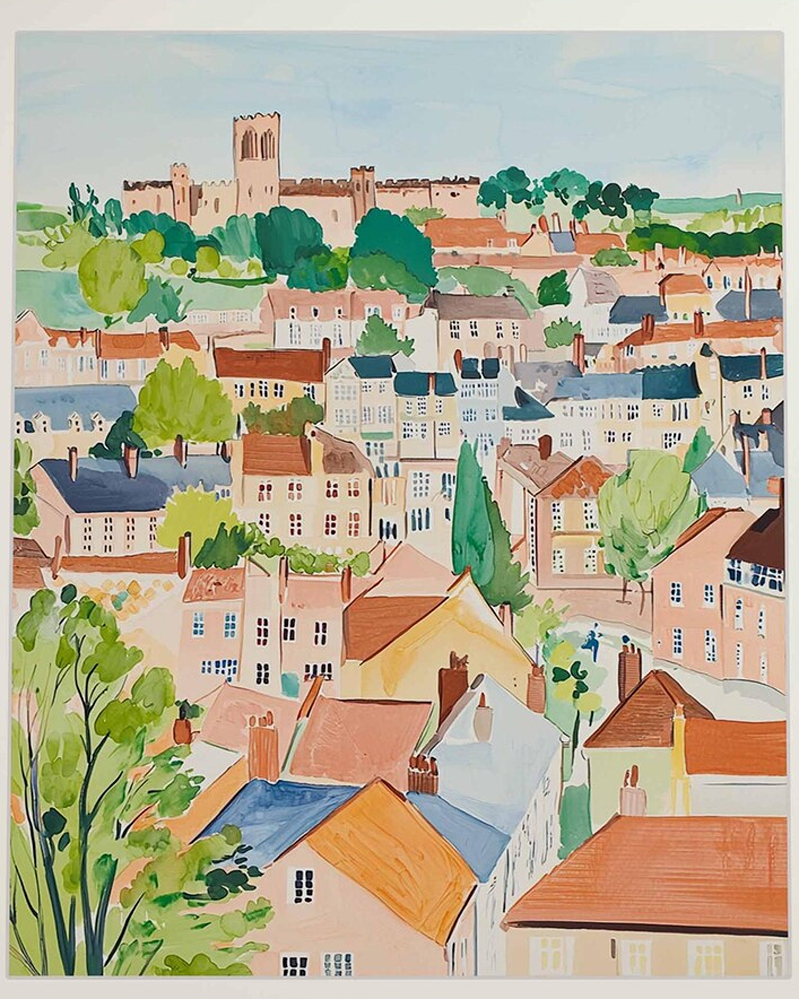
The History of Kent’s Beautiful Oast Houses

If you want a break that feels properly rural, but still easy to reach, Kent County, England fits the bill. It sits just south east of London, with the English Channel on its doorstep. You can move from market towns to open countryside, in the time it takes to finish a pot of tea.
Kent often gets called the Garden of England, and you can see why. Orchards line the lanes, hop fields still shape the view, and old oast houses pop up behind hedgerows. Then there’s the other side of Kent, with seaside towns, shingle beaches, and salty air.
If out walking, follow the Countryside Code, to keep all creatures safe. If at the coast, read up on keeping dogs safe by the seaside.
From hop gardens to hot kilns, how oast houses began in Kent
Hops come in soft green cones, full of moisture and scent. That moisture is the issue. If you pile freshly picked hops and leave them, they heat up, sweat, and then spoil. Drying slows that decay, and it also makes hops lighter and easier to pack.
Kent’s hop farming expanded over time because the county had good soils, a mild climate, and access to London’s markets. As hop gardens spread, the old habit of drying hops in general farm buildings became less practical. Barns could work in a pinch, but they didn’t control heat well, and they struggled with volume when the crop came in fast.
So purpose-built oast houses began to appear more often, with dedicated kilns and vents. By the 18th and 19th centuries, they became a familiar part of the Kent landscape, especially in the Weald and other hop-growing areas. You can think of the change as a move from making do, to building for speed and repeatable results.
What the hop-picking season was like for local families and travelling workers
Hop-picking shaped the year. Local families joined in, and so did travelling workers, often called hoppers, who came for a few weeks of paid work. Villages filled up, roads stayed busy, and fields ran from early morning to dusk.
Living conditions were basic for many pickers. Some stayed in simple huts or temporary lodgings, with limited space and shared water. Work could be tiring and weather dependent, and pay varied by place and time. Yet it remained important because it brought seasonal income, especially for families who needed it.
All that human effort created a second pressure. Hops arrived in bulk, at speed, and they couldn’t wait. Oast houses mattered because they turned a short harvest window into a product that could last.
The basic drying process, explained in plain English
First, pickers filled bins or sacks with fresh hops. Next, workers moved them into the oast and spread them on a slatted drying floor above the kiln. Then warm air rose up through the gaps, carrying moisture away.
Heat control mattered. Too cool, and hops stayed damp. Too hot, and they could scorch, losing quality and flavour. After drying, workers pulled the hops off the floor, let them cool, and finally packed them tight into large pockets for storage and sale.
It sounds straightforward, and it mostly was. The challenge was doing it again and again, during the busiest weeks, without mistakes.
The look of a Kent oast house, and the clever design behind it
Kent oast houses look charming now, but their shapes came from practical needs. They had to move warm air upwards, pull damp air out, and keep rain from getting in. At the same time, they needed sturdy walls for heavy use, plus space for storing and handling hops.
Many Kent oasts are round because a round tower stays stable in high winds, and it helps air move evenly. Still, square oasts exist too, often tied to earlier styles or different sites. In some places you’ll see a mix, with round kilns attached to a larger storage building.
Materials often came from local supply. Brick was common, as was timber framing with weatherboarding. Clay tiles suited the climate and were widely available. Each choice had a quiet logic: keep the building dry, keep it standing, and keep it working during harvest.
If an oast house looks “storybook”, it’s because the job demanded a clear shape, not because anyone tried to make it pretty.
Round towers, conical roofs, and the white cowls that turn with the wind
The cowl is the detail most people remember. It sits on top of the kiln roof and acts as a vent. As the wind changes, the cowl can rotate, helping draw moist air out of the kiln while the fire below keeps warm air rising.
Many cowls are painted white. Paint protects the wood, and the bright colour became a tradition in its own right. On a breezy day, you might see a cowl slowly turning, a little like a weather vane with a purpose, adjusting itself without fuss.
This simple moving cap helped make drying more reliable, especially when weather turned damp.
Inside the building, what spaces did what jobs?
Inside, the kiln area did the drying. The drying floor sat above the heat source, and workers accessed it to spread hops and judge progress. Attached spaces, often called stowage, held hops before and after drying, as well as tools and sacks.
Workflows varied by site. Some oasts had more than one kiln, which meant larger batches and fewer delays at peak harvest. Others were smaller, serving one farm rather than a wider area. Either way, the layout aimed to reduce heavy carrying and keep hops moving in one direction: in, up, out, and packed.
When you tour or rent a converted oast today, those old links between spaces often still show.
Decline, rescue, and new life, what happened to Kent’s oast houses in the 20th century and beyond
By the 20th century, many oast houses began to fall quiet. Hop farming in Kent shrank, and drying methods changed. Some growers used newer facilities, and some stopped growing hops altogether. As a result, older oasts became redundant, and many slipped into disrepair.
Several pressures sat behind this change:
- Mechanisation reduced the need for large seasonal workforces.
- Beer tastes shifted, and breweries adjusted what they bought.
- Industrial processing favoured bigger, central drying sites.
- Land economics pushed some farms towards other crops or development.
- Global supply made imported hops more common in parts of the market.
Kent still grows hops, but not at the scale that once filled every lane with wagons. Even so, the buildings remained, and people began to value them for more than their original job.
Planning controls and local heritage interest helped protect many oasts. Careful owners restored roofs, repaired brickwork, and kept cowls turning. Conversions to homes also played a big part, because a lived-in building gets maintained.
Why hop farming shrank, and why oasts fell silent
The old hop system relied on labour, timing, and a lot of land set aside for one crop. When costs rose and farms changed, that model became harder to keep. At the same time, larger brewing firms often preferred consistent supply chains and uniform processing.
In Kent, the story played out in visible ways. Hop poles disappeared from some fields, oast fires went out, and farmyards re-organised around different work. The buildings stayed, though, because they were solid and hard to ignore.
How oast houses became homes, and how to spot a respectful conversion
Oast house conversions tend to follow a pattern. Owners add windows with care, insert internal floors, and turn kiln towers into striking rooms. Good projects keep the towers readable from the outside, and they usually retain cowls, or restore them if they’ve gone.
Some oasts now serve as holiday lets, studios, or event spaces. The best ones still “make sense” at a glance. Look for original cowls that sit correctly, brickwork that matches in colour and bond, and rooflines that haven’t been flattened or muddled. Also check how vents and openings have been treated, because blocking airflow can cause damp in old fabric.
Let’s Visit Three Leafy Kent Towns (all quite posh!)
Kent is a large county in southeast England, home to the ancient city of Canterbury, leafy affluent commuter towns, the white cliffs of Dover, and seaside resorts not far from the French coast.
Sevenoaks is indeed named after a group of ancient oak trees (which came from an ancient chapel in Knole Park). A main hub for commuters, it’s home to farmers’ markets and top independent schools.
Oak trees are toxic to horses and livestock (conkers from horse chestnut trees are also unsafe to dogs).
Royal Tonbridge Wells is one of only three towns in England with the prefix ‘Royal’, with beautiful architecture. The other two are Royal Leamington Spa (Warwickshire) and Royal Wootton Bassett (Wiltshire).
Like the city of Bath, this is a spa town with a natural spring, where people would visit to ‘take the waters’ for their health, back in the day.
Tonbridge is home to an 11th century castle that sits on the River Medway. It was originally called Tunbridge, but changed its name, as people kept getting the two mixed up. Again a popular commuter route, with a busy train station.