Quakers (the peaceful Society of Friends)

Quakers or ‘the religious society of friends) meet across England in Meeting Houses (usually plain beautiful buildings). Unlike traditional faith services, there are no priests, vicars, hymns or prayer services. People simply sit in silence, until someone is inspired to speak.
Often described as ‘western Buddhists’, this faith has the same kind of philosophy: plain living, peace, kindness, justice and doing good in the world.
Although inspired by the philosophy and teachings of Jesus Christ, Quakers don’t believe they have to be ‘saved’ and are more believing that the light of Christ, is through how you behave, not what you preach or how much money you give to a church.
Although being seen as meek and mild, this is not so. Many Quakers over the centuries have been imprisoned and attacked for their beliefs (founder George Fox and his wife spent years in prison, and was even thrown down church steps and beaten with sticks and a Bible).
When he refused to serve in the army due to Pacifist beliefs, he had his prison sentence extended. Quakers over the years have also been instrumental in bringing huge changes for both the planet and animals, and were involved in the ending of slavery.
The History of the Quaker Movement
George Fox (a shoe maker in Leicestershire) grew up in a religious family, so knew the Bible very well. But even while young, he was aghast at the hypocrisy of the established church, that seemed more concerned with wealth and power, rather than living the simple peaceful life that Jesus Christ preached.
After years of being disappointed with answers from ‘those in charge’, he went off to explore his faith alone.
It’s said that while visiting Pendle Hill (the gateway to the Lake District), he had a vision and from there, began a movement that soon had 60,000 followers.
This greatly upset the established church (at a time when there was civil war between Catholics and Anglicans, due to the reformation of Henry VIII who replaced the Pope with himself as head of the church, so he could divorce and remarry). This movement later became the Church of England.
George Fox was a frequent visitor to the Cumbrian town of Ulverston, where the local judge (though not a Quaker) supported him. He lived at Swarthmoor Hall (now a Quaker retreat ). George married his widowed daughter (ten years his senior and mother to 8 children).
She too became a Quaker. During over 20 years of marriage, they did not see each other that much, as he was either away preaching or one of them was in prison.
One of his great supporters was the English writer and thinker William Penn, who also was frequently sent to prison (in the Tower of London).
He went on to found the US state of Pennsylvania, and returned to England where he was cheated out of his wealth by an associate. He died penniless, but is known as one of the founding fathers of the Quaker movement.
I expect to pass through life but once. If therefore, there be any kindness I can show, or any good thing I can do to any fellow being. Let me do it now. And not defer or neglect it. As I shall not pass this way again. William Penn
Quakers Believe in Peace
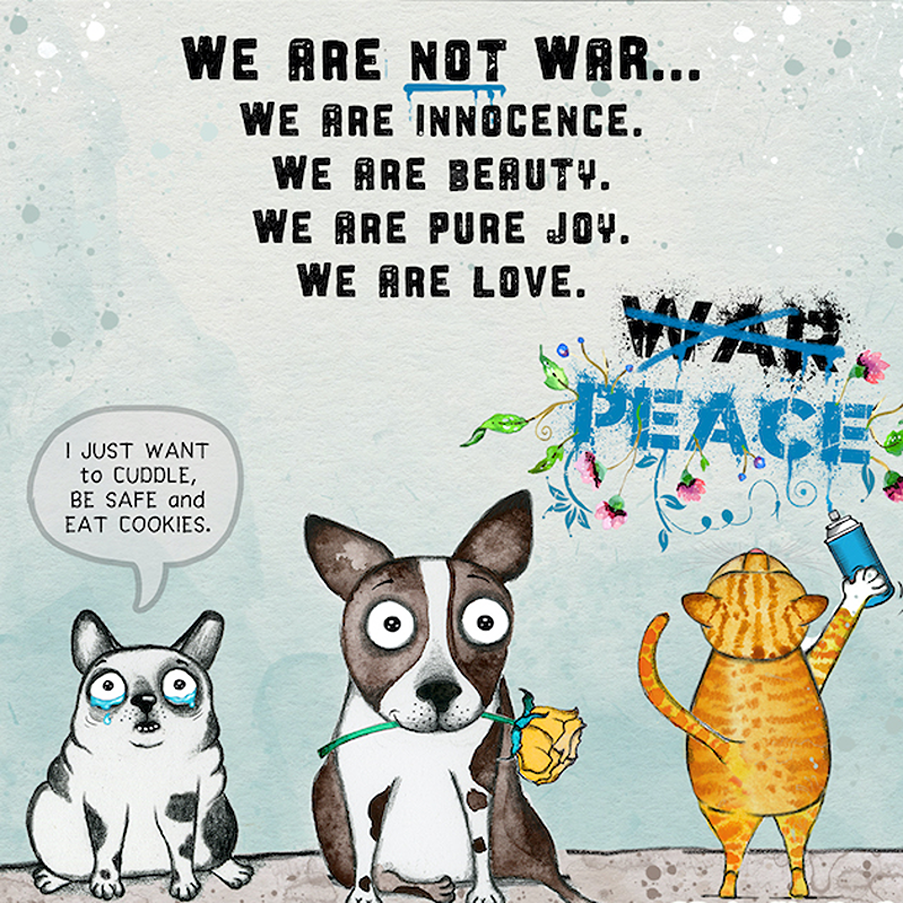
World peace is what we mostly know Quakers for. They are against war, and also have strong views on human rights, animal welfare and environmental stewardship. Beliefs are so strong, that some were almost certainly put to death during the last World War.
Quakers Believe in Simplicity
Quakers are have always dressed simply, and avoided gambling (and mostly alcohol). Even Meeting Houses are very simple, with no formal sermon, hymns or prayer.
Quakers simply consider before purchase. Do they need it? And if so, how was it made, did it cause harm to the planet, animals or people? They still buy cars and coffee, but not if it causes others to suffer. Some have compared them Amish people (but with electricity and without the bonnets!)
Quakers Believe in Truth
If you tell fibs, you can’t be a Quaker. Truth is the ultimate aim of relationships. Because without truthful communication, there is nothing left. Quakers for this reason often were successful in business.
You won’t find sneaky businessmen in the Quaker world. They all pay a Living wage, and there is no deception of important things left unsaid. Quakers also speak ‘truth to power’. And are not afraid of telling MPs what they think, about social justice.
It was easy to imprison Quakers back in the day, because they don’t swear oaths on the Bible (preferring to just ‘tell the truth’). They also would not pay tithes to the established church, nor doff their hats (or bow) to people in charge. So you can imagine!
Quakers Believe in Equality
Quakers were into equal rights for all, long before anyone else. You won’t find arguments about women bishops here. Quakers were the first British religious movement also to condemn slavery, and were pioneers in prison reform.
For the same reason, Quakers refuse honorary titles. They would never become a Sir or a Dame or a Viscount or an OBE. They don’t even use the terms ‘Mrs and Mrs’, just referring to others as ‘friends’.
Quakers reject war in all its forms, and some even refuse to pay tax, because it is used to buy weapons (legally done, but refusing to earn above the tax threshold).
Quakers Don’t Accept Lottery Grants
Quakers refuse to take money from lottery grants. Because in order for someone to win, others (often vulnerable people desperate for money) has to lose. And lotteries are a form of gambling, which is against Quaker faith.
Lotteries also give the impression that ‘life begins when you have lots of money’, rather than working to produce something of worth to others. If a local church orders a shiny new roof paid from the pockets of people who are now out-of-pocket, this is not seen as good practice.
How George Cadbury Helped A Village (from the grave!)
Now here’s a story to make you smile, even if eventually, Tesco did kind of win (as they unfortunately always tend to, same thing happened in Sheringham, Norfolk):
Bournville is a small village just outside Birmingham, built by George Cadbury (a devout Quaker who invented drinking chocolate, to dissuade his workers from drinking gin – he was a strict teetotaller!)
He looked after his staff well, and built this village with nice houses and pretty green spaces, to give a good quality of life, amid the city slums of yesteryear.
Cut to a few years ago, and Tesco Express opened a store nearby, and applied for an alcohol license. It was refused, because local people (concerned more about glass litter and hooliganism than George’s religious beliefs) opposed it.
So Tesco Head Office went into action, and launched a legal challenge. And guess what? Clever Mr Cadbury had wrapped the deeds up so well, that it became the first store where it lost, and Tesco had to open this branch, with no alcohol. A triumph of the little man winning!
Alas, Tesco got around it by selling alcohol at a nearby petrol station.
Where to Learn More about Quakers?

- Quakers of Britain is the main website, where you can learn more about the movement, read Quaker Faith and Practice (a bit like ‘the Quaker bible’) and find local meetings.
- Quaker Concern for Animals offers educational content and makes charitable donations, believing that all animal lives matter.
- Quaker Education gives details on schools that use Quaker values, to promote a peaceful world. Time is given over to arts, forest schools and volunteering, rather than being glued to phones and laptops.
- The Friend magazine focuses on peace to find solutions. Also in podcast form, if you prefer to listen, rather than read. Just like BBC Radio 4’s Thought for the Day, this site has a ‘thought for the week’. There are discounted rates for study groups.
Books to Learn More About Quakers
- A Simple Faith in a Complicated World is by a woman who grew up in mainstream faith, but could not find answers in science and psychology. She ended up a Quaker, where she found a community based on the base commandment: love one another.
- Quakers in Politics establishes the theological roots of political activism, which starts amid members of the Society of Friends. The book profiles individuals that influenced public policy, and traces the 360 years of political peaceful activism.
Some Well-Known Quakers
Quakerism still remains a small religious movement, with the highest percentage in Kenya and the USA, although we have the fifth most of any worldwide. Some well-known people raised as Quakers are:
- Judi Dench went to a Quaker school, and says her faith informs everything in her life. Happily married until his death, her husband Michael Williams was a Catholic but she never swayed, and neither believed they had to convert to the other’s faith.
- Paul Eddington (who played Jerry in The Good Life), was granted exemption from military service, due to being a pacifist Quaker. He attended school in Oxfordshire, where many teachers were conscientious objectors.
- Victoria Wood was not a Quaker, but attended meetings with her husband, after becoming interested in the faith. She wrote ‘As I’ve got older, I am more interested in having a belief. If you don’t, it makes everything seem pointless. To only think ‘You’re alive, you have acne and then you die’ makes you wonder what’s it all for’.
- Inspector Morse was raised by Quakers (who often give children ‘virtuous names’ like Hope and Patience, which is why he was called ‘Endeavor’). John Thaw’s widow Sheila Hancock ‘lost religion’ after her mother and first husband died of cancer, became a humanist, and later a Quaker.