How to Help Save Our Independent Shops

Indie bookstores can’t compete on price, because Amazon makes a loss on selling books (as it can recover profit from selling high-income-producing electronic and other items). So to survive, indie bookshops must do what online retailers can’t. Here are a few ideas:
For cookbooks, read about food safety for people and pets. For gardening books, read up on pet-friendly gardens and wildlife-friendly gardens.
- How about free foot delivery to local people? No postage fees and no plastic, instead just a friendly face (instead of a delivery fan that may turn up when someone is out).
- Offer a loyalty card, and get together with others (pubs could offer discounts on an evening pint, when used to collect book parcels, for when people are out).
- Make use of wasted space. You could hire out to art teachers or have a little tea room, with books to sell on the shelves.
- Mr B’s Emporium (one of the England’s best bookshops in beautiful Bath) offers ‘Reading Subscription Gifts’ where customers complete a questionnaire, than a ‘bibliotherapist’ hand-picks suitable books to deliver each month on subscription (this can be changed, say you went vegan or changed hobby from gardening to pottery). This shop even has its own acoustic ‘bookshop band’, all their songs inspired by books!
- If you shop online, choose Blackwell’s, an Oxford online bookstores. Unlike Amazon, you are not supporting a company that sells real fur and has ethical issues. Bloggers can join its simple affiliate program (all our books link to this site).
Danny Caine (an indie bookseller in the USA) explains that the only way for the species to survive, is to support them. With a wholesale discount of around 46%, indie bookstores can’t sell books for the same price as Amazon, as they could only stay open for a few days, making less than 50p profit per book. He wrote an open letter to Amazon founder Jeff Bezos:
Small business owners are led to believe that if their idea is good enough, they can grow their business and create more jobs. Yet your company is so big, so disruptive, so dominant, it’s severely skewed the ability for us to do that.
Maybe someday you’ll hear what we have to say. Maybe we can talk about it over pie and coffee at Ladybird Diner across the street, my treat. I’d love to show you around a vibrant community anchored by small businesses, here in Kansas, here on earth. Sincerely, Danny Caine, indie bookshop owner
In Praise of Good Bookstores (a good book!)

In Praise of Good Bookstores is a charming book on the importance of browsing, written by a bookseller in Chicago, USA. This well-reviewed book explores why independent bookstores matter, in a world of one-click technology, and why local book shops are still places of discovery and refuge, for towns fortunate enough to still have them.
Jeff is the former director of one of the most lauded independent bookstores in the world, so is qualified to write on what makes a good one. Growing up with a love of reading, he believes that losing our independent bookshops in the age of online shopping would be a tragedy, not just for people, but for communities.
This elegant little book, offers the most moving justification for the survival of bookstores, I have ever read. Ron Charles
The next time you see an Amazon delivery truck blocking traffic on your street, think about Jeff’s book. He has something valuable to tell you. David Emblidge
Deutsche shows how communities need bookshops, like ships need sails. A joyful river of a book. Jump in. Martin Latham

Community shops are owned and run by local people, usually with a paid manager and volunteers who help out a few hours each week or month, and receive affordable food (they get to choose what to stock) in return.
Before shopping, read up on food safety for people and pets. Also bin scraps from alliums (onion, garlic, leeks, chives, shallots), tomato, rhubarb and citrus, as acids could harm compost creatures.
For plants/flowers, read about pet-friendly gardens. Never face indoor foliage to gardens, to help stop birds flying into windows.
Plunkett (help for community shops/Pubs)
If you fancy starting (or saving) a community shop, Plunkett is an organisation run by experts, who can help (they also can help to start or save a community-owned pub). Benefit from free advice, business plans, and help with creating budgets and raising funds through crowdfunding.
Even if you don’t include a Post Office, community shops are good drop-off places for local people to collect parcels. Make your shop and pub dog-friendly if possible, with fresh water bowls, outdoor space and perhaps some organic biscuits, for four-legged visitors!
Also register at Great British Toilet Map, to let people know they can use your loos. Many older people don’t go out, if they can’t find a free place to spend a penny.
The Galleries Community Shop (near Bath)
Galleries Community Shop is a gold-standard community shop located just outside the city of Bath (on the Somerset/Wiltshire border).
Housed in a solar-powered eco building (that sells excess energy back to the grid to generate more income), it sells locally-produced food and plants, sourdough loaves from an independent bakery, locally-prepared ready-meals, plus locally-brewed and roasted beer and coffee.
This shop was fortunate in having land donated by local people, and also has an outdoor café that is popular with locals, and also walkers to refill their water bottles and dog bowls with tap water. The shop also has cloth bags and you can ‘borrow a brolly’ in a downpour, and return it next time you’re passing.
With over 200 daily customers, volunteers help to serve customers, stock the shelves and help with deliveries. The shop is dog-friendly and wheelchair-friendly. There is also a community defibrillator and a large outdoor deck for countryside views.
The shop’s Reverse Credit Scheme is a bit like a modern version of ‘put it on the tab’. Customers set up an account and pay at the end of the month, meaning not only do they not have to carry cash or cards to shop, but can send older children to pick up goods as well, without worrying about cash (bank notes are made from plastic and animal fat).
The post office allows people to pay bills, receive pension payments and exchange foreign money. It also receives parcels and prescriptions for local people if they are out.
Run as a charity, profits are then re-invested into the shop, for the benefit of the community. The village is also one of the few nationwide to also have community-owned pub alongside. The Hop Pole Inn even runs comedy nights, to enjoy with a glass of bubbly, or pint of beer.
Member of the Move to Minus 15°C Campaign
Move to Minus 15°C was launched at the last Paris Climate Agreement Meeting, to help reduce global warming (despite changes in technology, the rules for frozen food temperatures have not changed in 100 years).
This is a worldwide campaign to change the temperature at which frozen food is stored (from minus 18c to minus 15c) to save 27% on energy bills, while retaining a 5-star food hygiene rating.
In a country of 60 million people with an ageing population, it’s likely never going to be the case again that you pop to the village baker, deli, greengrocer and indie health store (most sell pills over food).
But there are ways to support indie shops, if only for a weekly loaf of bread or a basket of organic veggies. If we all did that, they would survive. Every little helps!
Run an indie shop? Many seeds, flowers, plants (and plantable cards) are toxic to pets, so learn what not to sell to households with pets. Also read how to save our independent bookstores.
Small indie shops are not just nice for communities to avoid ‘clone towns’ (where all towns look and feel the same), but they tend to have staff who are treated better and paid more. And importantly, small indie shops stick around when things get tough.
You can usually take dogs inside, ‘borrow a bag’, put a few groceries on a tab for older children to collect and often small shops will also order in goods that you request, rather than you have to write an ignored letter to Head Office, if you really want that artisan vegan cheese brand in store.
The main reason to support independent shops is that you usually can get there by foot or bicycle. Many indie shops are in old buildings so can’t adapt for wheelchairs etc. So it pays to have a sign (or website) saying you can deliver locally for free.
Supporting indie shops also means you get to keep money within your community. A small shop owner may well bank with a local credit union, likely employs local people, has no shareholders, employs a local signwriter, and likely also eats his lunch at the local pub!
Shop Local Whenever Possible
When you shop local, you keep money in your community and help create jobs. Think about it: each time you decide to buy from a small shop, you’re investing in your neighbours and fostering local diversity.
- Create a List: Before you shop, make a list of what you need. This way, you can plan visits to local shops that might have what you need.
- Explore New Places: Dedicate time each week or month to visit shops you haven’t been to before. You might discover hidden gems.
- Consider Gift Giving: When special occasions arise, look for gifts in local shops. They often have unique items that reflect your community’s character.
- Pedddle is a site connecting shoppers with independent market stall holders.
Local Buyers Club (discounts at London indie shops)

Local Buyers Club is a unique discount card, for people who live and work in the city of London. Just click the borough of choice, and find local shops (often zero waste and artisan-based) that offer discounts.
The £15 or so membership fee pays for itself in no time (and there are discounts if you get together and buy multiple cards). Cyclists can enjoy a partnership with Transport for London) for a membership fee of just a couple of pounds (some discounts are of course for cycle shops!
Membership renews automatically each year, but you can cancel at any time. Each shop and business is free to choose its own discount, but most offer 10% to 25% off plus freebies, and discounts at restaurants cover everyone at the table (not just the card holder).
Indie businesses in London that wish to join up, can choose from a Basic or Premium package. Either way, you’ll benefit from more customers, bespoke marketing and active social media campaigns, that are flying the flag for indie businesses in the city. There’s even a 6-month trial, so you’ve nothing to lose!
The Basic Package should be enough for most people, the Premium package includes a professionally-written press release, listing in three areas (over just one) and the option of introductory offers. Costs are £10 or £20 per month, so either should pay for itself within a short while.
For every £5 or £10 you spend each week at an independent shop, this brings collectively billions back into the local economy over a year.
This is because local businesses use local suppliers, pay local taxes, use local signwriters, and tend to eat and drink locally too. Plus ‘top profits’ go the retail shop owner, rather out-of-county to shareholders and companies abroad.
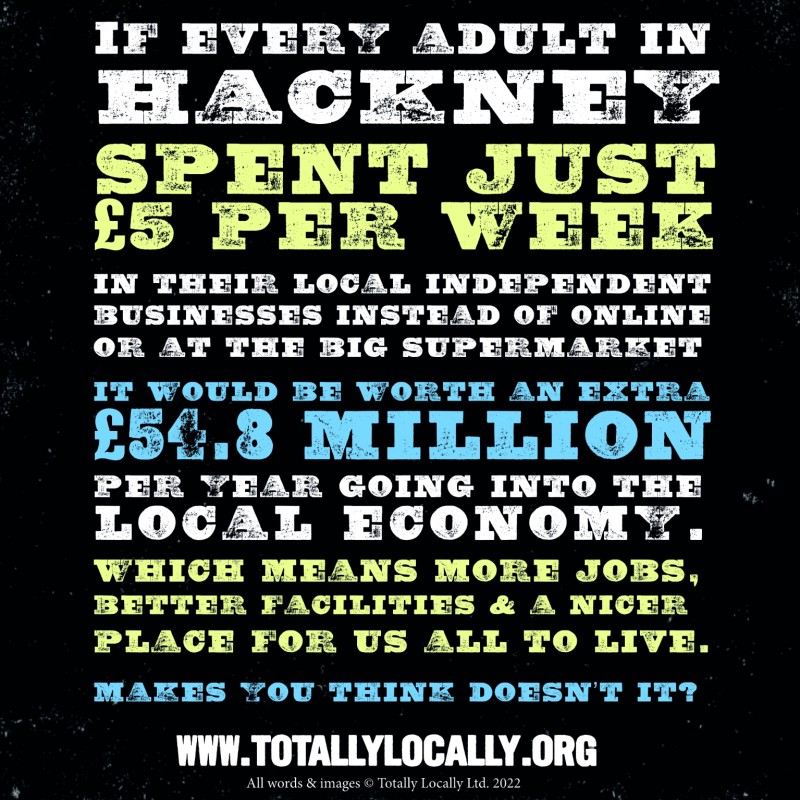
Totally Locally began as a ‘shop local’ campaign in northern England, and is now a worldwide movement. Volunteers use the Town Kit to make their communities more resilient from big supermarkets and chain stores, to support local economies.
Around 80p spent in local shops, stays in local communities. With big chain shops and supermarkets, it’s closer to 20p to 30p (or almost nothing, with big online retailers).
The Totally Locally Town Kit includes all you need to help reinvigorate your high street. You’ll learn how to put your first meeting together, develop posters and logos and print templates. This kit is a legal agreement, so you can’t change the logos or colours.
Anyone can download free posters (translated in many languages). You can also order organisation’s first book The Economics of Being Nice, which explains what the movement is all about, and its many benefits.
Fiver Fest and Magic Tenners!

These two campaigns encourage people to spend £5 or £10 a week in independent stores in their town, to bring a collective massive amount of income to local economies.
If every adult in the UK spent just £5 per week with local shops and businesses, this would generate £13.5 billion of money to go back to your town. This is because local independent shops tend to buy food and drink at local sandwich shops and pubs, and use local signwriters, and source from local producers.
Just imagine if your own town had over £13 billion extra? What would you do with all this extra money? It’s likely that most issues (from lack of litter bins, public parks and pot holes) could all be solved. With lots of money leftover!
You can customise the bank note posters (like above) to make your own town. Penzance is holding a campaign here, asking people to spend just £5 a week in local shops, to bring and extra £4.1 million into the town.
Here’s another example from the website:
If you buy a local pie from a local shop, a big part of your money is passed to the pie maker. The shop employs a local accountant or decorator. He buys ingredients from a local farmer, who spends money at the local garage, who then buys something from someone else who is local…
As a contrast:
If you buy a pie from a big supermarket, it’s likely made with factory-farmed ingredients and palm oil, sold in plastic packaging. The supermarket has its finances done by a big accountancy firm hundreds of miles away, and all stores are decorated the same (so no local signwriter used).
The ingredients for the food sold are hardly ever local (palm oil is from Indonesia) and all delivery vans are branded, not bought from a local garage. And if one breaks down, it’s unlikely going to be the local mechanic who fixes it.
Many Totally Locally communities ask local shops to get involved, by creating special £10 offers (from gift bundles to meal deals and unique local experiences). This encourages residents and visitors to ‘spend a tenner’ in local shops, find new favourites, and return to back independent unique businesses.

Local currencies have a quiet charm. They help people connect in their communities and bring life to small businesses. These special notes or tokens might seem old-fashioned to some, but the benefits are real, lasting, and often surprising.
Local money brings people closer and gives towns and cities a sense of pride. If you’re interested in what makes a community flourish or just want to support your high street, it’s worth learning what makes local currencies tick.
Projects like the Lewes pound show how local currency can keep wealth moving locally, and spark new pride in a community’s businesses.
Conventional bank notes in the UK are made from a combination of plastic and animal fats, which is why many people now prefer to use cards to pay for things.
And for those obsessed with the national economy and international trade, we like this piece of writing from Paul Kingsnorth, on why many of us are not fans of the EU:
The EU violates just about every green principle going: It is the opposite of local: it is destructive to the natural world; it wipes out cultural distinctiveness; it is anti-democratic; it puts the interests of banks and corporations before the interests of its working people.
Why – when – how – did the green movement abandon its commitment to localism and democracy, and jump into bed with a beast like this? Paul Kingsnorth
Here’s a closer look at the many benefits that local currencies offer.
Boosts Local Economies
A local currency keeps money moving nearby. When people spend local notes, shops and services in the area get busier. This cycle repeats, helping keep businesses strong and creating more jobs.
Studies show that when you use local money, more cash stays close to home compared to what happens with national currencies. This extra support helps small firms survive tough times and grow over the long run.
Supports Local Businesses
Independent shops and family-run firms often struggle against huge chains. Local currencies are a tool for helping them compete. When shoppers are encouraged to spend local money, they’re more likely to visit nearby outlets instead of large supermarkets or online giants.
This gives small traders a fair shake, helping to keep corner shops, local cafés and market stalls open and busy. Over time, everyone benefits from the extra variety these businesses offer.
Builds Community Spirit
Using a local currency helps people feel connected to their area. There’s a real sense of teamwork when you know your money supports neighbours and friends.
Community events, farmer’s markets and festivals often use local tokens to spark interest and draw crowds. This brings people together, promotes trust, and reminds everyone that looking out for each other pays off.
Reduces Environmental Impact
When money stays close to home, goods and services don’t travel as far. This cuts down on transport emissions and reduces the carbon footprint linked to shopping.
Supporting local farms and artisans means fewer trucks on the road, less packaging waste, and more fresh produce. Local currencies encourage greener habits, which means a cleaner, healthier place to live.
Encourages Ethical Spending
Community money can have clear values. Local currencies often come with a pledge to back fair trade, support living wages, or only work with eco-friendly firms.
When you buy with local notes, you often know that your cash backs companies that treat people well and care for the planet. It’s shopping with a conscience, made simple.
Adds Diversity and Resilience
A local currency is another way to keep trade going when the national economy wobbles. If national banks go through a crisis or cash becomes tight, local notes can keep local shops running.
This extra system makes communities safer and more adaptable during tough times. It’s a safety net that helps the area recover faster and stand tall, no matter what’s happening elsewhere.
Attracts Tourism
Visitors are often curious about local quirks, and a town’s own money is a real conversation starter. Special notes or tokens can make shopping and dining more fun for tourists. These unique bits of paper or plastic often become souvenirs.
By offering something different, local currencies help bring in guests who spend money and spread the word about their trip.
Sparks Local Innovation
Creative thinking often comes from trying new ways of doing things. Local currencies can be used for reward schemes, charity donations, or green energy projects.
They give communities a chance to experiment, find better solutions, and learn from small wins or setbacks. This culture of trying new ideas helps places grow in their own way, rather than copying what works elsewhere.
Strengthens Local Identity
A home-grown currency often reflects local history, famous faces or landmarks. People feel proud to use it, and it can become a symbol of what makes a place special.
This sense of belonging encourages people to invest time and energy in their area. Pride in your town or city can lead to cleaner streets, better public spaces, and more cheerful neighbours.
Makes Money More Accessible
Some people don’t use banks or credit cards. Local currencies can help, especially when they come as paper notes, tokens or simple apps.
They provide an easy way for everyone to take part in the local economy, even those who avoid big banks or live without a regular account. This opens doors for people who might be left out, making sure everyone has a place at the table.

RefillAbell (Watford)
The popularity of zero waste living keeps growing. From swapping disposable plastic for reusable products to shopping package-free, people in England want to make real change on their doorstep. Cutting single-use waste doesn’t just help the planet; it supports local independent shops, builds stronger communities and encourages small businesses leading the eco movement.
This guide shares what zero waste shops offer, how they work, and how you can make the most of these local heroes.
As most zero waste shops sell food, beauty, cleaning and candles:
- Read up on food safety for people and pets (it’s best to bin bin allium scraps (onion, leeks, garlic, shallots, chives) along with rhubarb, tomato and citrus scraps, as acids may harm compost creatures.
- Choose unscented beauty, cleaning and laundry products for pregnancy/nursing and near babies/pets (and read our post on candle safety).
- If growing food, read up on pet-friendly gardens and wildlife-friendly gardens (avoid facing indoor plants to gardens, to help stop birds flying into windows).
Some zero waste shops sell pet food, this is a complicated subject due to various ethics, mixed with the nutritional needs of animal companions. Read our post on quality pet food (in consultation with your vet).
How Do Zero Waste Shops Work?
Zero waste shops aim to reduce waste at the source. Their main goal is simple: cut down on packaging and single-use plastics by encouraging people to refill and reuse. Unlike typical supermarkets filled with shrink-wrapped goods, zero waste shops use refill systems, bulk bins and a tare weight process.
This hands-on shopping experience puts you in control of what you need and how much you bring home.
Zero waste shops stand out for a few reasons:
- Bulk buy sections for rice, pasta, shampoo, laundry powder etc.
- A focus on plastic-free swaps (think: bamboo toothbrushes, food wraps)
- Friendly, knowledgeable staff with waste-reducing tips
A few zero waste shops in London
- Art of Zero Living (Greenwich)
- Weigh and Pay (Brixton)
- Gather (Peckham/Southwark/Lewisham)
- Kilo (Holloway)
- Jar Market (Herne Hill & Stoke Newington)
Refill Systems Explained
Most zero waste shops run a simple refill system. Bring your containers (old jars, bottles or tins work fine). Some shops have a ‘take a jar, leave a jar’ shelf for those who forget. You weigh your empty container, fill it with what you need – whether oats or washing up liquid – and pay by weight.
There’s no extra packaging waste, and you only buy as much as you need. This method keeps your cupboards tidy, saves money, and shrinks your rubbish pile at home.
Bulk refill stations usually stock:
- Grains, pasta, lentils, cereals
- Nuts, seeds, dried fruit
- Baking goods
- Cleaning liquids (washing up liquid, detergent)
- Shampoo, conditioner, shower gel
Bringing your own container means you avoid unnecessary packaging and plastic, reducing pressure on local waste collection and recycling schemes.
Understanding the Tare Weight System
If you visit a zero waste shop, it’s likely using the tare weight system. It’s good to know how it works, so you can save money by taking your own packaging, which also helps to reduce plastic waste.
Around 30% of the price of most goods in supermarkets is due to packaging. So if you buy your daily essentials from zero waste shops, often the price is a third cheaper. We’re talking everything from lentils to rice to herbs and spices.
Tare weight is that of the empty container, before you add the contents. That means that when you take along your clean dry containers (or use ones sold in zero waste stores), this is subtracted from the gross weight of the final contents, to ensure that you are not paying for the empty packaging that you own.
Most modern zero waste shops then print labels with the tare weight and a barcode, for easy scanning at the checkout. Learn where to buy scales for zero waste shops.
For more info on helping your shop to use tare weight systems, visit UnPackaged, which runs a consultancy for both small shops and supermarkets (along with online stores).

It helped Abel & Cole to launch their Club Zero. Customers rinse their empty bottles and screw the lids on, then put them next to their organic fruit and veg boxes, for collection, refill and reuse.
Brands including ReRooted (organic plant milks in glass bottles) and Miniml (an eco-friendly cleaning range made with Yorkshire water) are involved.

Shopping in bulk is more than a trend. Bulk buying in zero waste shops means fewer single-use packs, less food waste, and a lower shopping bill in the long run. Most shops stock:
- Cereals, grains, pulses, pasta
- Spices, herbs, loose-leaf tea, coffee beans
- Dried fruit, nuts, snacks
- Household cleaners in refillable bottles
- Bath and beauty products (like lotion, shampoo, hand soap)
The choice can surprise newcomers. Want one scoop of cumin instead of buying a big jar? Easy. Need just enough rice for dinner? No problem. By letting you choose small or large amounts, zero waste shopping helps cut waste at home and encourages a more thoughtful approach to what you buy and use.
Benefits of Shopping Bulk in Zero Waste Shops:
- Save money by buying only what you need
- Cut down on food and packaging waste
- Try new products without commitment
- Reduce carbon footprint thanks to fewer deliveries and less packaging
The Refill Shop of Ikigai is St Ives’ very own zero waste shop. The name translates as ‘a reason for being, a purpose, a meaningful life’. Just take along your clean containers, and fill up on daily essentials. The shop was founded after the pandemic by vegans, who wished to do something even more to help the planet.
Pebble Magazine has a good list of zero waste shops in England, Wales and Scotland.
The Clean Kilo (Birmingham)

The Clean Kilo (Birmingham) is England’s largest zero-waste supermarket. Situated in Bourneville, it’s beautifully fitted out with a deli, chilled plant milk dispensers and machines to make your own orange juice and peanut butter.
Most food is organic from local artisan producers, bought in bulk to build strong relationships and good income for small suppliers. Even crisps arrive in packaging-free containers from nearby Staffordshire.
Two Mobile Zero Waste Shops
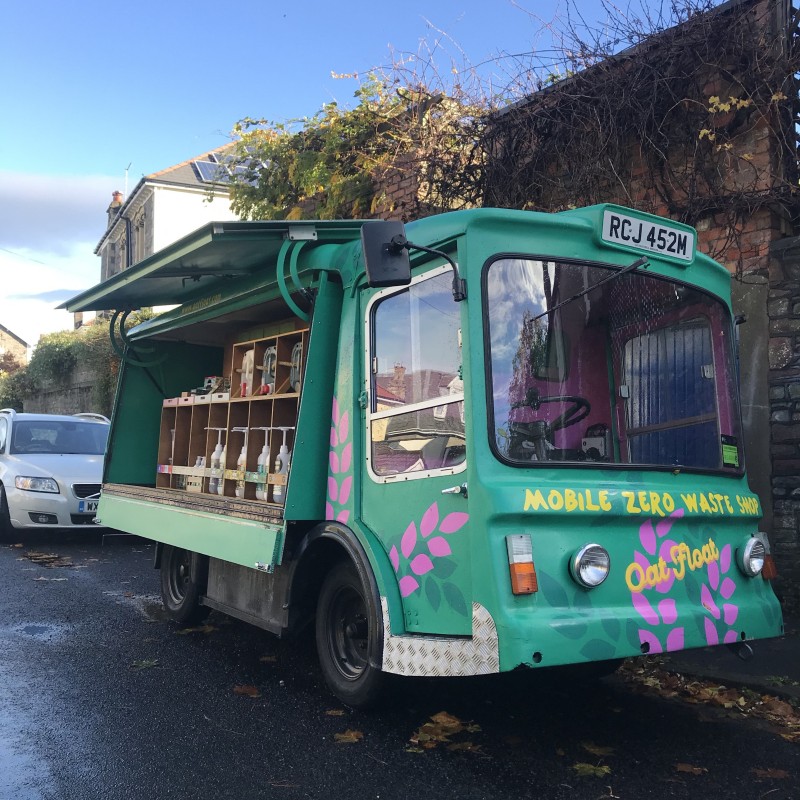
Oat Float is a quirky 70s vintage milk float, that has been developed into a mobile zero waste shop in Bristol, doing the rounds to deliver plastic-free daily essentials. Customers can buy pantry staples like pasta and porridge oats to eco beauty and household items.
Incredible Bulk (Cornwall) delivers to several villages in this rural but fairly small county, so it’s likely the van will be visiting near you at some time or another. Their converted van travels through Cornwall, turning up at village halls and markets.
Why Use a Mobile Zero Waste Shop?
- Reach rural or remote areas with no local shop
- Reduce car journeys for customers
- Support small regional suppliers
- Build community through regular visits
Zero Green (Bristol)
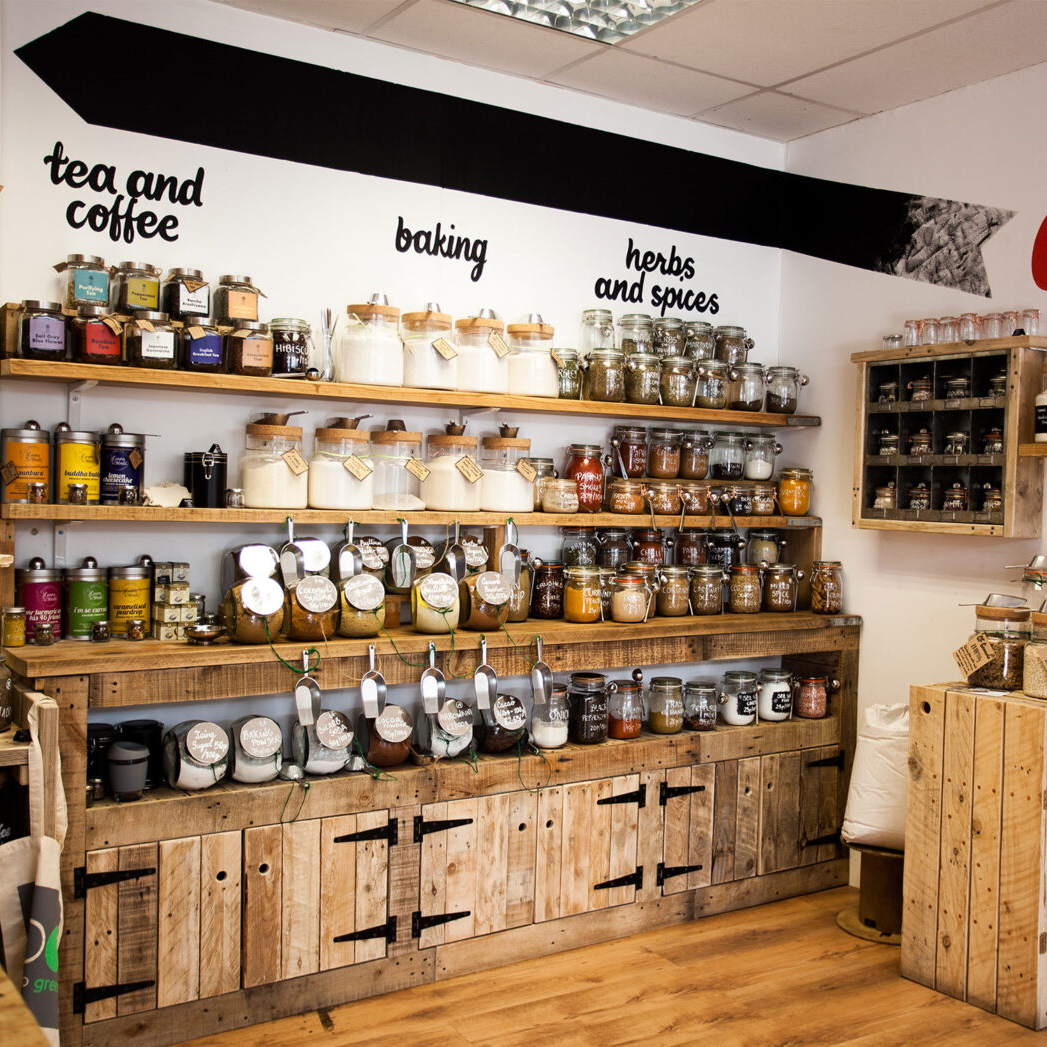
Zero Green (Bristol) not only sells zero waste staples. But if you have a coffee at their shop, you can eat the cup as it’s edible! It tastes a bit like a thick ice-cream cone and the drink will keep for around 40 minutes, before the ‘cup goes soggy’ (the paper sleeve holder is then recycled).
Earth. Food. Love (Devon)
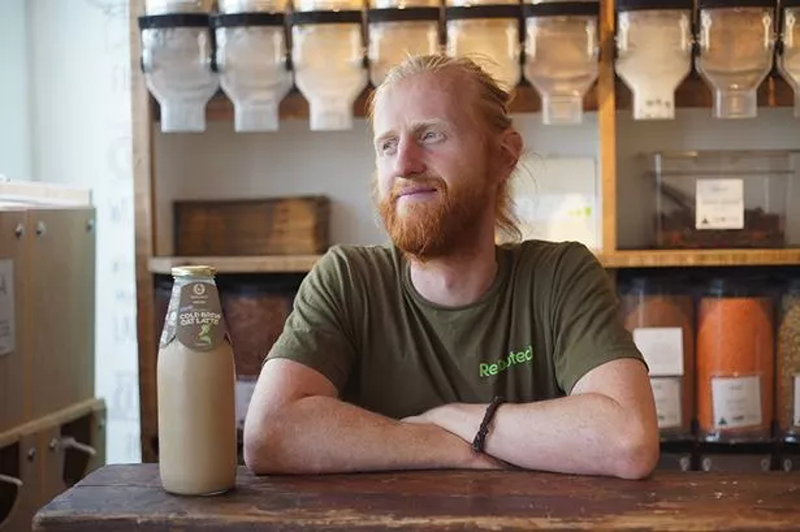
Earth. Food. Love (Devon) was England’s first zero waste shop, and the founder is also co-founder of ReRooted organic plant milks (sold in returnable glass bottles). This shop was founded (with his wife) by a former Manchester United footballer. Who says if you told him that he would give up a lucrative career in his late 20s to become a shopkeeper, he never would have believed you!

This lovely couple have even created a free downloadable e-book (pdf) to help anyone set up their own similarly successful zero waste shop. It covers everything from location and products, to marketing, pricing, hygiene and payment methods.
In an interview, it’s interesting that the founders say they opened the shop first, then gradually became zero waste, inspired by a similar shop in Berlin. It shows that nobody has to be perfect. Just aspiring to do their best.
It’s only one straw – said 8 billion people. Benjamin Von Wong
Four Zero Waste Shops in Brighton
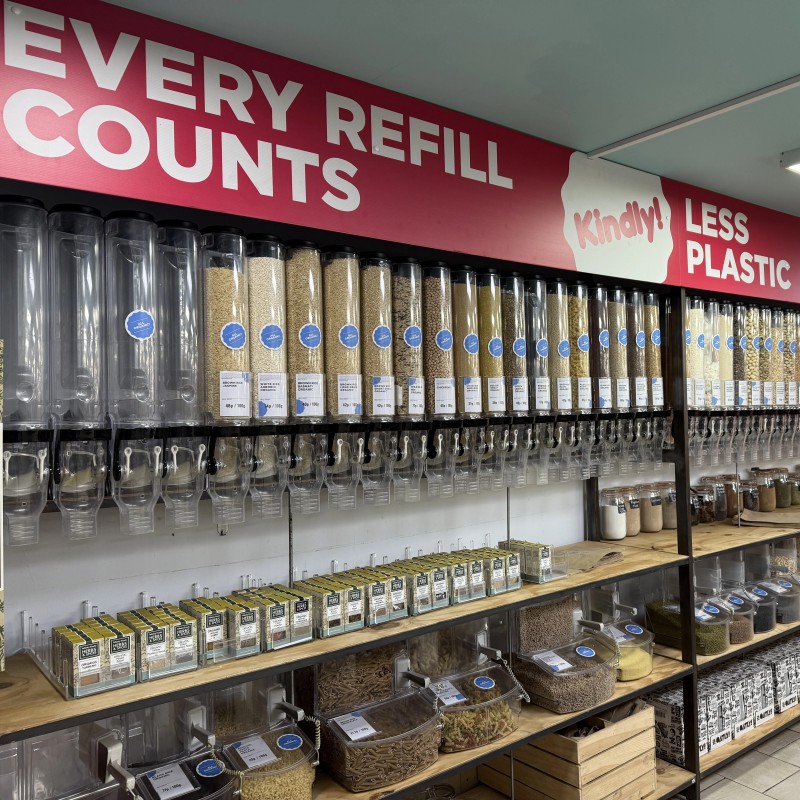
Kindly is a vegan supermarket with big plan. Most items are organic, locally-sourced and in plastic-free packaging. It also offers a loyalty card and delivery for local customers, as well as an online shop nationwide.
The store was founded by a bored Internet entrepreneur during the pandemic, who wished to use his success to do something good. With two stores already, there are plans to open five more stores in five years.
Harriet’s of Hove is a plant-based refill shop, offering a wide choice of organic foods and eco household products. Just like big supermarkets, you can order ‘click-and-collect’ service or local delivery. The shop is run by a nurse and dentist (‘Mr Harriet!’) But instead of giving you a filling, he gives you a re-fill!
Infinity Foods is a co-operative that’s been around since the 70s, with its own successful wholesale department too. These days the plastic packs of lentils are being replaced by loose foods in refill stations, to sell alongside their local organic loose fruits and vegetables. And runs its own Community Card for discounts.
Hunglish is an award-winning zero waste shop, offering both in-store service and online shopping (with free local delivery). It even has a cosy coffee corner.
Unicorn Grocery (Manchester)
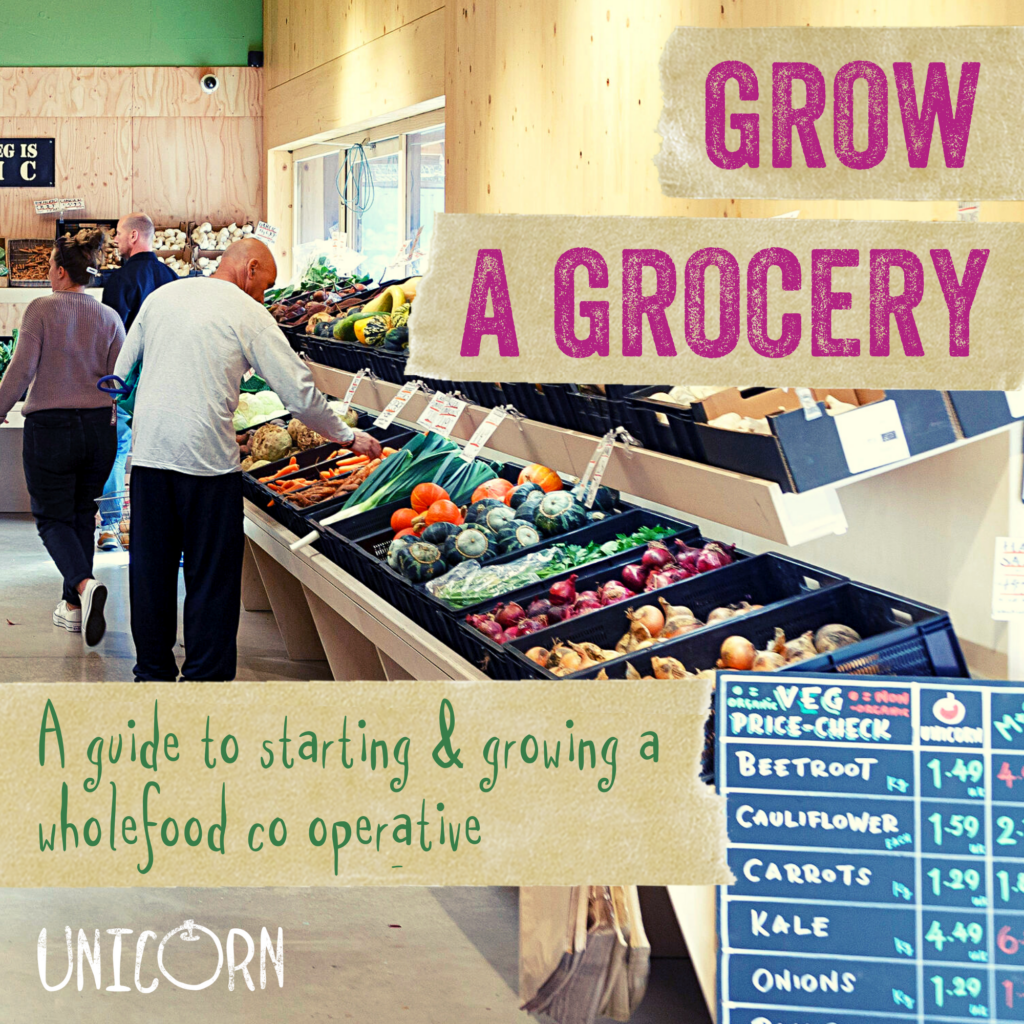
Although touted more as an independent and affordable plant-based co-operative supermarket, Unicorn Grocery could fairly also be called a zero waste shop too.
As well as giving fairly paid jobs to local people and offering mostly locally-grown and sourced items, it offers discounts on unpacked ‘hoppers’ stocked with grains, pulses and nuts that you fill up yourself, and also for loose fruits and vegetables.
If you forget your own bags or containers, there is a customer jar collection by the tills, with boxes from their veg deliveries to carry your shopping home. The store also runs a bag deposit scheme, and is happy to take small loose and fruits and vegetable purchases at the till.
Again, this store offers a free Grow a Grocery guide, for anyone inspired to do the same. It has no plans to expand into a multi-chain company, but wishes to help others wanting to build local thriving zero-waste plant-based grocery stores.
Forrist: A Online Zero Waste Grocery

Forrist (use coupon FORXENGLAND20 for 25% off pantry items – minimum purchase £40), a zero waste online food supermarket, changes the way people buy food. Choose from a wide range of organic groceries including:
- Grains and pulses
- Rice and pasta
- Nuts and seeds
- Flour and baking ingredients
- Herbs and spices
Just select what you need, in the quantities you need. Then everything is weighed in a paper bag. So you are paying for the food, not the packaging. And not only is all the packaging easy-to-recycle (including glass jars and bottles for household goods), you have the added option of sending back empty packaging, to get them refilled.
The Waste Savers Mystery Box lets you get further discounts, by ordering items approaching or past their best-before date.
Best-before dates are about quality, so the food should be safe to eat if eaten up quickly, it may just be a bit ‘past its best’ (for instance, spices may not be quite as spicy!)
Each box contains a mix of products that are discounted from 30% to 70%. The box size obviously depends on the range of products available.
You can also buy subscription boxes, and hampers that make nice gifts for you or someone you care about. You can email a copy of your student or higher education ID, to receive a 10% discount.
Forrist sends every order in fully recyclable or compostable packaging. There’s no single-use plastic involved. From brown paper bags to reusable jars, every item you order gets delivered in a way that won’t add to landfill problems. You can even return packaging to Forrist when it’s no longer needed.
You’ll find almost every pantry staple you need, from organic pasta and rice to herbs, spices, and nuts. Forrist covers all your basic vegan and gluten-free choices.
Forrist lets you choose quantities that match your needs. Order 100g or a kilo – it’s up to you. This feature means you don’t end up with more food than you’ll use, which helps cut food waste and saves money.

England remains one of the few countries where street food is not really the norm. Yet it’s a great way for talented chefs to earn a living, and with far less overheads than renting a shop.
- In India, local people buy pakoras and wraps.
- In Italy, people buy homemade pizza slices.
- In New York, people buy vegan hot dogs
Yet in England, it’s always going to a takeaway or a supermarket for a sandwich. Street food is usually fresh, fast and cheap. And good for you too.
Before cooking, read up on food safety for people and pets.
Food truck owners can make good profits, if planned well. It’s quite a nice way to make a living for some people, with less food waste and less street litter than fast food chains.
Boosting Local Events and Tourism
Street food can lift fairs, markets, concerts, and sports fixtures. A strong lineup of stalls makes people arrive earlier and stay longer, which boosts spending for nearby shops. European cities such as Lisbon and Copenhagen have shown how food halls and market-led districts become visitor magnets that shape trip plans.
Small towns gain too. A monthly street food night in a market square can put a place on the map, increase footfall, and spark pride. Vendors can source from local farms, reduce travel miles, and promote seasonal menus. Clear recycling rules and composting points keep events clean and aligned with local green goals.
Economic Gains from Street Food
Street food is a smart engine for small business growth. It lowers the barrier to entry compared with a full restaurant, which means more people can try a concept, learn fast, and scale if it works. Young entrepreneurs, career changers, and talented home cooks can enter the market with a van, a gazebo, and a recipe people love.
The money flows locally. Vendors often buy ingredients from nearby producers. A busy market in Birmingham or Leeds can turn a quiet square into a cash register for the area. The effect multiplies when people also visit butchers, greengrocers, and independent shops near the stalls.
Clear policy helps. Long-term permits, simple safety checks, and fair site fees create a stable route for vendors. In return, councils gain cleaner streets where food is regulated, community life improves, and business rates grow as stalls turn into permanent sites. It is a tidy example of public policy meeting private graft.
Helps to Reduce Food Waste
Street vendors are masters at using surplus. A tray of wonky peppers becomes a roasted salsa. This habit trims waste and keeps prices fair. Lower start-up costs and simple equipment open doors to first-time owners, recent graduates, and migrants with strong food traditions. With access to shared kitchens and mentoring, the path from idea to income gets shorter.
Health and Convenience
Street food can be quick, fresh, and balanced. Many stalls grill rather than deep-fry, use whole grains, pile on herbs, and serve portions that satisfy without excess. Compared with standard fast food, a well-run stall can offer shorter ingredient lists and more freshness.
For busy commuters, a reliable cluster of stalls near stations would be a daily asset. People can grab a hot meal on the way home, pick a veggie option, and avoid the soggy microwave dinner. Time saved at lunch improves afternoons, while a warm, outdoor setting gives a short mental break.
Sustainability is a clear win. Many vendors choose local, seasonal produce and trim transport emissions. Refill stations for water, compostable packaging, and clear waste sorting reduce rubbish. Compared with heavy plastic packs and transport chains of large outlets, a local stall can keep its footprint lighter and more visible.
Easier Access to Nutritious Meals
Street food can be a simple path to a better lunch. Think veggie-packed wraps with hummus and grilled courgette, tacos with slaw and herbs, or brown rice bowls with spiced pulses. Vegan and gluten-free stalls now serve full menus, not just side dishes
Many vendors already lead on green methods. Biodegradable trays, wooden cutlery, and returnable cups cut waste. Some traders use bike-powered carts or electric vans, which fits England’s net-zero goals and keeps air cleaner on busy streets. Community compost bins near markets help close the loop. When people see waste handled well, they copy that care at home.
A Vegan Coffee Bar & Cake Shop (Surrey)
Four Fillies (Surrey) is a mobile coffee truck with a difference. As well as the ethical coffee (from a non-profit Brighton brand) being sold in compostable cups from an old horse trailer, everything’s vegan from the plantmilks to the autumnal pumpkin-spiced flapjacks.
Where to Buy Vegan Street Food
Enter your postcode at Vegan Markets. The site works with councils to let people try food food at affordable prices. The first market in Cambridge has led to working with thousands of local artisan foodie businesses.
If you want to run a food truck, you need to sort out hygiene ratings and public liability insurance. If you sell at the above markets, all packaging must be plastic-free.
England has many vegan street takeaways. If you’re in Leicestershire (birthplace of the vegan movement), check out Dhil’s (award-winning vegan kebabs). North of the border, Planet G has won an award for its vegan haggis burger!
Vegan Mob: BBQ and Soul Food Recipes

Vegan Mob is a book by a super-cool Californian chef, offering soul food galore and street food vibes. The 80 mouth-watering recipes are by an Oakland-based restauranteur, who infuses his food with hip-hop music playlists. Toriano grew up eating soul food and when he went vegan, he wanted to recreate favourite flavours.
Vegan street food is a celebration of fresh ingredients served in creative combinations. This food trend has roots in many cultures, providing a wide variety of tastes and textures that appeal to everyone. Popular street foods are tacos, falafel wraps and Vietnamese bánh mì .
Street food has a long history, dating back to ancient times. In many cultures, it was the go-to option for those in need of a quick meal.
From bustling markets in Asia to food stalls in Europe, street vendors have always known how to tantalise taste buds. Street food embodies the spirit of community and sharing, making it a cherished part of cultural identity.
The innovative recipes include:
- Vegan Mob Gumbo
- Vegan Brisket
- Mobba’Q Baked Beans
- La La Lumpia
- Mafia Mobsta Noodles
- Mob Lasagna
- Mob Taco Bowls
- Mob Burgers
The recipe for Smackaroni is a plant-based take on our macaroni cheese. It only needs a few ingredients like pasta, palm-oil-free vegan butter (like Flora) and flour, plus onions, garlic, pea milk and salt, and shredded vegan cheese. Once mastered, you’ll never go back.
Toriano has an interesting life story. He actually studied at Cordon Bleu (his grandfather owned two restaurants) but instead became a rapper, fell into drugs and even had a dice with death.
He then got his life back together and today is a celebrated chef in the US. He began selling his homemade plates from his car, before investing in his own restaurant. Known for making ‘amazing meatless barbecue a thing’, he uses his past life experiences to help incarcerated and at-risk youths in San Francisco.
Even to this day, my food is hip-hop. Remixing dishes, making them vegan and blending influences to make a new recipe requires me to be creative in the kitchen.
Almost five years ago, I decided to vegan. I had caught the flu and wasn’t getting better and I was also scared because people were dying from pneumonia. A friend of a friend died from it.
After that I started juicing and drinking ginger shots. Then I decided I didn’t want to eat meat anymore, and after that I cut out dairy.
I found that I had more energy, and my emotional state was better. I had no idea that eating this way would lead me down a whole different career path. Today I feel better than ever.
Vegan Street Eats (recipes from a Texas chef)

Vegan Street Eats is a debut book by a Texas chef, ideal if your idea of food heaven is a steak with fries, and blueberry cobbler, washed down with a beer.
Chef Will Edmund shows how to make quite bits inspired by international night markets to NYC food trucks and beyond.
Learn to make:
- Chi-Town Juicy Slaw Dog
- Bang! Bang! Chimichanaga
- Veganize Yo’self BBQ Ribz
- Crispy Cajun Mozz Sticks
- Spicy Fried Half Sours
- Big Texas State Fair Funnel Cake
Author Will is known as ‘the plant daddy’ online and one of his cooking videos has had 34 million views. He runs a remote glamping business with his partner, and recently converted an old cargo trailer into a tiny house.

For years, the idea of a quiet Sunday has stood out in England. Many saw it as a time to rest, spend time with family, or simply pause from a busy week. The campaign to Keep Sundays Special grew out of this feeling that Sundays shouldn’t become just another workday.
Shops often stayed shut or opened for fewer hours, and the streets felt calmer. People valued having a day to recharge or share a meal together. In this post, you’ll get a look at the story behind the campaign, what Sundays used to mean up and down the country, and why many believe it’s worth keeping that slower pace, even now.
Not many realise that you do have certain legal rights, if you don’t want to work Sundays. Citizens Advice has good info. But if you refuse – they may find some other way to fire you?
Stores over 280 square metres are now allowed to open for 6 continuous hours on Sundays, but not allowed to open on Easter Sunday or Christmas Day.
Long Living People Don’t Work Sundays
You may have heard of Dr Ellsworth Wareham, the vegan cardiologist who continued his practice well into his 90s (he said the only problem was when the patients saw how old he was, just before they went under the knife!)
Although his diet and lifestyle played a key part, it’s interesting that he was from the Californian town of Loma Linda.
This town is religious (Seventh Day Adventist). So apart from emergency services, everything shuts down on Sundays, and people do nothing. And the town has the highest longevity of any town in the USA.
Do not let Sunday be taken from you. If your soul has no Sunday, it becomes an orphan. Albert Schweitzer
The Igbo (who live mostly in Nigeria) have a four-day week (the second day Orie is a holy day of obligation when farmers rest).
On Ghana’s coastline, no fishing is allowed on Tuesday, to give the sea time to replenish. Mohandas Gandhi took each Monday as a day of total silence. Try it. One day a week. It could be merely a question of doing nothing. Jonathan Schorsch
The Influence of Faith
Faith, especially Christian faith, gave Sunday its special role in England. For centuries, church bells marked the start of a slower day. Families would dress up and walk to church together, setting aside work and chores. It wasn’t just about the service. The day carried a simple message: take time to rest and reconnect.
In Christian practice, Sunday is special because it marks the resurrection of Jesus. Early Christians chose this day for worship to set themselves apart from Jewish Sabbath traditions (which fall on Saturday). For many, that Sunday rhythm became woven into daily life. Long before shops or football matches, the quiet of Sunday held a different weight thanks to church traditions and rest.
Tradition and Community
Tradition kept Sunday different even beyond faith. Villages and towns would plan around it. Walks and family visits were the norm. In some places, you could almost hear the quiet—little traffic, closed shops, a distant sound of church choirs.
The slower pace let people recharge and spend time together in ways that can be hard to find in a busy week.
Some of these traditions still linger. Afternoon teas and family dinners often happen on Sundays. Many older people remember when even chores took a back seat. You might spot friends at the park or families strolling after lunch. These customs became part of the weekly rhythm that people looked forward to.
Protecting Worker Rights
No one wants to feel like they’re always on call. In England and across much of Europe, the right to rest is often seen as basic as fair pay. Allowing workers Sunday as a day off helps draw a line between work life and home life.
- Right to Refuse: Laws in some countries mean staff can say no to Sunday shifts without losing their jobs. Germany’s “blue laws” keep most big shops closed on Sundays. Workers in Austria and Poland also get this guaranteed pause, making it clear that time off matters as much as time at work.
- Balancing Act: Not everyone has control over their schedule. With more places open every day, staff, especially in shops, often feel pressured to work weekends. When Sunday stays special, it stops bosses expecting round-the-clock cover.
- Fairness Across Sectors: Those in care or emergency jobs may still need to work, but keeping other industries closed helps cut the pressure and shows respect for everyone’s time.
Supporting Mental Wellbeing
A pause in the weekly rush can work wonders for your headspace. Mental health experts talk all the time about the need for downtime. Sundays give people a built-in reason to switch off.
Benefits include:
- Lower Stress: Without the hum of everyday business, people can breathe easier. No last-minute work emails or calls pulling you away from home.
- Stronger Bonds: Time off together brings families closer. Parents get the chance to play with their children, have lunch with relatives, or go for a walk in the park.
- Time to Reset: Quiet Sundays let people follow interests, reflect, or just nap. Over time, this break can cut down on burnout and make Monday feel less like a mountain to climb.
Examples Across Europe:
- In Greece, Sunday shop closures still hold in most places. Families often spend the afternoon outside or at local cafés.
- In Poland, schools and businesses slow down, giving entire towns a breather every week.
Local Shops and Less Consumer Pressure
Protecting Sundays does more than help workers and families. It can also give life back to the high street.
When supermarkets and chains stay open all week, small local shops struggle to keep up. Limiting trade on Sundays helps even the playing field. Owners get a break with their families, and staff don’t have to sacrifice their weekends just to stay afloat.
Key outcomes:
- Community First: Local shops can survive when they aren’t forced to compete nonstop. That means more unique stores, friendlier faces, and money staying in the neighbourhood.
- Reduced Consumerism: A quieter Sunday puts less pressure on everyone to shop for the sake of it. Instead, people use these hours for hobbies, home-cooked meals, or chatting with neighbours.
- Warmer Feel: Anyone who’s walked down a high street in Austria or Germany on a Sunday knows the calm. Coffee shops are full, but shops are shuttered. Friends gather without the urge to rush to the next sale.
What Makes a Restful Sunday?

Time Spent Outdoors
Stepping outside on a Sunday morning can feel like hitting a reset button. Parks fill up with families, friends meet for walks, and the simple act of breathing fresh air is enough to make anyone feel lighter. Nature works its quiet magic best when you let yourself slow down.
People find calm in many ways:
- A walk in the local park or woods: Even half an hour outside can make you feel brighter. You might spot neighbours out for a stroll or meet someone walking their dog.
- Bike rides: A gentle cycle through the countryside or along quiet streets feels different when you’re not racing the clock.
- Gardening: Potting up some seeds or tidying the garden gives a sense of purpose, but still lets you take it easy.
If planting green spaces, read up on pet-friendly gardens and wildlife-friendly gardens. If planting trees, know of trees to avoid near horses (including yew, oak and sycamore).
Cooking and Sharing Food
Food brings people together, and Sunday offers a perfect reason to gather round the table. The smells tumbling out of kitchens speak of comfort and tradition without much fuss. When meals are shared, they linger longer and feel more special.
- Families pull together for a Sunday veggie roast or a slow breakfast.
- Baking bread or cakes becomes a group effort, not just a chore.
- Lunch spills into the afternoon, with stories, laughter, and sometimes a dozy nap.
Small Pleasures and Simple Routines
Slower Sundays shine when you let yourself enjoy life’s small comforts. It might mean reading a book in the sun, listening to music, or just enjoying a quiet cup of tea. Setting aside time for these simple habits can make a big difference.
Here are some ideas that work for many people:
- Write a letter or postcard to a friend instead of firing off a quick text.
- Tidy a small space at home while listening to your favourite album.
- Do a puzzle, draw, or knit for a bit of quiet focus.
- Switch off your phone for a couple of hours and notice the difference.
Community Events and Local Gatherings
A restful Sunday doesn’t have to be spent alone. Plenty of people find joy in joining community events. Local fairs, Sunday football matches, open gardens, and car-boot sales all offer low-key ways to spend time together.
Local noticeboards or online groups often list what’s on. Attending even one event here or there helps build ties and makes the day feel brighter. Simple pleasures like a stroll to a farmers’ market or a chat with someone at a car boot sale are ways to feel part of something bigger, without having to do much.
Doing Less to Enjoy More
Restful Sundays work best when you let yourself press pause. This can look different for everyone, but the idea is to do a little less so you can enjoy a little more.
Some practical ways include:
- Skipping the big shop and using what’s in the fridge or cupboard.
- Leaving chores for another day if they aren’t urgent.
- Saying ‘no’ to anything that feels like another job, unless it brings peace or joy.
Giving yourself permission to step back means you’re more likely to enjoy what you do choose. A restful Sunday doesn’t need to be perfect. It just needs to be yours, done your way.
Whatever you choose, a truly restful Sunday is about turning down the noise, even just a little. By doing so, you can keep the spirit of Sundays alive in a way that fits your life today.
Preparing Your Heart for Weekly Mass

Bath Abbey is a unique building with grand stained-glass windows, honey-gold stone and beautiful fan vaulting, creating magnificent light. A place of worship for over 1200 years, it still holds regular services throughout the week.
This historic holy place also features unique ‘ladders of Angels, created after the Bishop of Bath had dreams of Angels descending and ascending from Heaven.
One Sunday at a Time is a beautiful colour book to help you prepare for 10 minutes each week, to help experience the Sunday Mass more fully, and deepen your love for the Word of God.
An ideal resource for Catholics who wish to get more out of Mass, learn to understand the Bible better, receive God’s grace and learn how to make the liturgy come to life in a whole new way.
In this book you’ll find brief summaries of Mass readings for Sundays and engaging reflections to draw your attention to primary themes and common threads each week. Also find explanations of key Greek and Hebrew words in Biblical texts.
The book also includes prayer and a weekly challenge to help put into practice the message of each week’s readings in daily life. Author Mark Hart is a graduate of the University of Notre Dame and research fellow at the St Paul Center for Biblical Theology. He lives in Arizona, USA.).