Social Bite Villages (sustainable hubs for homeless people)
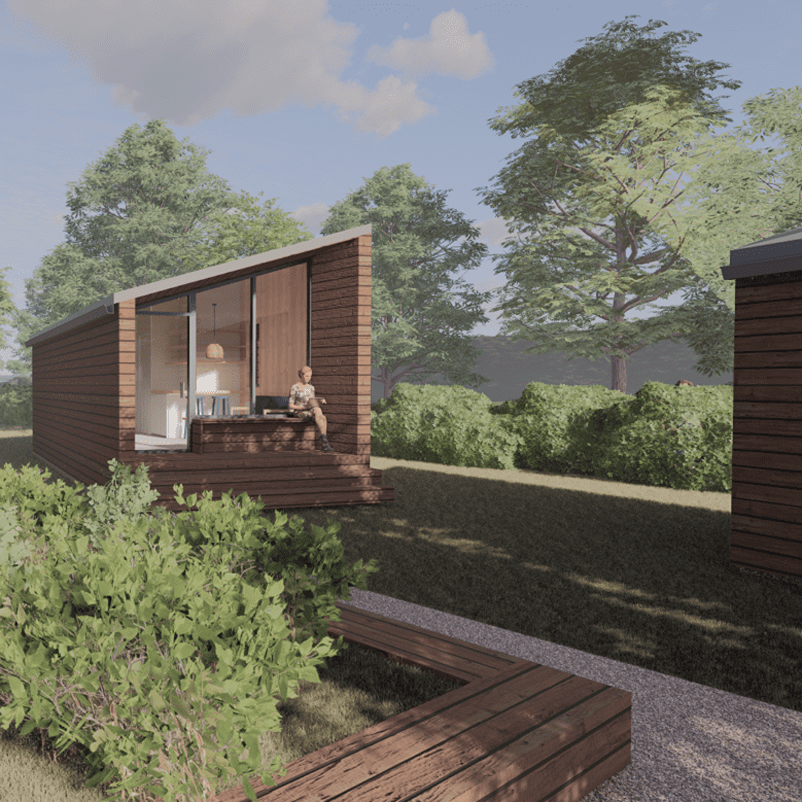
Social Bite Villages are a great idea from over the border in Scotland, to prevent homelessness. There is already one village up-and-running. Run on a franchise model, so communities worldwide can use the same idea.
The two most common forms of temporary accommodation for homeless people in the UK at present are hostels or bed-and-breakfasts. Many are not fit for purpose (cold, damp and often don’t accept pets). And do nothing much to inspire people to turn their lives around. Which requires stabliity, good sleep and food, and help to find training and jobs.
How Social Bite Villages work
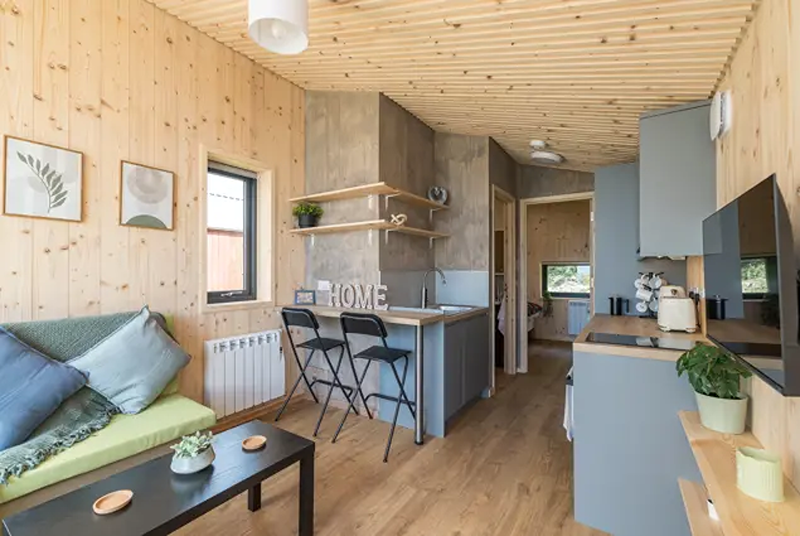
Social Bite Villages are different. Run with local charities and councils, residents can come and go as they please, and live in comfortable accommodation (pets allowed). And receive 24/7 support to deal with any issues, from physical and mental issues, to finding support to find work.
Each village is built on wasteland. And combines 10 to 15 modern sustainable homes with natural light . In a community hub where residents can take nature walks, enrol in workshops and even learn to bake!
The buildings are cheap as they are pre-made fabricated buildings (a bit like park holiday homes). So each ‘nest house’ is ready-made and arrives on site complete with a bedroom, shower room, kitchen and living space.
Residents live in these nest homes for 1 to 2 years, with wraparound support so they can find stability, get well, get proper food and exercise, and train up to a good job, so they can move on to self-financed accommodation. Then the home obviously is freed up for someone else.
And hopefully new friends are also made, to support each other long-term. There are also social walks and bike rides, and even trips to the cinema.
Recovery Village (funding ongoing)
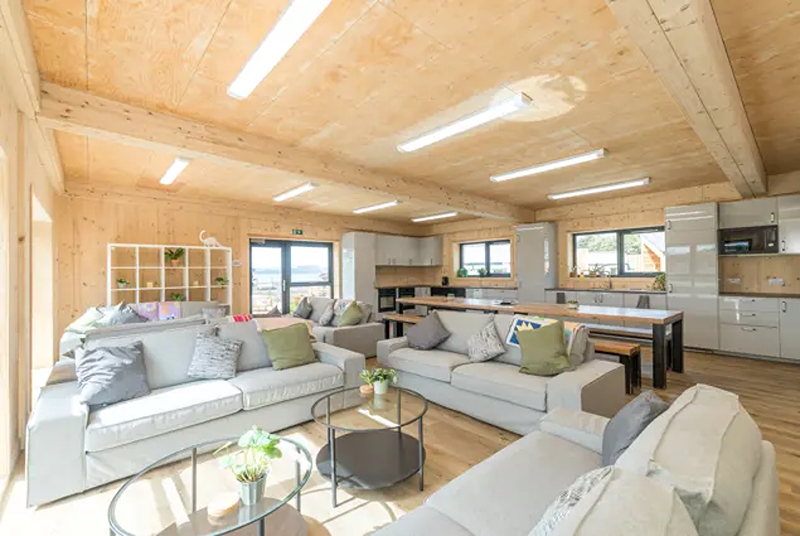
The planned Recovery Village is to support people with drug addiction, to be built in an area of deprivation (people living in poorer areas are 16 times more likely to die from drug abuse). This is designed to help people who can’t afford to pay for private rehab services.
The idea is for 10 modular sustainable homes to be built, again surrounded by beautiful landscaping. The idea is similar. But this time there will be personalised recovery support, to help people come off drugs and get clean, to turn their lives around in a positive way.
Residents live communally at first, for intensive support. Then when ready, move into independent homes and learn to budget/cook their own food, yet remain connected/supported by the community.
Inspired by a Dundee philanthropist
William ‘Bill’ Sword was a businessman and philanthropist from Dundee, who did a huge amount to help disavantaged people in his local area. And his Trust has now pledged £1.5 million towards building the Recovery Village.
How to help homeless people on the street
If you see someone sleeping rough, send a report to StreetLink, whose outreach teams visit rough sleepers at night. To help homeless people find benefits and accommodation (if the person is under 18, call 999).
How homeless people can help themselves
Homeless people can claim benefits, giving the address of a family member/friend, hostel or job centre. This helps to pay for food (and pet food), interview clothes and rent deposits.
People without bank accounts can use the government’s Payment Exception Service to collect benefits from a local post office or PayPoint outlet.
How to help homeless people with dogs
One great way to help is to have local shops use BillyChip, a token that can be given to homeless people, to pay for hot drinks or pets food. This complies with council advice not to give money, and helps also to prevent robbery.
Sign the Big Issue’s Campaign to end the practice of local councils refusing pets in emergency or temporary accommodation, as homeless people then remain on the streets, as they won’t part with their animal companions.
Read more on how to help dogs with homeless people.