Spruce (refillable natural cleaning products)
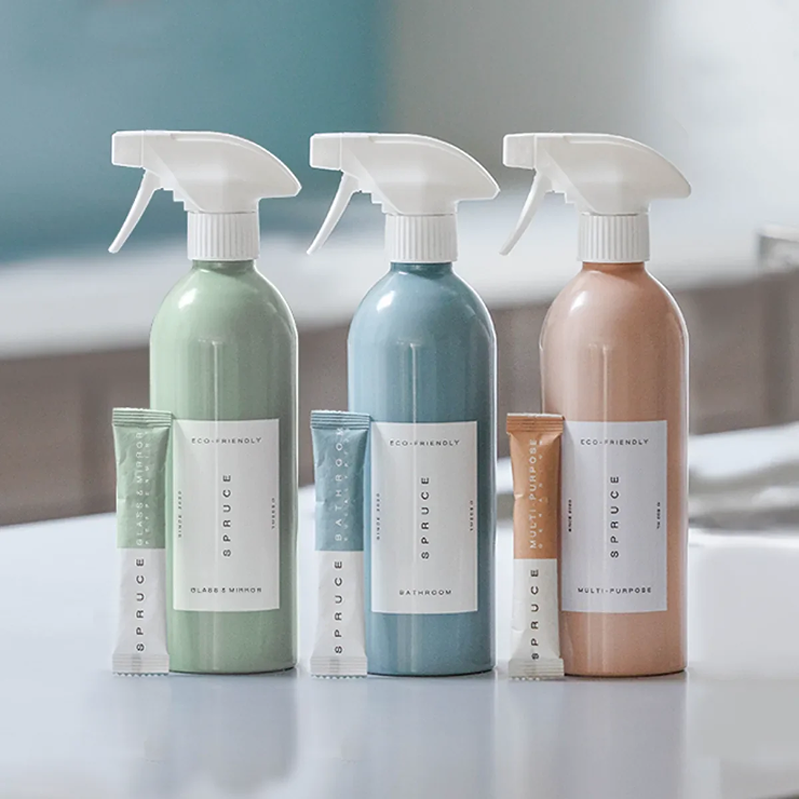
Spruce uses natural ingredients, sold in starter kits to ‘create your own cleaner’ with tap water. Then just rinse and use the bottles again.
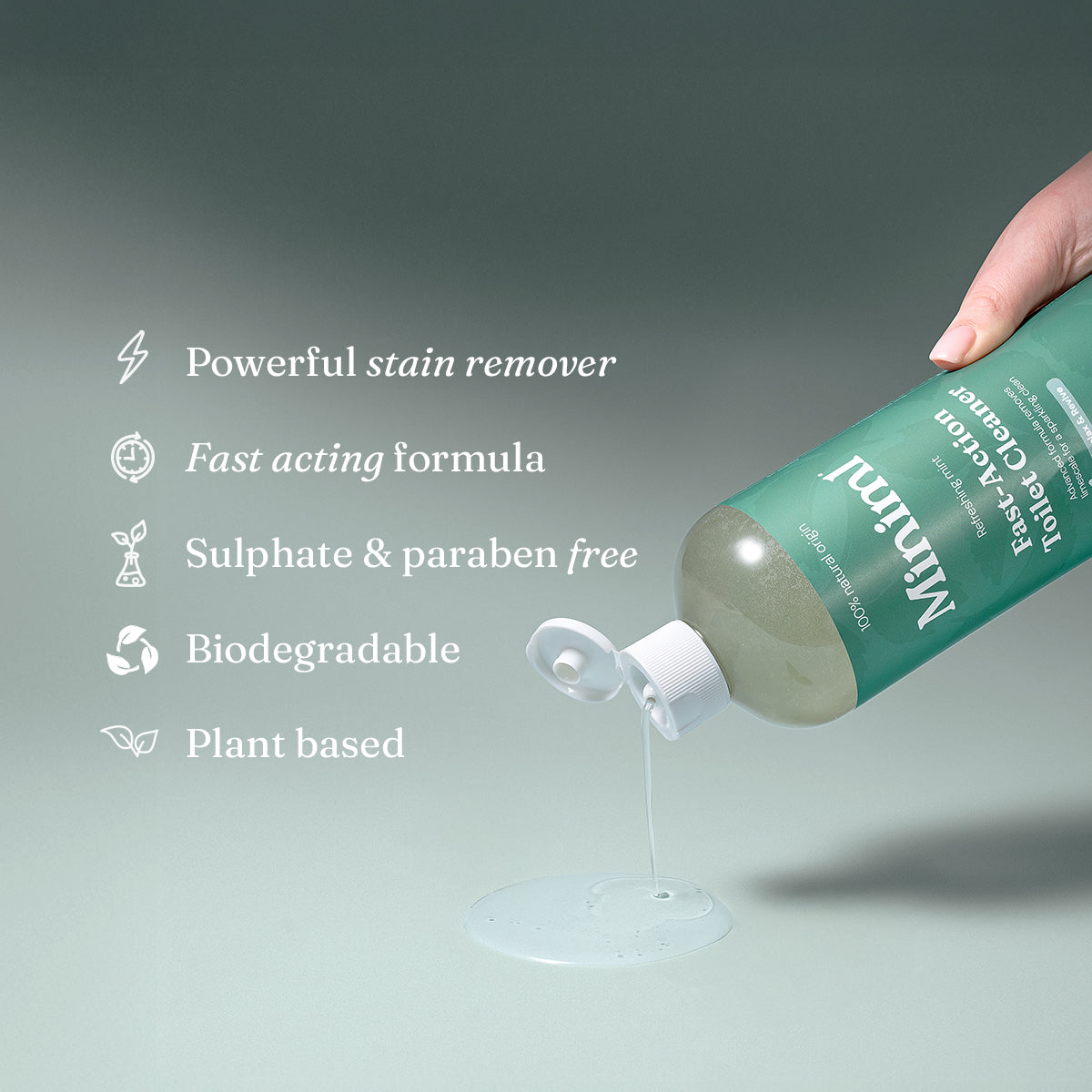
Conventional cleaners have all kinds of issues from not biodegrading to being made with artificial fragrance to being tested on animals. Try these more natural alternatives instead.
Use eco-cleaners with plastic-free cleaning cloths and sponges (SEEP also sells fair trade rubber gloves in cardboard packs). Keep all cleaners away from electrical components.
Choose unscented brands for pregnancy/nursing and near babies and pets (citrus oils in particular are toxic, even if dried and licked from laws on countertops or floors). Never mix vinegar or lemon juice with any bleach (causes toxic gas). Read how to clean floors naturally (without harming spiders).
We don’t recommend the laundry sheets, as most are PLA-based (polyvinyl alcohol) so are not really plastic-free – use eco laundry powders).
You then just buy refill sachets to make up new batches. To avoid overwhelm, there are just few choices:
- Multipurpose Cleaner (geranium) for countertops, tiles, stone, wood and sealed surfaces.
- Bathroom Cleaner (eucalyptus) for tubs, tiles, ceramic, stainless steel & porcelain)
- Floor Cleaner (bergamot, patchouli, geranium).
- Eco sponges (add to your order to avoid plastic sponges)
- Glass & Mirror Set (peppermint) for windows and mirrors.
You can order each item separately or mix-and-match. For instance, you may only wish to buy the multi-purpose and glass cleaner (using the former to clean the bathroom). Each order includes aluminium eternity bottles and paper refill sachets, which you can compost when empty.
Most users say they use up one bottle’s worth of product in around 2 months, with regular cleaning. Obviously this may be more for big houses, housekeepers or professional use (offices, restaurants, hotels etc).
Where to recycle toxic cleaning products
If you have some toxic products that you no longer wish to use, don’t pour them down the sink, as this can harm waterways. You can recycle empty containers with household waste. With bottles still containing product, your council should be able to collect via the hazardous waste department. The fact that this is where they should be taken, is good reason to switch to a more natural brand!