Why England Should Stop Celebrating Stupidity!
England is the country of Shakespeare, but today our media and politics has become something that celebrates the stupid, boring and obsession with money (think of silly quiz shows). It’s lazy cheap TV for the masses.
In December 2025, the BBC was blasted (and received several complaints) for the dumbed-down Celebrity Mastermind. Even the contestant paused (no doubt dumbfounded if this was a real question, when asked ‘What pet goes ‘woof-woof?’)
Many of us remember as children celebrating with our parents, if we managed to get one or two of the general knowledge questions right!
Only 20 years or so after we would sit down to Inspector Morse or Miss Marple. Intelligent comedy (Dave Allen, Les Dawson) has been replaced by nasty talentless stand-ups, and in-depth interviews (Parkinson, Walden) replaced by what Trump has last said on social media.
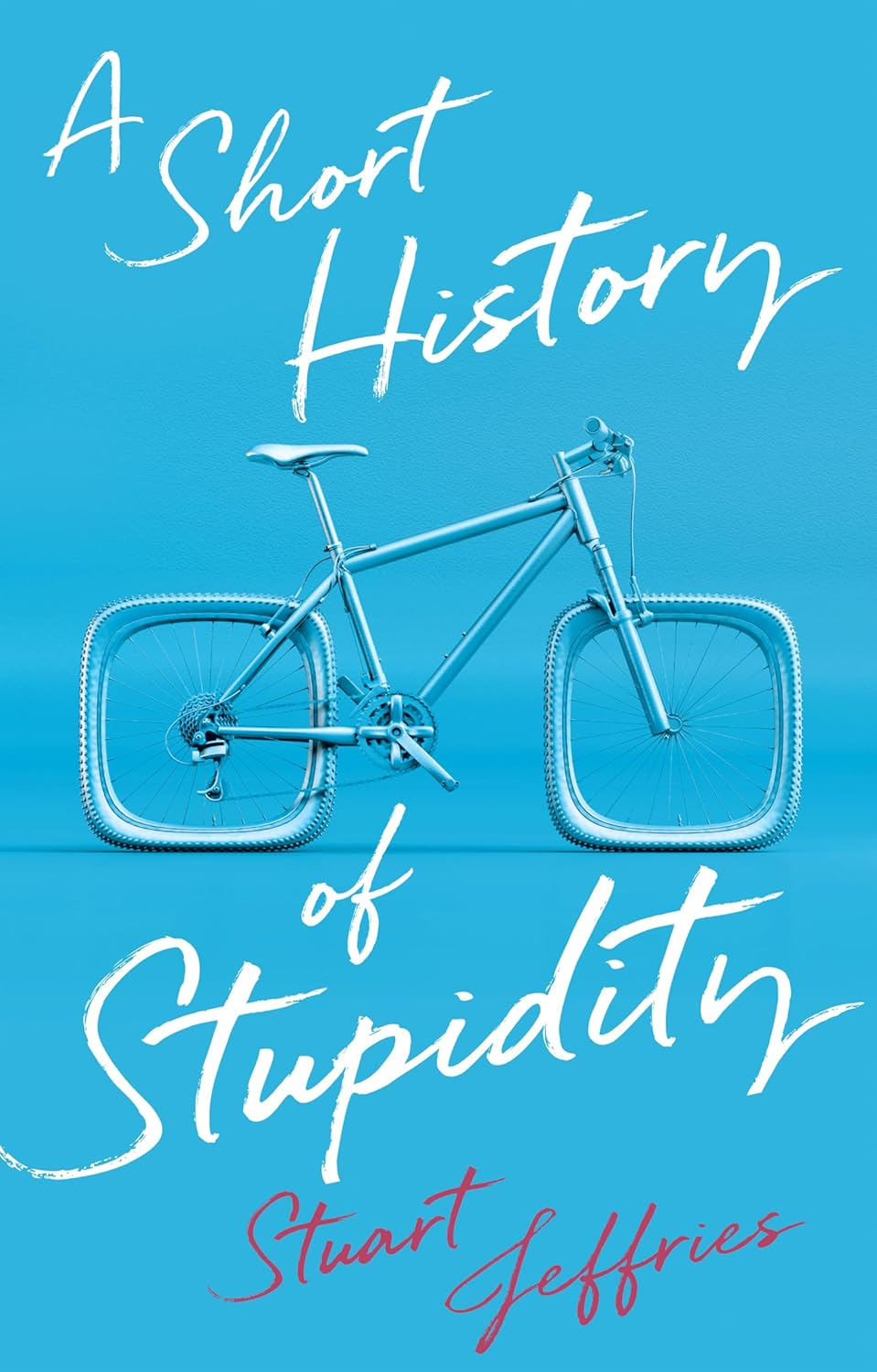
A Short History of Stupidity is not a stupid book at all. In fact, sadly, it’s a book whose time has come. The author (like many of us) are wondering how we got into this state. We have politicians claiming to know more than climate scientists, top-rated TV shows that focus on bullying and deception, and people ‘famous for doing nothing’.
Why the author asks, is the world entranced by the ‘five horsemen of the stupid apocalypse’:
- Donald Trump
- Elon Musk
- Vladimir Putin
- Nigel Farage
- Boris Johnson
This book is funny at times, quoting a quiz contestant who when asked the first name of Gandhi, replied ‘Goosey’). But the author is careful not to confuse ignorance with stupidity. It does not sneer at people who don’t have good intellect, rather it’s a fight against stupid media and politics.
Stuart Jeffries is a writer and journalist, who for many years worked for the Guardian newspaper as its Friday Review editor and Paris correspondent. He now works freelance for this and other publications (including the Financial Times and London Review of Books).
When you are dead, you do not know you are dead. The same is true when you are stupid. Anon
When being loud beats being right
In plenty of places, confidence gets treated like proof. A calm, thoughtful person says, “I’m not sure”, and the room moves on. Meanwhile, someone bold says, “Trust me”, and suddenly it’s settled.
You see this in meetings when the best idea loses to the fastest talker. You see it at the pub when a half-remembered headline beats a person who actually read the report. You see it online when a punchy comment gets likes, even if it’s wrong.
An opinion isn’t the same as knowledge. Still, we often act like they’re equal. As a result, quieter people step back. They stop asking questions. They stop offering careful answers, because careful answers don’t always win the moment.
A culture that rewards noise over thought doesn’t just get louder, it gets less accurate.
Why praising ignorance harms everyone
When a country gets used to laughing at effort, the damage spreads. It doesn’t stop at school gates. It shows up in training budgets, job skills, health choices, and public debate.
This is how celebrating stupidity culture becomes more than a joke. It shapes what people feel allowed to say, and what they feel forced to hide.
The worst part is that it hits the people with the least room for error. If you’ve got money, time, and contacts, you can recover from bad information. If you don’t, you pay for every mistake.
It lowers the bar at school and at work
Children pick up status signals quickly. If “trying hard” equals “trying too hard”, they learn to perform not caring. Some will still work, but they’ll hide it. Others will stop, because it’s easier than being mocked.
Picture a student who revises in secret, then tells mates they “didn’t bother”. That isn’t laziness. It’s fear of being seen as keen.
Workplaces get the same problem. A manager offers training, and someone shrugs, “I’m not doing all that”. The room laughs, because it sounds relatable. Yet the long-term cost is real. Skills stall. Pride in good work fades. Apprenticeships and practical training lose their shine when people treat learning as a joke.
England needs builders, carers, technicians, teachers, and engineers who keep improving. That takes practice and patience, not bravado.
How we change culture without snobbery
Nobody wants a country of smug know-it-alls. That isn’t the goal. The aim is to make room for honesty, learning, and proper standards, while keeping humour and warmth.
You don’t have to win every argument. You can model a better tone in one sentence. These phrases work because they lower the temperature while raising the standard:
“I’m not sure, let’s check.”
“What’s the source for that?”
“Teach me how you did that.”
“I used to think that too, then I read more.”
Also, praise the boring virtues. Praise effort, honesty, and careful work. In practice that can sound like, “Nice one for owning that”, or “Good shout for looking it up”.
Reward competence in public life
Public debate often rewards theatre. Fast lines beat clear thinking. Changing that means changing what we clap for. It helps to celebrate competence where it lives: in good apprenticeships, skilled trades, patient teaching, and steady public service. It also helps to praise people who change their mind when facts change. That should be a mark of strength, not weakness.
On the media side, basic media literacy should be treated like a life skill. Ask: is this news, opinion, or entertainment? Is it evidence, or just a confident story? Debate should test ideas, not just score points.
As a viewer and voter, you can set a higher bar. Demand clear claims, plain evidence, and honest limits. “I don’t know yet” is often the most truthful thing a person can say.