How to Store Your Fresh Garden Produce (year-round)
A full basket from the garden feels good, right up to the point where it starts to wilt on the counter. That’s the quiet problem with organic garden produce. It’s fresh, often picked at its best, and usually a bit less handled than shop-bought food. So it can spoil faster if you store it badly.
The good news is that storing homegrown food isn’t hard. Most of it comes down to three things, harvest timing, the right storage spot, and a little routine. Get those right, and your lettuce stays crisp, your courgettes stay firm, and your onions don’t turn soft in a week.
Read more on no-dig gardening and humane slug/snail deterrents. If you live with animal friends, read up on pet-friendly gardens (some recommended flowers and fruit trees are not safe). Also avoid netting to protect food (just leave some for wildlife!)
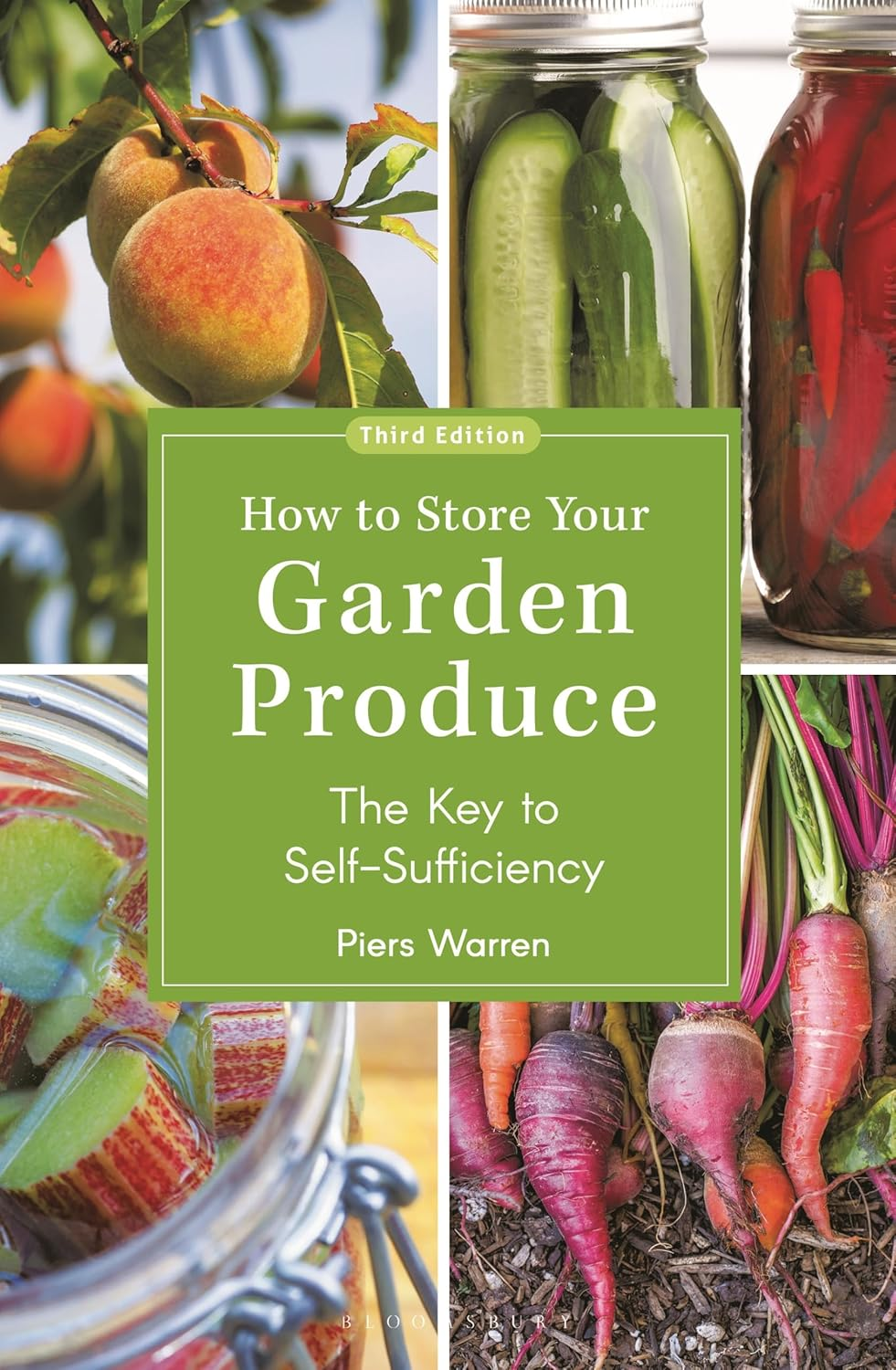
How to Store Your Garden Produce is an updated version of a classic book, to show that anyone with even half an acre of land can feed a family of four for an entire year. Most gardens produce harvests in spring and summer, so this book shows how to avoid the rest of your harvest spoiling (of course you can donate the rest to others if wished).
This simple A to Z guide shows how to dehydrate, freeze, ferment and pickle your produce, plus there are recipes like strawberry wine, peach chutney, mushroom ketchup and celeriac soup. Also read the author’s book he wrote with his daughter: The Vegan Cook and Gardener.
Fresh storage starts before produce comes indoors
Storage really begins in the garden. If you pick vegetables in the heat of the day, they lose water fast. So harvest in the morning or late evening when the air is cooler. Put produce straight into shade, because sun on a trug can age leaves in minutes.
Sort everything as you bring it in. Keep damaged, split, or bruised produce separate and use that first. One soft tomato can spoil the mood of a whole bowl, and sometimes the bowl itself.
Don’t wash everything at once. That sounds tidy, but extra moisture often shortens storage life. Instead, brush off soil where you can, trim off very muddy leaves, and wash just before cooking. Root crops are the main exception if they’re heavily caked, but even then they need to dry well before you store them.
Leafy tops pull moisture from roots, so cut the greens from beetroot, radishes, and carrots. Leave a short stem, about 1 to 2 cm, so the root doesn’t bleed or dry out too quickly. Herbs also last longer if you treat them gently and don’t crush the leaves.
Most produce keeps better when it goes into storage cool, dry, and calm, not warm and damp.
This part matters more than people think. A fridge can help, but a hot kitchen and a wet sink undo a lot of that help. If you’ve picked a large harvest, let it cool indoors first. Then pack it loosely. Tight bags trap moisture, while sealed boxes with no airflow can encourage mould.
A simple habit helps, too. Label containers with the date. Then you’ll know what to eat first, and less gets forgotten at the back.
Match each crop to the right place and temperature
Not every vegetable wants the fridge. Some love cold, some hate it, and some just need a dark shelf and a bit of space. If you store everything the same way, you lose flavour as well as freshness.
Here’s a quick guide for common garden crops.
- Lettuce, spinach and chard (store in the fridge at 0 to 4 degrees C. Wrap in a dry tea towel or store in a box with paper for 3 to 7 days.
- Carrots, beetroot and radishes (same fridge temperature, remove tops and keep in a bag or box to hold moisture for 1 to 3 weeks
- Courgettes, cucumbers and beans (in a cool room at 7 to 10 degrees C, keep dry and don’t squash for 3 to 7 days (be sure to buy organic courgettes, as bad crops can be poisonous)
- Tomatoes, peppers and aubergines (store at room temperature and keep out of direct sun, don’t chill until very ripe, keep for 3 to 7 days)
- Onion, garlic, winter squash (keep in a cool dark dry cupboard for good air flow, don’t seal in plastic, keep for 2 weeks or more)
The pattern is fairly simple. Leafy things need cold and a little humidity. Dry-skinned crops need air and darkness. Tomatoes are the awkward middle child. They ripen best at room temperature, and the fridge can dull their texture.
Potatoes need their own note. Store them in a cool, dark place, around 7 to 10°C (latest advice from Love Food, Hate Waste is to store them in the fridge). Don’t store in bright light, and never with onions. Potatoes give off moisture and gases that speed up sprouting and spoilage in both crops.
Fruit can also affect vegetables. Apples, pears, and ripe tomatoes release ethylene, a natural gas that speeds ripening. That’s helpful if you want to soften a hard avocado, but less helpful near cucumbers or leafy greens. So keep ripening fruit apart from slower, delicate produce.
If your fridge dries vegetables out, use the crisper drawer and add a slightly damp cloth, not a wet one. If your house runs warm, use the coolest room you have, often a pantry, utility room, or shaded porch. The right place doesn’t need to be perfect. It just needs to suit the crop.
When the harvest is too big, preserve the extra
Some weeks, storage alone won’t keep up. Beans keep coming, basil turns into a hedge, and suddenly the kitchen feels outnumbered. That’s when preserving stops being a hobby and starts being practical.
Freezing is often the easiest route. Beans, peas, sweetcorn, and many greens freeze well after a short blanch in boiling water, followed by quick cooling. That brief step helps hold colour and texture. Then pack in small portions, because one large frozen block is annoying to use.
Herbs are another easy win. Soft herbs like parsley, chives, and basil can be chopped and frozen in ice cube trays with a little water. Later, drop a cube into soup, sauce, or stew. It’s simple, and it saves that sad bunch in the fridge drawer.
Drying works well for onions, garlic, chillies, and many herbs. Keep them in a warm, airy place away from direct sun until fully dry. Then store them in clean jars. If there’s any softness left, they need more time.
Pickling can help with cucumbers, beetroot, and surplus onions. Fermenting suits cabbage and some roots if you know the method and follow it carefully. If you’re new to preserving, start with freezing or drying. They’re more forgiving, and they ask less of you.
Even with preserved food, keep checking what’s stored fresh. A five-minute look every few days saves a lot. Use the oldest first, remove anything going soft, and tidy containers before they turn sticky and forgotten. Small habits do most of the work.
In the end, good storage is less about gadgets and more about paying attention. Pick at the right time, store each crop where it wants to be, and preserve what you can’t eat soon.
That’s how a harvest stretches from a single busy weekend into days, sometimes months, of good food. Keep it simple, and your garden will feed you longer than you think.