Suffolk (sandy beaches, windmills and wherry boats)
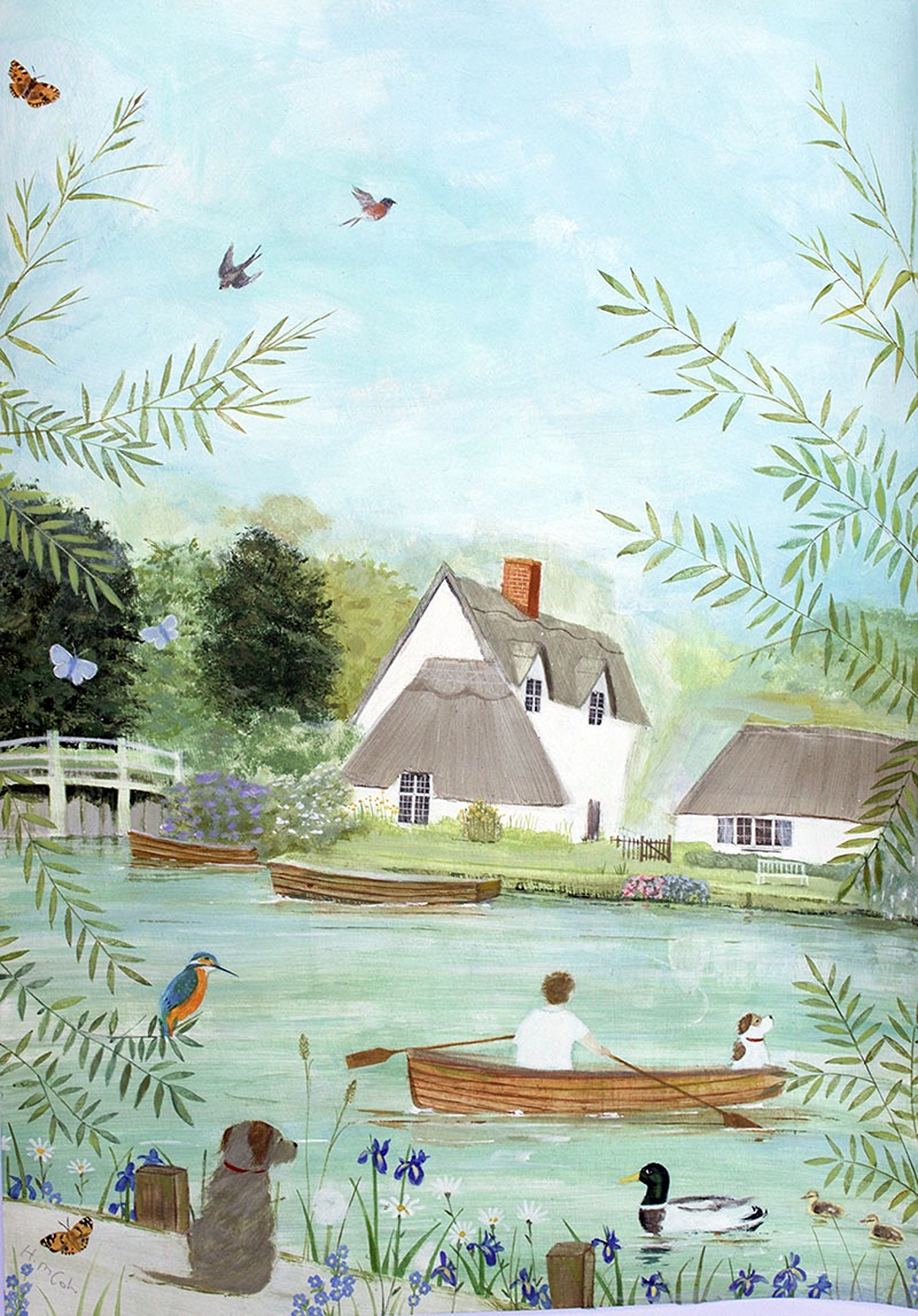
Suffolk is a beautiful county, combining pretty villages with windmills, and a lovely coastline.
Always follow the Countryside Code to keep all creatures safe. Keep dogs away from steep banks, mushrooms (and toxic plants/trees) and on leads near birds, barnyard friends and wild ponies.
If at the coast, keep away from nesting birds and never walk on sand dunes. Learn how to keep dogs safe by the seaside (check beach bans before travel).
Join the campaign to ban flying rings, to help local seals.
Why Suffolk is Known as ‘Constable Country’
If you grew up with a painting of ‘The Hay Wain‘ on your living room wall, it was painted here. John Constable grew up here, and featured Suffolk countryside in many of his paintings.
Flatford Mill
This is a historic Grade II listed watermill built in 1733, now owned by the National Trust. The cottage seen in the Hay Wain painting sits next to the mill on the River Stour.
Dedham Vale (a national landscape)
This is now a National Landscape (the new name for an ‘area of outstanding natural beauty). Also on the River Stour, it’s home to historic villages and rare wildlife like otters, water voles and stag beetles.
Painter Sir Alfred Munnings also lived here (his home is now a museum). The beautiful church was built from the wealth of the cloth industry, and today the village street is still lined with Georgian houses and old inns.
John Constable had deep affection for the landscape of his home, writing ‘I should paint my own places best: painting with me is but another word for feeling.
As a child, he attended school in Dedham, so walked from his home in East Bergholt along the River Stour, which later became the scene, for many of his paintings.
Just like Van Gogh, Constable sold very few paintings in his lifetime (although he had more success in France, winning a gold medal for his Hay Wain painting).
Today ‘Constable Country’ is a designated National Landscape (the new name for an Area of Outstanding Natural Beauty’. So here’s hoping the buildings and landscape will never be turned into blocks of flats. The National Trust owns Flatford Mill, and there is also an RSPB nature reserve nearby.
History behind ‘The Hay Wain’
When Constable painted what was voted Britain’s second-favourite painting, it did not sell! But many of us grew up with a copy of it on our living room wall.
The house is Willy Lott’s Cottage (Willy was a farmer who inherited the estate and lived there all his life, save one or two nights away). He never married, he lived with his sister, and died age 88.
Can you guess what Britain’s favourite painting is? If you thought ‘sunflowers’, you’d be wrong. In fact, it’s the lesser-known J.M.W Turner’s painting The Fighting Temeraire. Third was Manet’s A Bar at the Folies-Bergère.
The (quite snooty!) Suffolk Town of Southwold
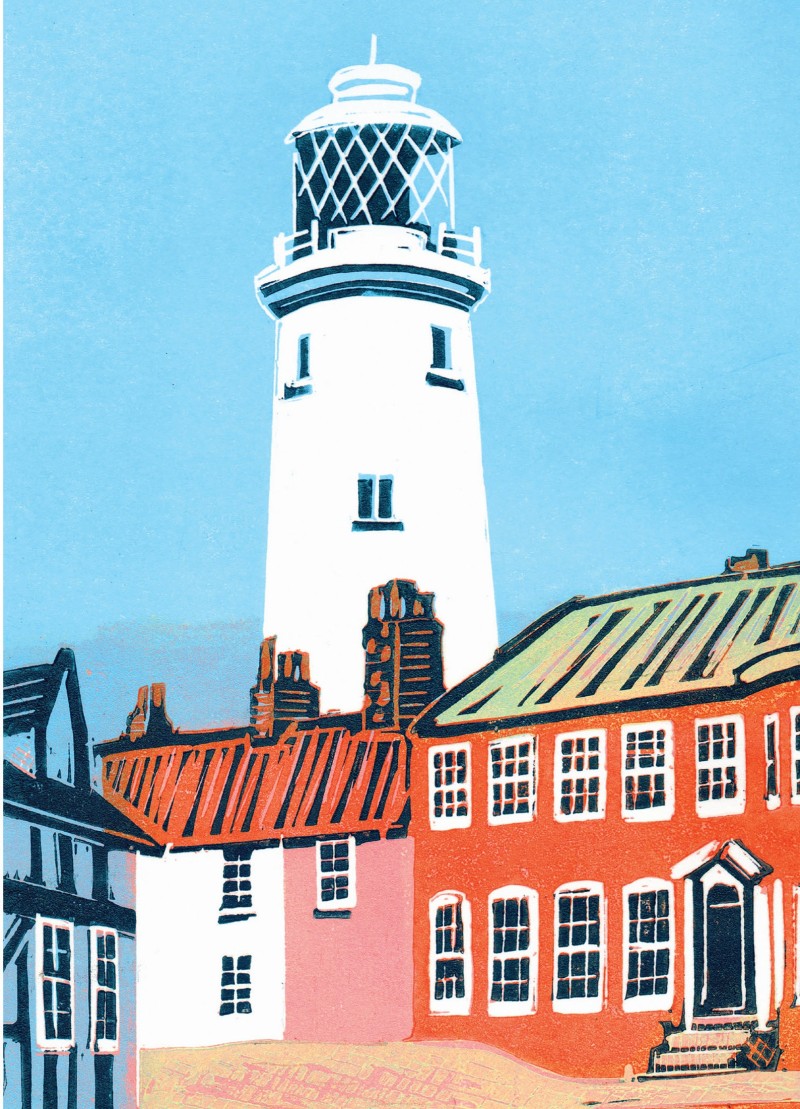
If you want a lovely seaside town, then Southwold is your man! This is a beautiful little place, with pretty buildings (many alas now holiday lets, rather than homes). Alongside real greengrocers and independent bookshops. And a lighthouse (which still guides ships today), despite being set back from the shore.
The town has a reputation for being a bit snooty, but in a good way. This is a town that looks after itself, a nice promenade, independent shops, litter-free streets, pretty beach huts and a quaint small pier. There are handsome Georgian and Victorian buildings and a prosperous but not flashy high street.
However, like many affluent seaside resorts, it does have issues with empty homes most of the year from wealthy owners of airbnbs. Meaning local people are often forced out of buying affordable homes, even if they have lived there all their lives.
Another problem is when you have weekend tourists from London. Who may arrive with a car packed full of groceries from Waitrose or M & S, then spend a few days before returning home. This means that wealth does not come into the town, from spending money at local bakeries and grocery stores.
Walberswick (Suffolk): A Quiet Coastal Retreat

Suffolk is a large county just below Norfolk, that faces the cold North Sea. Home to sandy beaches, native seals, pretty beach huts and windmills! And it’s home to the beautiful seaside village of Walberswick.
Known as one of Suffolk’s ‘posh villages’, it sits on the Heritage Coast, a pretty place of tiny cottages in narrow lanes, often loved as retreats for writers and artists. It’s an affluent area, with many well-heeled people enjoying a bolthole here, where privacy is respected.
One local told The Guardian ‘Celebrities come here, because we don’t make a fuss. I don’t even know who this ginger-haired chap is, who everyone’s talking about. And I don’t much care’.
The name likely comes from ‘Walhbert’ which means a Saxon landowner, For many years, the area was a thriving port trading corn and timber. It used to have trade disputes with the neighbouring village of Dunwich, which even resulted in a royal enquiry!
But silt and coastal changes caused the decline of injury, and today it’s more a sanctuary for creative types, who enjoy coastal walks along the quiet beaches. Nearby is a large nature reserve, enjoyed by many rare birds.
The village is also known for its local ferry service. Unusual in that it’s by rowing boat, a local ‘wherry boat’ so there is no engine. The ferry is based on the traditional Suffolk punt, and can take up to 12 passengers (it’s also dog-friendly).
During winter it may use a motor launch for safety (or if too busy). If you want to contact them, you have to email (because the staff can’t hold a phone, while rowing the boat!)
The Suffolk Coast Path
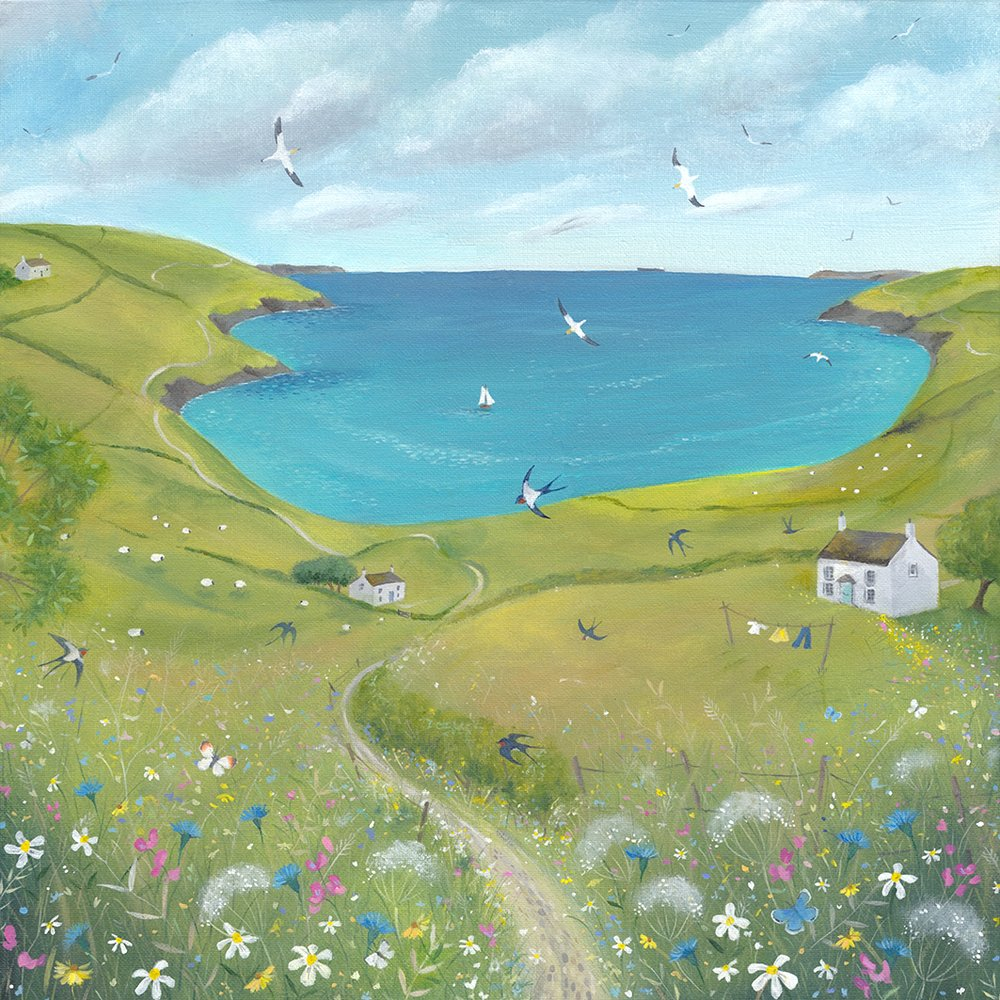
The Suffolk Coast Path is a 50 mile long distance path known for its diverse landscapes (salt marshes and heathland), running from the port town of Felixstowe (south Suffolk) to Lowestoft (north Norfolk).
Nearby Ness Point is the most easterly point in England, if you want to be the first person in England to watch the sun rise).
Wildlife Wise is a project run by local people, to educate residents and visitors on how to avoid disturbance wildlife on the Suffolk coast (due to its vast estuaries of mudflats, saltmarsh, reedbeds, sea grass, lagoons, heathlands and freshwater wetlands and sea grass). Unique shingle and sand attract unusual plants and creatures.
Its projects include secure fencing, and a special ‘dogs-off lead’ area so dogs can play free, without disturbing local wildlife – what a great idea!
Orford Ness (where England’s first atomic bomb was tested), is now a nature reserve , run by National Trust. You can only reach it by a seasonal foot ferry, and that’s a good thing to prevent over-tourism.
It’s the largest vegetated shingle spit in Europe, so a habitat for many rare birds and plants. Who love the lagoons, reedbeds and marshes.
The Suffolk Broads (peat pits to manmade wetlands)
The Suffolk Broads are (along with the Norfolk Broads) one of England’s most popular boating destinations, so be a sustainable sailor, to protect wildlife.
Wherry boats are the traditional way to get around here. Most rely on human power or wind, so they don’t pollute the water either. They also don’t have engine noise, a bonus for local wildlife.
Beccles is the main market town in the Suffolk Broads, sitting by the River Waveney. These streets have old buildings, little shops and cosy cafés. There are great views from the tall church tower in the centre of towns.
How peat pits became the Suffolk Broads
Peat bogs formed over long periods from partly decayed played. But once cut and dried, it served as useful fuel, so workers removed large amounts in the Middle Ages, and this left deep pits and channels in the soft ground. As water levels rose, river flooding increased. And the Broads were formed.
As this happened, industrial spaces became open broads, reeds spread and silt settled. Marsh plants moved in. In short, a working landscape turned into wetland.
Shallow edges warm more quickly than deep water, and that helps many plants and insects. Reeds give cover to nesting birds. Wet grassland offers feeding space. Slow-moving rivers connect one habitat to another, so fish, amphibians, insects, and water birds can move through the system.
A single broad can hold open water, reed fringe, fen, scrub, and marsh within a short walk. That variety supports species different needs. Some need shelter, some need mud, and some need calm water full of plant life.
- Reedbeds are among the most recognisable habitats. They shelter birds, insects, and small mammals. They also soften banks and filter water.
- Open water supports fish, aquatic plants, and feeding birds.
- Grazing marsh adds another layer. These wet meadows are shaped by water and long-term farming. They offer feeding grounds for birds and help keep the wider wetland open.