Why Linen is a Sustainable Fabric Choice

Linen (along with cotton and hemp) are the best ‘natural fibres’ to wear as they don’t release microplastics (try to choose organic or recycled cotton, as conventional cotton uses pesticides). Linen comes from flaxseeds, so is more local (often grown in Europe) and uses less water than cotton.
Amour Linen is a quality brand of linen clothing, from our friends in Lithuania. And unlike cotton, it doesn’t cling to your body, so no static electricity!
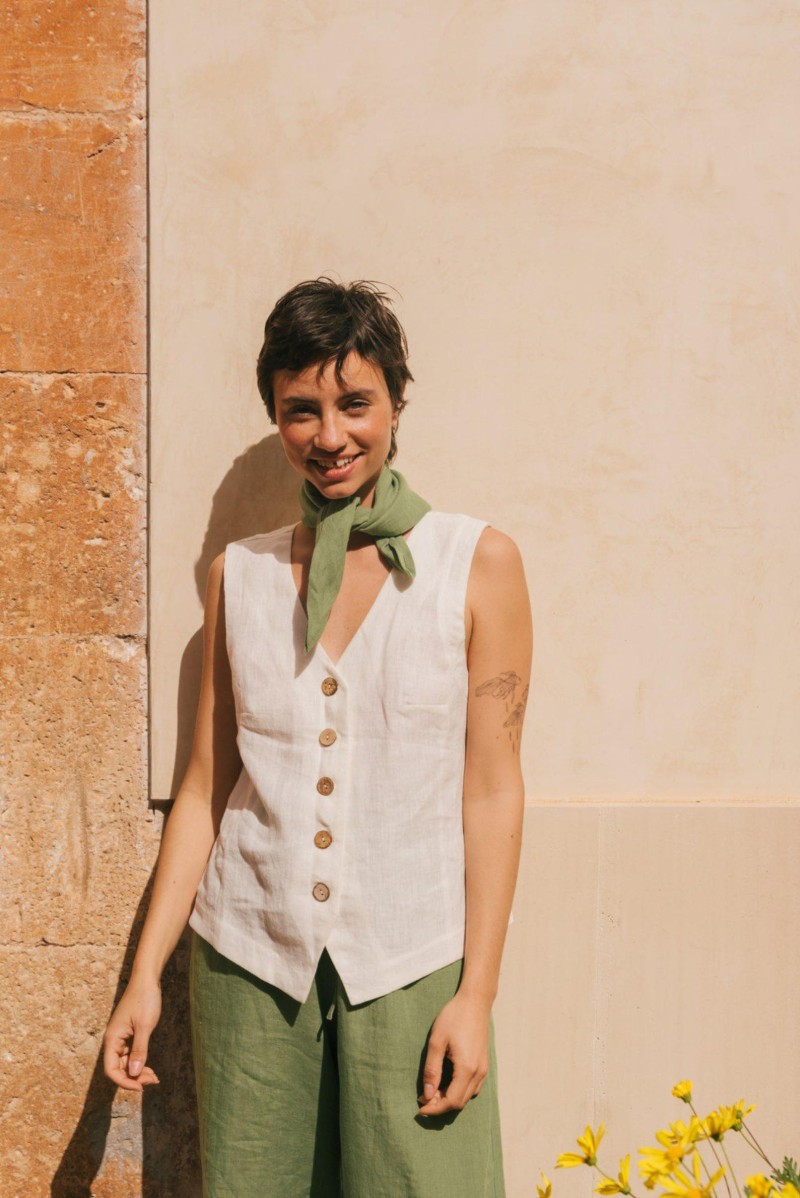
Cool in summer and warm in winter, it gets softer with age. Its only caveat is that it wrinkles, so avoid it if you don’t like ironing (or don’t mind being a bit ‘crinkly-clothed!’)
All the linen is locally sourced and the dying factory is nearby too. Everything is made by a team of in-house seamstresses. Any leftovers are made into other products, and all items are sent in zero waste packaging.
Where is Lithuania?
You will find that linen clothing often is from Lithuania, a Baltic state in eastern Europe, and home to one of the world’s oldest languages (related to Sanskrit, which is used to chant mantras in India).
It’s home to The Stelmuze, the oldest tree in Europe – an oak. Not surprising, considering one third of this beautiful country is entirely forest.
What makes linen sustainable?
A more sustainable fabric usually needs less water, fewer harsh chemicals, and less land. It should also cause less pollution, from farm to finish. Linen can tick many of these boxes, but results still vary by farm method, region, and how the fibre is processed.
Flax often grows well in cooler, wetter parts of Europe. That matters because regular rainfall can reduce the need for irrigation compared with thirstier fibres. On top of that, flax is an annual crop, which means farmers can fit it into rotations.
Crop rotations can support healthier soils and reduce pest pressure over time. None of this makes flax “perfect”, but it gives linen a strong starting point.
Flax needs less water and grows organically
Flax is often described as a hardy plant. In many growing regions, it relies mainly on rainfall rather than heavy irrigation. As a result, linen can have a lower water burden than fibres that are commonly grown in hot, dry areas.
Better farming improves outcomes for any fibre. Organic farming can cut synthetic pesticide use, while regenerative approaches can focus on soil health and biodiversity. If you find linen made from certified organic flax, that’s a good sign, but it’s not the only marker of responsibility.
More of the plant can be used
Linen is made from fibres in the stalk of the flax plant. Meanwhile, flax seeds can be used for food and for linseed oil. When more parts of a crop are useful, less goes to waste, and the overall system can be more efficient.
Retting and finishing: how linen is made
Retting sounds technical, but it’s simply the method used to loosen flax fibres from the woody stalk. Different retting methods can have different impacts. Field (dew) retting leaves stalks outdoors so moisture and microbes do the work. Water retting uses water to speed the process, which can create wastewater that needs proper treatment.
After retting, manufacturers may add finishing steps to change the feel and look. Some finishes are mild, while others rely on heavier chemical softeners or bright optical effects. If linen feels extremely slick and “perfect” straight off the shelf, it may have had more processing.
Slight texture is not a flaw. In many cases, a more natural hand-feel can hint at fewer intensive finishes. Comfort still matters, but you can often get softness through washing and wear rather than extra chemistry.
Dyes and blends can change the footprint a lot
Undyed linen in its natural shade (often called flax, ecru, or oatmeal) avoids many dye-related risks. When you do want colour, look for brands that talk clearly about low-impact dyeing and wastewater treatment. Vague claims without detail don’t help you judge anything.