London’s Tower Bridge: A Magnificent Victorian Structure
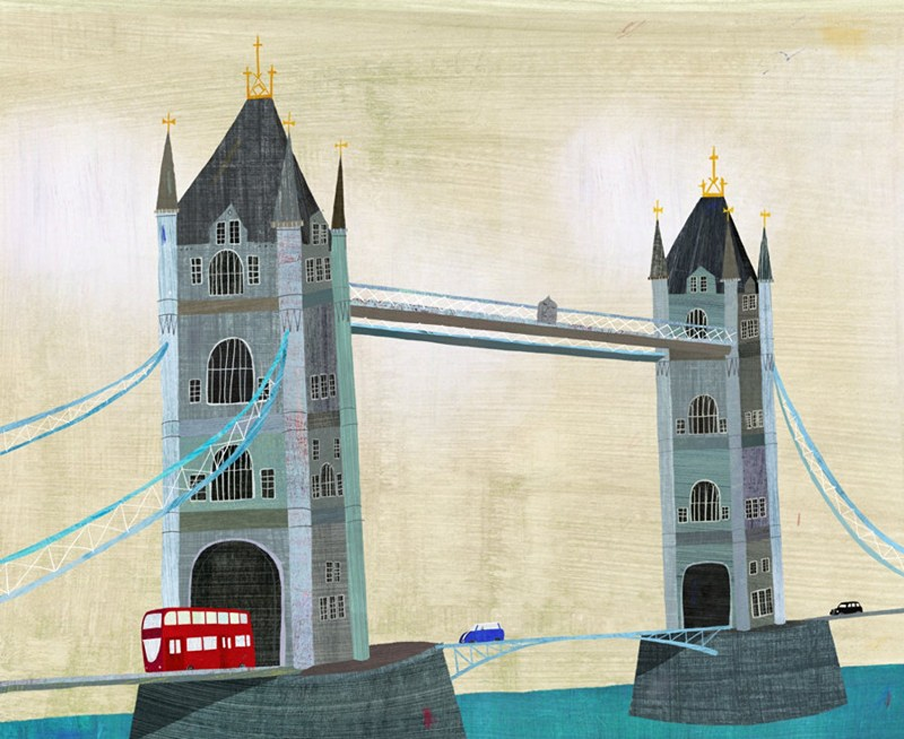
Tower Bridge is a suspension bridge built in the late 1800s, to give people better access to the East End. Often confused with London Bridge (half a mile away), the urban (denied) legend is that an American (who bought a bridge to put in Arizona) bought the wrong one!
The bridge was originally built to allow ships to pass underneath, while letting walkers and cars pass overhead. It took almost 8 years to build and almost 500 workers.
Even today the bridge still opens for ships to pass. And visitors can watch all the action through the famed thick glass floors. Braille booklets are available for blind people to also enjoy all the action.
How a Victorian idea became a London bridge
By the late 1800s, London had a busy problem. The East End was growing fast, and more people needed to cross the Thames each day, so traffic was piling up. So work began in 1886, and the bridge opened in 1894.
If engineers had built a fixed low bridge, tall ships would have been stopped downstream. So the bridge had to do something flexible. It needed to carry people and vehicles most of the time, then step aside when vessels arrived. This was a complex operation.
What happens when Tower Bridge lifts?
Tower Bridge uses two main systems at once. First, it’s a bascule bridge, which means the road lifts like a giant see-saw. Each half pivots upward, creating a clear channel. Second, it uses suspension elements on either side to support the approach spans.
When the lift begins, barriers drop and alarms sound. Traffic stops, and the bridge crew checks the sequence. Then the bascules rise from the centre line, rotating on pivots. The gap opens, and the river gets a clear path.
Originally, the bridge used hydraulic power driven by steam. Today, the bridge uses a modern electro-hydraulic system.
Tower Bridge doesn’t open at random. Vessel operators request a lift in advance, and the bridge team schedules it. That planning helps reduce disruption on the road, especially during busy hours.
When a lift is due, staff close the road with barriers and signals. Pedestrians are kept back too, because the moving parts need clear space. On the river, signals guide vessels through, and boats wait their turn.
England’s own version of the film ‘Speed!
In 1952, a double-decker bus began to slide, as the bridge accidentally opened.
Driver Albert Gunter saved everyone’s lives by making a split-second decision to accelerate to clear the opening gap (a bit like in the film Speed when the road wasn’t built). There were no serious injuries and to reward his bravery, he was awarded the princely sum of £10!