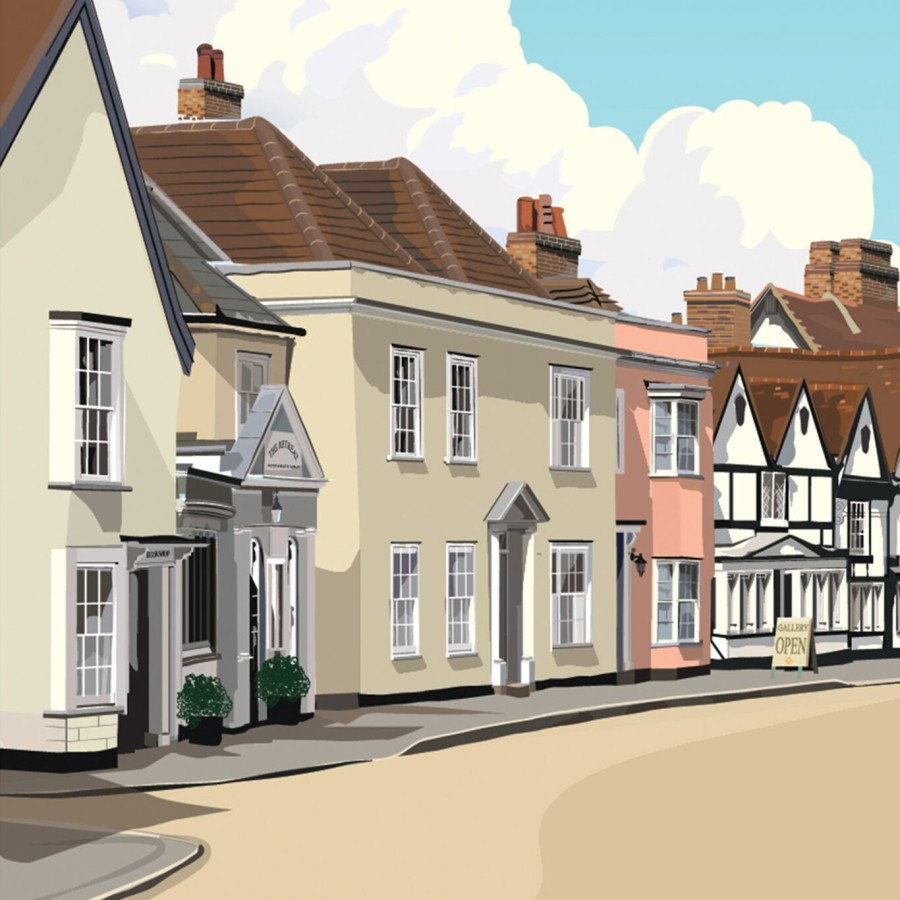
Saffron Walden, Geraldine Burles
Essex is a large county in East of England. Far more than Bluewater shopping centre, the Dartford Tunnel and cheeky boys, this is a mostly rural county of windmills and country pubs, with England’s second-longest coastline.
Essex has a way of surprising people. Turn off a main road, and you can be in a place of crooked beams, flint walls, old inns, and church towers that have watched centuries pass.
If out walking, always follow the Countryside Code to keep all creatures safe. If at the coast, read about how to keep dogs safe by the seaside (check beach bans before travel).
Epping Forest spans nearly 6000 acres, and is rich wild wildlife including deer, woodpecker and many species of butterflies). Just like Norfolk and Suffolk, windmills are a common site in Essex. Stock Windmill dates back to the 1700s and red-brick Thaxted Windmill welcomes visitors to climb its stairs, and learn about milling history.
Thaxted has the atmosphere of an old English storybook. Cobbled streets wind past a grand church, timber-framed guildhall, and even a windmill. The market square has hosted traders for over 800 years.
Manningtree claims to be the smallest town in England, sitting on the banks of the River Stour. The high street is lined with Georgian homes, independent shops, and classic pubs.
Saffron Walden and Audley End
Saffron Walden has winding streets and timber-framed buildings, to show off centuries of history. The twice-weekly market is at the heart of the town, offering everything from fresh bread to handmade gifts. Nearby Audley End House adds the grand note, with formal gardens and long views.
Keep it simple: do a short town walk, then head to the estate for an afternoon. It works well by train via nearby stations, and mornings are calmer for photos.
Castle Hedingham & Sible Hedingham
Castle Hedingham gives you instant drama. The Norman keep rises hard and pale above the village, and it still looks built to last. Around it, the lanes soften the mood, with hedges, old cottages, and small turns that make you slow down. Sible Hedingham sits close by and feels quieter, more everyday, and just as pleasing.
Walk between the two on public footpaths if the weather’s dry. Check opening times for the castle before you go, and aim for late afternoon light.
Dedham and the Stour Valley
Dedham is a pretty village situated within a National Landscape, not far from Colchester. It sits close to the River Stour. It’s compact and handsome, with old frontages and a church that anchors the view. Then you get the River Stour, flat fields, and that wide, open sky that’s tied to Constable Country. It’s gentle scenery, but it stays with you, like a familiar painting seen in real life.
Take a riverside walk towards Flatford, or choose a slow boat trip when they run. Summer weekends can get busy, so arrive early or go midweek. Parking fills fast near the centre.
Wivenhoe (waterside & old quay charm)
Wivenhoe blends a creative energy with riverside views. Home to artists and writers, it’s full of colourful homes and quirky galleries. The quayside is perfect for a stroll or a pint in a local pub.
Wivenhoe is small, bright, and quietly confident. The houses have colour, the quay has history, and the River Colne brings a steady sense of movement without any rush. Old maritime links still show in the shape of the waterfront, and you can feel how working life once leaned on the tide.
Do a simple waterfront walk, then loop back through the village streets for a coffee. It’s also a good choice without a car because the rail links are straightforward. Go around high tide if you want the river to look full and glossy.
Maldon (salt marsh views & maritime)
Maldon has sea air and space. The Hythe Quay is the heart of it, with historic Thames sailing barges and long views over the Blackwater’s mudflats and marsh edges. It’s pretty in a working way, timber and rope, creak and gulls, with the town rising behind.
Stroll along the quay, then carry on by the water for a longer view. Dress for wind, even in warmer months, because it cuts across the open river. Late afternoon often feels best here, when the light drops softer.
Coggeshall (timber streets & medieval past)
Coggeshall is packed with history, from the old abbey to medieval buildings, and crooked cottages. The streets hold a dense run of old buildings, and the whole village feels walkable and close. Timber-framing is the headline, but the deeper pull is medieval history, still visible in the bones of the place and the way the centre sits.
Make time for a key heritage stop such as Paycocke’s House, then wander without trying to cover every lane. It suits slow browsing because details hide in doorways and beams. Parking can be limited, so arrive before lunch on weekends.
Finchingfield (a village green from storybooks)
Finchingfield is known as Essex’s prettiest village. Thatched cottages, a duck pond, and a green give it a postcard look. Local bakers and cafes fill the air with the scent of fresh bread and coffee. The windmill overlooks the village.
Try a short circular walk out into the fields, then come back for lunch. Arrive early for parking and photos, especially on bright days. Early evening can also be calmer once day-trippers drift away.
Burnham-on-Crouch (marina & old roots)
Burnham-on-Crouch balances smart sailing culture with older riverside history. The waterfront has a clean, open feel, and the town rises gently behind it, with older buildings tucked among newer life. It’s less “chocolate-box”, more airy and salt-tinged, which is part of the charm.
Walk the promenade and watch the boats shift on their moorings, then settle in for a calm lunch. Tide times change the whole view, so check them if you can. The light can be lovely late in the day, when the river turns silver.