Tyne Bridge: A Feat of Victorian Engineering
Tyne and Wear is a county that is one of England’s coldest, as it sits on the same latitude as Scandinavia (it’s only the Gulf Stream that prevents it being covered with snow each winter). Home to the city of Newcastle and the town of Gateshead, it’s pretty near to the border with Scotland.
If out walking, follow the Countryside Code to keep all creatures safe.
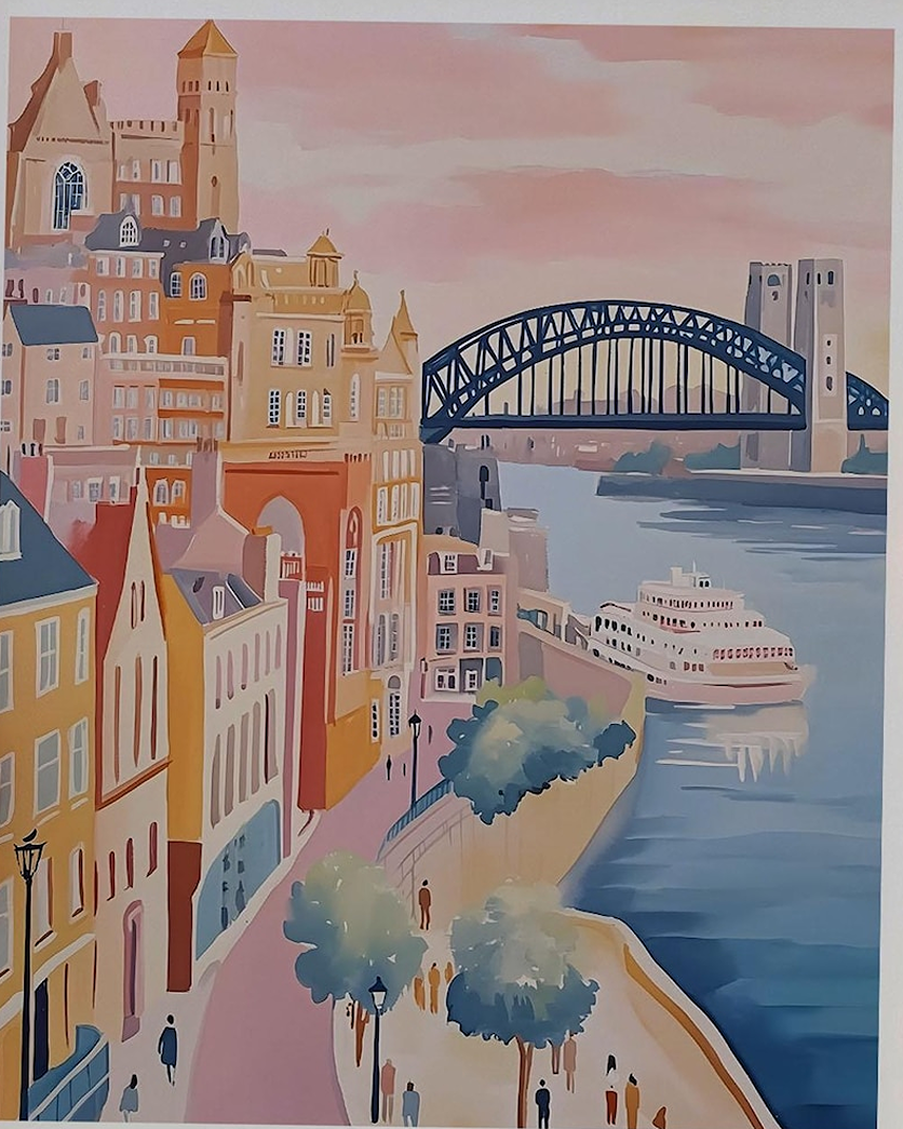
One of England’s most iconic bridges is Tyne Bridge, the one that links the city of Newcastle and the large town of Gateshead in northeast England. It’s used daily by many people, who often live in one area, and work in the other.
The bridge was opened to great fanfare in 1928, after taking three years to build (one man sadly died during construction, when he fell into the river).
The arch shape looks similar to that of Australia’s Sydney Harbour Bridge. But in fact this bridge in England was built first, so it’s likely the Aussie bridge was influenced by Tyneside, not the other way around!
Another bridge that this is compared to is New York’s Hell Gate Bridge (who would name a bridge after the gates of Hell?!) Now used by Amtrak (passenger railroad services), this was built in 1917 so may have influenced English architects.
Formerly the world’s longest steel bridge, it’s so strong it survived Nazi bombs. And experts say without maintenance, it could survive for 1000 years!
From busy quays to a bold plan
Long before the arch arrived, the Tyne was already doing its job. It carried ships, coal, timber, and wages. It also cut the city in two. Newcastle and Gateshead faced each other closely, yet moving between them could feel slow and awkward.
The river banks didn’t help. They’re steep in places, and the routes down to the water pinch into tight streets. Meanwhile, the early 20th century brought more lorries, more buses, and more people travelling for work. Trade still pressed through the quays, and the roads above had to cope.
A lower crossing near the water would have clashed with shipping. A high-level road bridge, on the other hand, could clear the river traffic and connect the higher ground. That meant fewer stops, fewer detours, and a more direct line between the centres of Newcastle and Gateshead.
A river crossing that could not keep up with the city
Before the Tyne Bridge opened, the crossing options were limited and often frustrating. Ferries helped, but they had natural limits. They relied on weather, tides, daylight, and simple capacity. They also caused queues when trade and commuting peaked at the same time.
Other bridges existed nearby, yet each served a slightly different need. Rail links helped trains, not carts and cars. Older crossings and streets weren’t designed for heavier road traffic. As a result, bottlenecks formed in the very place you’d least want them, right at the river edge where space runs out.
A high-level road bridge mattered because it gave the river room to breathe. Ships could still pass below, while traffic moved above without waiting for a gap. In plain terms, it separated two busy systems that kept getting in each other’s way.
The team (and what people expected)
The push for a new bridge needed more than local pride. It needed agreement, funding, and a clear design that could stand up to scrutiny. Local authorities backed the idea, while engineers and builders shaped it into a buildable plan. T
he design work came from the consulting engineers Mott, Hay and Anderson, with architect Robert Burns Dick giving it its distinctive look. Dorman Long and Co took on the build, a name still tied to big steel structures in Britain.
The timeline ran from planning and debate to years of construction, then finally to the opening in 1928. Public feeling was mixed, as you’d expect. Many people wanted progress and jobs. Others worried about cost and disruption. Still, once the arch began to rise, excitement spread.
How the Tyne Bridge was actually built
The Tyne Bridge isn’t Victorian in date, but it carries Victorian thinking in its bones. It belongs to that tradition of big public works, built from iron and steel, assembled with rivets, and designed to be practical first. The idea is simple: make a strong shape, then build it honestly, piece by piece.
At the heart of the bridge is the steel arch. The arch sits on solid supports at each end, and the roadway hangs from the arch structure. That choice solves two problems at once. It keeps the span clear for the river below, and it gives the road a steady platform above.
Foundations matter just as much as the visible steel. The bridge needed firm ground to take the outward push of the arch and the constant weight of traffic.
Builders had to work with the river environment, the weather, and the city pressing close on both sides. Nothing about the setting makes heavy construction easy, yet the design had to look calm when finished.
How the arch carries the load (the maths!)
Think of a stone arch in an old church doorway. Each block presses against the next, and the force travels down into the sides. The arch stands because the load wants to move outward and downward, and the supports stop it.
A steel arch works on the same idea, just at a different scale. On the Tyne Bridge, the main arch ribs take the weight and guide it into the supports at each end. The deck is the road you drive or walk on. That deck needs support along its length, so the bridge uses a framework that connects the deck to the arch structure.
Depending on the point along the span, those connections act like hangers or stiff spandrel framing, keeping the roadway steady and spreading loads.
Bearings sit where parts meet and move slightly. Steel expands and contracts with temperature, so the bridge needs controlled movement. Without it, the structure would fight itself over time.
Rivets, cranes, and working above the Tyne
It’s easy to see the Tyne Bridge as one clean object, but it arrived in many pieces. Steel sections were made and brought to site, then lifted into position with cranes and temporary supports. Each piece had to align closely, or the whole shape would drift.
Riveting was central to the build. Crews heated rivets until they were glowing, placed them through holes in the steel, then hammered them to form a tight joint. Once cooled, the rivet shrank slightly and pulled the plates together. It’s physical work, loud work, and work that leaves a pattern you can still spot if you look closely.
Conditions on the Tyne can turn fast. Wind catches clothing and tools, rain makes surfaces slick, and cold bites into hands. Safety standards were different then, and the risks were real.
A landmark that shapes the North East story
The bridge sits in a busy scene, with the Quayside below and the city centre above. Other crossings share the view, and that’s part of the charm.
Steel bridges don’t look after themselves. Weather brings moisture and salt, and traffic brings vibration and wear. Over time, paint fails, joints need checks, and small faults can grow if nobody acts.
That’s why inspections and repairs never really stop. Repainting helps protect the metal from corrosion. Maintenance also means lane changes, closures, and signs that test everyone’s patience.
Providing Habitats for Coastal Kittiwakes

Made from strong steel, Tyne Bridge provides a strong backdrop for nesting kittiwakes, around 700 use it each year, hidden from view. In fact, Tyne Side now boasts the largest colonies of inland breeding kittiwakes on earth.
Local wildlife experts have been instrumental in persuading those restoring the bridge to avoid netting (that could trap nesting birds) and use alternative methods from those who know, to protect birds that have been there a lot longer than us.
Kittiwakes are gulls. But due to over-fishing, pollution and warming seas, their population has fallen in the UK by 60% in the last 40 years or so. This makes protecting those nesting in Tyne Side so vital.
In fact, despite being a naturally cliff-nesting bird that spends most of the time at sea, this area has become a haven for gulls that previously would have nested on shipwrecks even.
Unlike most gulls, kittiwakes (who only have three toes) are not scavengers, so you won’t find them stealing your chips or on landfill sites.
Learn more on how to protect seaside homes of wild gulls.
To attract a female, male kittiwakes perform a ‘head-jerk dance!’
The Main Cities and Towns of Tyneside
- Newcastle is linked by several bridges to Gateshead. Originally a Roman fort (2000 years ago), the old castle gave the city its name, and it later became prosperous, due to coal mining and ship building.
- Gateshead is just south of the River Tyne. Both places are looked over by the infamous ‘Angel of the North’, which most people say looks like a Nazi propaganda statue (known locally as ‘the Gateshead flasher!’) On a serious note, critics are concerned about road safety.
- Sunderland sits on the North Sea, and again has a rich ship-building history. It has its own patron saint (Benedict Biscop founded a local monastery; the ruins now a Grade 1 listed building).
Read how to keep dogs safe by the seaside (some beach bans apply).
The Sunderland Empire Theatre is where Carry On actor Sid James died of a heart attack in 1976. Les Dawson refused to play there again, after saying he saw Sid’s ghost in his dressing room?