Walkable Communities (tips for town planners)

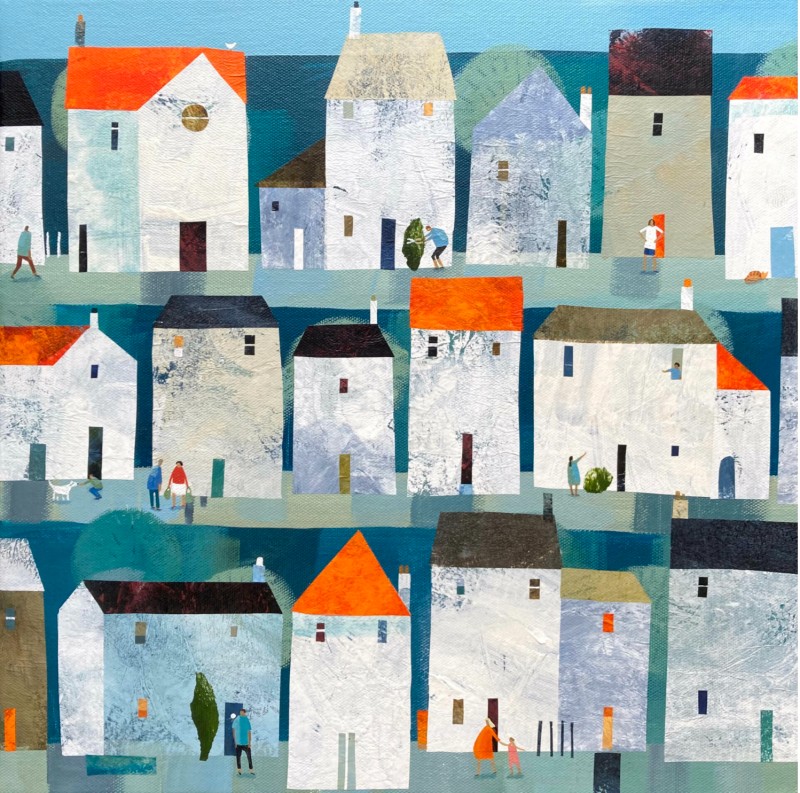
Copenhagen, Simply Katy Prints
One of the best ways to get people healthy (physically and mentally) and reduce road traffic, is to create walkable communities. There is no point focusing on NHS waiting lists, while also promoting lifestyles where people have to drive to buy food or meet other people.
Bogotá’s former mayor in Colombia ripped up the car budget and used it to build bus lanes, pavements, bike tracks and parks (resulting in 50% reduction in road traffic). It’s also important to install wildlife-friendly lighting to ensure walkable communities are safe for vulnerable people to get around.
An advanced city is not one where even the poor use cars. But rather one where even the rich use public transport. Enrique Peñalosa
Local Shops and Walkable Communities
One big way to help reduce road traffic is for town planners and MPs to focus on walkable communities and independent shops. This is because most supermarkets and retail parks are out-of-town and need cars to reach.
Around 25% of motorway traffic is due to lorries transporting food from central distribution houses to supermarkets.
The Transition Town movement began when co-founder Rob Hopkins (a permaculture gardener) heard then-Prime Minister Gordon Brown lament that we were ‘days away from having no food’ due to lorry strikes.
He knew that we can grow nearly all our own food locally, and now such towns are ‘resilient’ not having to rely on supermarkets, oil prices or lorry transport.
A Cornish delivery company (now no longer in existence) once had a wonderful description of how supermarket produce and lorry delivery works: in a nutshell this is how mad it is:
Your strawberries may be grown locally. Then they are delivered by lorry to a central distribution house (often hundreds of miles away) then sit there (powered by oil-fridges) until read to thunder back (by lorry) and likely past your front door, before landing on supermarket shelves as ‘local strawberries’. This is what causes traffic jams.
Books to Help Create Walkable Cities
The best way to create walkable communities is likely to read these books (and stand as a councillor to implement the ideas). Or campaign for these ideas and give one or more of these titles as ‘birthday books for your councillor or town planner!’
It’s not that they don’t want to create walkable communities, it’s likely they don’t have the knowledge or vision to do so (it would cost less long-term than mending endless pot holes on roads).
Streetfight is a book by a woman who against big opposition, turned an area of New York City from gridlocked traffic, to a pedestrian paradise. Now it’s an area for walking, cycling, buses and green spaces. The book is a manifesto for other places to do the same, with practical tips to make streets safer and nicer to live.
Examples include pocket parks in Mexico City and LA, walking-friendly communities in Auckland and Buenos Aires and bike lanes in Indianapolis and San Francisco.
Mixed-Use Developments
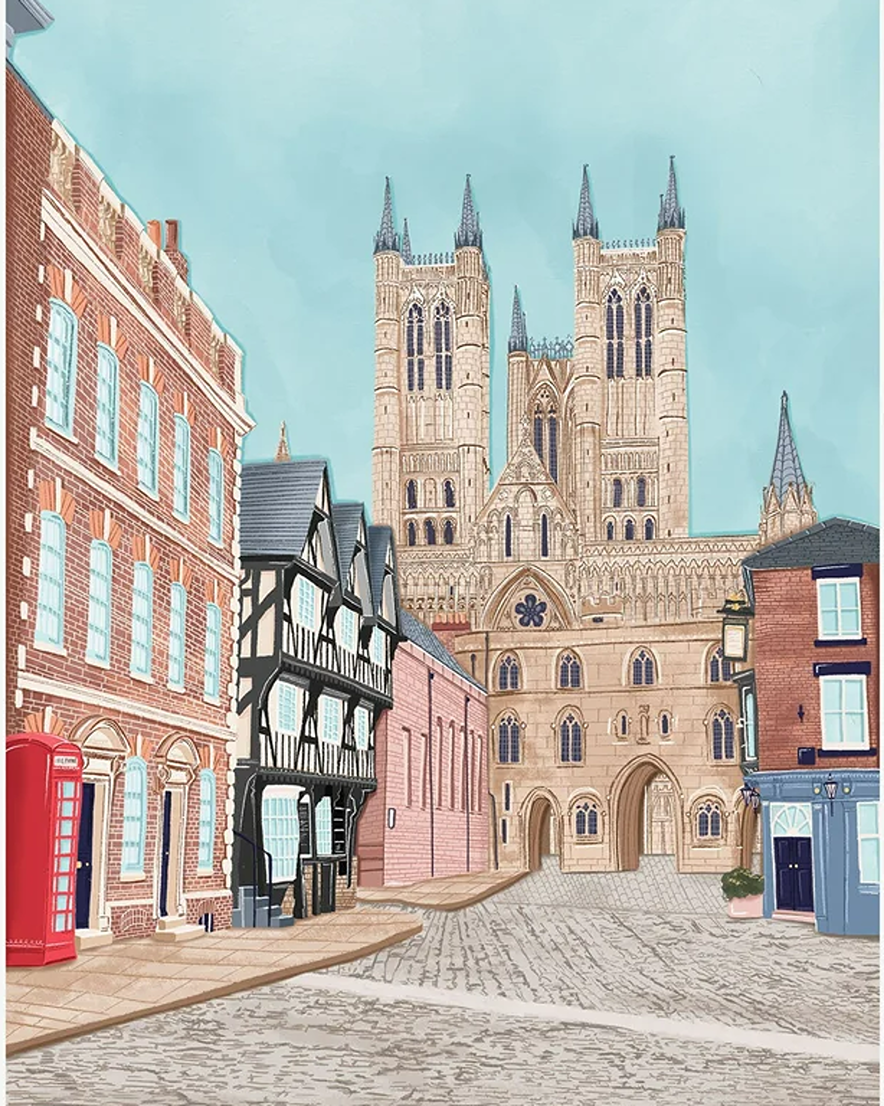
Lincoln, Simply Katy Prints
One effective approach is the creation of mixed-use developments. These projects combine residential, commercial, and recreational spaces in one area, allowing people to live, work, and play without the need for long-distance travel.
Imagine waking up in a neighbourhood where shops, offices, and parks are just a short walk away. This not only reduces reliance on cars but also fosters a sense of community.
By clustering different types of spaces together, mixed-use developments can significantly decrease traffic volumes. When people can access amenities nearby, they’re less likely to hop in their vehicles for every errand. As a result, urban areas can experience less congestion and improved quality of life.
The Benefits of Designing Grid-Based Cities

Grid-based cities offer many environmental benefits. These cities have streets and roads that form squares or rectangles. This simple layout can make life better for people and nature.
First, grid-based cities make it easy to walk or cycle. Roads usually connect in straight lines, so people can get from one place to another without going out of their way. This reduces the need to drive cars, which lowers pollution.
If you think about the typical cul-de-sac (which does not happen in most European countries), this sometimes means that even if you only live 10 minutes from the sea (as the crow flies) you may have to take a 2 or 3 mile walk to get there, due to no grid layout.
This of course means that many people drive instead, leading to pollution and traffic.
Helps Traffic Move Smoothly
Second, having a grid layout helps traffic move smoothly. When roads are well organised, fewer cars get stuck in traffic. This means less fuel is used, which is good for the environment.
England’s terrible road system of one-way systems, ring roads and Spaghetti Junction all lead to traffic jams, which are bad for traffic and bad for mental health too!
On a serious note, getting stuck in traffic jams is also not good in emergencies and heatwaves.
Use Land for Building Wisely
Grid-based cities also use land wisely. Buildings are close together, which leaves more open space for parks or gardens. Green spaces provide homes for animals and help clean the air. A good example of this is Paris, which is built completely on a grid-system.
It has many apartment buildings close together, and everyone lives within walking distance of parks to walk their French poodles!
Public Transport Works Well
Public transport works well in these cities, too. Buses and trains can follow direct routes because of the simple road system. This makes public transport quick and easy to use, so people leave their cars at home.
It’s all very well to tell people to walk more and drive less, but if the public transport stinks, then you are never going to get people out of their cars.
New Buildings Don’t Mess Street Layouts
Finally, the grid system makes it easier to add new homes and shops. Planners can arrange new buildings without messing up the street layout. This helps the city grow without harming the environment. We do need more affordable housing.
But in our present climate, planners are ripping up greenbelt land to build on the outskirts of town. Grid systems means you can usually have more affordable homes in more central areas, so there is more green areas left for wildlife in the suburbs.
Santa Fe (a good example of a grid-based city)

Santa-Fe in New Mexico (US) is a good example of a walkable city, built on the grid layout. This mecca for artists, writers and musicians is full of pretty buildings in Spanish-influenced colours.
The city has strict planning codes, with buildings built around a central plaza (like in Italian cities) with the town hall on one side, and the church on the other. Then there is a radiating grid of narrow streets, all easy to reach each other.
In what ways do you think a grid-based city might make daily life simpler?
The Walkable City of Paris (what English cities can learn)
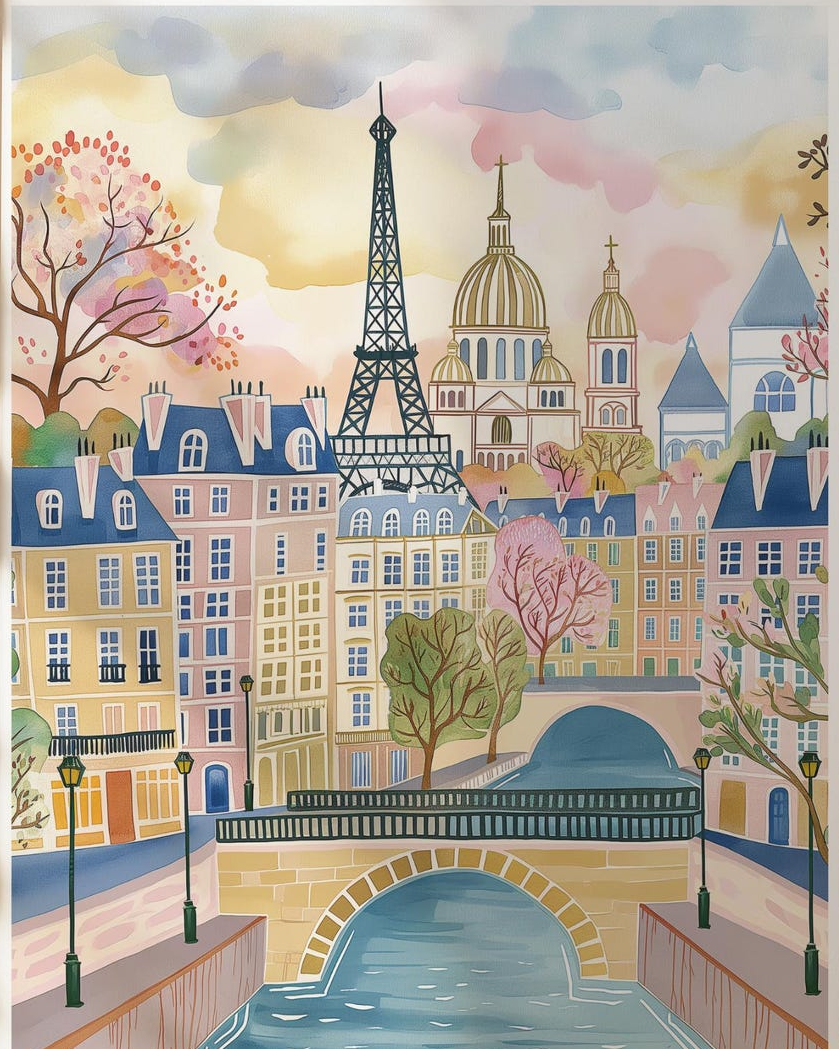
Paris is one of the world’s most beautiful cities, and fairly easy to get to from England. It’s also one of the best-designed, a grid system with most buildings no more than four stories high (good for community and good for fire safety).
The only ‘tall buildings’ are the Eiffel Tower and a few others, this is not a city of skyscrapers. But rather walkable streets and many beautiful public parks. Most people walk everywhere and take the Metro (like our underground) rather than drive. Which is a lot safer in France!
The central areas are divided into Arrondissements, and are built for people over cars, with over 100 walking-only streets. Along with many car-free areas along the River Seine and many narrow historic streets. Often it’s faster to walk, than waiting for a bus.
For rainy days, there are many passages couverts for people to pass the time having coffee or window-shopping. And it’s easy to explore popular areas like Montmartre, as cars are restricted.
And when French people get thirsty from all that walking, the city is full of public water fountains, that spew out fresh clean safe water, so they don’t have to buy bottled (or even carry reusable bottles).
Paris has been designated a ’15-minute city’, where everyone can walk from their home to work, the park, shops, the boulangerie and the patisserie, all in quarter of an hour!
Paris is the only city where you can step out of a railway station and see simultaneously the Seine with its bridges and bookstalls, the Louvre, Notre Dame, the Tuileries Gardens – nearly everything. What other city offers you so much, as you leave a train? Margaret Anderson