Finding Serenity in the Simple Act of Birdwatching
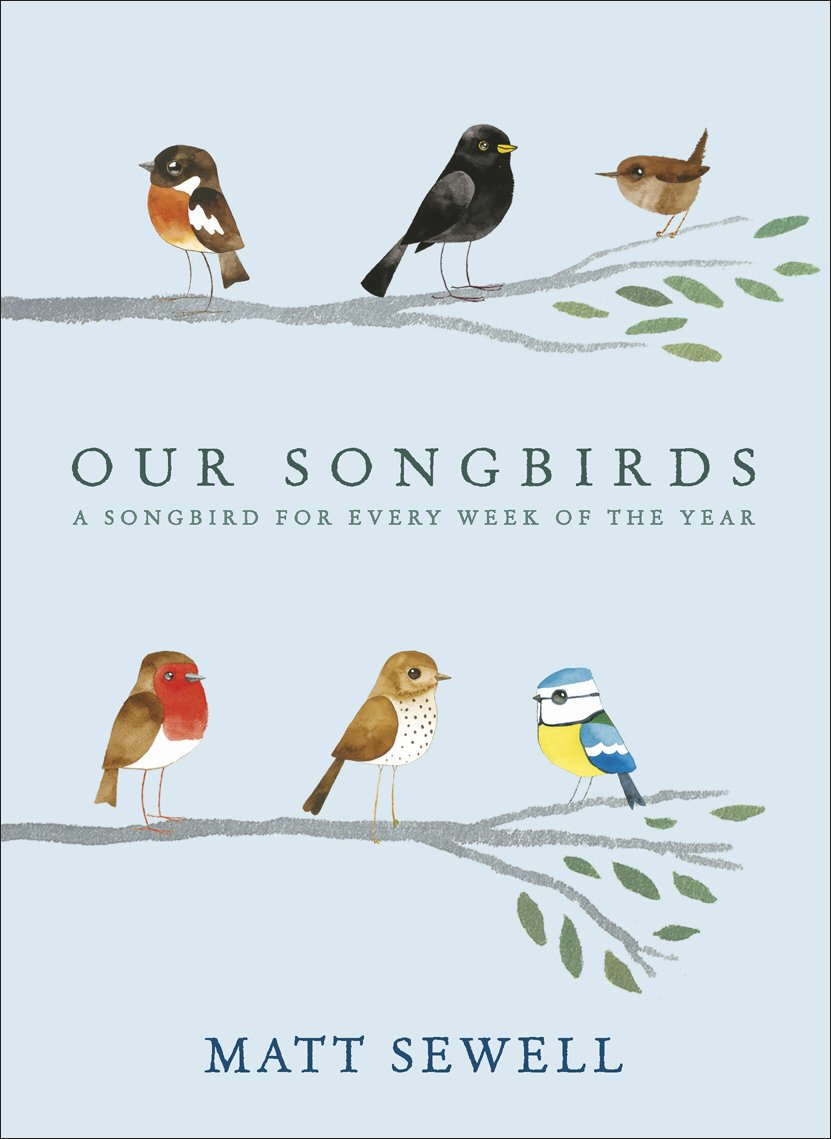
Our Songbirds is a beautifully illustrated guide to England’s songbirds, by pop artist Matt Sewell. This enchanting volume has lovely art and accompanying descriptions like the peewit (‘sings the blues’) and the bittern who fills his neck ‘like a tweed pair of bellows’.
If there’s one type of bird I have a strong affinity with, it’s the singy songy fellow. They kind of wake up the world with their vocals. It’s a little know fact, but that’s not them getting up you know.
It’s them not having been to bed, yet. Often they’ve had a drink too. They’re feathery show-offs.
Birds using using a special organ called a syrinx (like our larynx, but with two tubes like an upside-down Y where air flows over vibrating tissue to generate sounds).
Don’t play birdsong near birds, it can attract predators. Read more on safe havens for garden birds. Also read how to stop birds flying into windows.
Tips to Help Garden Birds
- Keep cats indoors at dusk and dawn, when birds are feeding.
- Don’t feed birds stale, mouldy or crusty bread (nor buttered bread, fat can smear on feathers, affecting weatherproofing and insulation).
- Never use coloured or tin bird houses (they overheat and attract predators).
- Don’t play birdsong near birds, it can confuse and attract predators.
Learn to Tell Birds Apart by Their Songs
Not all birds sing (storks make a mild clatter!) but half the world’s 10,000 species of birds are songbirds. Some sing naturally, others learn songs from their parents. Find a list of over 200 melodies at British birdsongs.
Song thrushes have clear repeating songs. Due to lack of habitat, they are now endangered (they love snails, so always choose non-toxic humane snail/slug deterrents).
They are responsible for the dawn chorus (mistle thrushes are forgetful, so tend to end songs quickly, as they can’t remember the ending!) And wood thrushes can sing rising and falling notes at the same time, something that humans could never do!
Blackbirds have early-morning low-pitched songs (like flutes). They don’t repeat verses, so each song is different!
Reasons Why Birds Sing?
Nature writer Stephen Moss says birdsong is quite simple: males are singing ‘keep out’ to other males and females are singing ‘come in’ if she’s interested. Males sometimes fly thousands of miles from Africa, and then on arrival, start singing (sometimes for hours) to find a mate. Most songbirds don’t live long, so if they don’t find a mate, they may never get the chance to breed.
Some birds are now waking up at midnight to sing, thinking it’s dawn (due to light pollution from car parks etc). This in turn affects feeding, breeding and sleeping habits.
Report broken street lights at Fix My Street (complaints are sent publicly to councils) and ask your council to install wildlife-friendly lighting (orange hues have longer wavelengths, so are better than blue-hued lights).
Books to Learn More about Birdsong
- The Cello and the Nightingale is the remarkable story of a nightingale who would join in to perform a duet in a Surrey garden with cellist Beatrice Harrison. From 1924 to 1942, over a million people listened to her play songs with these amazing birds.
- The Nightingale is written by a conservationist and folk music scholar, who studies the sweet song of a bird that has inspired musicians, writers and artists. Includes conservation concerns.
- Singing Like Larks is a charming book that shows how folk songs have been influenced by birdsong for many years.
At first glance, nightingales look as humble and modest as a farm labourer. Medium-size and plain brown all over, wing feathers ribbed like a corduroy jacket. But the moment they open their beaks, the world is alight with an unparalleled majesty of sound.
Take time to listen to songs brought to you by:
- Blackbirds – these early risers have short low-pitched songs like flutes. They don’t repeat verses, so each song is different!
- Song thrushes are responsible for the early-morning dawn chorus, with loud ‘verses’ they repeat several times. Mistle thrush songs are similar, but they’re a bit forgetful so tend to end songs quickly, when they trail off and can’t remember the ending!
- Robins (they don’t live that long – your ‘annual returning robin’ is likely the son or grandson of the one you saw last year) also like to sing early mornings. Their call has ‘rippling’ notes and whistles, and they sing all year (unlike most birds). Similar dunnocks (small and grey) have lovely high-pitched melodies.
- Warblers sing in long verses of different notes, and again are similar to someone playing a flute. Blackcaps (migrant warblers) also have clear flute-like notes. Another ‘dawn chorus’ bird is chiffchaff, who likes to add extra notes when he feels like it!
- You’ll also find lovely songs by blue tits, great tits and coal tits. And you’ll enjoy listening to chaffinches and greenfinches. Despite their tiny size, wrens give out high-pitched whistles.
- Northern Cardinal birds can play more notes than on a piano, in just one-tenth of a second! Wood thrushes can sing falling and rising notes at the same time, something no human could ever do!
Chaffinches (with a most melodic song!)
Chaffinches common in England, and also the national birds of Finland! These colourful birds have beautiful bright and earthy plumage, the male having rosy pink cheeks and breast, the females are more brown-grey, to blend in during nesting season, whilst laying on her eggs.
The song of the chaffinch is divine, very melodic, and bound to cheer up anyone. One birdwatcher describe it as a combination of ‘trills, chirps and whistles’.
Chaffinches ideally choose forests, woodlands and orchards to live, with lots of trees for food and nesting. Most live for a few years.
They like to eat wild seeds from trees (pine, beech, alder) and when breeding, also eat caterpillars and insects, to get protein for growing chicks.
Dipper Birds (can swim and walk underwater!)
Dipper birds are one of England’s most fascinating creatures, chunky songbirds that ‘dip’ or bob while perched on rocks in fast-flowing streams. They are the only songbirds that can swim and walk underwater, using in-built ‘goggles’ to see aquatic insects, using their wings to dive for food.
Dippers can stay underwater for up to 30 seconds, while they use their built-in scuba diving gear to shut water out using nasal scales (they have twice as many feathers as other songbirds, to stay dry).
Although they look a bit like blackbirds, they are not related (you can tell the difference as they have white throats and breasts)
Dippers need protected habitats
Due to loss of habitat, dippers are a protected species. Living near rivers, they are at risk from forever chemicals polluting our waterways, which can affect the hatching of male dippers, thyroid and development of fledglings.
They are also at risk of microplastics (so if you wear synthetic fibre clothing like polyester, launder in microfiber filters and buy cotton, hemp or linen clothing for new purchases).
Numbers of dippers have dropped 30% since 1970, with other threats like intensive poultry farming that causes polluted water run-off from modern farming methods, even run-off from quad bike tracks.
Birdwatching with Hamza
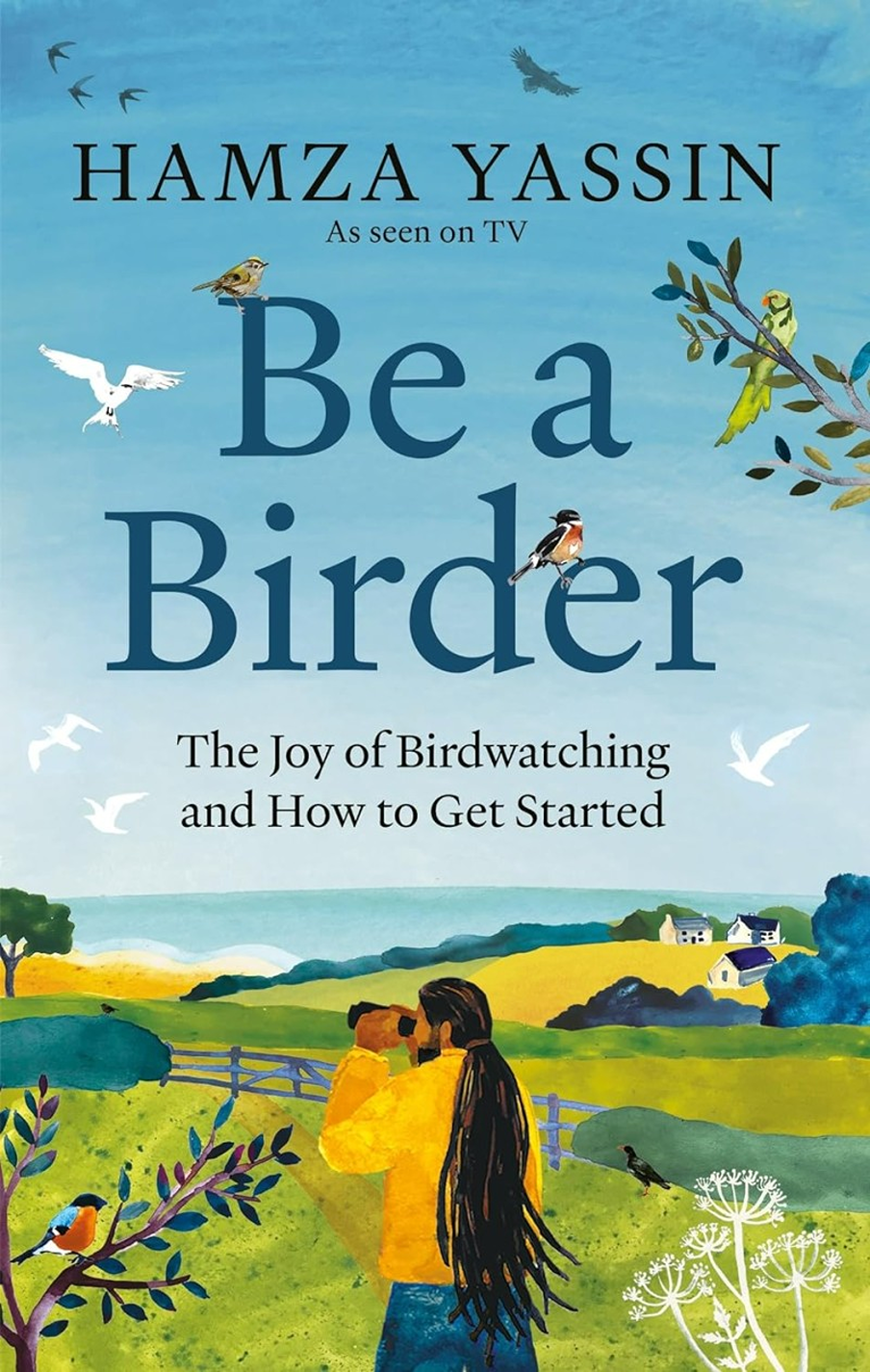
Be a Birder is a treasure! The moment you open this book, you’ll fall in love with the 50 birds featured, each with gorgeous black-and-white illustrations and information on their habitat, behaviour and movements. And Hamza is a wonderful writer who will instil a love of birds, in anyone who reads this book.
Hamza Yassin was born in Sudan and on arrival to England as a child, only spoke four words of English (he began to learn the language by watching David Attenborough’s The Life of Birds).
This fuelled in him a passion that led to a degree in zoology with conservation, and career as a wildlife cameraman. He recently presented Hamza’s Hidden Wild Isles (wonderful viewing on BBC iPlayer).
Birds in Cities, Parks and Gardens
- Blackbird
- Goldcrest (and Firecrest)
- Magpie
- Peregrine Falcon
- Redwing
- Ring-Necked Parakeet
- Rock Dove (and Feral Pigeon)
- Starling
- Swift
Birds in the Woods
- Bullfinch
- Great Spotted Woodpecker
- Green Woodpecker
- Nightingale
- Nuthatch
- Sparrowhawk
- Tawny Owl
- Wryneck
Birds in Moors and Mountains
- Black Grouse
- Capercaillie
- Dartford Warbler
- Dotterel
- Golden Eagle
- Hen Harrier
- Merlin
- Wheatear
Birds on Farmland
- Barn Owl
- Lapwing
- Long-Tailed Tit
- Red Kite
- Skylark
- Waxwing
- Yellowhammer
Birds on Rivers, Marshes & Estuaries
- Curlew
- Dipper
- Great Crested Grebe
- Grey Heron
- Grey Wagtail
- Kingfisher
- Osprey
- Snipe
- Teal
Birds on the Coasts
- Arctic Tern
- Black-Browed Albatross
- Chough
- Eider
- Herring Gull
- Northern Gannet
- Puffin
- Stonechat
- White-Tailed Eagle
It’s important not to disturb birds (don’t play birdsong, it can confuse and attract predators), when watching them. RSPB Puffin Binoculars are around £30 (they are designed for children, but they are small and lightweight, so also good for adults who don’t want to lug around heavy binoculars).
They are easy to hold still, and offer a wide field of view and sharp image quality. They include a case and wrist strap, sold with a 1-year warranty.
How to Look at a Bird (by an artist)
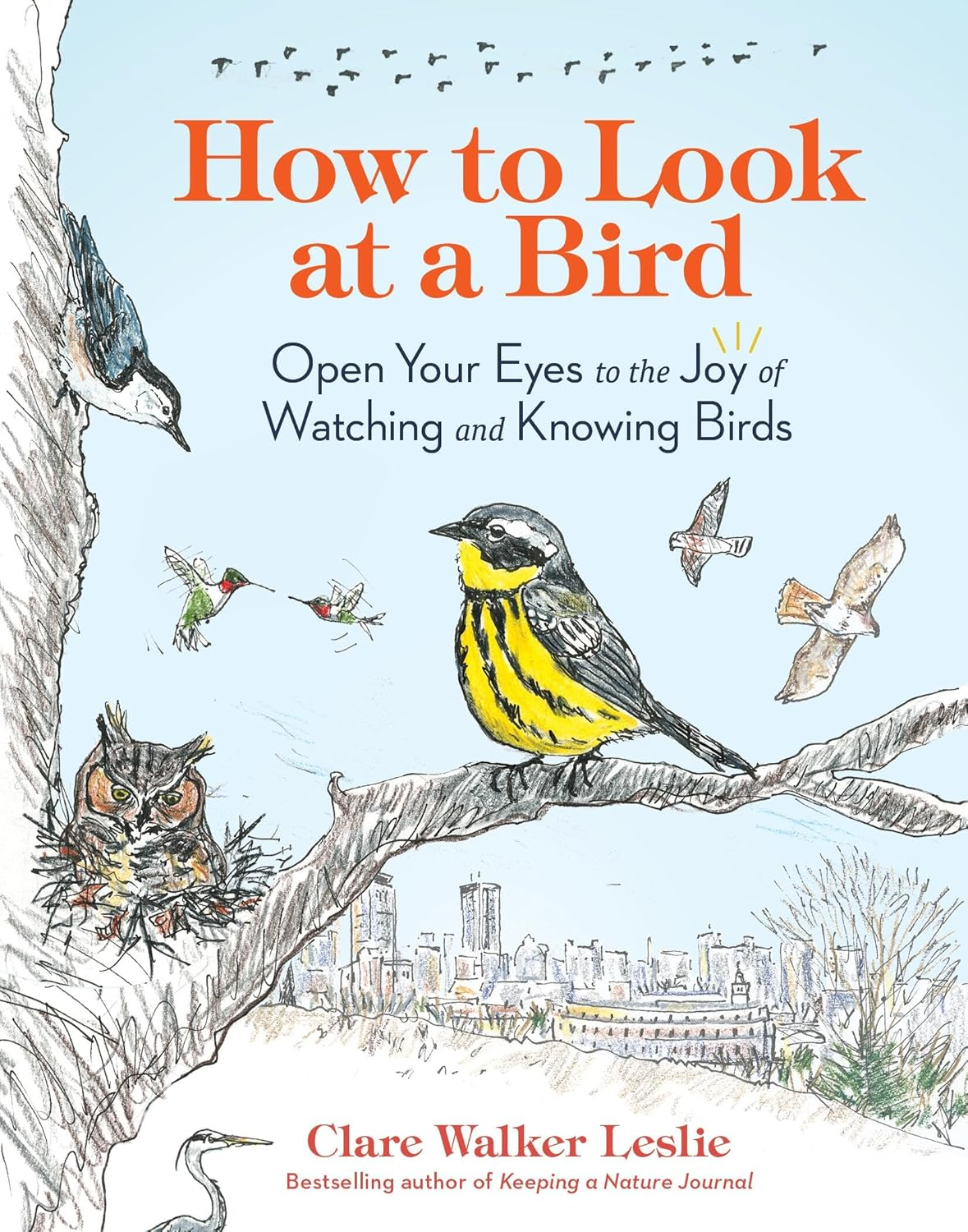
How to Look at a Bird is a beautifully illustrated guide for beginner birdwatchers, by acclaimed naturalist and artist Clare Walker Leslie. Using her signature nature journal illustrations, she shows readers the key clues to look for – from the shape of the beak or talons to distinctive feather colours, flight patterns and behaviour traits. Find simple prompts to encourage readers to ask how the bird is moving or eating and what season is it?