Stop Light Pollution: Protect Birds and Wildlife

Night should mean safety, quiet, and a chance for animals to rest or hunt in the dark. Instead, many towns and cities never truly get dark any more. That constant glow messes with nature’s plan. Below, you’ll see how bright nights disturb birds, confuse insects, and shake up food webs.
Turning off lights, also helps stop birds flying into windows. Businesses and councils can buy wildlife-friendly lighting, which only light the areas needed, in special (orange) hues that are safer for birds, insects and wildlife.
Report white or on-all-night lights to Fix My Street (these reports are sent to councils).
Disruption of Migration and Navigation
Birds and turtles depend on the moon and stars to guide their seasonal journeys. A cloudy sky used to be the main risk for these travellers. These days, it’s bright streetlights and shop signs that steal the night.
When young turtles hatch on a beach, they look for the bright open water, using moonlight as their guide. A floodlit hotel or car park can lure them inland instead, where they get stranded or crushed. For migrating birds, city skylines can look like stars, drawing mixed flocks into windows and office blocks. You might hear about thousands of birds lost at once, when they fly through well-lit towers on foggy nights.
Examples:
- Young sea turtles heading towards busy roads in Florida.
- Songbirds flying into glass buildings in London, after becoming lost by artificial lights.
Impact on Breeding and Night‑time Behaviour
Extra light at night doesn’t just stop animals from sleeping. It changes how they act, court, and breed. Streetlights and porch lights trick robins into singing through the night, which drains their energy and disrupts their breeding cycles. Blackbirds and tits start their day earlier in lit areas, losing precious rest.
Breeding pairs get stressed from noise and light, laying fewer eggs or sometimes giving up on nests altogether. Nocturnal insects, many of which birds eat, gather around lamps and vanish from bushes and fields. With fewer insects in their usual spots, birds and bats must work harder to feed themselves and their chicks.
You’ll hear blackbirds at midnight in towns, while sparrows in city parks nest less often than those in darker areas.
Key changes caused by light at night:
- Birds sing out of season and out of time.
- Pairs become stressed, leading to broken nests.
- Insects stop visiting certain plants, lowering food for young birds.
Effects on Insects and Food Chains
Insects are vital for birds, bats, and mammals like hedgehogs. Many insects, like moths and beetles, are drawn to artificial lights. This makes them easy targets for predators, which can quickly wipe out local bug populations. Sometimes, insects get so focused on circling street lamps that they forget to feed or breed, dying from exhaustion.
With fewer insects hiding in hedges or low grass, hedgehogs go hungry or must roam further across roads for food. This domino effect shakes up entire food chains. A shortage of moths at night means swifts and spiders have less to eat. Less food for insects leads to a silent spring, without birdsong or buzzing.
If you’ve ever seen a group of flies spinning mindlessly under a porch light, you’ve caught a tiny piece of a much bigger problem. Far fewer bugs in the dark means less life for everything higher up the chain, from songbirds to foxes.
Choose Wildlife‑Friendly Lights and Fixtures
- Pick orange‑hued or amber LED bulbs instead of bright white or blue. These colours are less harsh for wildlife and do not draw in as many insects. Birds notice blue-rich light more, which can throw off their sense of time and navigation. Warm amber glows are much easier on their eyes.
- Use low‑intensity bulbs. High-powered outdoor security lights might help you see your garden gate, but they play havoc with wildlife routines. Lower the wattage or replace existing bulbs with dimmer models.
- Go for fixtures that point light downwards. Choose lamps and lanterns with shields or solid tops, so light only shines where you need it. This stops it spilling up into the sky or across your neighbour’s garden.
Why does this matter?
Orange and amber lights cut the glare that attracts swarms of insects. You’ll often see far fewer bugs circling these bulbs. For birds, softer colours are more like natural moonlight, keeping them calmer and less confused.
Use Timers, Sensors and Solar Options
- Fit motion sensors. Security lights that only turn on if someone walks by not only deter burglars but save insects from endless glow. These lights drop back into darkness when no one’s around.
- Try dusk-to-dawn timers. These handy timers switch your lights on as the sun goes down, then off again once daylight returns, or at a set hour each night.
- Choose solar-powered garden lights with automatic switches. They fade away naturally overnight, using only what energy they need.
The benefits stack up. Using sensors and timers stops wasted energy, saves you money, and lowers light pollution. Less wasted lighting also means less heat given off at night, which keeps your garden cooler and reduces the “heat‑island” effect in busy areas.
Shield, Direct and Dim Outdoor Lighting
- Fit shields on outdoor lamps. These are simple covers you can buy and attach above or around light bulbs. They block stray beams and focus light downwards.
- Install full‑cut-off lamps. These special fittings direct every bit of light to the ground, stopping glow from leaking into the sky.
- Dim lights after midnight. If you use smart bulbs, drop them to just 10 to 20 percent brightness for the late hours. Your space is still lit enough for safety, but with much less disruption for wildlife.
Reduce Decorative and Seasonal Lights
- Limit fairy lights and lanterns to times when you’ll actually enjoy them. Turn them off before heading to bed.
- Put Christmas lights on timers so they cut out in the evening. This gives wildlife a window of proper darkness every night.
- Ask local shops to dim or switch off signs after closing. Just one shop window blaring after midnight can see insects stuck and birds flying out of their way.
Community Actions and Policy Changes

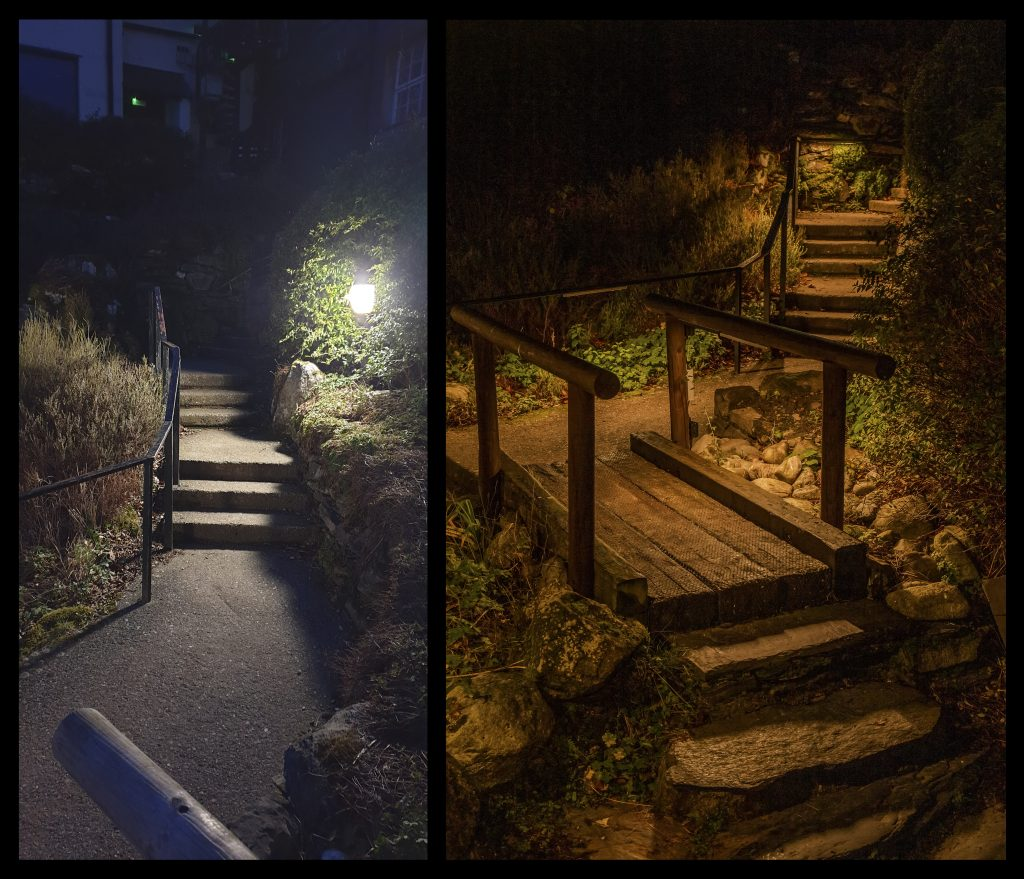
Above is a before/after image of wildlife-friendly lighting from Dark Sky Lighting, swapping bright white light for more natural orange-hued light.
Businesses and councils can buy wildlife-friendly lighting, which only light the areas needed, in special (orange) hues that are safer for birds, insects and wildlife.
Repair Broken Streetlights
Faulty streetlights don’t just waste energy, they often spray harsh light in every direction. This glare makes it harder for nocturnal animals to find shelter or follow natural cues. When local authorities fix broken lamps and upgrade older fittings, the whole area benefits.
Some cities are leading the way. York, for instance, has achieved Dark Sky City status. This means the council has committed to repairing old lights, fitting shields, and replacing bulbs with warmer colours that don’t dazzle birds or draw in moths and bats.
Up in Northumberland, local authorities work to keep the famous night sky clear of glow, preserving one of England’s best places to stargaze and see wildlife thrive after dark.
You can support this by reporting broken or glaring streetlights to the council. Ask about dark‑sky upgrades when new housing estates get built.
Lighting Curfews and Automatic Dimming
Public areas like car parks, sports grounds and charging points stay lit for convenience, but not always out of need. Most car parks are empty after midnight, stadium floodlights are often left on long after the crowds leave, and LEDs on charging bays can outshine the stars.
Bringing in curfews, where lights switch off or dim at set times, is a win for wildlife. With automatic dimming, cities can easily lower the output of lights when fewer people are out and about.
Bus stops and timetables are good examples of how sensor solar lights would be better, and also safer (they light up if someone is waiting or reading, but turn off, when not in use. Saves council funds too (to pay for more regular buses!)
Many people are unaware of how light pollution affects wildlife. You also contact your local councillors and MPto ask for the use of wildlife-friendly lights.
Support Local Dark-Sky Projects

DarkSky UK is the official organisation campaigning to remain free from light pollution. The site has lots of information on the benefits of night skies, plus you can find the nearest dark skies to you.
The site also has lots of materials for educators, and template letters to send to your MP.
Dark Sky Lighting is the main brand, which offers residential and commercial solutions, including solar. It offers everything from ground lighting to bollards to street lights. The site also has expert guidance on what lights to buy for where, how to site and what brightness is needed, for different situations.
More councils and parishes are working to get “Dark Sky” or “Night‑Sky Friendly” recognition for parks and green spaces. When a council wins a dark sky status, it protects large areas from over-lighting, helping not just local wildlife but whole communities who can now see the stars again.
If planting green spaces, read up on pet-friendly gardens and wildlife-friendly gardens. If planting trees, know of trees to avoid near horses (including yew, oak and sycamore).
Healthier Birds, Bats and Insects

Night is the natural time for many animals to feed, rest, or find a mate. Too much light muddles these routines, yet giving darkness back to wildlife has clear pay-offs.
- Birds rest better and rebuild their energy. Fewer streetlights mean robins and blackbirds spend less time singing at odd hours, which helps them focus on breeding and raising healthy chicks.
- Bats rely on the cover of night to hunt insects. When parks and gardens glow less, bats have more places to feed and don’t have to stick to hidden corners just to avoid glare.
- Insects like moths and beetles thrive in darker gardens. They aren’t drawn repeatedly to porch lamps, so more survive to pollinate flowers and feed birds or hedgehogs later on.
Anglepoise Desk Lamps (with lifetime guarantees)

Anglepoise is a brand of desk lamps that are quite pricey, but designed to last forever – indeed, each one is sold with a lifetime guarantee. An ideal investment for your office. Use with energy-efficient light bulbs.
Desk lamps are good for task lighting, especially in the evening with blinds pulled down. Combined near glass, this helps to stop birds flying into windows. Also never display indoor plants, to face outdoor gardens.
Why the Moon is So Important to Wild Creatures

Today England is suffering a lot of from light pollution. This means 24-hour lit car parks and supermarkets, broken street lights that never go off at night (report at Fix My Street). White street lamps attract insects (which should be in the natural world, providing food for birds and mammals).
We can all help by turning off lights when not in use (and using blinds and task lights). Read more tips to help stop birds flying into windows. Councils and businesses can order wildlife-friendly lights from Dark Sky Lighting.
When towns replace night skies (with stars) with too much artificial light, wild creatures (that depend on the moon for survival) can’t see our lunar friend. This ends up affecting everything – from finding food to migration.
Some examples of how light pollution is affecting wildlife:
Birds are waking up at midnight (thinking it’s morning at beginning to sing). Birds don’t sing for our benefit, they are nearly always singing to find a mate. So they end up breeding at the wrong times, and this can affect the survival of chicks in nests.
Stag beetles use the moon to navigate. They are one of England’s most endangered creatures. A good reason to practice no-dig gardening (to avoid forks and spades harming the big grubs you see in soil – they are baby stag beetles). Earthworms will thank you too!
Abroad, sea turtles (who always return to where they were born to give birth) have even been found trying to make their way to multi-storey car parks to lay their eggs). All they see is a bright light, so think it’s the moon.