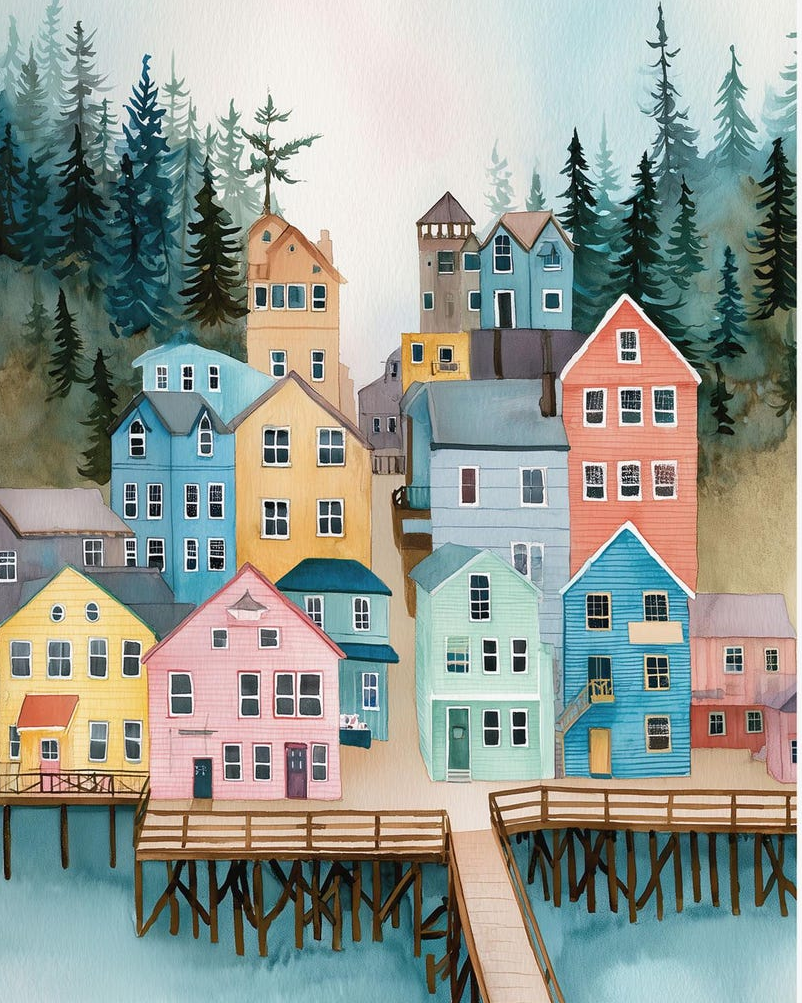
Whitstable, Kent (England’s least-cloned town!)

This small seaside town was the location of one of England’s first passenger railways, and today has a historic harbour and artistic community. Packed with independent shops, it’s the least-cloned town in England (unlike Cambridge and Exeter which are the most cloned, packed with chain stores).
If out walking, always follow the Countryside Code to keep all creatures safe. If at the coast, read about how to keep dogs safe by the seaside.
Independent shops also thrive in Canterbury’s medieval streets. The Crooked House Bookshop is a wonky building with leaning walls (like our own Tower of Pisa!) It dates from the 1600s, and somehow is still standing up, despite gravity pulling it sideways!
What is a Clone Town?
A clone town is where all the main streets have the same shops (Boots, Costa Coffee, EE phone shops etc). So you could go to anywhere in England, and not really see any difference from where you were before.
This is not just boring and ugly, but also means after paying staff, the profits go to some head office, rather than being kept in local economies. Such stores don’t ‘create more local jobs’, as indie shops create better jobs that also invest in towns that employees live in, unlike chain store.
Today over 40% (and likely more) of English towns are considered clones, and if not chain shops, many others are empty or rented out to ‘big charity’ and vaping shops.
Twenty-first Century Syndrome: Knowing a place so well, that you’re bored by the time you first visit. Paul Kingsnorth
At time of writing, a few other towns that have thriving indie shops with few chain stores are Totnes (Devon), Stroud (Somerset), Hebden Bridge (Yorkshire) and the London borough of Brixton.