The Wild Beauty of Lincolnshire’s Beaches
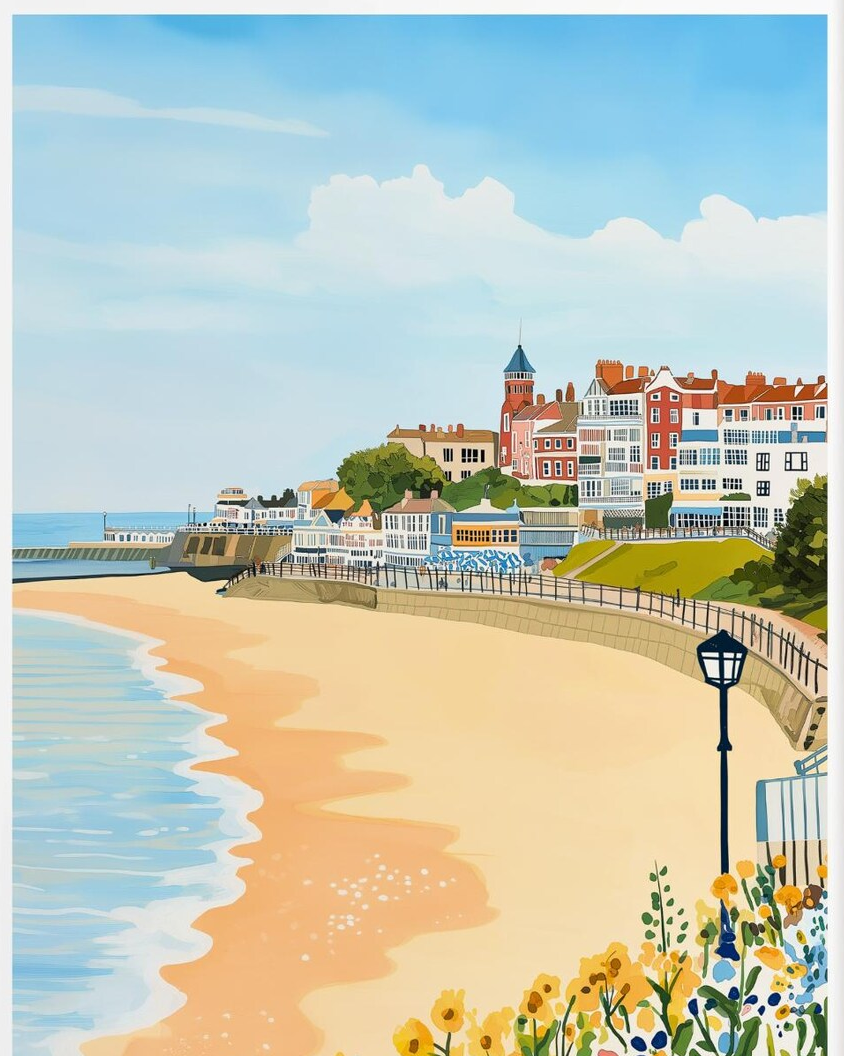
Cleethorpes, Ava Lily
Lincolnshire has many wide sandy beaches and dramatic skies. Perfect for quiet and gentle strolls, these are the nearest seaside towns for people living in Derbyshire and Leicestershire (counties furthest from the sea).
If out walking, always follow the Countryside Code to keep all creatures safe. If at the coast, read about how to keep dogs safe by the seaside.
Don’t walk on sand dunes (to protect endangered natterjack toads) and keep you and dogs away from coastal birds and flowers (some are toxic) and seals. Join the campaign to ban flying rings, to help local seals.
Gibraltar Point National Nature Reserve (near Skegness) is a long strip of saltmarsh, sand dunes and lagoons, a haven for native birds, where Lincolnshire meets the sea. You can also spot avocets (with upturned beaks, these wading birds are the RSPB symbol), owls and grey seals.
The three main seaside resorts in Lincolnshire are:
Skegness is a small town that became a major holiday resort, when the railways arrived in 1873. It also became the location of one of the first Butlins holiday camps (opened in the 1930s). Today it’s a bit run-down and has the sad title of ‘England’s most littered beach’ followed by Margate and Formby.
The local RNLI has begged people not to throw litter on the sand dunes. Not only is it bad for the planet, but poses a threat to lifeguards, who keep tourists safe. Some had even been treated from cuts and burns, due to standing on disposable barbecues (banned by most councils).
Cleethorpes sits on the Humber Estuary and has one of the widest beaches at low tide in England, and lies directly on the Greenwich Meridian Line. It’s not technically even on the sea, and is one of the driest areas in England, with low rainfall rates.
Mablethorpe has a slowly eroding coast. At very low tide, you can see the remnants of an ancient mixed forest on the beaches here (and nearby Sutton-on-Sea). This is because the North Sea used to be dry land. So as water levels rose, the trees died and fell into jumble of stumps and trunks, which where buried and preserved by peat.