William Wordsworth’s Connection to the Lake District

The pretty town of Grasmere houses the former home and burial place of William Wordsworth, one of England’s most celebrated poets. It is a bit over-commercialised now (you can imagine – like Stratford-upon-Avon with Shakespeare, everything is ‘linked’ to Wordsworth for tourism income).
But William (and his sister Dorothy) did not just confine themselves to Grasmere. Interestingly, William campaigned a few hundreds years ago against the building of Windermere railway station, believing that the influx of tourists would ruin his beloved Lakes. He was right.
His sister was also very vocal, her and a fellow writer protesting against the the found house built on the Lake District’s largest island of Belle Isle, calling it a beautiful spot that now ‘deformed by man’, and resembling a tea canister.
Wordsworth’s final home of Rydal Mount is just a short hop away from Ambleside, one of the Lake District’s prettier towns, although again a bit overrun with tourists in summer. This town apparently has the country’s busiest mountain rescue team, due to inexperienced climbers frequently getting lost of stranded.
It does remain one of the few towns, where you can literally walk from the town centre, to discover a tumbling waterfall, right on your doorstep!
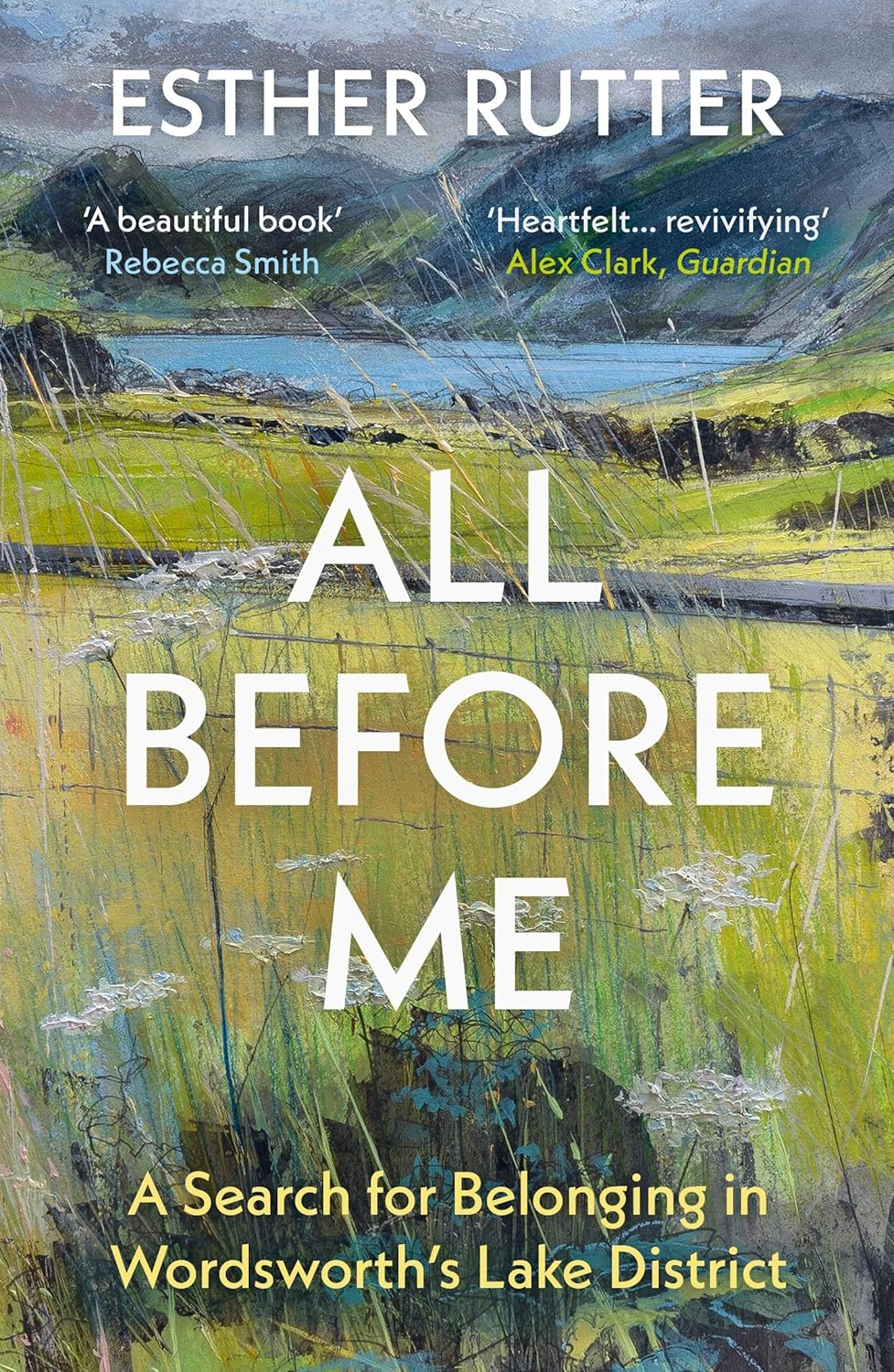
All Before Me is a very interesting and unique account, of how the Lake District helped to heal one woman from a serious mental breakdown.
While teaching in her early 20s in Japan, she suffered an acute breakdown, and was even section in a Japanese psychiatric institution, until she could be flown home under escort.
Back in England, Esther (though originally from Suffolk) was offered the chance to live and work at Dove Cottage in the lake District, the home of William Wordsworth and his sister Dorothy.
It was here that she began to heal. In the lives and writings of these literary siblings, she found an approach to living a life of peace and meaning, and also made lifelong bonds of friendship – and eventually love.
This book is a moving and absorbing account of the struggle to know oneself, and is intertwined with stories of the Wordsworth home and history.
Esther Rutter is a writer from Suffolk, who now lives in Scotland. She has previously worked at the Wordsworth Trust and Robert Burns Birthplace Museum. She also works as a scriptwriter and appears on BBC Radio 4’s Woman’s Hour.
I Wandered Lonely as a Cloud
This is Wordsworth’s best-known poem. Here’s a quick excerpt.
Not to be a party pooper, but know that like all bulbs, daffodils are unsafe near animal friends, so keep them clear if they like eating flowers!
I wandered lonely as a cloud
That floats on high o’er vales and hills,
When all at once I saw a crowd,
A host of golden daffodils;
Beside the lake, beneath the trees,
Fluttering and dancing in the breeze.