Zero Waste Washing-Up Sponges & Brushes

So bin your plastic nylon sponges and scouring pads (and plastic washing-up brushes) and treat your kitchen to a few zero waste tools instead!
Seep eco-sponge cloths are ideal for washing-up or cleaning, and sold in plastic-free packaging. Made from cellulose wood pulp, they can be machine-washed without releasing microplastics. At end of use, just bin or cut them up and pop them in your compost bin.
After use, reshape the damp cloth and allow to dry naturally (don’t tumble dry not use fabric conditioner, this will reduce absorbency). Sold in packs of 3.
A Bamboo Washing Up Brush
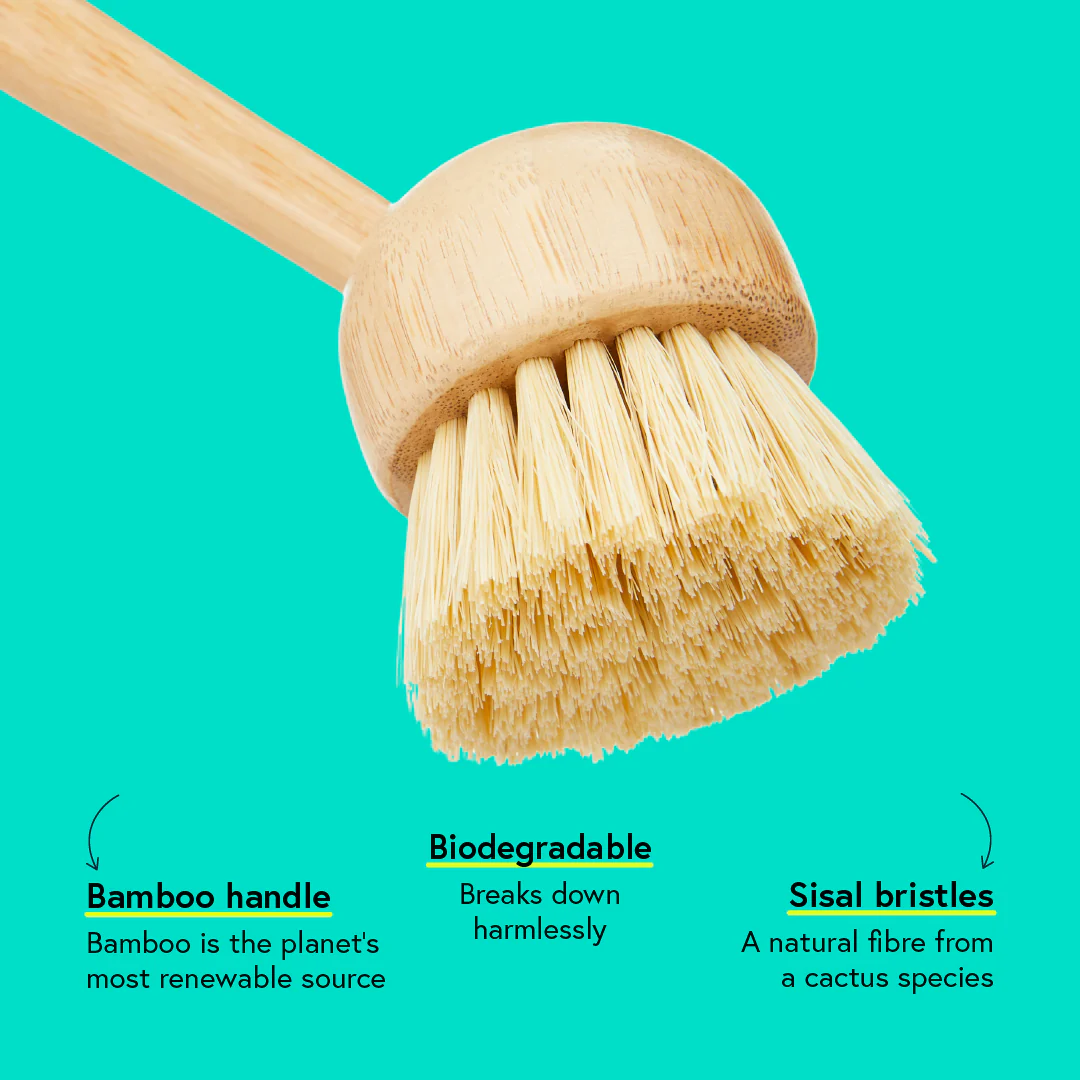
This bamboo washing-up brush has bristles made from sisal (a type of cactus) to tackle grease and grime, without scratching dishes. At end of use, just pop in the compost bin (or bin) to naturally break down, with no harm to the planet.
Rubber Gloves (in cardboard packs)
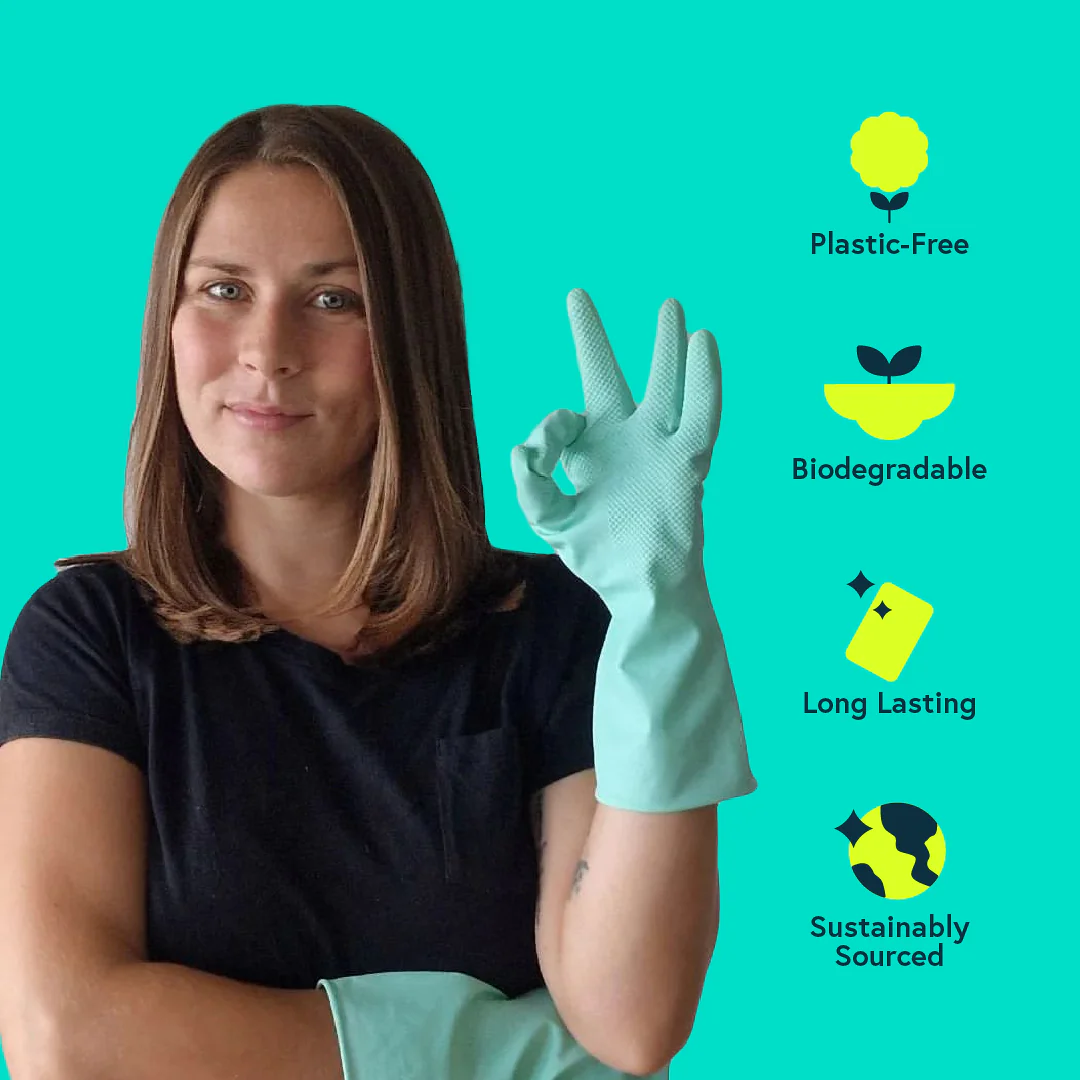
Seep rubber cleaning gloves are good quality, but different from you-know-who, because not only are they are made with natural rubber, but unlike most brands, these are sold in cardboard packs (no plastic). They also have textured fingers, to help you grip things, while washing-up.
Avoid for latex allergies. Use a separate pair for dishwashing, than cleaning. At end of use, cut them up (to speed up biodegradation) and pop in your bin!
Designed with soft lining for extra comfort, each pack includes 3 packs of gloves which should last you a long time. Made ethically in Sri Lanka, choose from small, medium or large sizes (rinse with water after use, dry out between uses, and store away from sunlight (to prevent mould).
The natural rubber is sourced from trees by tapping (like maple syrup, this does not require trees to be chopped down). So does not contribute to deforestation. And this company also donates to reforestation project, to offset the carbon from shipping the rubber from abroad.
Natural Copper Scourers in Cardboard Packs
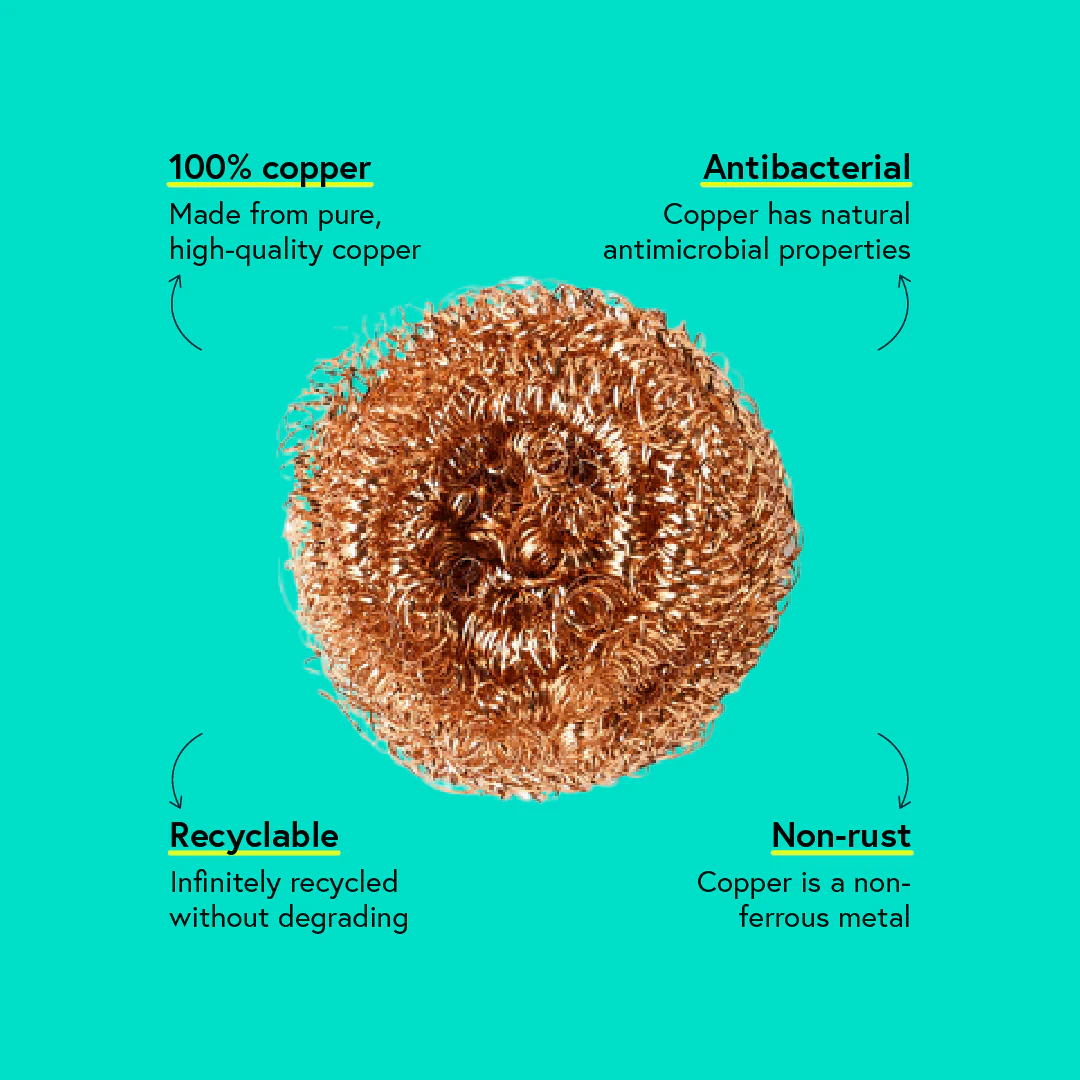
Seep eco copper scourers are the zero waste alternative to those cheap silver scourers, sold in plastic packs. These are made from real copper, and sold in cardboard packs (each one contains six scourers).
To use, just rinse before and after use, and dry between uses, to prevent mould. Each one should last around six months, then either recycle in your green bin (or take a metal recycling centre).
Do not use on non-stick or delicate surfaces (like porcelain) and avoid acidic liquids. Don’t use copper in gardens to deter slugs/snails as it can harm (instead, read how to humanely deter slugs and snails).
A Stainless Steel Washing-up Bowl
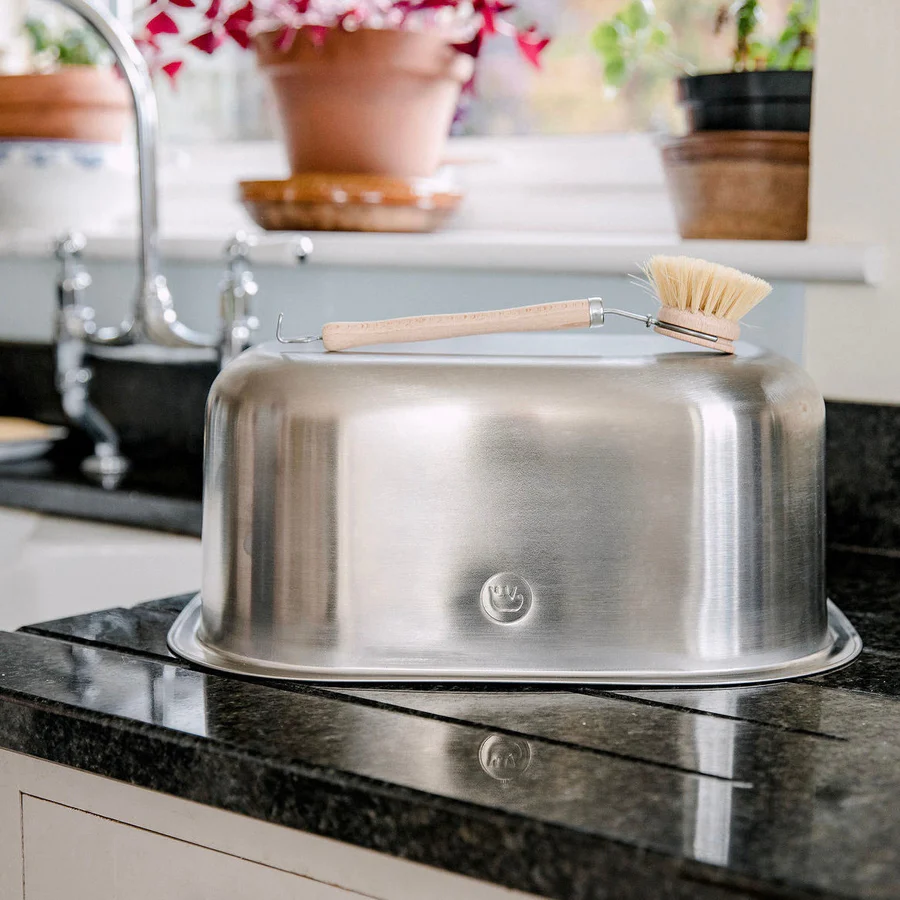
Instead of plastic bowls that support the oil industry and go mouldy and slimy, invest in a lifetime of use stainless steel washing-up bowl (also in orange).
This has a non-porous surface to wipe off food residue, and is heat-resistant and is easily recycled, at end of life. Stainless steel does not absorb stains or smells. just wash with mild soap, then rinse and wipe dry. Remove water marks with a cleaning vinegar and water mix, then a quick rinse.