Fun Books to Teach Children About Animals
Wildlife presenter Hamza Yassin (read about his book below) says he wish children could name 5 trees, rather than 5 Kardashians. Same would be good with our native and endangered wildlife.
These books will set them right! All are as fun as they are educational, and will have children stoked to learn more about the fascinating creatures that we share our world with. Which in turn will inspire a wish to protect them.
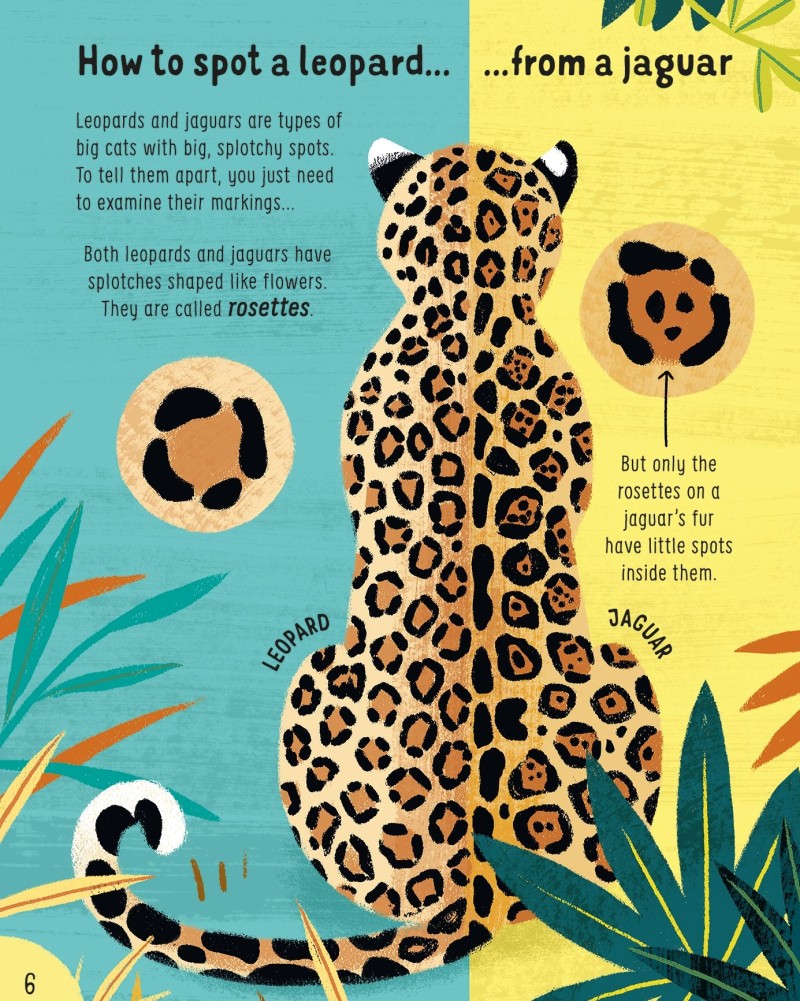
Lots of Things to Know About Animals teaches children the difference between leopards and tigers, how monkeys clean their teeth, how high bumblebees can fly, and which baby animals are bigger than their parents!
A Fun Book on Animal Classification
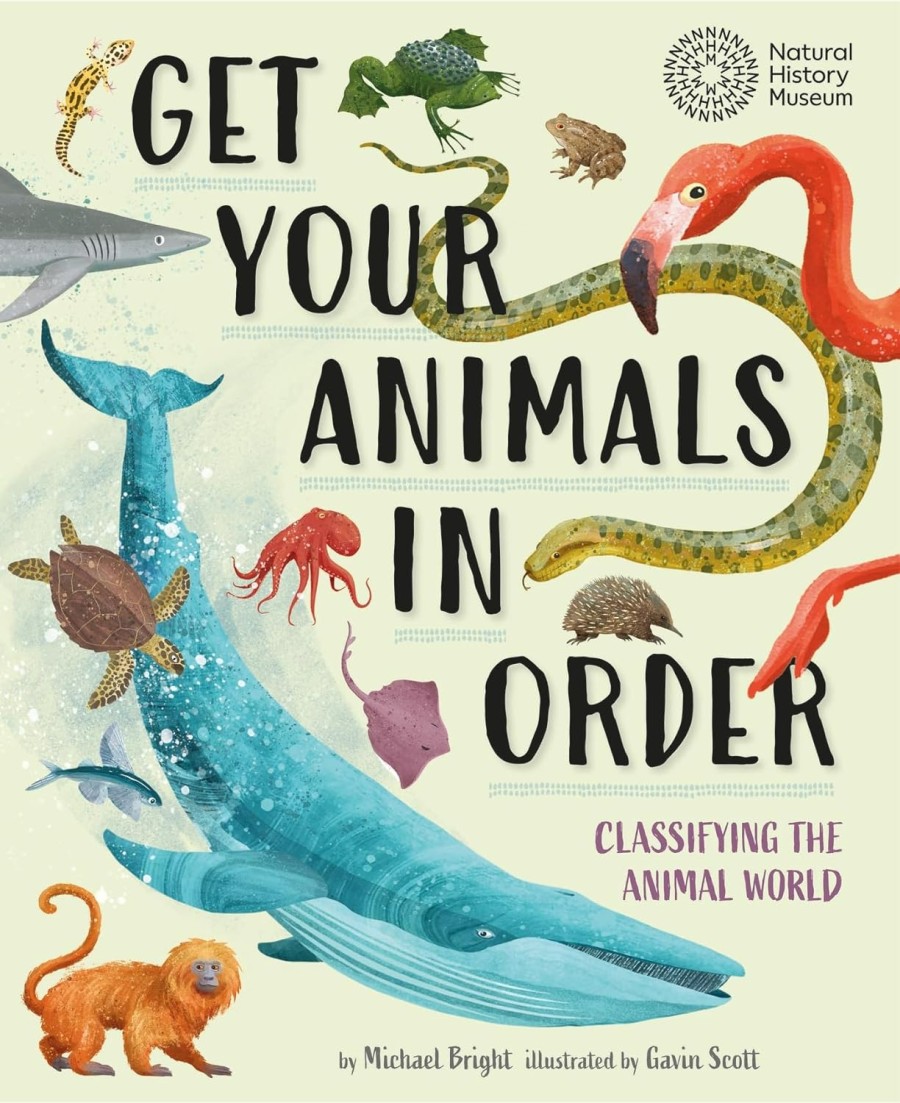
Get Your Animals In Order shows the similarities, differences and connections between animal groups, and how scientists are helping to conserve animals and their habitats, from whales to worms, and from snakes to stinkbugs.
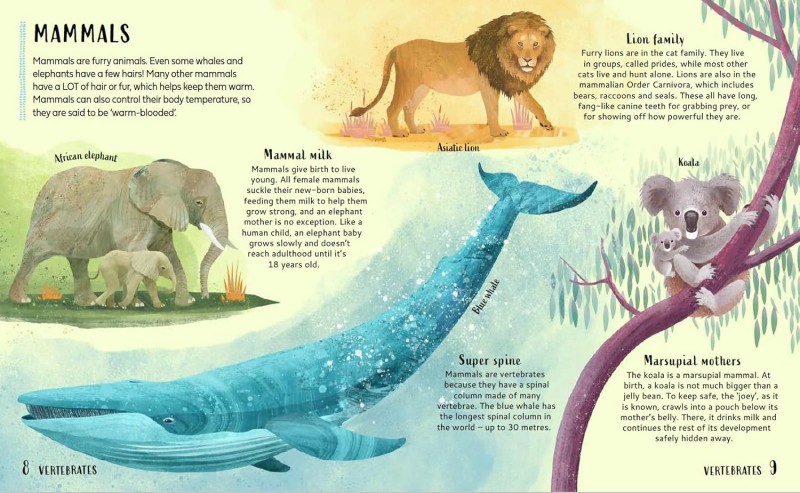
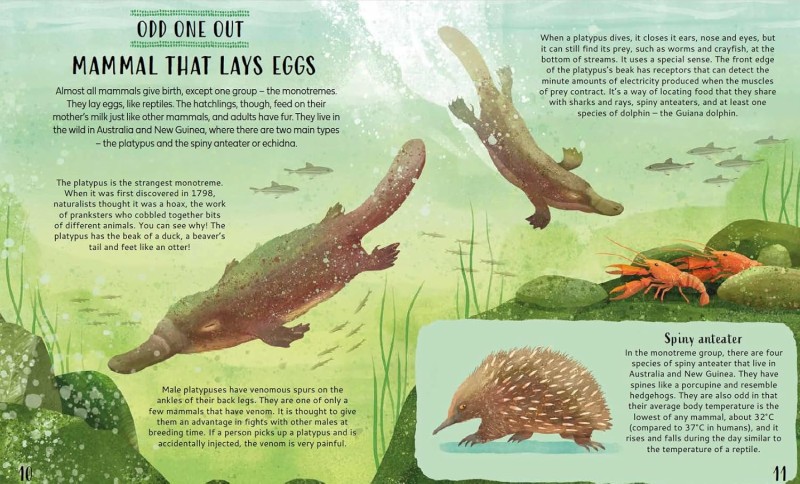
There are just two main groups of animals: vertebrates with backbones (animals, fish) and invertebrates without backbones (crustaceans, insects and spiders). Vertebrates are divided into five species:
- Mammals (including us)
- Birds
- Amphibians
- Reptiles
- Fish
However, nearly all the world’s creatures are invertebrates including insects (this includes bees, butterflies and beetles), earthworms, spiders, slugs, snails and spiders.
Scientists also classify plants into two types: ones that make seeds (trees and flowering plants) and those that don’t (like moss or fern). Then we have bacteria and fungi (which includes mushrooms and viruses).
Michael Bright has worked as an executive producer with BBC Natural History Unit in Bristol and is a member of the Royal Society of Biology, who has worked with Sir David Attenborough.
Illustrator Gavin Scott spent much of his childhood drawing and painting animals and birds, and studied for a BA Natural History Illustration at Bournemouth Arts University. He loves rock-climbing in Dorset, and riding his old Triumph motorbike.
Hamza’s Book on Worldwide Wildlife

Hamza’s Wild World is a lovely illustrated guide for children, to encourage them to love other creatures, as much as he does. Following on from his Wainwright-nominated book on birdwatching, this is his first book for younger readers.
Hamza begins the book, telling how he arrived in England from Sudan age 8 (not knowing a word of English). And rather than find his beloved animals, he confusingly found a big man with a white beard and red jacket, going ‘ho, ho, ho!’
So to learn English, his parents plonked him down of documentaries by Sir David Attenborough, and his passion for wildlife and filming was born. And in a family of doctors and dentists, he knew what he wanted to do!
Hamza writes that he sees dyslexia as his super power (he doesn’t need directions when driving, and knows his birds very well!
We cannot fly like birds, we aren’t as hairy as bears. And we don’t have feathers, scales, wings or horns. We don’t lay eggs. Some animals have more eyes than us, can hear much better than us, or have more hearts than us. The animal world is full of variety.
This is a beautifully written and original book. Hamza starts by sharing his top 10 favourite species including sparrowhawks (not loved by blue tits, who have a special ‘sparrowhawk nearby’ alarm call), which several other birds understand.
He then goes on to describe animal bones, guts, muscles, breathing, heart, blood, brains and muscles. Here is an interesting and knowledgeable author, who can instil a love for nature in any child or adult.
He covers animals with and without backbones, how fish and amphibians breathe differently, why reptiles need heat, how birds lay eggs and how mammals breastfeed.
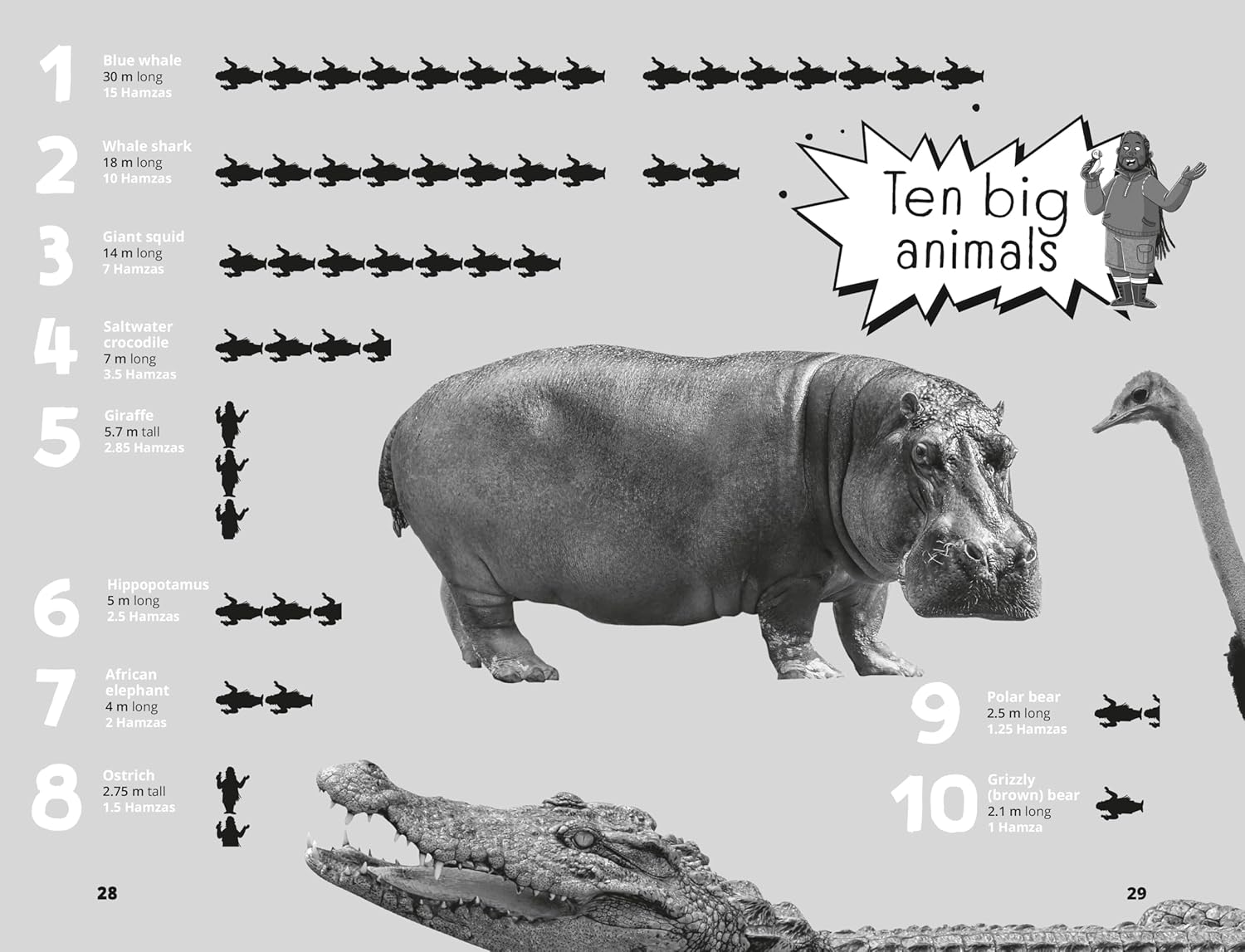
Children will get to know Hamza’s ’10 big animals’:
- Blue whale
- Whale shark
- Giant squid
- Saltwater crocodile
- Giraffe
- Hippopotamus
- African elephant
- Ostrich
- Polar bar
- Grizzly (brown) bear
He also lists his 10 favourite smelly animals including stink bugs and stink birds! He compares other creatures, to learn just how fascinating they are:
From courtship dances, along with the knowledge that ants are so strong, they can lift the equivalent of you lifting 20 of your classmates.
Can you imagine if every child in the western world had the delight of reading this book? Not only would they end up with a knowledge and awe for other creatures, but they could likely educate their parents, who then would make different choices on what to buy and not buy, and who to vote for.
It’s a passionate voice like this that youngsters need, in today’s consumerist world. The natural world is far more interesting!
Author Hamza Yassin is a Scottish wildlife cameraman and skilled ornithologist. Born in Sudan, he moved to Scotland while young and took a degree on Zoology with Conservation and a Masters in Biological Photography and Imaging.
Watch his amazing recent series Hamza’s Hidden Wild Isles.
A Fun Book about Animal ‘Cousins’

Animal Families is a wonderful read by pop artist Matt Sewell, teaching children how to spot family resemblances, some of which are rather surprising!
You likely know that the blue-and-orange river kingfisher is related to Australia’s laughing kookaburra. But did you know that that the there are 21 fascinating animal families to read about, from the fox and bear families to dolphins, owls and cobras.
Some species (like the elephant and hummingbird hawkmoths) may not live near each other, but are part of the same family. The South American coati belongs to the same family as the North American raccoon!
Other creatures that are (surprisingly) related to each other are:
- Woodlice are the land cousins of prawns and shrimp
- Elephants and manatees (‘sea cows’ that also have trunks!)
- Chickens descend from dinosaurs!
- Whales and cows are apparently distant cousins!
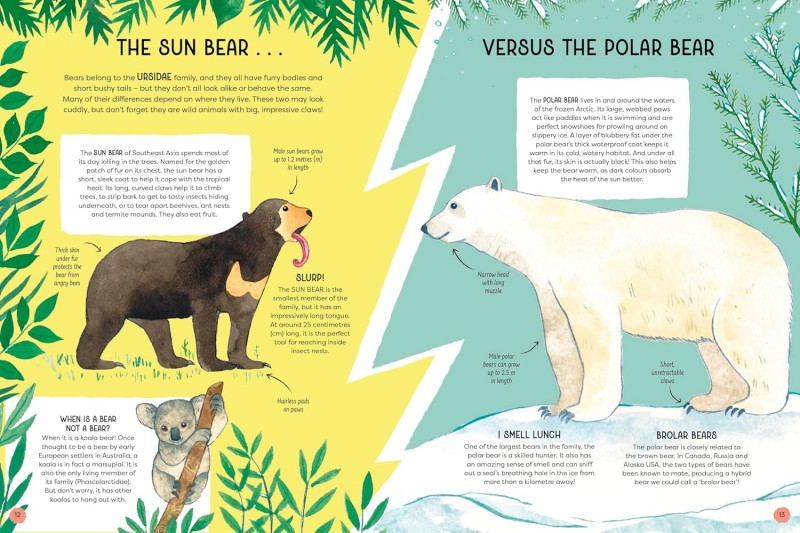
This is a beautiful, beautiful book! You’ll learn about the eight species of bears (and which order they belong to), you’ll learn how dolphins are mammals (so need to breathe) but can hold their breath for up to 7 minutes. And how foxes often get an undeserving reputation, they are to be admired!
From goldfinches to chameleons and from raccoons to tiger beetles, by the time your child has finished reading this book, you will have a little David Attenborough on your hands!
Think Like A Goat (a book on animal intelligence)
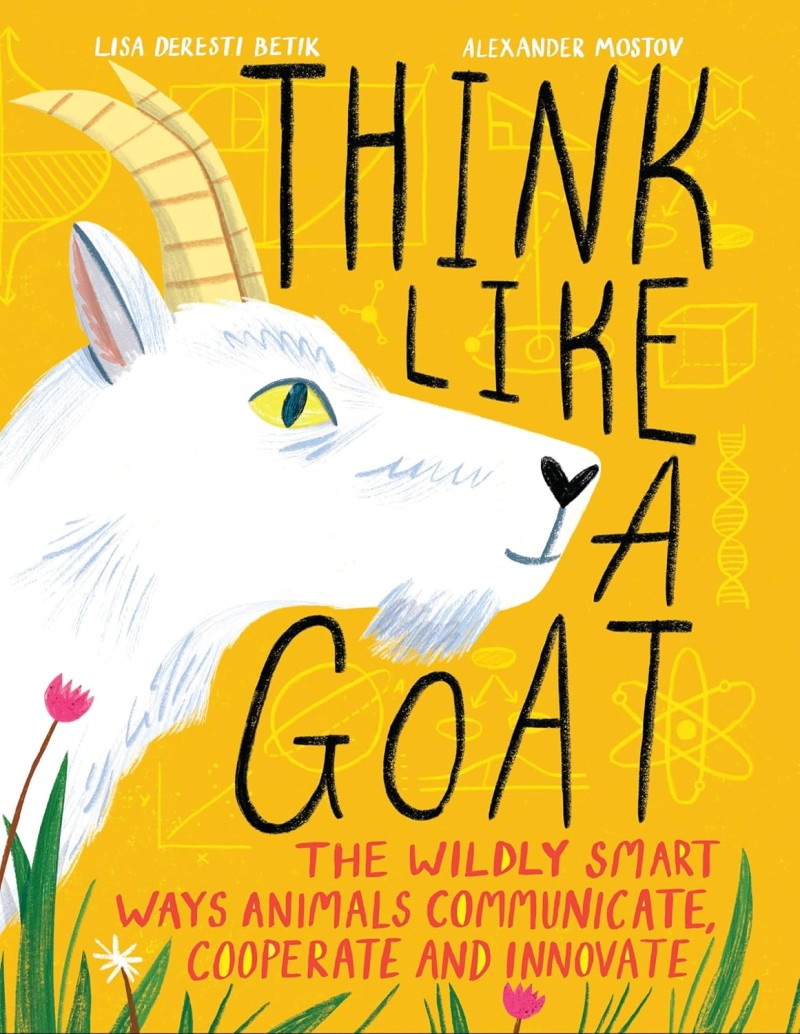
Think Like a Goat is a wonderful readable book for young people, teaching how different species are just as smart as us, in this glorious exploration of animal intelligence. Sure, some (!) humans are smart. But many animals are very smart too:
- Some birds store seeds in thousands of different places, and remember where they are, months later.
- Octopuses camouflage themselves as rocks, plants and other creatures to avoid predators.
- Fireflies communicate with another, by flashing light signals, from their tummies!
- Dogs communicate by peeing on things, for others to smell!
- Elephants communicate by stroking each others’ trunks.
- Chimpanzees communicate by facial expressions
Covering four broad categories of intelligence:
- Communication
- Social learning and co-operation
- Problem-solving and memory
- Emotional intelligence
Lisa Deresti Betik was born in Ontario and grew up surrounded by majestic lakes and forests. Which inspired her to write engaging books about nature as an adult.
Five Wonders of the Ocean Realm

Wonders of the Ocean Realm is a unique book for children. Not only does it portray five realistic stories of marine creatures, but it’s co-written by two devout Christians (one a marine biologist) to combine their faith with teaching of marine creature welfare.
Suitable for children age 8 to 12, readers will travel from the sun-soaked tidepools of Hawaii to the wide expanse of Atlantic waters to meet:
- Astrid (the vibrant colourful sea star)
- Maximus (a powerful peacock mantis shrimp)
- Dexter (a clever mimic octopus)
- Wendell (a massive humpback whale)
- Luna (a mysterious deep-sea anglerfish)
While enjoying captivating tales, readers will explore each ocean creature’s life cycle, habits and environment. Plus enjoy fascinating scientific truths about God’s incredible underwater world! With stunning colour art on each page, the Deep Sea Dive explores faith themes in each creature’s story.
Throughout the book are ‘ocean notion’ fact boxes:
A sea star doesn’t have a brain like ours. But it has a circle of nerves around its mouth that connect to each of its arms. These nerves help the sea star move and feel what’s happening around it. Each arm has a tiny eye at the end, allowing it to see large objects.
Tricia Goyer is a best-selling writer and home-schooling mother, who inspires families with her faith-filled stories. Sherri Seligson is a marine biologist and science writer, who has written several textbooks.