How to Support Someone with Depression
Depression is a massive issue in England and worldwide these days. There are many reasons for serious depression (an illness as serious as cancer, obviously suicide can kill you). Severe depression has always been around, but today things are even worse, being a leading cause of suicide in younger men. And many people of all ages are now having mental health problems.
Why? There are many reasons. But launching mental health awareness campaigns obviously don’t really do much. We need to look at the root causes, natural ways to help, and how to offer support. And in many cases, this is much simpler than you think (and governments and councils can help too).
Suffering from depression can be due to brain issues (or even medication side effects) but often the causes can be more complex. In most cases, suicide attempts happen over many months or years of dealing with life problems, until the ‘coping mechanism’ breaks down.
Survivors of suicide attempts often say that the key word they felt was ‘trapped’, rather than depressed. They did not want to die, it was just that they no longer had the mental strength to live.
That’s why suicide prevention helplines are so important, as they can ‘stop a temporary problem becoming a permanent solution’. And obviously leaving behind is not selfish (suicide victims are ill), but it does often leave confusion and often awful guilt forever.
Common Reasons for Severe Depression
The reasons are multitude. Many people are genetically prone to feeling suicidal, while others are due to life circumstances. Being bullied, physical pain, lack of a stable home and income, feeling lonely, witnessing trauma, even worrying about the state of the world, can all make people depressed.
That’s why councils and government policies are so important. Many of us feel depressed at the state of the world (if present MPs get in who don’t follow advice from climate science, we could well have no world at all, or at least more wildfires, floods and extinct species, from hedgehogs to polar bears). That’s enough to make any sane person depressed.
We’ve seen in recent months how struggling small farmers have felt suicidal (one did take his own life) due to the fudged inheritance tax proposals by the government, which would have meant free-range farmers not being able to pass on their long-held family farms to children.
It’s well known that walking in nature is good for mental health. But councils sell off land to out-of-town retail parks and supermarkets, leaving people with depression, living in isolated spaces having no access to good food, walkable communities or public parks.
Although sometimes medication is needed, a change of culture is also important. Happy friendly communities with access to walking and nature and affordable organic food at farmers’ markets would massively drop depression and suicide rates in England.
We need good nutrition, good spaces, good environments, less bullying and nastiness in society. It would be a good start!
One huge issue is that most western governments are obsessed with shopping (economic growth – buy rubbish to throw away and buy again to make the numbers work).
Yet the ‘happiest countries’ (Costa Rica, Denmark, Sweden, Norway) all use happiness indexes, that focus on wellbeing, as much as money.
Finns (one of the happiest nations) are known for being looked after from the cradle to the grave by their government. But unlike Prozac-popping Americans (who lie that they’re happy), people in Finland go around looking glum, as if in a state of national mourning.
They don’t ‘manifest happy times’, they just live their lives in the present, and usually enjoy a good quality of life. So are happier for it.
When asked why they were so happy, one official said that it’s because they are naturally a bit glum and appreciate what they have. He said ‘If we’re the happiest nation, I’d hate to see what the others were like!’
In other words, forget comparing yourself to screaming, glamourous and super-rich celebrities on TV, and just learn to be happy in the moment, likely just like your grandparents did! Watch some old black-and-white films to inspire!
Read more on how to be an optimist, even if you’re a bit of an Eeyore!
Free Helplines for Severe Depression
Today we have quite isolated societies. Many people with depression (especially men) fear talking to others. And of course, sometimes it may be people close to them (say in relationship breakdowns) that are the cause of depression.
Rather than just visiting a GP to be given a pill, there are many organisations with trained listeners who can offer expert help and support, even if that’s just listening. People are here for you right now, on the other end of the phone (or via online chat).
Samaritans is open 24 hours a day (you don’t have to be suicidal to call) and offers confidential listening every day of the year. Call 116 123 (free including from landlines and pay-as-you-go mobiles). Over 200 towns have branches staffed by volunteers. If not an emergency, you can email them or write SAMARITANS LETTERS) for a reply within a week.
This service is very confidential (numbers won’t appear on your phone bill or caller display) and information is only passed on for safeguarding (say you told them you were about to step in front a train and told them where you were). Even for letters, replies are shredded, before being sent.
The charity’s founding is interesting. In 1953, Chad Varah (an Anglican vicar) oversaw the funeral of a 14-year old girl, who had taken her life, fearing she had a sexually-transmitted disease (she had simply started her period, but didn’t know why). He later said:
Little girl, I didn’t know you. But you have changed the rest of my life for good’.
A strong campaigner for sex education, he founded Samaritans, which in turn created Befrienders International, a worldwide suicide prevention family of charities. In later years (he lived almost to 96), he became disillusioned that his ’emergency service’ was now ”emotional support for the whole bloody population, whether they wanted it or not’.
SOS Silence of Suicide offers a confidential freephone helpline (0808 115 1505), open Monday to Friday, 8pm until midnight, and Saturday & Sunday, 4pm until midnight. This charity was founded by a woman who had experienced poor mental health and suicide loss, and barrister Michael Mansfield KC (who lost a daughter to suicide).
It offers a free training course OPEN Conversations, to educate and empower with those who are struggling, and have courses related to burnout and chronic pain (often causes of depression), coming in 2026. Along with mobile mental well-being hubs, hopefully soon nationwide.
Shout offers 24/7 free confidential text support (85258), ideal for people who don’t like talking on the phone or need support late at night, or in busy shares spaces, where privacy is difficult. You’ll receive four automated messages, then be connected to a trained volunteer, who will chat for up to an hour, to get you into a ‘safe place’.
Suicide Prevention Helpline again offers anonymous support on 0800 587 0800. Volunteers help people talk about their feelings, consider next steps and find specialised resources.
CALM targets the stigma around suicide (especially men) and offers a free helpline (0800 58 58 58) runs from 5 pm–midnight every day, and webchat during the same hours.
I’m Okay is a suicide prevention app that sends up to 3 messages a day to check you’re okay. If you don’t reply to say you’re fine, after 15 minutes, it alerts one of your five emergency contacts. A similar worldwide app is Grassroots Suicide Prevention that can be downloaded to your phone.
Specialist Helplines for Depression
Often depression is not due to ‘something wrong with your brain’, but due to specific circumstances. These helplines offer trained listeners for emotional support.
- Cruse offers a free helpline for bereavement, if you have lost a human companion. For animal companions, Blue Cross offers a free telephone bereavement support line, from trained volunteers.
- PAPYRUS HOPELINEUK (for people under 35) offers a helpline from 9am to midnight, and at weekends/bank holidays (2pm to midnight). Call 0800 068 41 41, text 07860 039967, or email pat@papyrus-uk.org.
- Switchboard is a helpline for LGBT people who struggle with depression and suicide thoughts.
- Gordon Moody helps people depressed due to gambling addiction (a main cause of suicide). Read more on how to give up gambling.
- Farming Community Network is a suite of charities that offers help for depression (and causes related to it including tenancy worries and finances – it can offers free food for livestock, if you can’t afford it (or suffer droughts or floods etc).
- Combat Stress offers 24/7 help for veterans (and their families), many of whom suffer post-traumatic stress and depression. Families of veterans and are suffering from post traumatic stress.
- Vetlife is a free helpline for vet surgeons and nurses (many have depression from seeing cases of animal abuse, and even guardians who are angry due to misdiagnosis – 70% of vets have lost a colleague to suicide). Some vets who work for others, get depression when guardians are turned away, due to lack of funds. Read where to find free and affordable vet care.
The Proud History of England’s Chaplaincy Teams
England has a proud history of chaplaincy teams, religious groups who band together to give help to people needing mental health support, including those at risk of suicide.
Never preachy, NHS England has more information on what chaplains do. Churches Together in England go into greater detail on the benefits of chaplaincy, and how it makes a difference.
The only time the media has ever promoted them, was when they were laughing at some, who were given out free flip-flops to young girls, whose feet were sore from dancing in heels! On a more serious note, they were actually there to keep the girls safe, in case any needed a talk or lifts home.
Another name given to chaplaincy teams these days is ‘street angels’, just google your area, and you’ll likely find a group near you (the one in Guildford has great testimonials).
One Scottish group of street angels help out at festivals, saying that Jesus liked a good party, as much as anyone! They are not there to ruin people’s fun. If anything, they often join in the fun (as well as giving directions to toilets and helping people out of the mud!)
Beachy Head Chaplaincy Team
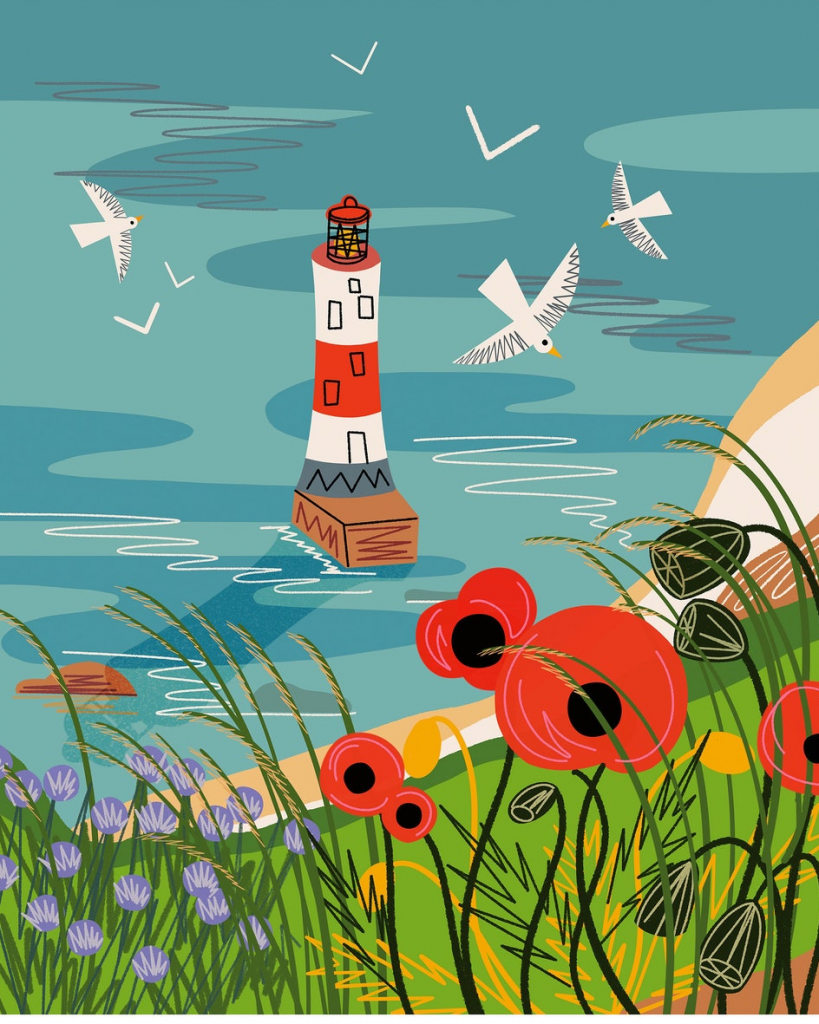
Perhaps England’s best known chaplaincy team is at Beachy Head Lighthouse (Sussex), known for its red and white striped, against a dramatic backdrop of white cliffs. The lighthouse was built in 1902 in an area often shrouded in mist, in order to keep boats safe.
When someone visits here to end their life, the chaplains are nearby, ready to listen to someone in despair. All the chaplains are volunteers from local churches, who never preach. They just reach out with skilled crisis intervention, to anyone who needs help.
If it weren’t for the chaplaincy team at Beachy Head, my wife would now be a widow. Thank you for being there are my lowest.