How to Save Our Local Independent Pubs
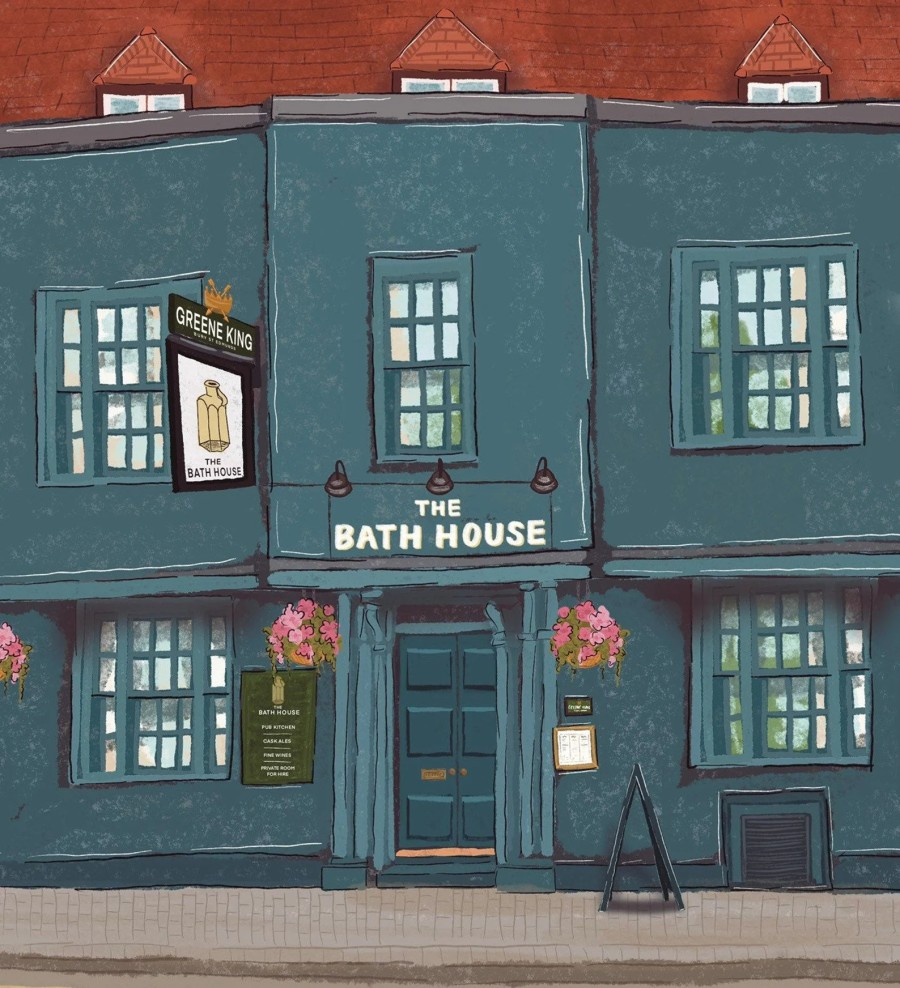
Plunkett is the organisation that helps to start or save community pubs (and shops). It can reach out with expertise help, and sometimes get you discounts on insurance and other perks.
Many pubs are going to the wall, sometimes due to rising rents. Other times due to high beer tax. And often due to being bought by big chains that remove the seats and turn the music up loud, so you sup up quickly, rather than sit down and engage in conversation, over a ‘beer an hour’.
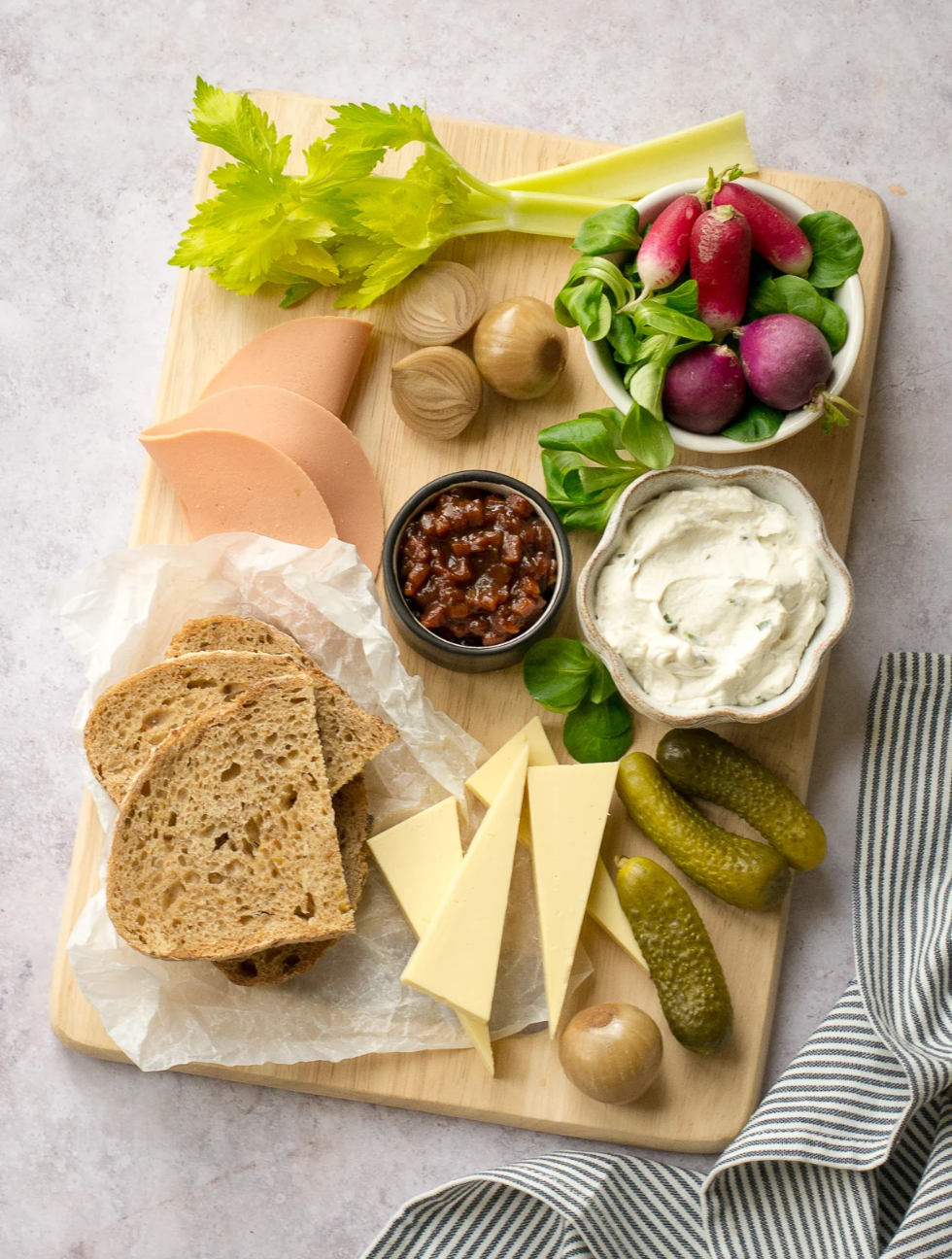
The Ploughman’s lunch is about as English as you can get, accompanied by a nice glass of Dunkerton’s organic cider. But you don’t have to splash out at a pub if you’re on a budget. You can make your own, and even make it vegan too! It’s not really even a recipe, you just find good food, and plonk them together on a plate!
Pickled onions are choking hazards for children, also keep onions and gherkins away from pets. Read more on food safety for people & pets. Just bin fresh onion/shallot/tomato scraps, as acids could harm compost creatures.
- Choose organic apples, as conventional ones are sprayed with shellac (dead insects) to make them look waxy.
- Good vegan cheese (forget the coconut oil supermarket brands, and choose something better in the farm shop or health store).
- Pickled onions and gherkins (of course!)
- Fresh radishes (optional)
- Good bread (splash out at the local bakery)
- Vegan butter (all Flora brands are free from palm oil)
- Sticks of celery
Gather Your Fresh Ingredients

Kinda makes a nice vegan cheddar
It only takes a few minutes to plate everything up. Ensure produce is patted dry after rinsing to retain flavour, and butter your bread close to serving, to keep it crisp. You can add a little English mustard to the bread if you like, and spoon chutney into a bowl, to keep your Ploughman’s board clean, and stop sogginess! Some fresh organic tomato halves are optional extras.
Only really make as much as you need, as a vegan Ploughman’s won’t keep for long. If you’re having a picnic, keep the apple slices in lemon water, to prevent browning until you eat them.
History of the English Ploughman’s Lunch
Would you guest that the lunch was made for ploughmen in the field? You’d be sort of right. The original meal of bread and cheese with a pint, dates back to 1394, though it became popular in the 1950s. The lunch was designed by the Milk Marketing Board to increase sales of cheese, after World War II rationing ended (70% of cheese was being imported). But rural labourers had been eating this way for years.
In 2022, the landlord of a Devon pub decided to rename it as a ‘Ploughperson’s lunch’ in honour of female farmers on Dartmoor. He intended this to bring attention to his pub. It worked, as there was ‘fury’ at trying to change the name! The original lunch was thought to have originated in Kent (who ate it with beer). While Devon farmers preferred sour cider.
But it’s always best to make your own. Tesco’s ‘Ploughman’s Sandwich’ contains ingredients that ancient farmers would not even recognise: mono-and-diglycerides of fatty acids, mono-and-diacetyl tartaric acid esters of mono-and-diglycerides of fatty acids and palm oil – all wrapped in plastic.
A Journey In Search of the Perfect Local Pub
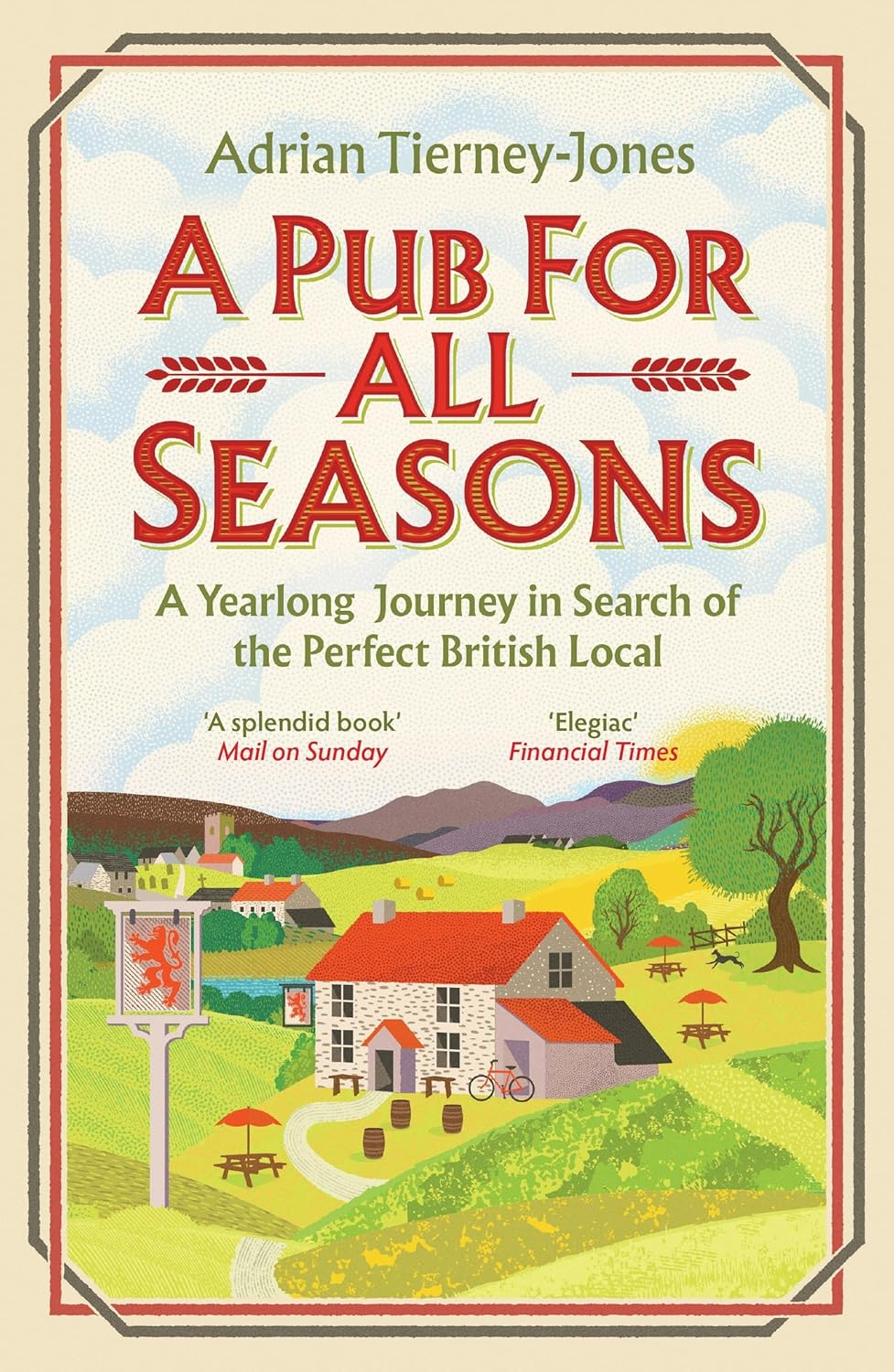
A Pub for All Seasons is a travel guide with a difference, the author on a mission to discover the best pubs in Britain.
Ever since he was old enough, the author has been visiting pubs all over the country. Join Adrian as he visits mellow gentle pubs, cosy spots, lively bars and buzzing garden pubs.
Along the way, he speaks to locals and landlords, hears unique sounds and stories, and notices the differences between pubs throughout his year-long journey.
And what started as a simple quest to find a nice place to sit and drink, ends up revealing so much more: the secret to what truly makes the perfect British local pub.
A poetic meditation on the public house, an appreciation of what makes a pub great. Spectator
Adrian Tierney-Jones is a journalist and writer on beer, travel and pubs. He can often be found with a glass, telling tales of drinking beer in bars across the world. He lives in Devon.
Tasty Roast Dinners at Vegan Pubs!

The Spread Eagle, Homerton, London
There’s nothing more traditional in England than a roast dinner at pub. But modern concerns over factory-farms, the plant-based revolution and concerns over environment and allergies and health, mean that a few pubs are now following a trend, in offering deliciously hearty vegan roast dinners. With roasties and gravy, so don’t worry!
Allergies are well-catered for. Just be aware that some roasts contain tasty miso (but this is unpasteurised, so not for pregnancy/nursing or weak immune systems). Read more on food safety for people and pets.
Vegan-Friendly Pubs (for Sunday Roasts!)

The Roundhill (Brighton) is a very popular city pub, with a safe inclusive space for all, and weekly rotating menus in line with seasonal ingredients.
The Spread Eagle is London’s first fully vegan pub. Expect a centrepiece such as seitan or a nut roast, seasonal greens, and crisp roasties that stand up to rich gravy. The setting is in East London is lively yet warm, and booking is wise, as peak slots fill fast, especially on Sunday.
. Located in Homerton High Street, this sustainable eaterie offers vegan ales along with meals like Pie & Mash and of course a traditional Sunday roast including slow roast ‘celeriac crackling’.
The Gardener’s Arms (Oxford) offers good vegan food, not necessarily all Sunday roasts, but various options like a Mixed Cup & Wild Mushroom pie, cooked in sage and red wine gravy, with fries and fresh seasonal veggies.
The Walnut Tree (Suffolk) again goes beyond the traditional pub lunch. Try the chickpea ‘crab cakes’ with homemade tartare sauce, or the warm halloumi salad. On Sundays, go for the roasted mushroom Wellington, with with a white wine sauces, roasties and veg. Or you could order take-out – Sunday gourmet pizza or a Sicilian veggie stew roasted in vermouth and herbs.
The Punter (Oxford) is a laidback riverside garden pub, displaying local art. The menu here is more international – sweet potato and black bean burgers with kimchi, kaffir lime and fries. Or a tofu red curry. Finished with a selection of tasty puddings: apple tarte tatin or chocolate mousse cake.
The World’s First Plant-Based Steakhouse!

The Queen Inn (in Wales) not only went plant-based a few years back, but has recently been voted the best-rated vegan restaurant in Europe, and one of the top five in the world! This family-owned business dates back a long time.
But rather than continue the tradition of serving up meat, it has instead decided to offer plant-based alternatives like realistic redefined steaks, ‘battered fish and chips’, vegan crab cakes and cauliflower steaks! The food is so good that people travel from Scotland to taste these meals!
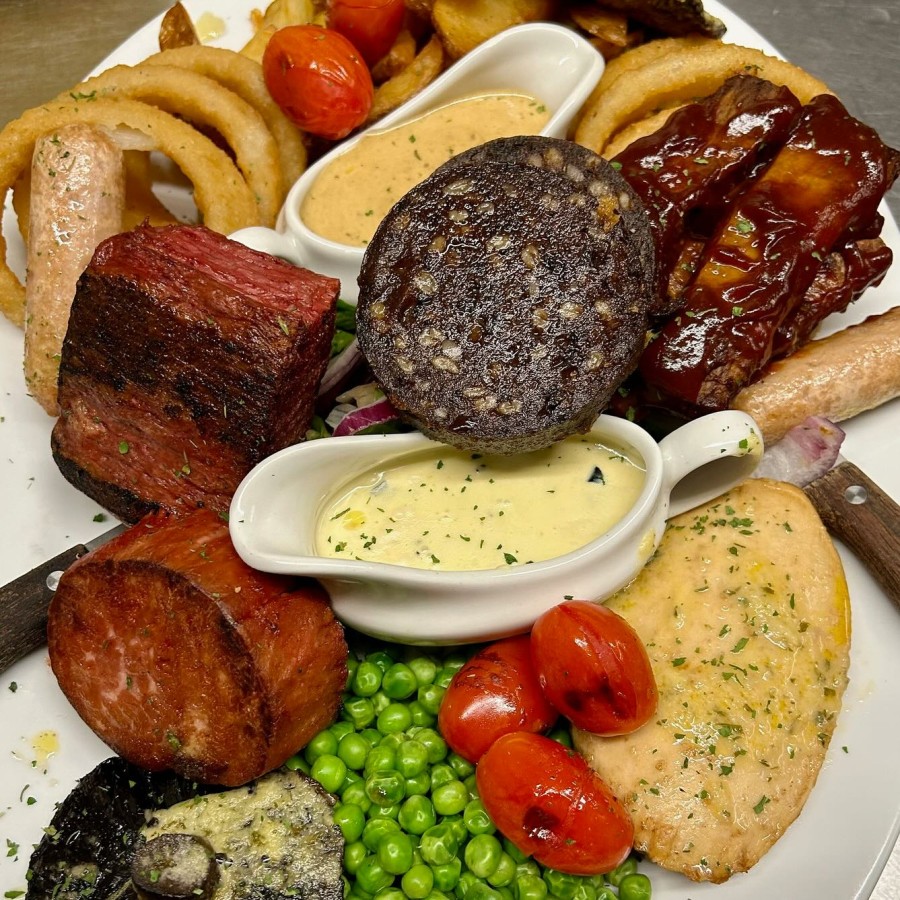
This pub is both beautiful and welcoming (even visiting dogs get water bowls and blankets to sit on). The pub decided to go plant-based during Veganuary and it was so successful, so far using the vegan calculator, the pub landlords reckons their alternative menu has saved:
- Over 40,000 animal lives
- Over 350,000 kilos of carbon dioxide
- Over 165 million litres of water
- Over 350,000 square metres of forest
- Over 812,000 kilos of grain
What Makes a Vegan Roast Dinner?
Nut roasts are obviously one option. But times have moved on. Chefs now make roasts using tempeh or lentils, and offer all the usual favourites like roast parsnips and mashed peppered swedes, along with vegan mash and roast spuds. All served with vegan gravy.
A few pubs (like the Queen Inn, above) are using lab-grown meats. These are not as bad as they sound, they are ‘real meats’ but without animal cruelty or environmental issues:
For instance, one brand (Mission Barns) recently took (without harm) one sample culture from Dawn the pig, then cultivated it in a lab, to mimic her body. Then it added sugar, proteins and vitamins. The sample is then ‘fattened’ in the cultivator. After two weeks, it’s combined with plant-proteins to make ‘pig meat’.
Meanwhile, Dawn continues to roam free with her friends, at her home at an animal sanctuary. The company says she is happily unaware that her cells could feed millions of people, and save millions of her fellow pigs!