A toy that doesn’t belong in the sea
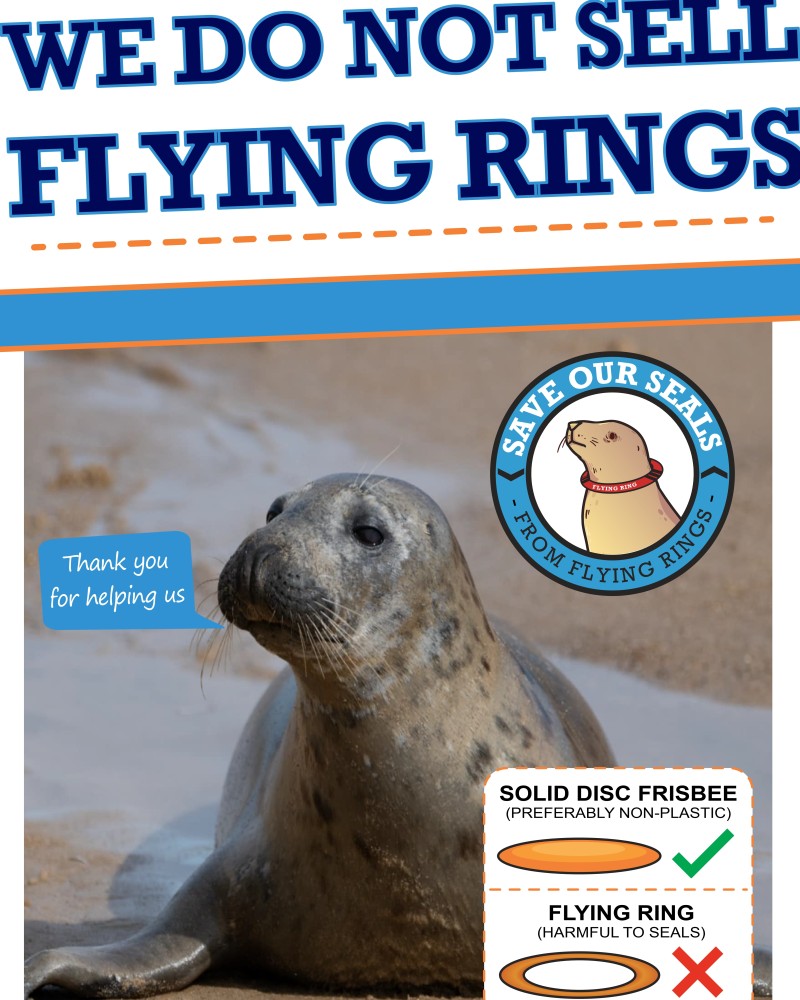
Flying rings are slightly different from ordinary frisbees. They have a large hole in the middle, creating exactly the kind of shape that can become caught around an animal’s neck.
They are also remarkably easy to lose.
Anyone who has spent time on a windy beach knows how quickly a lightweight plastic toy can disappear. A ring can be blown or thrown into the water, carried by the tide and eventually become marine litter.
The campaign is becoming political
In June 2026, Labour MP Tonia Antoniazzi asked the Environment Secretary whether the Government would assess the potential merits of banning the import and sale of plastic flying rings.
The Government’s response was cautious. It said tackling marine litter remains a priority but also acknowledged that it had not carried out a specific assessment of the impact of flying rings on seal populations. Not good enough.
Why wait for the evidence to become a much longer list of injured animals?
This debate has been going on for several years.
In 2023, a parliamentary question asked the Government how many seals had been killed or seriously injured by lost flying rings and whether ministers planned to ban their manufacture.
The Government said that one case of a seal being killed by a lost flying ring had been recorded, alongside reports of live seals found with their heads trapped in rings. At the time, it said there were no plans to ban their sale. And nothing has changed.
The campaign has continued. Wildlife organisations have kept raising awareness. Some retailers have stopped selling the rings. Local authorities have taken action in particular areas.
And now MPs are continuing to raise the issue in Westminster.
That is how environmental campaigns often work. They start with someone seeing a problem that other people have overlooked. They gather evidence. They persuade businesses to change. They persuade councils to act. Eventually, they put the question to central government.
The flying-ring campaign has reached that stage.
Local action shows that change is possible
There is already a useful example in Norfolk.
After seals were found suffering injuries from flying rings, the Borough Council of King’s Lynn and West norfolk resolved to ban the plastic rings from its council-owned beaches.
North Norfolk has also explicitly told visitors not to use flying rings on the beach and explains why: the rings can be blown or carried out to sea, where seals may become trapped in them.
Showing that a ban is not impossible. If government won’t listen, councils set rules on the beaches they manage. Shops can stop stocking the products. Visitors can stop buying and using them.
Why not just tell people to be careful?
People should take their rubbish home. They should not deliberately throw plastic into the sea. They should keep their distance from seals and follow wildlife guidance.
But relying entirely on individual behaviour is not always enough.
A ring does not have to be deliberately discarded to become a problem. It can be caught by the wind. It can be thrown badly. It can be forgotten. It can be carried away by a wave.
If we know that a particular shape creates a specific entanglement risk, the sensible response is to remove that risk where we can.
A ban would send a message
Seals are protected under UK wildlife legislation, and intentionally or recklessly killing or injuring a seal is an offence in England.
It seems contradictory to take the protection of seals seriously while continuing to allow an avoidable source of injury.
A ban on importing and selling plastic flying rings is needed.
Education needs to be part of the campaign. If people know the risk, many will make a different choice.
For the seals, we should act now
We are not being asked to give up something essential.
Nobody’s quality of life will be seriously affected if a ban came into place. For seals, however, the difference can be enormous.
- We already know these rings can hurt animals.
- We already know they can reach the sea.
- We already know seals can become trapped in them.
- We can choose what we sell.
- We can choose what we buy.
And, ultimately, our politicians can choose whether to listen to the people asking them to protect our seals. For the sake of a £1 or £2 beach toy, it simply isn’t worth taking the risk.
For the seals, it’s time to get rid of flying rings.
Super organisations that help wild seals
Buy a t-shirt, help a seal!