Where to buy natural carpets & eco flooring
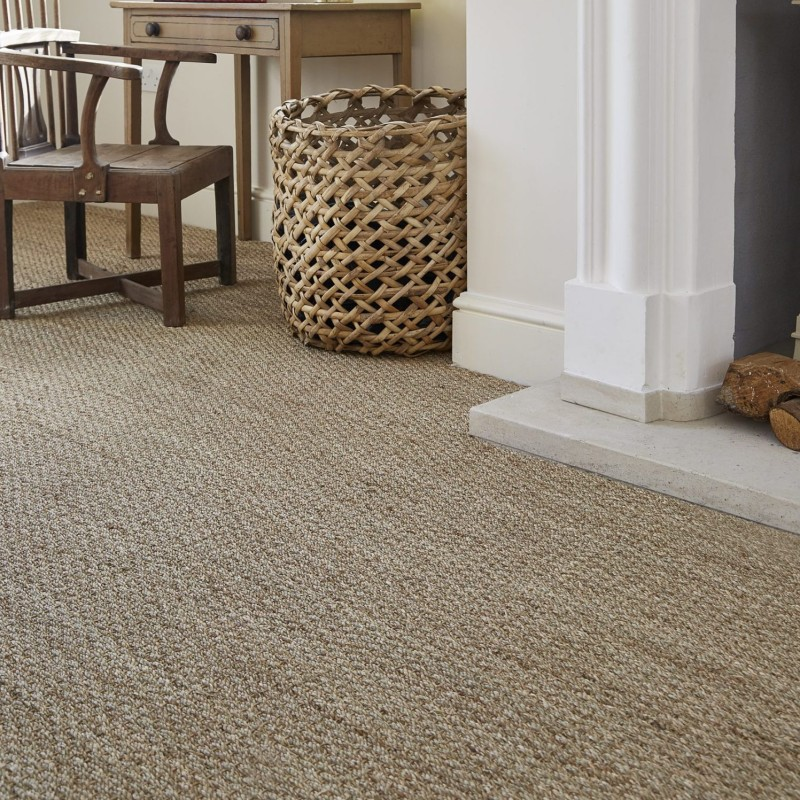
Flooring by Nature (seagrass carpet)
Flooring and carpet are huge investments, so unless you can find and securely fit second-hand, it’s likely best to just wait until you can find a bargain for quality flooring to last you years.
Always have carpets (especially on stairs) professionally fitted, to avoid trip hazards. Avoid loose runners and check corners and edges for wear or lifting, on a regular basis.
All carpets can fade over time, so try to use lighter shades in high sunlit areas with large windows. Natural carpets should last around 15 years.
Natural carpet choices
Natural carpets don’t collect dust, mites or moths, so are good choices for people with asthma. To clean, use a carpet sweeper or hoover, avoid water-based carpet cleaners. Use a stain removal kit.
- Sisal is from an agave plant used to make rope. The leaves are crushed and spun into stunning weaves. This has good grip, so is the best natural choice for stairs.
- Seagrass is sourced from rapidly regenerating coastal meadows, made from dried leaves and usually with a latex backing. It does not bend easily, so unlike sisal, is not suitable for stairs.
- Jute is spun from plant stems in Indian and Bangladesh). It leaves a lighter footprint, but is too soft for stairs, so stick to low-traffic areas like bedrooms. It is not for stairs, as could be too slippery.
Sisal & Seagrass sells sisal, seagrass, jute and coir carpets, plus natural rugs (most have a chalk-based latex backing so don’t need underlay). As a specialiste site, it has full info on which to use, and how to safely fit.
This brand sells recycled tyre underlay or natural airflow underlay. To fit with Auro carpet glue (the company also sells no glue carpets)
Recycled plastic carpets and carpet tiles
Sedna is made from recycled plastic, also good for office tiles. Although not good for clothing (due to releasing microplastics in machines to the sea), for carpets it’s a good option to help remove ghost fishing waste (nets et al) from the sea, to make life safer for marine creatures.
Cork, bamboo and wood flooring
For hard floors, use natural floor cleaner (this post includes how to humanely deter and move cute spiders), avoid citrus oils near pets.
Cork does not require trees to be chopped down (the cork bark is simply stripped from trees every 9 years or so, and keeping the industry alive helps to protect forests and wildlife in Spain and Portugal.
This is a naturally cushioned floor with acoustic properties, and lovely and warm. So good for bedrooms, playrooms or home offices. It can swell with too much moisture, so avoid in wet rooms.
Bamboo (not the same as fresh shoots eaten by pandas) is another popular choice, from the world’s fastest-growing grass. It stands up well to food traffic, so is good in living rooms, hallways and bedrooms. It works best in low-moisture areas (so not for kitchens or bathrooms).
Sweep daily and use weekly wood-cleaning products.
Reclaimed wood is another choice, and you may find bargains at salvage yards or online. These planks are often bought from old barns, warehouses or factories, and retain original grain, yet save new trees being chopped down. These should be fitted to avoid uneven planks and to remove nails.