A Guide to the County of Norfolk, Naturally

Norfolk is a large dry and mostly flat county in the east of England, the coast facing the North Sea, the coldest on earth! It’s pretty chilly in these parts in winter, so bring an extra jumper.
Wells-next-the-Sea is the quintessential Norfolk town. Situated on the North Norfolk coast, this is all sandy beaches and pastel-coloured beach huts, perfect for enjoying a cup of tea, while watching children build sand castles. And seeing boats drift past.
If visiting the coast, read our post on keeping dogs safe by the seaside. Barbecues are banned on the beach (and in local pine woods).
The pinewoods behind the beach add shelter and are great for shaded strolls. The tidal creek means the view changes with the day and the time of year.
The Wells & Walsingham Light Railway
This is the world’s smallest public steam railway, and links Wells with the village of Walsingham (England’s Nazareth, full of churches and religious shrines).
You can’t book online (you have to just turn up and wait your turn). The journey takes 30 minutes and goes through beautiful countryside, over and under bridges, and even passes a hill-fort and a real ghost platform!
The train is currently fighting for survival (because people prefer celebrity TV shows to keeping an iconic steam railway alive). Join Escape to the Country presenter Jules Hudson, who is leading the campaign to buy a new boiler (very expensive) to save it.
The town is from the Anglian word for spring wells, and the ‘next-the-sea’ was simply added in the 14th century to avoid confusing it with other places (like Wells in Somerset, England’s smallest city).
The Great Flood of 1953
The town suffered many casualties in the great 1953 flood (which killed many people on the East Coast). Police officers Charles Lewis and Leonard Deptford received George medals for heroic rescues, including of a bedridden elderly couple, and a local dog.
A Year Surrounded by Marshy Wildness
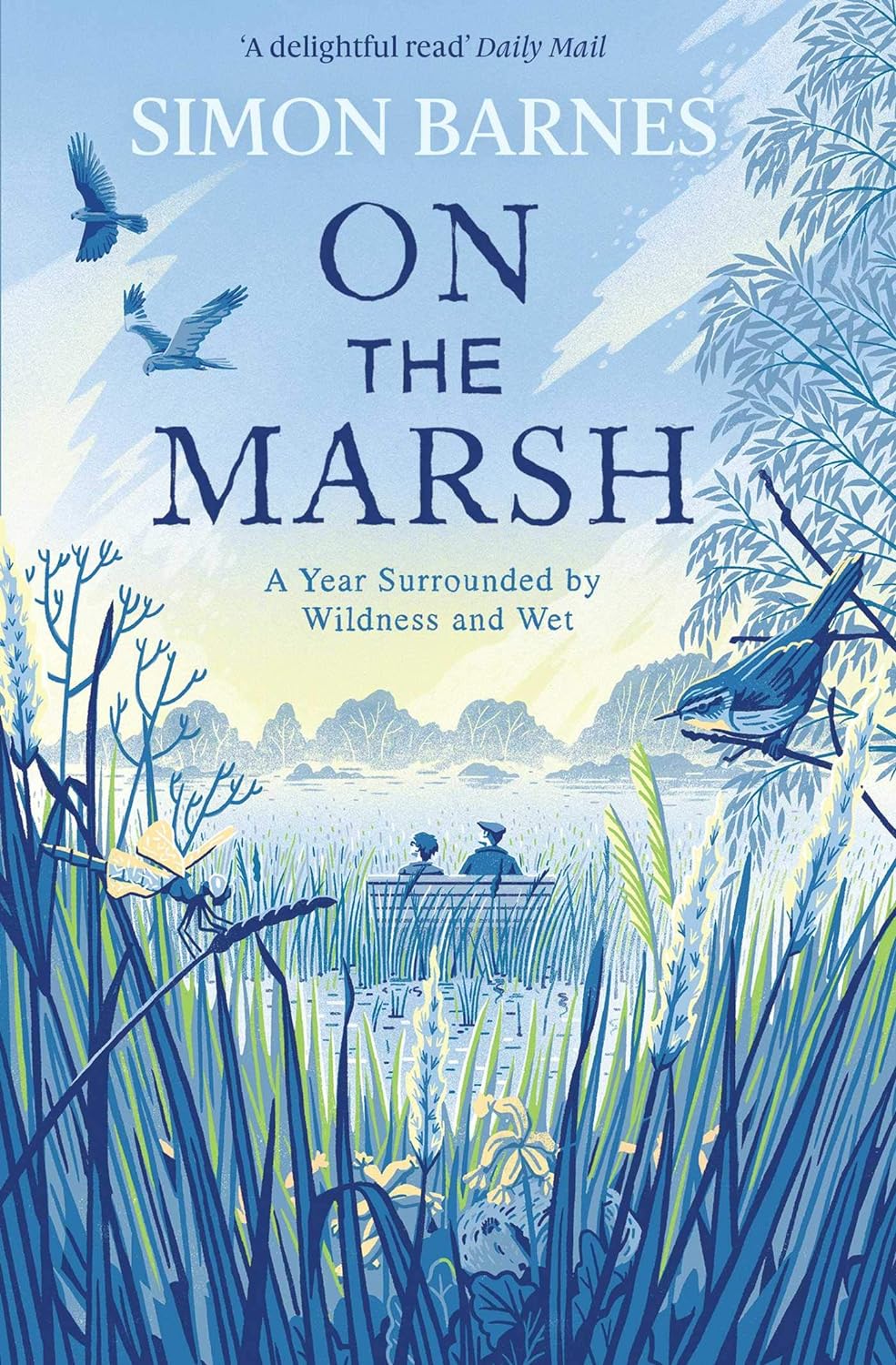
On the Marsh is a lovely book by Simon Barnes (who used to be a peaceful troublemaker writing for national newspapers). On hearing a Cetti’s warbler sing in Norfolk as he looked at a house for sale, he decided to move there with his family, as he feared that marshy land nearby would end up being lost to developers or intensive farming.
As he and his wife rewilded the area, this had beneficial effects for their son, who has Down Syndrome. A place of calm and inspiration for all.
The book follows triumphs (two harrier families arrive to use the marsh as hunting ground). And disappointments (chemical run-off from neighbouring farmland creates a nettle monoculture).
About the Author
Simon Barnes is a travel writer and wildlife journalist, who was sports writer for The Times newspaper for 32 years. Many were appalled when they fired him, saying they could not afford his salary.
There were whispers that his writing on how hen harriers (endangered birds of prey) were being illegally killed by some in the grouse-shooting industry’, led to ‘heads will roll’ due to powerful landowner supporters of the newspaper.
The (very walkable) Green City of Norwich

Norwich is one of England’s most walkable and cycling-friendly cities, and one of its greenest too (with a strong vegan movement). With medieval roots, it has two cathedrals (one Catholic, one Anglican) and is the only city in England where a national park (in this case the Broads) runs through it.
Elm Hill is Norwich’s most picturesque street, lined with timber-framed houses and cobbles. Many of these lovely buildings date to the Tudor era.
When out walking, always follow the Countryside Code, to keep all creatures safe.
The compact medieval street pattern of Norwich means it’s one of the most walkable cities in England. Norwich Castle and Cathedral (both 900 years old) are only 10 minutes apart by foot!
The city also has plenty of green spaces. From Eaton Park to Taverham Mill Nature Reserve. (100 acres). Whitlingham Country Park (280 acres) is just 30 minutes walk from the centre of Norwich.
Walsingham, Norfolk (religious history and mystery)

A few miles inland from the Norfolk town of Wells-next-the-Sea is the ancient village of Walsingham, a popular pilgrimage for religious retreats. Read Paul Kingsnorth’s lovely piece on visiting England’s Nazareth.
Norfolk boasts more churches than anywhere on earth, so you won’t have to look for to spot a medieval church or spire, even if some lay abandoned. This is due to the strong history of the Catholic faith, before Henry VIII came to power.
Today, Walsingham is an ecumenical site with both Roman Catholic and Anglican shrines, which draws hundreds of thousands of pilgrims each year.
That would be an ecumenical matter (Father Jack Hackett- a phrase used to dismiss any difficult question on church discussions!)
Walsingham Abbey grounds are 18 acres, with woodland and trees, and spectacular displays of snowdrops (although dogs are allowed in the grounds, snowdrops and all bulbs are not safe, so avoid if you have flower-nosey pooches).
The medieval architecture makes this little village stand out. The 14th century buildings were built in a grid layout for the benefit of pilgrims, and there were two markets (now long gone) to buy food.
The old prison was built on the site of a former leper hospital, and there are numerous little churches. The tiny orthodox church was built from the old railway station, and one of the Catholic churches is the first in England to be carbon-neutral, with solar panels for electricity, and a deep-bore heat exchange system.
The village is also home to ‘little sisters of Jesus‘, a community of around 900 religious women who live in 50 countries. One writes a lovely story on their website:
After giving up her career as a paleontologist, she travelled to Wells to examine fossils on the beach. Meeting a dying man on his last holiday, they struck up a conversation and she told him ‘Keep courage and see you one day’. She went home, and knew she would never see him again.
Seven years later, he approached her – now healthy and married to his wife (the nurse who looked after him). He had kept the fossil she had given him and remembered her words. She writes that now she knows ‘God didn’t take her love of rocks away’ – instead He uses them as a means to give her people!’
Just 4 miles from Wells-next-the-Sea and Fakenham, the nearest railway station to Walsingham is Kings’s Lynn (about 25 miles away).
Home to Many of England’s Seals
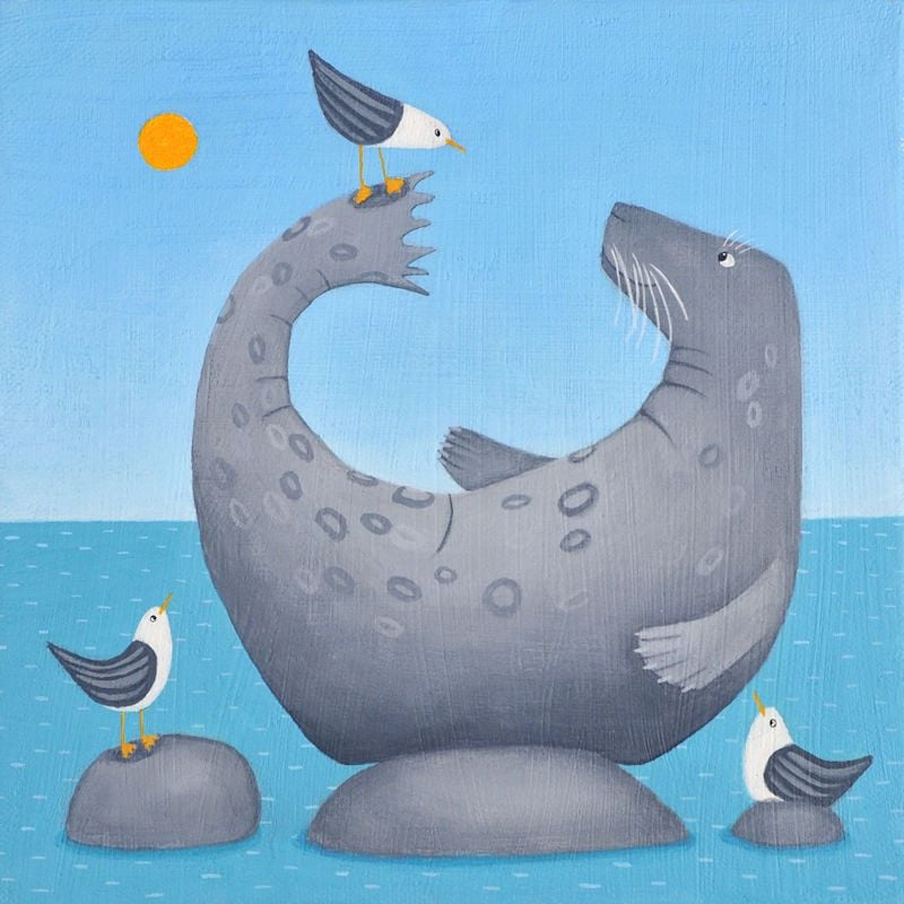
Norfolk is home to many of England’s native seals. There is presently a campaign to ban flying rings. Add your signatures (over 45,000 so far!) If passed, the UK would become the first nation to do so. It’s also good to avoid flying kites, for the same reasons.
Thousands of flying rings are bought and discarded/lost at sea or beaches each year. The aftermath is that curious seals get them stuck around their necks on land or at sea (they start playing with them). One seal was found almost decapitated, but thankfully was rescued and survived.
It’s best to avoid playing with beach toys near seals anyway. If you use them, avoid ones with hollow centre, as these easily trap around seal necks. And choose biodegradable solid ones, in case they get lost at sea.
The Norfolk Coast Path (Hunstanton to Sea Palling)
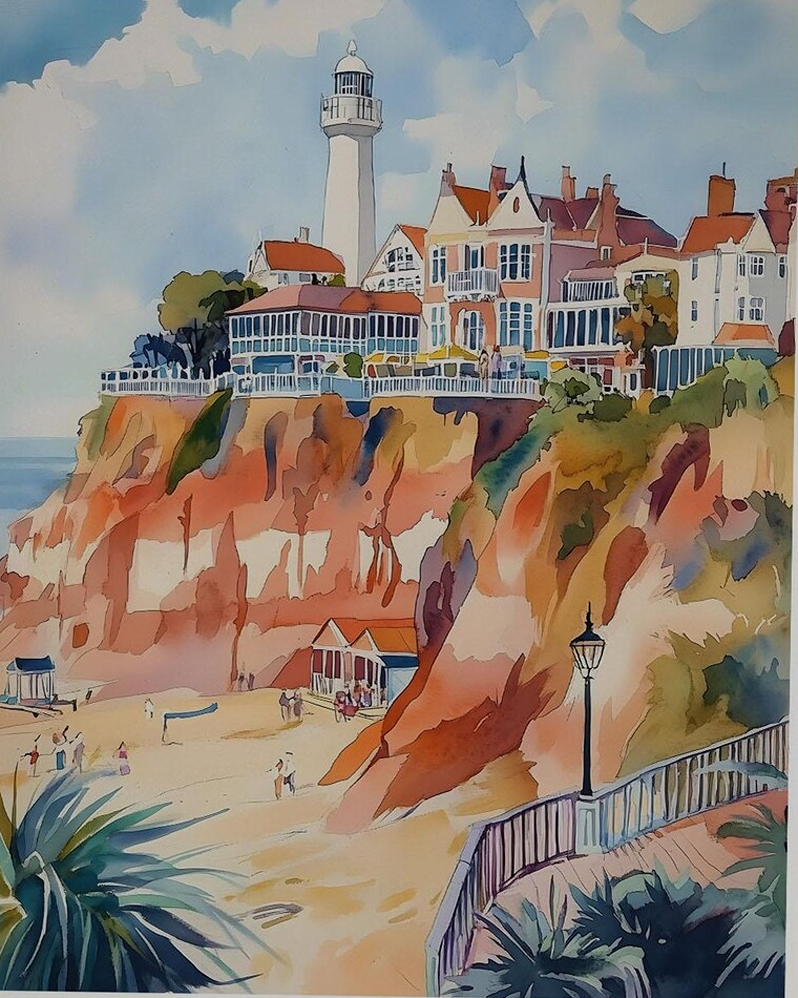
England is surrounded by coast, so it makes sense that there are several coast paths that you can walk. You can just walk a section, or take an entire holiday and walk one over a few weeks.
You could book your own accommodation using sites like Snaptrip. For those watching the pennies, YHA hostels are set in lovely grounds with communal kitchens, and dorms or private rooms from £30 to £60 a night – some even have dog-friendly secure Landpods.
The Norfolk Coast Path offers tidal marshes, sandy beaches and big skies. Starting from the cliffs at Hunstanton, this waymarked route travels through this Natural Landscape.
The flat, soft paths make it an easier long walk. While Wells-next-the-Sea and Cromer add classic English charm. Birdwatchers flock to Blakeney Point and Cley Marshes, where grey seals and rare birds gather.
The Peddars Way starts at at Suffolk (near Thetford) and follows the route for 49 miles to Holme-next-the-Sea on the North Norfolk Coast.
Check tide times and avoid walking in bad light/weather). Follow the Countryside Code (don’t walk on sand dunes), and keep numbers on hand to report concerns for farm animals, wildlife or marine creatures.
Check for dog beach bans (avoid walks for 2 hours after long drives) and keep dogs away from cliffs, seaweed, palm oil (white waxy lumps), jellyfish and uncapped mine shafts.
Also keep dogs away from seals, coastal birds and coastal flowers (many are toxic). Read how to keep dogs safe at the seaside (and info on dog safety and hiking with dogs).
The Norfolk Broads (or ‘England’s Amazon’)
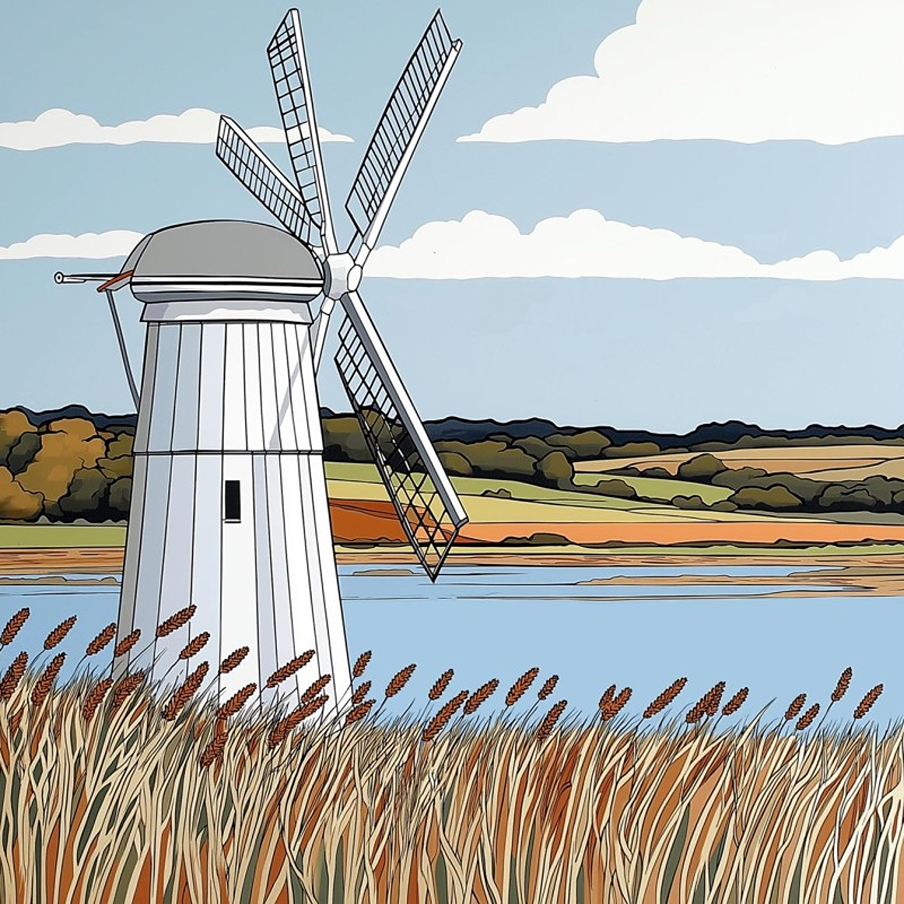
Known as ‘England’s Amazon’, the Broads are home to many creatures you likely won’t find elsewhere in England these days: bitterns, marsh harriers, swallow butterflies and fen raft spiders all find safe haven here. As do avocets, wading birds with unique upturned beaks.
The Norfolk Broads (manmade wetland waterways) are home to 25% of England’s birds and native wildlife (including rare Swallowtail butterflies). There are seven rivers and over 60 broads (bodies of water). They span over 120 miles of rivers and lakes, created from flooded medieval peat diggings.
Wherry boats are the traditional way to get around here. Most rely on human power or wind, so they don’t pollute the water either. They also don’t have engine noise, a bonus for local wildlife. Read our post on how to be a sustainable sailor!