Blooms on the cliffside (discover England’s coastal flowers)
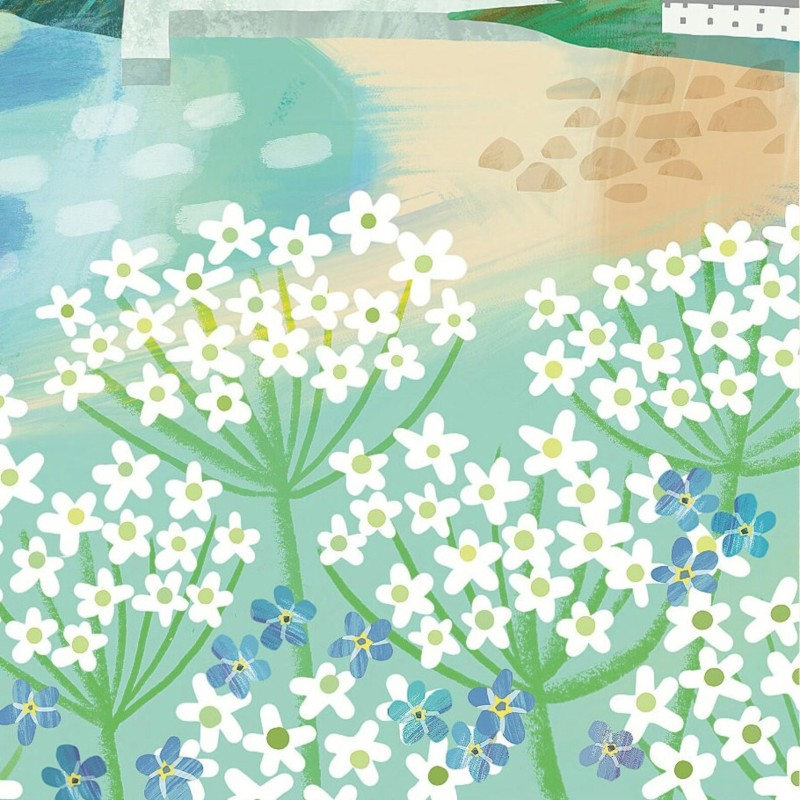
England has lots of flowers, but also many by the seaside! These thrive amid sandy oils and salty breezes, and have important roles to play in protecting sand dunes from coastal erosion, and supporting local wildlife.
Keep dogs away from coastal plants, as some are toxic and grow near cliffs. Read more on keeping dogs safe at the seaside. Also don’t walk on sand dunes, to avoid disturbing nesting birds, seals hiding pups and endangered natterjack toads.
As well as not dropping litter (rubbish can smother young flowers), also don’t remove wildflowers (or driftwood), as these are important ecosystems for wildlife (the same reason to avoid removing sand, pebbles or shells, all have important roles to play at the coast).
A few of England’s coastal flowers
Sea holly is common on the Wirral coast, with spiky blue-green leaves and metallic blue thistle-like flower heads. It thrives on sunny dunes and sandy beaches, loved by bees and butterflies.
Related to carrots, sea holly is often mistaken for thistle. Years ago, people would pulp the roots and sweetened with sugar, then sell them as sweets. Don’t pick these flowers (you will be punished with an injury, to tell you to stop!)
Sea thrift (sea pinks) are also purple, found on rocky cliffs and coastal grassland. They bloom from April to July, with strong roots that hold soil on dunes. Tolerant of wind, frost and sun – they grow mostly in Cornwall and Devon.
Sea campion are white bell-shaped blooms (sometimes with purple stripes). Found on shingle beaches and along sea walls, their leaves lock in moisture. Flowers bloom from late spring to late autumn, with each petal split in the middle (so they only have five petals, but looks like ten!)
Sea beet has thick shiny green leaves (like spinach) found at sandy beaches and estuaries. Related to beetroot and Swiss chard, this is a salt-tolerant plant, with seeds loved by birds and insects.
Sea aster (sea daisies) have star-shaped lavender or white blooms. They grow on salt marshes and along tidal rivers. Flowering from July to October, bees love their late-blooming nectar.
Sea spurge has blue-green leaves and green/yellow flower heads, and a waxy coating to protect from salt and sun. Often found on coastal sand dunes, these are mostly found in southern England (the juice can irritate skin, so admire without touching).
Sea rocket has purple or white flowers, found in dry salty sand, close to high tide lines. It flowers in summer, attracting hungry pollinators. Its seed pods float on ocean currents to new beaches.
Sea kale has big curly blue-grey leaves and a spray of white flowers with honey-scent. Found on shingle beaches and coastal banks, the deep roots can anchor shingle, even in storms.
Golden samphire has needle-like leaves and yellow flowers that bloom in late summer. It grows on salt marsh edges and rocky shores, and is adored by insects. This flower is endangered, due to habitat loss.
Dune pansy has pale yellow or violet flowers (blooming April to September), found on sand dunes or coastal grassland. The soft hairy leaves hold onto water, in hot dry spots.
Spring squill may look harmless with star-shaped blue/lilac flowers (lethal to people and pets). Found on short coastal grassland and rocky turf, its short flowering spell in spring makes it easy to miss.
Yellow horned poppy (also toxic) has bright golden petals, blue-green leaves and long seed pods, that look like horns. Growing on shingle and sand, it flowers from June to September.
Viper’s bugloss (also toxic including to livestock) has electric blue and pink spikes, found on sandy clifftops and dunes. Loved by bees and butterflies for its rich nectar, it flowers from May to September.
How to grow your own coastal flowers
If you wish to grow coastal flowers, RHS has a list of suitable plants, best used with windbreaks (woven willow or hazel alternatives are good). Walls or fences are great, as they can increase turbulence.
Read more on no-dig gardening and humane slug/snail deterrents. If you live with animal friends, read up on pet-friendly gardens (some recommended flowers and fruit trees are not safe). Also avoid netting to protect food (just leave some for wildlife!)