Simple Affordable Swaps for Greener Driving
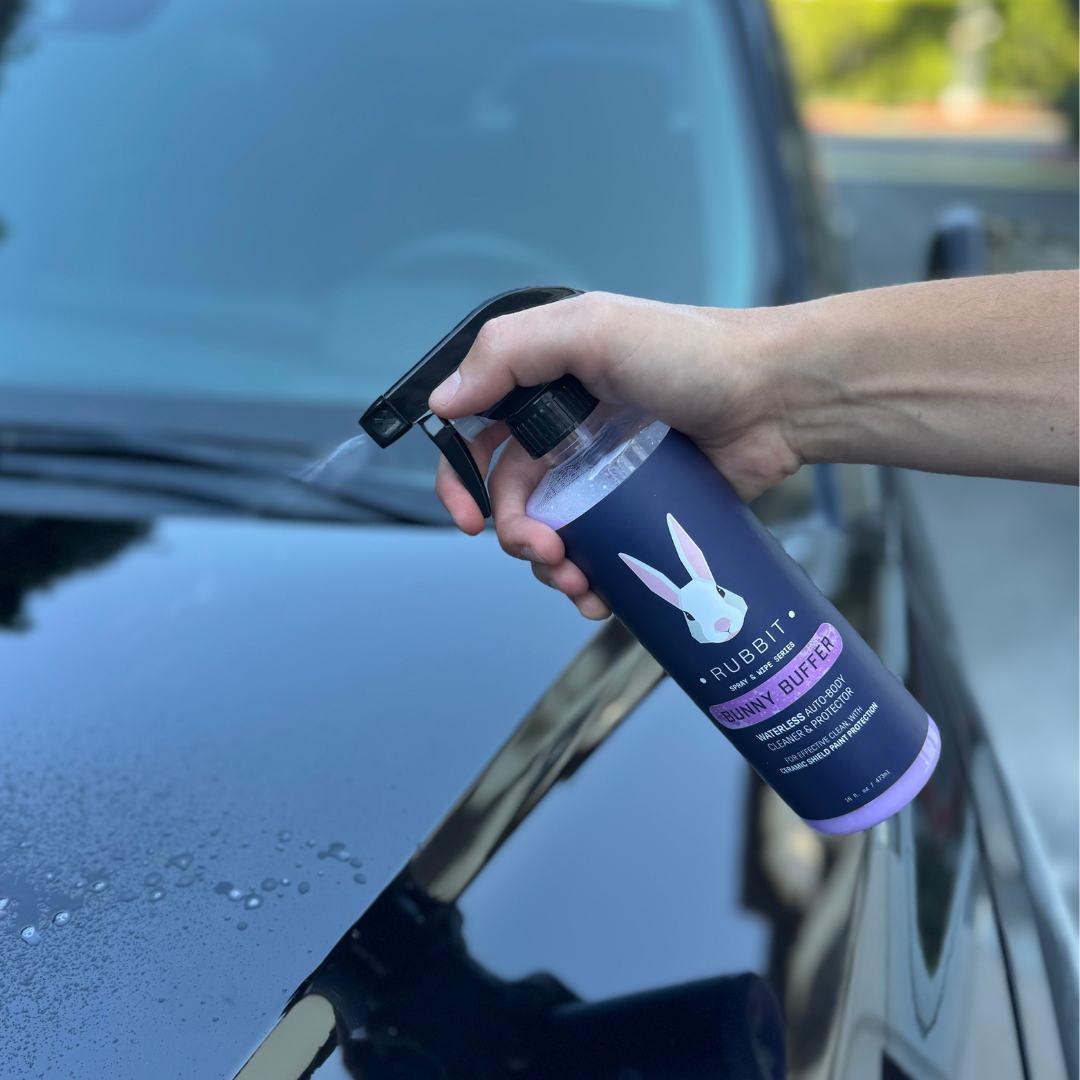
If you own a car, read our post on greener driving tips. But one other way to help the planet, is by switching how you wash (and valet) your vehicle.
Conventional car washes on the drive or in supermarkets are not good, as oily water goes untreated down storm drains, and into the sea. This causes oil spills, which harms marine wildlife. Either use an eco-friendly car wash company, or switch to a waterless car wash.
Another reason to avoid supermarket car washes, is concern over worker welfare, often paid below minimum wage without protective clothing. If you book one, use Safe Car Wash app.
Rubbit is a kit to clean cars without water, designed by two airline pilot, who worked with chemists to design a foaming formula, to absorb dirt and be wiped, without rinsing. If you wash your car every two weeks, this kit saves over 3000 gallons of water.
Just soak the included Microfiber towels in a budget of water (the detergent has already washed them, so no need to launder in the washing machine).
The company also makes eco-friendly dissolving windshield window tablets (give the air-fresheners a miss, they are made with fake scent). Instead use charcoal purifying bag that are scent-free, so good if travelling with babies, pets or allergies).
Removing Bird Poop Off Car Paintwork
Remove this immediately to avoid burning paint (and scratches, due to containing seeds). mix 4 tablespoons of baking soda in a litre of warm water, shake to mix and spray from a bottle. Leave to soak for 10 minutes, then rinse off with a wet cloth or hose.
To prevent birds pooping on your car (apart from not parking under trees!), a survey found that birds hardly ever poop on green cars (nobody is sure why!)
How to Valet Your Car, Naturally

- Use a car trash bag to store rubbish, until you get home. Never throw it out the window (this attracts scavenging wildlife, putting them in danger of traffic).
- Use plastic-free cloths and sponges with biodegradable unscented cleaner. Absorb odours with a charcoal purifying bag (if you smoke, do so outside the car, and use a personal ashtray to safely extinguish butts, until you find a bin).
- Avoid de-icing sprays (use a windscreen cover or park your car facing east, to naturally defrost in the morning). Or rub half an onion on the screen the night before (the oil lines the glass to stop freezing – keep onions away from pets).

One of the first electric cars, Oshay Watercolors
Electric cars are now being promoted by government so much that it now offers grants (through seller discounts) to encourage people to make the switch. The reason is that electric cars don’t give off the same emissions as petrol/diesel cars, so contribute less to climate change and air pollution.
Of course, there are actually better ways to do this: promote car-sharing clubs (to avoid people having to buy cars), and creating walkable communities where people can stroll to local shops and groceries, and not live in a ‘car-centric culture’.
But if you do buy or replace a car, are electric cars worth the switch? They soon will be, as the aim within a decade or two, is for everyone to drive them. They are still more expensive, but due to less moving parts and maintenance, do last longer than petrol cars.
Avoiding City Congestion Charges
Electric cars are becoming popular, as they become more affordable. London drivers can save up to £10,000 by avoiding the London Congestion Charge.
Bath also has a Congestion Charge, and other cities (Bristol, Newcastle, Portsmouth and Sheffield) have introduced Clean Air Zones (which could feature congestion charges). A proposed Congestion Charge is currently under review in Greater Manchester.
The Cleaner Vehicle Discount offers several discounts from the government. This includes offering help with the upfront price, road tax waivers and free access to some low-emission zones. Electric vehicle owners also pay less in maintenance, thanks to fewer moving parts.
Are Electric Cars Safe?
Obviously new cars have to be kind of safe, or else they would not legally be allowed to be sold. All the main car models now offer electric or hybrid versions, and you can find safety info at car websites or in magazines/newspapers for expert reviews. Read this EV buying guide.
Electric cars are quieter, which often gives rise to concerns if a persona or animal can hear them coming. But studies have found that at high speed, the noise is similar (due to tyres etc).
The time when they are ‘silent’ is say driving slowly out of a driveway or supermarket car park, when cars are not hopefully going at speed anyway.
EV makers are now inventing cars with noisier tyres, to alert pedestrians and wildlife. Plus of course EV vehicles have no air-pollution exhausts or leaking oil, which harms. Read more on making roads safer for wildlife).
Fire risks for electric vehicles are usually due to lithium-ion batteries (the same reason why vapes should always be recycled at shops), due to short circuits, overcharging or physical damage. But they are less of a fire risk than petrol cars, due to no fuel leaks.
There is a 0.0012% chance of an EV catching fire, compared to a 0.1% chance of a petrol or diesel vehicle catching fire. Energy Saving Trust
How to Charge Electric Cars
One advantage of electric cars is that you don’t have to worry about wearing plastic gloves at the petrol station! They are often being littered all over petrol station surrounds, even where there are bins.
You can charge electric cars at public charging stations or use Go Zero Electric Car Chargers to charge at home with solar power. Private driveway owners and even office and hotel owners, can earn up to £5000 passive income, by letting other drivers use their charging stations (say at weekends or out of season).
Elon Musk and Tesla
Of course the most famous electric car in recent times is Tesla, which has created the world’s richest man. Elon Musk (on course to become the world’s first trillionaire) has his finger in many other business pots, but this is the main one.
He recently assisted President Trump with policy including cutting foreign aid, which led Bill Gates to accuse ‘the world’s richest man of killing the world’s poorest children’.
A staunch supporter of right-wing politics, he has talked of giving mega donations in the UK, with critics saying he should mind his own political business, as it’s not his job to decide who governs us.
Defenders say he has created hundreds of thousands of jobs. But his political views have led many people to boycott Tesla, with critics saying that those jobs would just go to other companies that made electric cars.
Jeremy Clarkson, Nigel Farage and Electric Cars
Former Top Gear presenter Jeremy Clarkson famously does not like electric cars, saying he prefers the roar of a petrol engine, so does not like reviewing new cars anymore (he famously had a spat with Elon Musk, after he gave a bad review of a Tesla).
Nigel Farage also dislikes electric cars, saying they are ‘net zero madness’, which has led to a cultural backlash, with many more people buying them.
One surprising criticism he makes is that it harms British jobs. But actually many people have good skilled jobs making electric cars, whose jobs would be lost, he his wish came true:
Why does Nigel Farage want me to lose my job? Worker in a Merseyside factory that makes electric cars
Back to Elon Musk, he has asked that Nigel Farage be replaced as head of Reform UK (though what it’s got to do with him again is unclear). Instead, Musk now supports Advance UK, which the BBC has labelled far-right, due to its extreme views (the party is backed by Tommy Robinson).

England has millions of old cars that are not roadworthy, either rusting away in garages or alas littered and dumped in the countryside. Not only is this unsightly, but such vehicles leak oil and antifreeze, causing all kinds of environmental problems.
But you can donate such scrap cars, and the metal is sold to raise money for good causes, and other parts can be recycled, to prevent littering.
You must obtain a DVLA Certification of Destruction, to avoid getting fined by DVLA.
Charity Car and Give a Car are the two main organisations, that can arrange collection nationwide. Parts are repaired or reused, and your charity gets the car’s scrap value.
Avoid listed charities that test on animals, and choose alternative causes instead (butterfly conservation, horse sanctuaries, animal shelters, homeless shelters).
You can scrap cars as insurance write-offs, rather than leaving them as fire hazards and eyesores on the street. Give the ATF the vehicle log book (V5C) but keep the yellow ‘sell, transfer or part-exchange your vehicle to the motor trade’ section, and again tell DVLA to avoid a hefty fine.
Donating scrap cars also helps prevent England’s ‘car graveyards’, where cars are dumped and left to decay, leaking oil and antifreeze. One walker in Wales recently discovered 50 classic cars (including Mercedes), all left to rot in a forest.
Where to Recycle Used Tyres
Ask your mechanic to recycle used tyres (fire/pollution hazards) that can be made into roofing, crash barriers & carpet underlay.
Learn how to change a tyre in 10 simple steps. ‘Eco-tyres’ have less rolling resistance, so reduce fuel consumption & carbon emissions. Check tread regularly with a digital gauge and replace worn treads (that won’t grip in wet weather, and can get you fined).
Parking vehicles in England is a non-stop headache, for drivers of cars, vans or lorries. With over 40 million licensed vehicles, our streets are packed with cars, and finding a free spot is difficult. Even disabled people often now have to pay to park their cars.
An easy solution is car-sharing (above) as this frees up parking spaces, as the vehicles are always on the move. If one vehicle is used by 20 people per day, this frees up 19 cars on the road (and those car’s parking spaces).
The easiest solution to find cheap parking is to download JustPark app. This lets you find empty parking spaces belonging to people (their garages, driveways or even empty weekend office parking spaces and low-season hotel car parks).
This earns good passive income for them, and you get a better deal than spending a fortune on multi-storey or airport hotels. Many use the app, if taking trips to football matches or music concerts.
Just imagine the income that could be raised by local councils (that always claim to be cash-strapped) if they rented out the hundreds of empty parking spaces at weekends, when staff were not working at the office). This money could then be invested in walkable communities, road repairs, litter clean-ups and free social care.
Design Car Parks Like the USA
If you’ve ever visited the USA, you’ll know that car parks are designed differently. Whereas in England we tend to have car parks with cars faced uniformly, in the US the parking spaces are placed on a diagonal.
This is done, as it’s easier to get out of a tight spot. So if we switched to designing car parks like the Americans, there would be less prangs, and therefore less insurance claims.
Fairer Penalties over Silly Parking Fines
In England, an elderly person who may be a few minutes late back, can be subjected to an expensive parking fine, and almost ‘bullied’ into paying less, if they pay straight away.
In fact, there is a 10-minute government grace period. So if you have a good case (say you or an elderly dog not making it back to the car in time), it may be worth appealing.
Yet football stars who drive at 200mph down an motorway get peanuts fines, if they are clocked by a speed camera.
Campaigners say it would be far better to use proper penalties (in Finland, speeding fines are linked to income – the home of the £100,000 fine for speeding millionaires) to pay for clearer street signs, with direct instructions. Rather than unclear parking symbols and tiny print.
When instructions are clear and fines are fair, people trust the system more. And are more likely to follow the rules.
Digital Parking Apps for Easier Payments
We’ve all had this. You find a parking space and don’t have change. So you put coins in the parking meter, and it ‘can’t give change’, meaning the company or council make huge profits, simply from you giving more money than you should.
You can usually phone up somewhere to pay by card. But it’s far easier to use parking apps that not only stop parking paying over the odds, but also the apps can use the data to spot busy times, and direct drivers to quieter areas. This can smooth out traffic, and reduce endless circling of cars on crowded streets.
Build More Public Car Parks in Busy Areas
Rather than let private multi-storey car parks make a fortune (at airports, it can cost more to pay for a week’s parking than the holiday itself), councils can invest in good public affordable car parks.
Doing this on unused plots can help to keep drivers off crowded streets, which is good for everyone. Good signage and lighting (avoiding light pollution) keeps car parks safe. Offering off-peak rates, would also encourage people to park away from busy areas.
Protect Disabled Parking Spaces
Blue badges (for disabled drivers and their carers) are very difficult to obtain, and should never be left in cars, as many people steal them.
There are already fines for people who park in disabled bays, but it’s good to ensure such rules are kept to. Local offices and shops with disabled bays could also join Just App, to offer these spaces for disabled drivers during off-season or weekend times, which brings in some passive income, and gives drivers somewhere cheap to park, away from busy areas.
But it’s better to let disabled drivers park for free. Some councils have now started to charge, a process branded unkind by many.
Encourage Park and Ride Schemes
These are when people leave their cars outside city limits, and use the bus to visit the centre of town. This cuts congestion in busy areas, and is usually less stressful. Visionary councils could also add walking and cycle paths, to help make the switch easy.
Block Illegal Pavement Blocking
Cars parked on yellow lines (or blocking pavements) is not just illegal, but creates hazards for people in wheelchairs, and families with families. Stepping up to stop this, helps to free up space, and keep roads safe.
Work with Employers to Ease Parking
Offices and factories can help, by encouraging car-pooling, and offering perks for staff who walk, cycle or use public transport.
Update Rules for New Home Developments
Rather than always designing estates for cars (out of town), it pays to build homes that are easy to walk to local offices, shops and parks. Including secure bike storage and a place for car-sharing clubs, helps to reduce parking pressure on local streets.
The Disgrace of Hospital Parking Charges
If an elderly or disabled or poverty-stricken person has a sick relative or friend (and doesn’t have good public transport), he or she may have to spend a fortune visiting on a regular basis. This is due to huge charges for NHS hospital car parks.
Although a few car parks do tend to be affordable, some (like one in Somerset) charges up to £15 for 24 hours (say someone was visiting a relative after a serious illness or accident, and wanted to stay with someone overnight).
Ask your hospital or council about community car schemes, where volunteers can take people to and from hospital. You may also be entitled to the reimbursement on both transport and parking costs under the Healthcare Travel Costs Scheme.
Of course hospitals argue that they have to receive funding from private parking companies, which goes back to the NHS. There are a few arguments against this:
- Firstly, the NHS hospital could just run its own car park, and charge less.
- Secondly, NHS hospitals should be looking after its staff (many nurses, doctors and other frontline workers have to pay for parking too in private car parks).
If the average big hospital rakes in around £40K a year or more from private parking charges, why is this money not being used to fund free or affordable community transport?
You could pay two taxi-drivers a full-time salary each year, to provide safe and friendly transport for anyone in the community that has to make regular hospital visits?
Car-sharing clubs are changing the way we think about transport. Instead of owning a car and bearing all the costs on your own, you can join a car-sharing club and access vehicles only when you need them.
It’s a smart, flexible and friendlier way to get around, and the benefits reach far beyond just avoiding the headache of finding a parking spot. Here’s a closer look at why more and more people are choosing car-sharing clubs and what members stand to gain.
Co-Wheels (a social enterprise) offer modern hybrid cars nationwide that you rent by the hour. It pays for the car, maintenance, cleaning, road tax, insurance and even pre-paid fuel & breakdown cards – you just pay extra if you drive a long way.
If you don’t mind lift-sharing, you can list your profile, then look for people to share journeys with. In most cases, insurance is not affected (as long as no profit is made).
Read tips to keep safe (including not sharing your full name and address before meeting in a public place, letting others know where and when you are going).
Save Money on Motoring
Joining a car-sharing club removes the big costs of car ownership. You don’t have to budget for annual insurance, road tax, MOTs or regular servicing. The club handles these.
You only pay for the time and distance you use, making it an affordable option for anyone who drives less than a few times a week.
Reduce Your Carbon Footprint
Car-sharing clubs help cut pollution and congestion. Fewer people owning cars means fewer cars on the road, which leads to lower carbon emissions and less crowded streets.
Many clubs offer hybrid or electric vehicles, which are far cleaner than petrol or diesel cars. If you care about the environment, joining a car-sharing club is an easy step towards greener living.
Enjoy Flexibility and Freedom
With car-sharing, you pick the car you need, when you need it. Different trips call for different vehicles—a small hatchback for daily errands or a large estate for a family day out. You’re not stuck with one car for every job.
Cars can be booked instantly via an app, available for anything from an hour to a whole weekend. No need to plan weeks ahead or stress over long-term hire contracts.
No Maintenance Hassles
Forget about breakdowns, flat tyres or routine servicing appointments. Car-sharing clubs take care of all vehicle maintenance.
If a car isn’t running right, you just report it and use another one. That takes a load off your mind and saves time you’d otherwise spend organising repairs.
Cut Down on Parking Problems
Parking fees and permits are a major headache in cities. Most car-sharing clubs have reserved bays in convenient locations.
You can collect and return cars there without searching for a space. This makes trips into town or to busy events much less stressful.
More Space at Home
If you don’t own a car, you free up valuable space. No more fighting for a spot in a crammed street or squeezing your car into a tiny drive.
For many, this means an extra parking space or even a clutter-free front garden. It also means you can rent or buy your favourite place, without worrying about needing a parking space or garage.
Easier Occasional Access to Cars
If you usually walk, cycle or use public transport, car-sharing gives you easy access to a vehicle when you really need one.
It’s perfect for those IKEA runs, camping trips or airport drop-offs that public transport can’t handle. You get the best of both worlds—a car when you need it, no costs when you don’t.
Try Newer Cars and Features
Car-sharing clubs keep their fleets up to date, so you’ll often find clean, modern cars with the latest safety features and tech.
You get to drive well-maintained vehicles without the commitment of buying one. This can make drives safer and more comfortable.
Reduce Traffic and Congestion
Studies show that each shared car can replace up to 10 privately owned cars. When people have access to shared vehicles, they usually drive less and combine trips.
This helps ease congestion in busy areas, making roads safer and more pleasant for everyone.
Support Local Communities
Car-sharing clubs often work with councils or local groups to improve access to cars in areas with fewer transport options.
They help people who can’t afford to buy and run their own car while also reducing parking pressure and pollution in crowded neighbourhoods.
Peer-to-Peer Car-Sharing

Peer-to-peer car-sharing is when one person shares their car with others, without need for a company to run an official fleet. Usually you do this with a company who can take care of all the legal details.
Hiyacar is the main player in this niche. Insurance costs are covered in the price, so members on subscription get lower rates, and a higher mileage allowance. It operates in many towns and cities, with vehicles from electric cars to convertibles and 7-seaters.
Some car owners (who are fully vetted) are earning around £650 a month, when their car may sit on the drive all day, when they are not working (or at work). Members who lease cars also benefit from AA Breakdown Cover and discounted services at Kwikfit.
The company uses a unique quick-start system, so people can unlock your car using an app. These are deleted after each hire.
People in the community can also ‘adopt a Hiyacar. For less than a tenner a month, it will put one of its cars on your street, and refund the cost of parking permits. Then the car is there for all members to book. Businesses can also get involved to hire a fleet car.
All cars are regularly cleaned by the in-house team, using waterless products. This is good, as water-based car washes tend to send untreated oily water down drains, and out to sea.
If you drive less than 10,000 miles a year, sharing a car with others is a good way to get the benefits of driving a car, without the hassle and expense of owning one (or having to sit next to a motormouth, one possible peril of lift-sharing).
Co-Wheels (a social enterprise) offer modern hybrid cars nationwide that you rent by the hour. It pays for the car, maintenance, cleaning, road tax, insurance and even pre-paid fuel & breakdown cards – you just pay extra if you drive a long way.
Peer-to-peer car-sharing clubs like Turo let car-owners earn up to £6000 a year passive income, by letting others share use of their vehicle (fully insured).
Car-sharing does not just free up funds for you, but helps to reduce road traffic. Most people’s cars sit on the road for 96% of the time. Car-sharing clubs means each vehicle is mostly driving around, freeing up 19 out of 20 car parking spaces.
If you don’t mind lift-sharing, you can list your profile, then look for people to share journeys with. In most cases, insurance is not affected (as long as no profit is made).
Read tips to keep safe (including not sharing your full name and address before meeting in a public place, letting others know where and when you are going).

Almost 80% of people in the UK have access to at least one car. Cars are convenient (and often cheaper than taking the train). But they come at a cost to the planet.
You can’t have a ‘green car’, but there are a few things drivers can do to make them greener. Also read about car-sharing clubs and electric cars.
Reduce Your Car Use
Not every trip needs a car. You can walk, cycle or combine journeys, to lower running costs, and get some fresh air and exercise too.
Read the lovely little guidebook Cutting Your Car Use. Printed on 100% recycled paper, it includes 100 simple tips. The author (England’s first traffic reduction consultant) walks and cycles most places, and sometimes hires a car or taxi, showing you can mix and match, to suit your lifestyle.
Never Leave Dogs in Warm or Hot Cars
Even a few minutes is risky, for dogs left inside parked vehicles. Temperatures rise fast (even with the window open) turning cars into ovens, even on mild days or in the shade.
Keep pets with you when out driving, or leave them at home in warm/hot weather. Councils can help by creating more dog-friendly beaches (to avoid irresponsible guardians leaving them in cars, when they discover beach bans).
If you see a dog in a hot car, smash the window, move the animal to a shady area and apply cool (not cold) water and call the vet, RSPCA and police. Likely dog guardians will feel too guilty to charge you with criminal damage (they will hopefully thank you).
Practical Tips for Greener Driving
- Waterless car washes are better for the planet, as they stop oily untreated water going down storm drains and into the sea.
- Regular servicing (tyres, engines, oil changes) can improve fuel efficiency. Click Mechanic lets you book vetted local mechanics at good prices, due to low overheads.
- Antifreeze is lethal to pets/wildlife, so let mechanics change it in enclosed spaces. Or use funnels (as with oil) and use sand/kitty litter to absorb spills (don’t mop).
- AA has tips on buying used cars. Avoid ‘cut-and-shut (two damaged cars welded together), cloning (replacing number plates) and clocking (adjusting mileage). Don’t check cars in rain (water hides dents/scratches) and insist on a service history and V5C document.
- ETA (Environmental Transport Association) offers vehicle inspection checks (plus eco-friendly insurance/breakdown cover).
- Councils can also help by making roads safer for wildlife and solving England’s parking problems.
A Friendly Soap Bar for Mucky Mechanics!

Friendly Mechanic’s Soap (made in Northumberland) is also sold in packs of 12. Free from palm oil, it contains grease-busting lemon oil, exfoliating pumice stone and is scented with cedarwood, patchouli and tea tree oil.
As this soap contains essential oils, it’s best to avoid during pregnancy/nursing, if you’re a female mechanic (girl power!) Also keep away from babies and pets (due to citrus oils).
My husband says this cleans his greasy hands very well, and he smells no more of engine oil!
Campaign for Animal-Friendly Number Plates

In the USA, many states let drivers buy license plates that donate money to animal charities. Mutts cartoonist Patrick McDonnell illustrates animal-friendly license plates in New Jersey.
Conservation Plate is similar, in that the plates support charities for wild birds and marine mammal protection. Which begs the question why similar programs are not running in England, a country renowned for being batty about animal welfare.
It would need a bit of work, as things work differently over the pond. Car owners pay their fee to local motor vehicle license agencies, and simply swap their plates.
But in the UK, DVLA is in Wales, so at present this could not be done. But it should be. It’s possible in England to buy vanity-based private number plates, so why not plates that help animal welfare and conservation causes?
Paramedics are also not fans of ‘baby on board’ stickers. Anything (including furry dice) in car windows can obscure vision, when driving. And reading stickers can cause people to take their eyes off the road.
Nobody ‘plans’ to have a car accident. So displaying warnings does not work. In Australia, one site notes that 1 in 20 accidents may even be caused by stickers obscuring rear window views. And paramedics often look for a child in the car that isn’t there, at the time of an accident.