How to Make or Buy Good Garden Compost
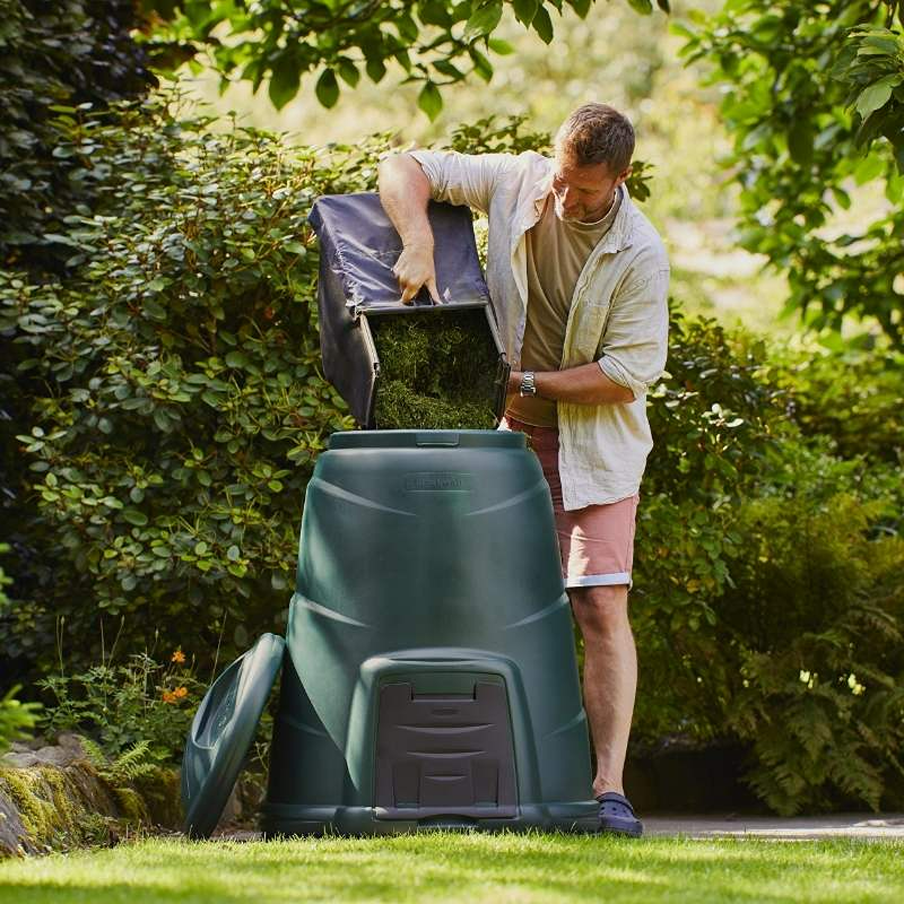
Blackwall compost bins (also in black) are made from recycled plastic, and some councils also sell them at discounts, so check before you buy online.
This is England’s best-selling compost bin, with an ample 330 litre capacity (or a compact 220L for small gardens) that retains heat to encourage moisture and produce a healthy mix of microorganisms.
Sold with a 5-year guarantee, it’s UV-stabilised and includes a wide aperture for easy filling. You can also buy an optional base plate to place on solid surfaces to increase ventilation and improve drainage and replacement hatches.
Composting is the process of breaking down organic matter into a dark, crumbly texture that resembles soil. It involves the natural decomposition of materials like food scraps and garden clippings. But what makes it work? Also read reasons to avoid peat compost.
At the heart of composting lies the work of microorganisms—tiny life forms that feast on your waste, breaking it down efficiently. This process creates heat, which speeds up decomposition and kills off any unwelcome seeds or plant diseases.
Making your own compost is a wonderful way to convert food waste into rich soil for your garden, and avoid buying peat, which supports habitats of endangered wildlife.
Learn how to create pet-friendly gardens and wildlife-friendly gardens. Also learn how to stop birds flying into windows.
Never fork compost piles, just gently prod as many creatures including hibernating hedgehogs can often be found inside.
What not to compost: latest research suggests to just bin citrus, rhubarb, tomato and alliums (onion, garlic, leek, shallots, chives) as acid could harm compost creatures – same with tea/coffee grounds due to caffeine.
You have to be a real expert to balance out the acids, to avoid harming compost creatures. Also bin soap nuts (natural insecticide could harm compost bin creatures).
Tips for Outdoor Compost Bins
- Keep fresh compost away from pets, as it contains mould.
- Always gently disturb (don’t fork) compost piles before handling/moving, as frogs and hedgehogs often sleep or hibernate in or underneath compost bins.
- Avoid rodents by siting compost bins near footfall and not adding animal foods (it’s illegal to sell food made with composted animal foods). Also ensure you add more ‘greens’ (rodents are attracted to dry compost with too many ‘browns’).
- Avoid ‘hot composters’ as these ‘cook’ garden creatures that fall in, as there is no earth to keep them cool.
- Leave wormeries to the experts (worms for compost bins are different to earthworms, and many die when transferred to soil or get lost in the post.
Know Your Greens and Browns
A good compost bin is made up of a roughly equal mix of greens and browns. Too many greens (like grass cuttings) will make your compost slimy, and too many browns (like leaves and cardboard) will make it too dry to turn into compost.
Try to tear up things like cardboard for faster composting. You can usually leave grass clippings on the lawn (if you have a lot of them, try a tumbling compost bin instead).
Green materials are rich in nitrogen. Think of grass clippings, fruit and vegetable scraps, and coffee grounds. They provide the moisture and proteins microorganisms need for growth.
Brown materials are high in carbon. These include dried leaves, twigs, and newspaper. They offer the energy microorganisms require to decompose waste effectively.
Greens include:
- Fruit & veg peelings (not alliums, tomato, rhubarb, citrus – just bin)
- Fresh grass clippings
- Egg shells
- Chicken, cow or horse manure
- Seaweed (keep away from pets)
- Dead flowers
- Cut-up plastic-free cleaning sponges
- Cut hair & pet fur (not with flea medicine etc)
Browns include:
- Fallen leaves (or use a leaf bag and sit in the corner of the garden and it will turn into leaf mould in a year or two).
- Shredded newspaper & cardboard (no magazines, due to inks)
- Sawdust or woodchips, straw or hay (in small amounts)
- Pine needles
- Cornstalks (after harvesting) if cut up
- Old paper packaging (shredded)
- Egg boxes
- Untreated wood chips
- Plant-based cut up fabrics (cotton or linen)
- Bamboo toothbrushes
An Odour-Free Kitchen Compost Bin
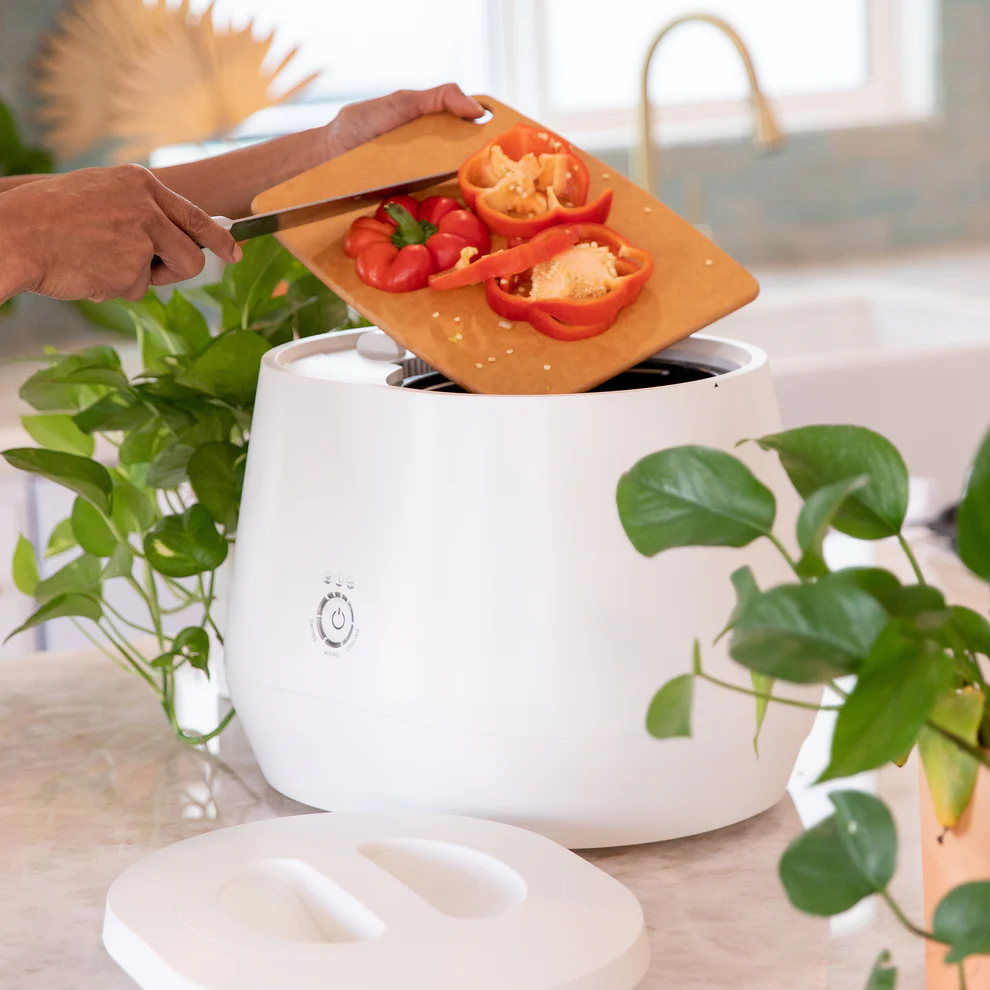
Lomi is a clever kitchen composter, to stop food waste. It stops smells and waste and is a good industrial composter for kitchens (it costs a few hundred pounds). Used by 100,000 people, it simply turns food scraps into nutritious compost.
Just push the button to turn your food waste into plant-friendly dirt! No ants, fruit flies or maggots. It sits on the kitchen countertop and is small enough to store in a cabinet. Ideal for anyone in a city apartment to a huge mansion.
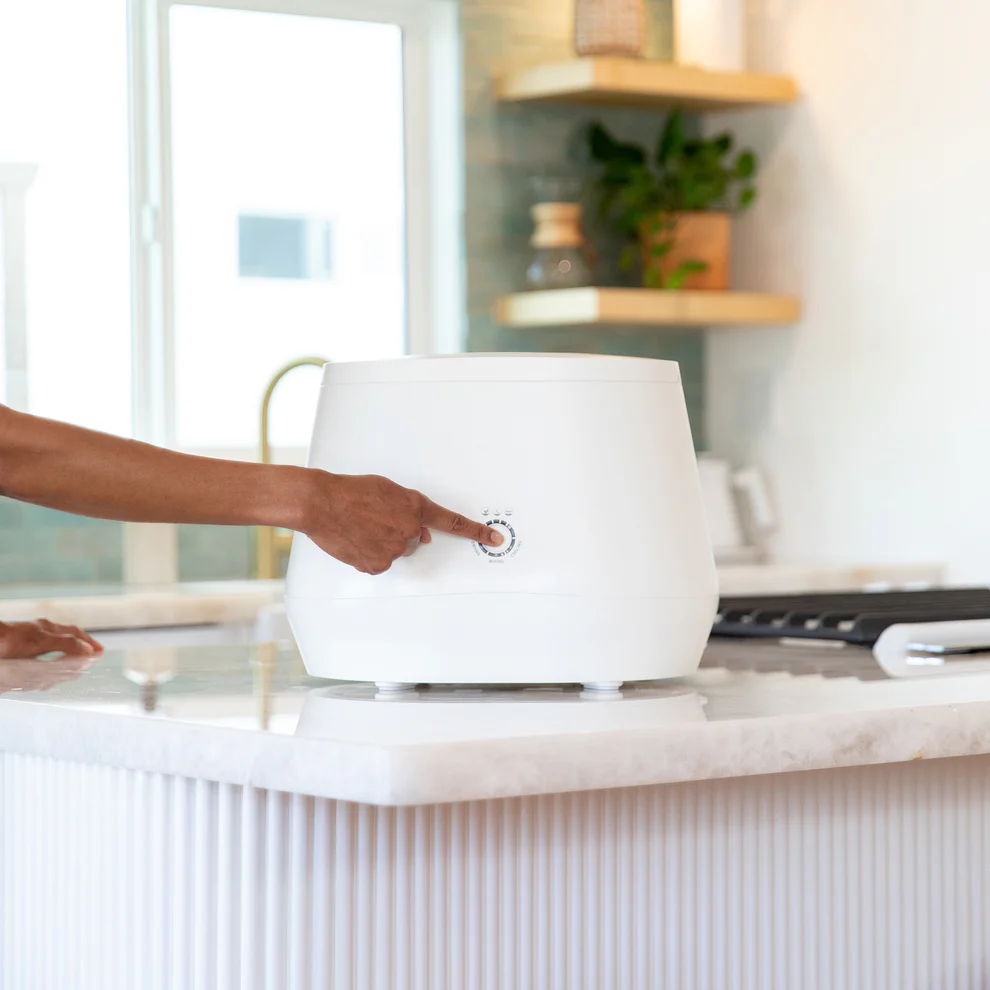
The sensors simulate and accelerate the natural process to produce compost in as little as 4 hours. You can put yard and food waste in this, but also animal foods if you eat them, along with bread and grain products and Lomi-approved compostable packaging. It’s around the same size as a bread maker and uses little electricity.
Japanese Bokashi Compost Bins
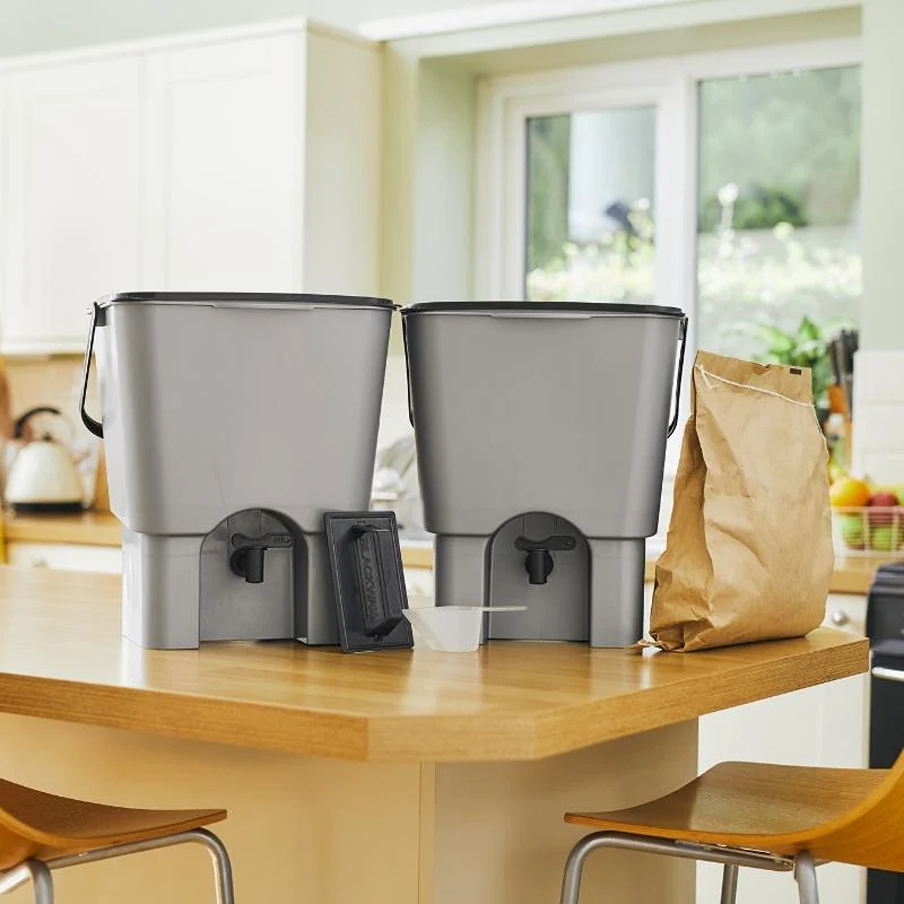
Bokashi composting bins were created by a Japanese professor and unlike conventional compost that uses oxygen, these use lack of oxygen instead, using a bokashi bran that you add to food waste, then close the lid and leave for 14 days to produce compost to add to your outdoor bin.
The resulting liquid can be drained off using the tap to use as plant feed (dilute with water 1:200). You buy two, so there is always one on the go. All you need buy after that are bran refills.
Bokashi bins can accept other fruit/vegetable waste, bread, dead leaves & withered flowers and used compostable dish sponges. Unlike outdoor compost bins, Bokashi bins can take most animal products if you eat them (not large bones) due to Bokashi bacteria helping to destroy pathogens.
Don’t compost cooking oil or pour down drains (use a cooking oil recycling container).
Community Compost Bins
Some councils offer community compost heaps. Brighton Community Compost Scheme prevents 100 tons of food going to waste each year, by setting up local compost boxes with monitors.
Councils may have an industrial compost scheme, for things like ‘biodegradable plastics’ that usually only degrade in such systems.
Make Your Own Leaf Mould
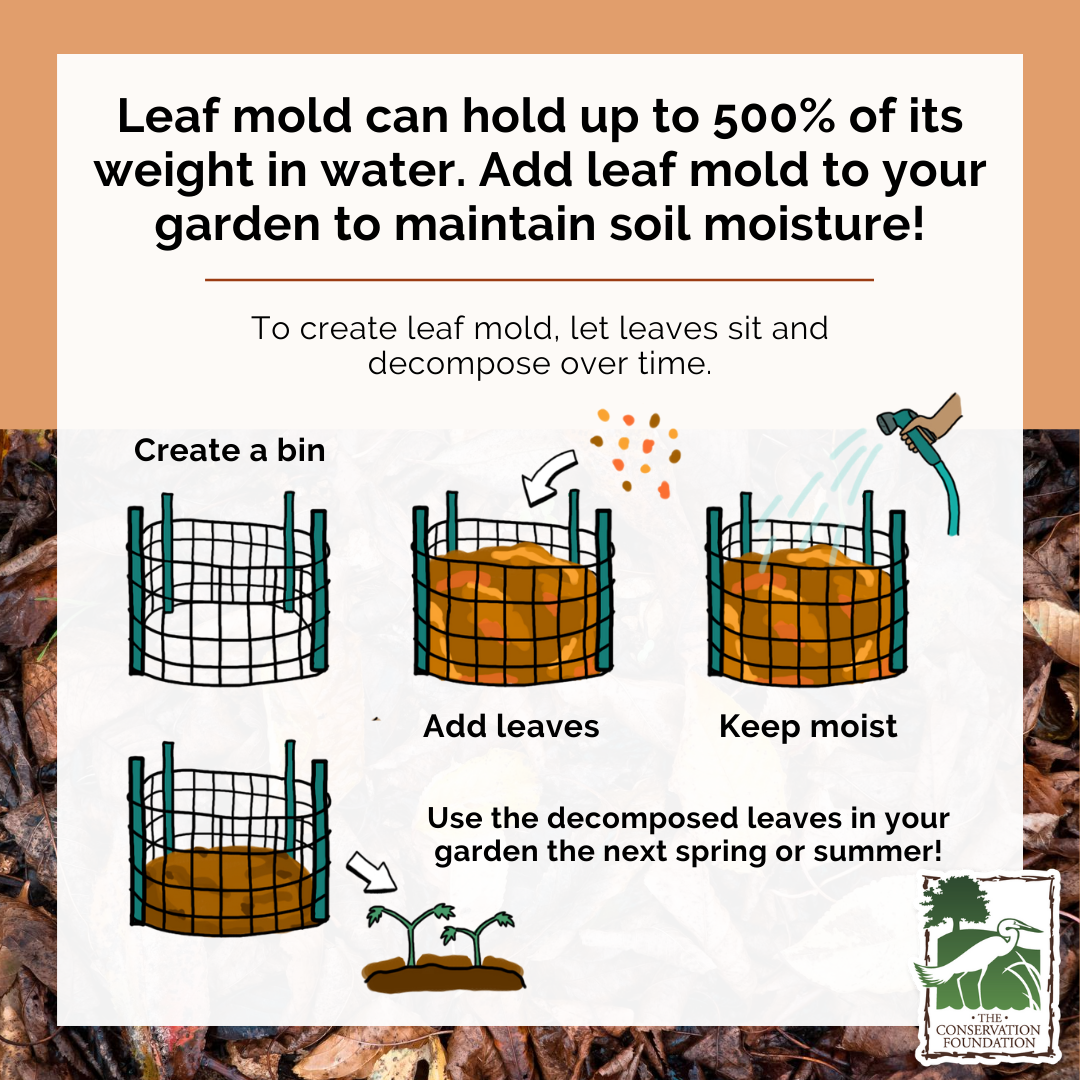
Make your own leaf mould from old rotting leaves in autumn. This is a great soil improver, to replace peat.
Again, keep leaf mould away from pets, as it harbours bacteria and fungi that could produce toxic mycotoxins . Read more on giving dogs baths, if they come into contact with damp leaves.
Enrich the Earth is a campaign to get more councils to collect green waste (millions of tons are discarded each year). This could be used to make green compost, another good nutrient-rich peat alternative.
Coir Compost Blocks

If you are not making your own compost, this is the next best choice. Coir is the waste product made from coconut husks in Sri Lanka, and holds water very well.
Sold in blocks, just soak in water (for 5 minutes) to produce instant compost (no more lugging heavy bags from the garden centre to the car to your house!)
Coco & Coir offers a wide range of coir compost including an everyday one, and those for specialist planting needs plus versions for houseplants and cutting/seed compost.
Their information page is extensive, covering all your question needs. Join the peat-free loyalty club, and receive 10% off regular orders.
Coir compost is sold in blocks, to which you add water. As a rough guide:
- 5kg makes 75 litres of compost
- 1kg makes 15 litres of compost
- 650g makes 9 litres of compost
Coir mulch retains soil moisture, and reduces weeds by up to 90% (ideal for no-dig gardening that protects earth worms and stag beetles). Ideal for acid plants (rhododendrons are toxic to pets including rabbits and guinea pigs).
Lightweight and easy to store in cupboards, just soak in water for 20 minutes, before use. It can also be used to create natural ‘woodland pathways in gardens.
As long as pets don’t eat it, coir is a safer mulch to pets, than cocoa, pine or recycled rubber mulches – which are toxic, puncture/scented or choking hazards respectively).
Avoid using netting in gardens, as most is sold with holes way too large, than recommended diameters to avoid wildlife getting trapped. Protect crops with fruit protection bags instead.
The Coconut Compost Company
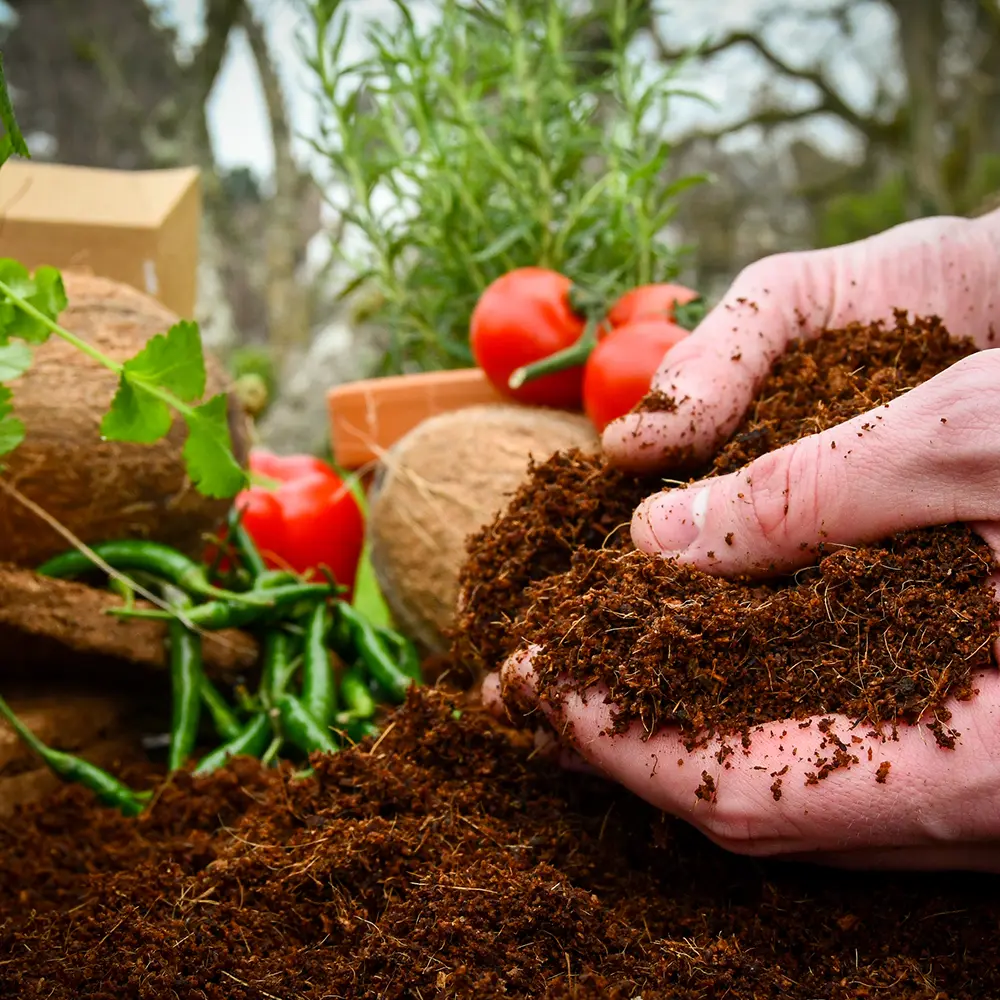
The Coconut Compost Company is another good brand, which donates 10% of profits to Sri Lankan charities.
Other Peat-Free Growing Composts
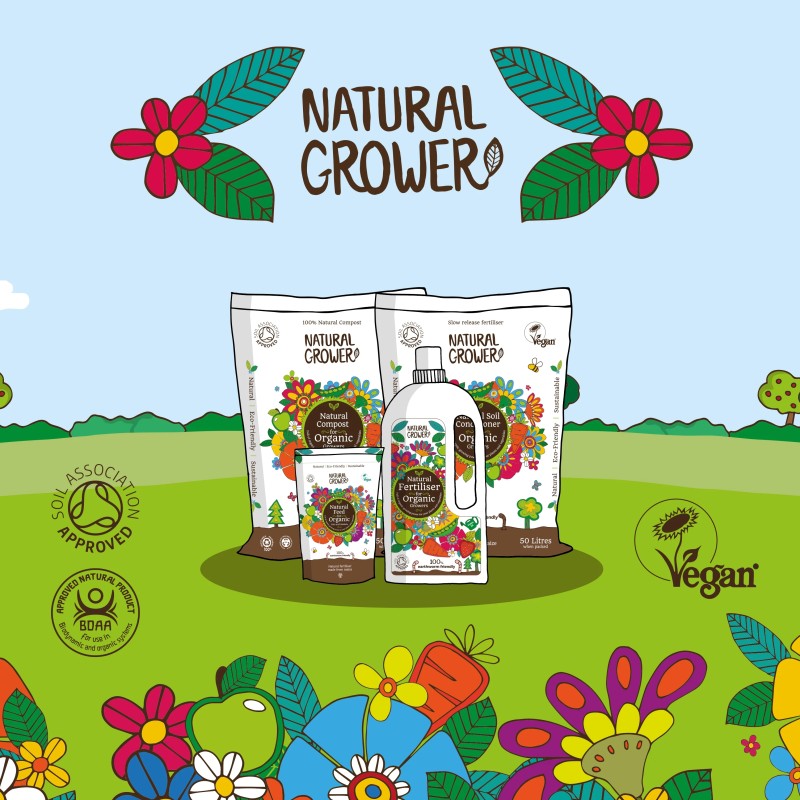
Sold in bags that are are easily recycled (at supermarket bag bins, if your kerbside does not recycle), these are all sold wholesale for garden centres and larger projects (public gardens and parks, stately homes etc)).
Natural Grower is a brand of natural compost and liquid feeds, with well-balanced NPK values and trace elements. Made with renewable energy, it’s approved by both Soil Association and Vegan Society.
RocketGro (made in Somerset) offers a wide range of peat-free composts (from everyday to specialist versions for roses, hanging baskets, herb/alpine plants, tomatoes and lawns